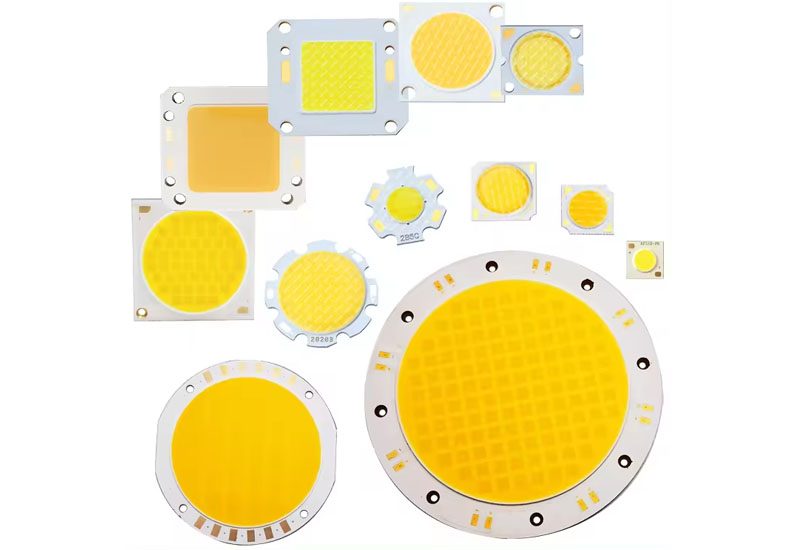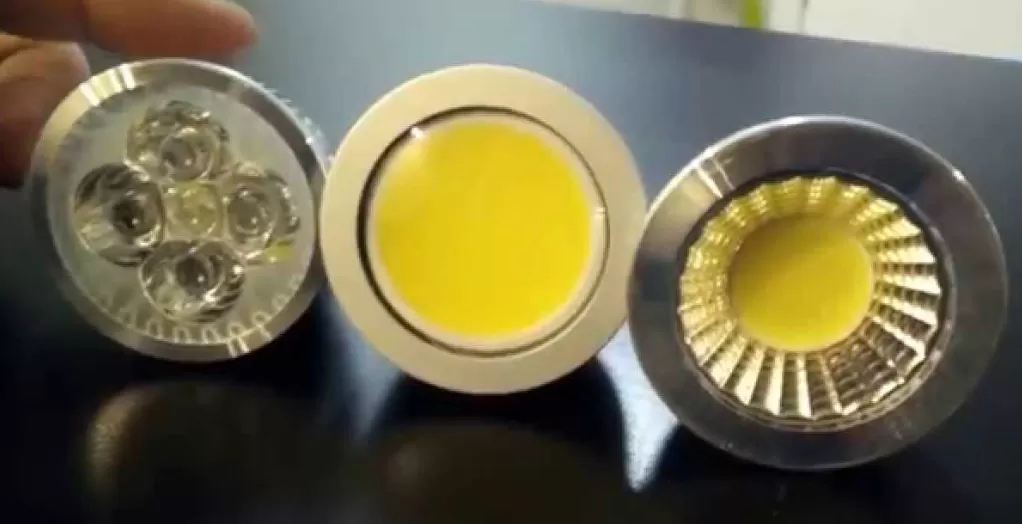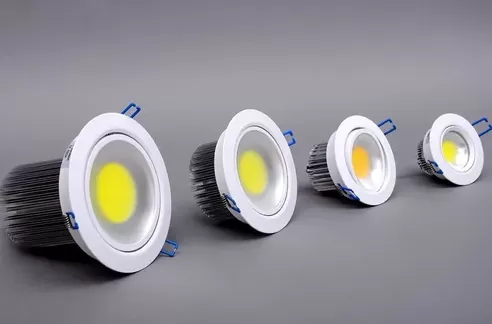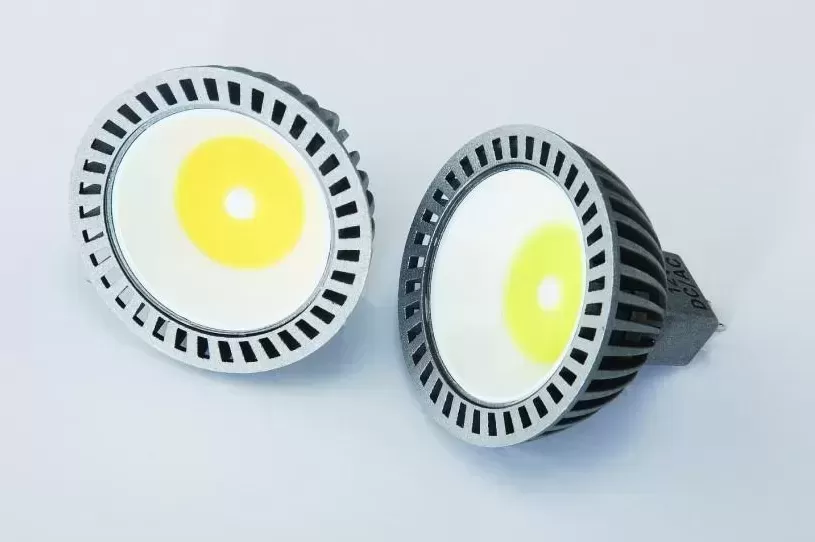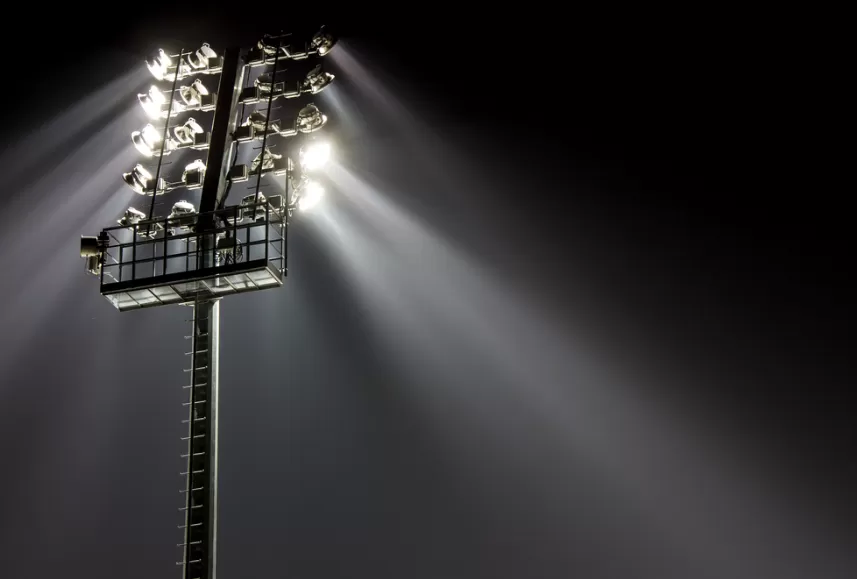
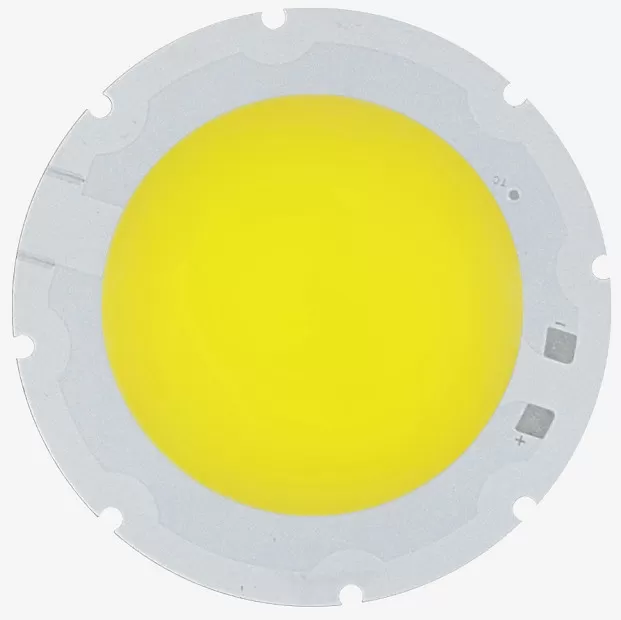
The progression of high-power solid-state lighting has transitioned from distributed multi-die arrays to concentrated, single-source apertures. Central to modern industrial high-mast, stadium, and heavy industrial illumination is the 500w Cob Led, a module class engineered to deliver ultra-dense luminous flux from a compact light-emitting surface (LES). By packing hundreds of micro-scale diode junctions directly onto a high-performance thermal substrate, these modules resolve the optical complexity traditionally associated with large surface-mount device (SMD) clusters. Maximizing the potential of this high-flux platform requires an exhaustive understanding of substrate thermodynamics, drive electronics, phosphor stability, and beam control mechanics.
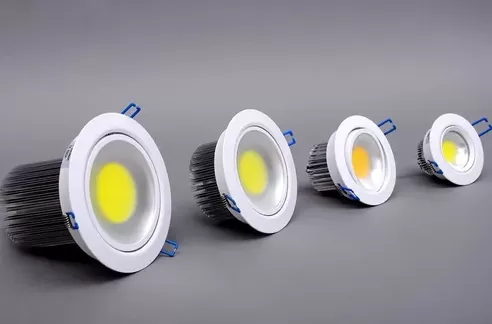
Substrate Metallurgy and Microelectronic Packaging
High-density packaging at the 500-watt threshold presents substantial mechanical and thermal stresses. Traditional Metal Core Printed Circuit Boards (MCPCB) utilizing dielectric layers with thermal conductivities below 8 W/m·K fail to prevent junction hotspots at sustained operational currents. Consequently, contemporary 500w Cob Led architecture relies on Direct Plated Copper (DPC) or Direct Bonded Copper (DBC) applied to ceramic bases, predominantly Aluminum Oxide (Al2O3) or Aluminum Nitride (AlN).
Aluminum Nitride stands out as the premium selection for extreme wattages due to its bulk thermal conductivity of 170 to 200 W/m·K, which closely matches the coefficient of thermal expansion (CTE) of the underlying gallium nitride (GaN) silicon dies. This CTE matching eliminates shear stress during thermal cycling, preventing the micro-cracking of solder interfaces that frequently degrades mid-tier luminaires.
Within the internal matrix, flip-chip configurations have systematically replaced legacy wire-bonded architectures. By mounting the p-n junctions face-down and bonding them directly to the substrate through gold-tin (AuSn) or silver sinter metallurgy, packaging engineers eliminate gold bond wires. Wire-bond elimination circumvents failures caused by thermal expansion mismatch between encapsulant silicone and fragile electrical bridges while slashing junction-to-case thermal resistance (Rth_jc).
Thermal Dynamics and Junction Temperature Regulation
Thermal management dictates the life cycle, spectral stability, and actual efficacy of solid-state emitters. When driving a 500w Cob Led, roughly 50% to 55% of the input electrical power converts directly into heat rather than visible light, depending on the radiant wall-plug efficiency. Dissipating 250 to 275 watts of concentrated heat from a light-emitting surface often measuring under 45 millimeters demands rigorous thermodynamic calculation.
The operational threshold centers on the maximum junction temperature (Tj), which must consistently remain below manufacturer ratings (typically 120°C to 150°C) to prevent catastrophic luminous decay. The total thermal resistance circuit follows a standard one-dimensional conduction model:
Rth_total = Rth_junction-to-case + Rth_interface + Rth_heatsink-to-ambient
Thermal Interface Materials (TIMs) represent the highest resistance bottleneck outside the chip carrier itself. Phase-change materials (PCMs) and high-viscosity structural adhesives loaded with metallic or ceramic particulates minimize interfacial voiding. Standard silicone thermal pastes with conductivities under 3 W/m·K prove inadequate for this thermal density; high-performance formulations exceeding 6 to 8 W/m·K applied with automated stencil printing under controlled torque specifications are non-negotiable for system longevity.
Heat sink engineering for high-wattage arrays utilizes advanced heat pipe matrices or two-phase vapor chambers integrated into aluminum extrusion profiles. By transporting latent heat across sealed capillary structures, vapor chambers spread the ultra-dense thermal footprint across a broad fin array, overcoming the conduction limits of solid copper or aluminum slabs in natural convection environments.
Optoelectronic Characteristics and Phosphor Conversion Systems
Achieving stable photometrics across decades of run-time necessitates resilient phosphor packaging. High-power emitters encounter radiant flux densities that induce localized thermal quenching within standard silicone-suspended phosphor matrices. Under elevated thermal loads, organic encapsulants degrade, leading to color temperature shifting, yellow-ring artifacts, and micro-cracking.
Advanced implementations apply conformal phosphor deposition or glass-bonded phosphor plates (Phosphor-in-Glass, or PiG). These inorganic binders survive elevated operational temperatures without yellowing, maintaining optical transmissive qualities and chromatic stability within a 3-step MacAdam ellipse over tens of thousands of continuous duty hours. Luminaires integrated with quality solutions, such as those engineered by CAS, focus strictly on inorganic matrices to yield uniform chromaticity across varying drive currents.
Drive topology plays an equally significant role in spectral output. Arrays configured with balanced series-parallel strings mitigate current hogging, an electro-thermal runaway phenomenon where hotter parallel strings draw excessive current due to localized forward-voltage drops. Integrating integrated negative temperature coefficient (NTC) thermistors and electrostatic discharge (ESD) transient voltage suppressor (TVS) diodes within the module carrier protects the multi-die matrix against utility-grade surges.
Optical Engineering and Beam Shaping Methodologies
A bare 500w Cob Led exhibits an approximate Lambertian emission profile with a half-intensity angle of 120 degrees. While this broad emission suits low-bay flood environments, directing high-lumen outputs toward narrow, precisely contoured target areas calls for precision secondary optics.
Reflector design requires high-purity aluminum coatings with protective chemical vapor deposition (CVD) silica layers, achieving specular reflectivities exceeding 95%. However, mechanical reflectors alone struggle with color-over-angle (COA) variations common in broad-area phosphors. Ray-tracing simulations dictate the integration of compound parabolic concentrators (CPC) or hybrid total internal reflection (TIR) optical lenses constructed from optical-grade silicones or UV-stable polycarbonates.
Silicone optics offer distinctive thermal and chemical resilience, withstanding temperatures beyond 150°C without mechanical warping or yellowing. Direct-contact or proximity-molded TIR silicone optics maximize optical transmission, capture high-angle stray light, and deliver tight 10-degree to 30-degree beam distributions necessary for harbor mast, athletic stadium, and aerospace apron installations.
Industrial Systems Integration and Electrical Topologies
System architects must coordinate the electro-mechanical housing, ingress protection, and electronic driver topology around the power delivery profile of the emitter. The driver must supply ripple-free constant direct current (CC) while accommodating forward-voltage fluctuations triggered by ambient and junction temperature shifts.
Total Harmonic Distortion (THD) of the electronic control gear must hold below 10%, coupled with a Power Factor (PF) surpassing 0.95 across wide-range utility inputs (100–277V or 347–480V industrial grids). Pulsed-width modulation (PWM) dimming for massive modules requires careful tuning to prevent audible driver resonance and high-speed stroboscopic effects, which disrupt industrial manufacturing and broadcast television standards alike.
Industrial deployment sectors demand specific design adaptations:
Marine and Maritime High-Masts: Assemblies require hermetic die-cast A380 or ADC12 aluminum housings finished with multi-layer conversion coatings to prevent electrochemical corrosion between differing metals in salt-fog atmospheres.
Mining and Tunneling Luminaires: Structural dampening prevents vibration-induced fatigue failure within the soldered electrical terminals and fastener networks.
Broadcast Arenas and Sports Complexes: Driver circuitry must deliver virtually zero current ripple (less than 1%) to comply with high-frame-rate, ultra-slow-motion imaging without flicker.
High-Bay Logistics Warehouses: Demands optical distributions that direct narrow vertical illumination along high-density racking corridors while avoiding driver-glare conditions for ground equipment operators.
Manufacturing facilities leveraging standardized assemblies from CAS maintain rigorous batch consistency, verifying that forward-voltage binning and spectral grouping align with strict international project demands.
Degradation Mechanisms and Reliability Metrics
Reliability estimation in solid-state systems relies on standardized measurement frameworks, primarily IES LM-80 testing data extrapolated through TM-21 methodologies. Operating a high-density 500w Cob Led creates internal stresses that differ markedly from low-power commercial luminaires.
Lumen depreciation paths stem primarily from three structural degradation vectors:
Interfacial Solder Voids: Void fractions exceeding 15% beneath the ceramic substrate create localized thermal choke points, escalating die temperatures and precipitating localized dark spots across the multi-die matrix.
Encapsulant Delamination: Repeated expansion and contraction cycles break bonds at the silicone-die interface, elevating internal reflection losses and shifting the spectral distribution.
Chemical Contamination: Volatile organic compounds (VOCs) outgassing from inferior internal gaskets, PCB coatings, or threadlock adhesives migrate into the silicone encapsulant, carbonizing under concentrated optical flux and generating broad brown-spot light attenuation.
By enforcing comprehensive automated optical inspection (AOI), acoustic microscopy for void assessment, and chemical-compatibility validation across all luminaire components, manufacturers preserve system integrity to achieve TM-21 calculated lifetimes exceeding 70,000 hours (L70B10) under standard ambient metrics.
Frequently Asked Questions
What is the typical forward voltage and current profile for an industrial-grade 500w Cob Led?
Most architectures are wired internally in a hybrid series-parallel network, resulting in forward voltages ranging between 48V and 72V DC, with drive currents commonly calibrated from 7A to 10.5A. Variations depend on the internal die configuration and specific manufacturer engineering.
How does substrate selection impact the lifespan of a high-power module?
Substrates engineered from Aluminum Nitride (AlN) provide thermal conductivities between 170 and 200 W/m·K, which far outperform typical alumina ceramics (20 to 30 W/m·K). This superior conduction reduces the thermal resistance between the junction and the cooling package, lowering steady-state operating temperatures and delaying lumen depreciation.
Can active liquid cooling be implemented with high-wattage COB modules?
Active closed-loop liquid cooling systems are widely deployed in compact stage, architectural, and broadcast settings where space limits passive heat sinks. In outdoor industrial high-bays, heavy-duty vapor chambers or thermosiphons with passive cooling arrays remain the standard due to zero mechanical maintenance needs.
What testing standards must be verified before procuring high-wattage arrays for industrial tenders?
Key standards include IES LM-80-08 for lumen maintenance, TM-21-11 for lifetime projection, IEC 62471 for photobiological safety, and RoHS/REACH compliance. Systems must also undergo thermal shock testing (MIL-STD-883 or equivalent) to prove interface resilience against cyclic thermal loads.
Why is Color-over-Angle (COA) a notable challenge with high-output arrays, and how is it resolved?
COA occurs because blue photons emitted at high angles travel through a longer path of phosphor encapsulant than directly emitted perpendicular photons, producing a cooler beam center and a warmer periphery. Integrating micro-prismatic optical plates, frosted diffusion secondary lenses, or textured TIR silicone optics mixes these optical paths to produce unified chromaticity across the entire target area.
Engineering Consultation and Technical Procurement
Specifying high-output solid-state luminaires requires precise alignment between the light engine, thermal envelope, driver characteristics, and primary optics. Industrial luminaire brands, project engineers, and high-mast system designers seeking to optimize the photometrics, thermal efficiency, and mechanical durability of their next-generation luminaires are invited to contact our application engineering team.
Submit your optical requirements, operational environments, and electrical configurations to receive full mechanical modeling files, ray-tracing optical files (IES/EULUMDAT), and comprehensive thermal dissipation simulations. Connect with our technical specialists at CAS today to evaluate sample modules and secure project-specific supply specifications.