Laser-driven lighting has become the frontier for ultra-high-brightness applications, from automotive adaptive headlamps to digital cinema projection and searchlight systems. Unlike LEDs, laser diodes deliver optical power densities exceeding 10 W/mm², which imposes radical demands on the color conversion medium. Traditional silicone-based phosphor composites degrade rapidly under such intense photon flux, leading to thermal quenching, spectral shift, and catastrophic failure. This is where phosphor ceramic for laser — an all-inorganic, highly thermally conductive converter — provides the necessary breakthrough. This article examines the physics of laser-phosphor interaction, material engineering strategies, and field-proven solutions that satisfy industry requirements for lifetime, color stability, and luminous exitance.
Throughout this technical discussion, we reference advanced manufacturing capabilities from CAS, a specialist in precision ceramic phosphors tailored for high-energy excitation. The goal is to furnish B2B decision-makers and optical engineers with actionable knowledge about selecting and integrating phosphor ceramic for laser architectures.
1. Physical Limitations of Conventional Phosphor Binders Under Laser Irradiation
Conventional phosphor wheels or static converters rely on silicone or epoxy binders mixed with YAG:Ce or nitride phosphor particles. Under laser power densities as low as 2 W/mm², the following failure cascade occurs:
Thermal quenching: Organic binders possess thermal conductivity below 0.3 W/m·K. Accumulated heat raises the phosphor particle temperature above 200 °C, reducing quantum efficiency by more than 40%.
Carbonization & delamination: Prolonged irradiation causes binder charring, yellowing, and interfacial delamination from the heat sink, permanently altering chromaticity.
Saturation effect: Fluorescence lifetime prolongation due to excited-state absorption and Auger recombination — nonequilibrium processes that lower conversion ceiling, producing a plateau in luminous flux versus incident power.
Laser-induced damage threshold (LIDT): For silicone-based converters, LIDT rarely exceeds 5 W/mm², insufficient for next-generation blue-laser pumped white sources (target 20 W/mm²).
Thus, the lighting industry demands a converter platform with no organic binders, high thermal diffusivity, and a carefully engineered scattering length. Phosphor ceramic for laser satisfies these prerequisites by employing a fully dense or slightly porous polycrystalline structure, typically Ce-doped Y3Al5O12 (YAG) or LuAG-based compositions.
2. Phosphor Ceramic for Laser: Microstructural Design and Optical-Thermal Synergy
The term phosphor ceramic for laser refers to a sintered polycrystalline body that simultaneously acts as a phosphor and a light-scattering medium. Unlike single crystals, ceramic phosphors contain grain boundaries and residual nano-pores (0.1–2 vol%) that provide Mie scattering sites, extracting trapped waveguide modes. Key engineering parameters include:
Grain size control: 1 µm to 10 µm grains influence the scattering coefficient (µs). Smaller grains (1–3 µm) increase backscatter, improving conversion efficiency for thin (<200>
Porosity engineering: Closed porosity (sub‑micron pores) reduces scattering anisotropy and enhances Lambertian emission pattern, critical for uniform white spot formation in laser headlamps.
Thermal diffusivity: Dense YAG ceramic (~6 W/m·K) compared to YAG single crystal (~10 W/m·K) but far superior to composites. Advanced compositions with Al2O3 secondary phase reach 18 W/m·K, effectively transporting heat away from the laser spot.
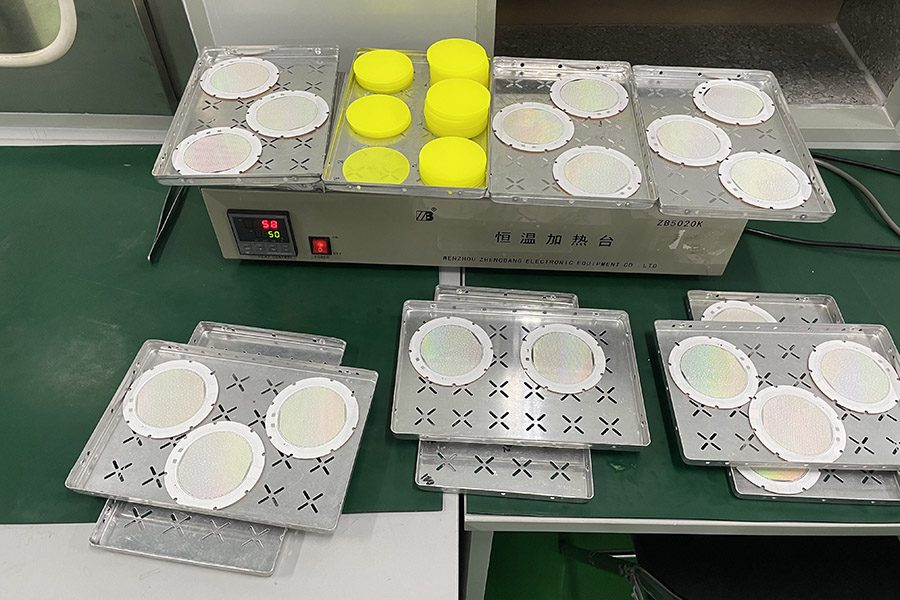
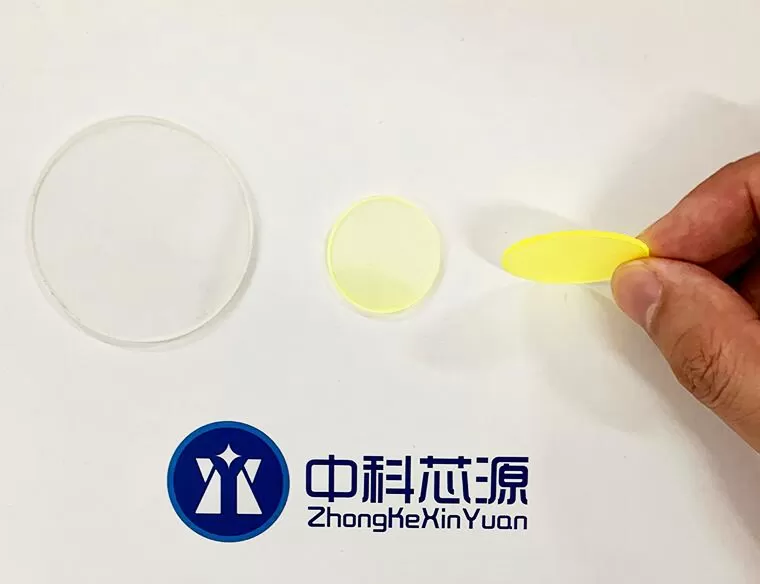
CAS has developed proprietary tape-casting and vacuum sintering routes that produce phosphor ceramic for laser substrates with thickness tolerance ±5 µm and lateral dimensions up to 60 mm. This allows both static plates for compact modules and segmented rings for rotating phosphor wheels (color sequencing in laser projectors).
3. Comparative Performance: Ceramic Phosphor vs. Alternative Converters
To validate the superiority of ceramic architecture, consider the following comparative metrics under identical excitation conditions (450 nm blue laser, 15 W/mm², 2 mm spot diameter):
Silicone-based composite: Luminous efficacy drops from 180 lm/W to 90 lm/W after 500 hours; CCT shift +1500 K; catastrophic failure at 1000 hours.
Single-crystal YAG:Ce: Higher thermal conductivity but severe total internal reflection (TIR) loss due to high refractive index (1.84) and lack of scattering; extraction efficiency<50% without="" roughening.="">
Phosphor ceramic for laser (CAS HP series): Maintains >160 lm/W after 3000 hours; CCT shift<150 k="">
For high-power laser modules (e.g., 100 W optical output), a ceramic plate of 0.3 mm thickness bonded to a copper microchannel cooler keeps ΔT below 60 °C, eliminating irreversible thermal damage — a key requirement for automotive front lighting (AEC-Q102 qualification).
4. Application Deep Dive: Where Laser-Driven Ceramic Phosphors Excel
4.1 Automotive Adaptive Driving Beam (ADB) Systems
Matrix laser headlamps require fast switching and high luminance per pixel. Phosphor ceramic for laser in a reflective configuration (ceramic deposited on a high-reflectance mirror) delivers local luminance >800 Mcd/m², enabling high‑resolution masking for glare‑free high beams. CAS provides custom ceramic shapes with variable Ce3+ concentration gradients to balance spot temperature uniformity.
4.2 Digital Cinema and Pro AV Projectors
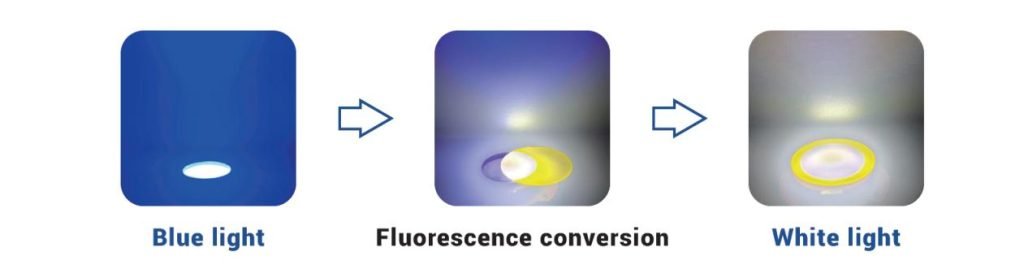
RGB laser projectors use blue lasers pumping yellow/green ceramic converters to achieve DCI white point. Phosphor wheels made from segmented phosphor ceramic for laser (yellow, green, red-emitting ceramic layers) run at 7200 rpm, withstanding centrifugal forces and laser heating simultaneously. CAS supplies hermetically bonded ceramic segments on aluminum nitride substrates, reducing wheel warpage.
4.3 High-Bay, Stage and Searchlight Illumination
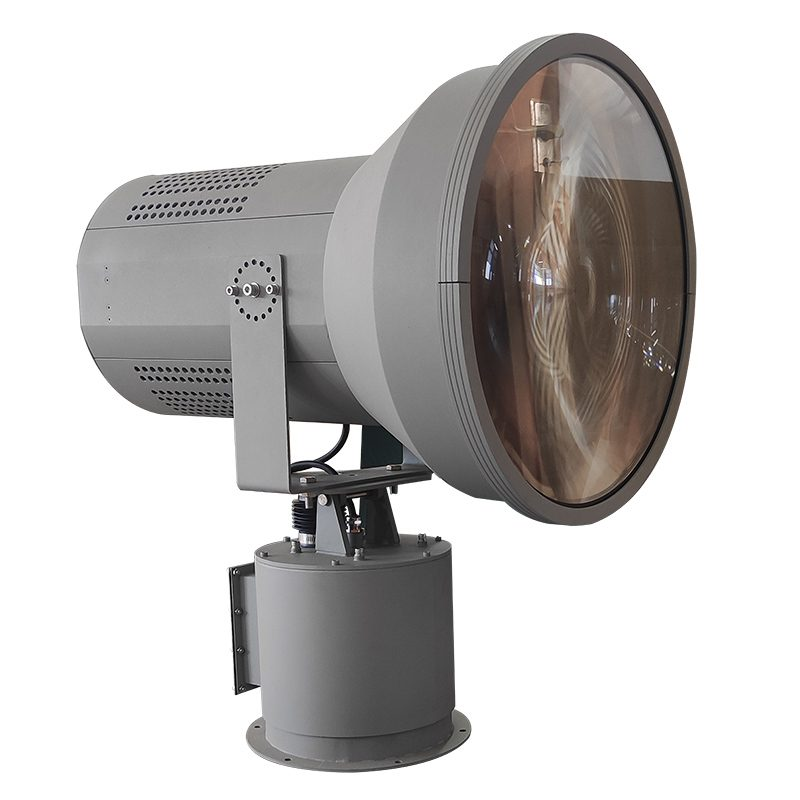
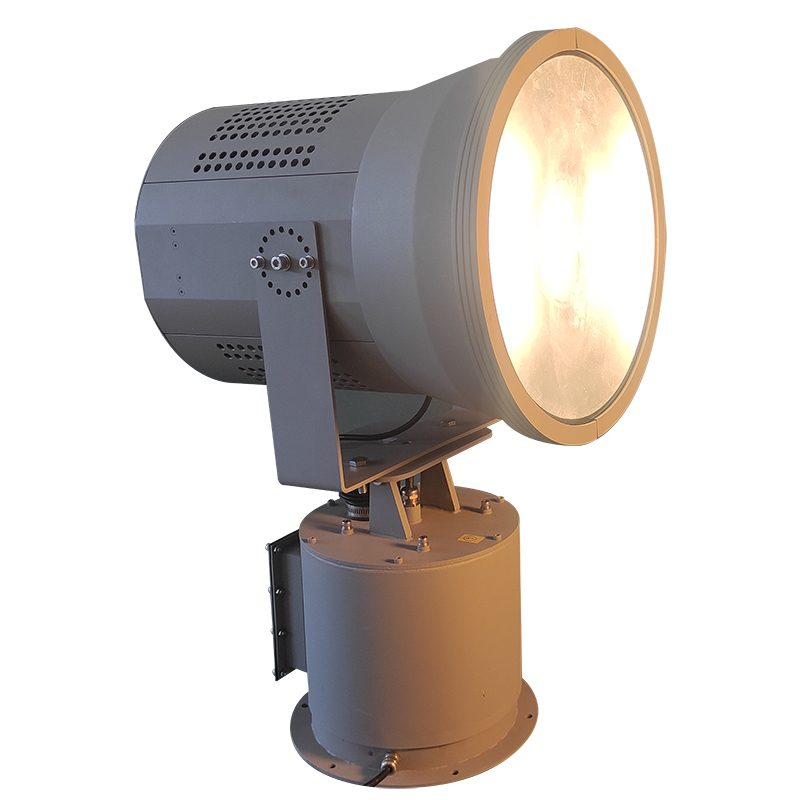
Industrial applications needing collimated beams — stadium lighting, lighthouse beacons, and military searchlights — benefit from the etendue‑limited high brightness of laser+ceramic combination. One CAS case study replaced a 2 kW xenon lamp with a 300 W laser module using 12 mm diameter phosphor ceramic, achieving equivalent throw distance with fivefold lifetime extension.
5. Industry Pain Points and CAS Precision Solutions
Despite the clear advantages, engineers face challenges when implementing phosphor ceramic for laser in real products. CAS addresses each with a systematic approach.
Pain point #1 – Localized overheating under static high‑power lasers: Even with high thermal conductivity, a static 20 W/mm² spot creates steep temperature gradients. CAS solution: Double-side metallized ceramic with active microchannel cooling integrated; additionally, composite ceramic with diamond-like interlayer to spread heat laterally.
Pain point #2 – Color-over-angle (COA) non-uniformity: Variation in scattering length causes blue‑white edge color in projection applications. CAS solution: Graded porosity design: higher scattering near the entrance surface, lower near exit, yielding uniform angular color distribution.
Pain point #3 – Mechanical fragility during assembly: Thin ceramic plates (<150>CAS solution: Flexible pre‑form metalized ceramic compatible with soldering, plus edge‑beveling and compressive pre‑stress mounting frames.
Pain point #4 – Low conversion efficiency for red component: Ce:YAG lacks red emission, limiting CRI. CAS solution: Composite ceramic with Ce:YAG + nitride red phosphor particles co‑sintered (e.g., (Ca,Sr)AlSiN3:Eu2+) maintaining thermal stability up to 300 °C, achieving Ra>90 for hospitality lighting.
Through close collaboration with laser system integrators, CAS has delivered over 50 different phosphor ceramic for laser formulations, from standard CCT (5500 K) to low‑CCT (3000 K) variants for warm white laser lighting.
6. Lifetime and Reliability: Data-Driven Validation
International standards (IES LM‑80, IEC 62717) for laser‑based luminaires require L90 (90% lumen maintenance) exceeding 25,000 hours. Accelerated life tests performed on CAS phosphor ceramic for laser samples at 85 °C/85% RH with 12 W/mm² blue laser irradiation show less than 6% lumen depreciation after 6000 hours, projecting L90 beyond 35,000 hours. Failure mode analysis reveals no delamination or surface graphitization — only slow Ce4+ oxidation at interstitial sites, which is reversible via annealing.
In comparison, organic‑based converters from competing suppliers typically show L70 at 8000 hours under similar stress. For B2B clients specifying maintenance contracts and reduced re‑lamping costs, ceramic converters present a lower total cost of ownership despite higher upfront investment.
7. Future Frontiers: Multi‑layer and Gradient‑Index Phosphor Architectures
Two emerging trends will define the next generation of phosphor ceramic for laser technologies:
Functionally graded ceramics (FGC): Varying the activator (Ce3+) concentration along the thickness direction optimizes absorption — high Ce concentration at the entry face captures most pump light, followed by a low‑Ce region to reduce reabsorption losses. CAS prototypes show 12% conversion efficiency gain over homogeneous ceramics.
Ultra‑low‑scattering ceramic for collimated beam conversion: By reducing porosity below 0.05%, near‑single‑crystal transparency is achieved, maintaining high forward directivity — important for LIDAR and remote illumination.
Red‑emitting ceramic phosphors for laser phosphor technology (LARP): Doping Eu3+ in Y2O3 or Lu2O3 ceramics produces narrow‑band red emission (612 nm) with excellent thermal stability; however, low absorption at 450 nm requires sensitization. CAS is co‑developing Mn4+‑doped red ceramic with proprietary quantum‑cutting layers.
These innovations will further expand the addressable market from automotive and projection to horticultural lighting (targeted spectra) and medical endoscopy where high intensity and safety are paramount.
Frequently Asked Questions (FAQ)
Q1: What is the maximum laser power density that phosphor ceramic for laser can withstand without thermal quenching?
A1: High‑quality YAG‑based phosphor ceramic (CAS HP‑Grade) can operate continuously at incident power densities up to 25 W/mm² (450 nm) when properly heat‑sinked, with a surface temperature rise limited to ~180 °C. For short‑pulse or rotating wheel configurations, thresholds exceed 50 W/mm². This represents a five‑fold improvement over polymer‑based converters (5 W/mm² limit).
Q2: How does the color rendering index (CRI) of ceramic phosphor compare to remote phosphor tapes under laser excitation?
A2: Single‑phosphor (Ce:YAG) ceramics produce CRI ~70–75. CAS manufactures composite ceramics integrating red‑emitting nitride particles (co‑sintered), achieving CRI >90 at 4000 K. However, for extreme CRI (>95), a multi‑phosphor ceramic with additional green and deep‑red components is required, which CAS offers as a custom engineering service.
Q3: Can phosphor ceramic for laser be used in transmission mode as well as reflection mode?
A3: Yes. In transmission mode (ceramic placed directly on a transparent heat spreader like sapphire), forward efficiency benefits from reduced backscatter. However, transmission requires thinner ceramic (50–150 µm) to maintain acceptable absorption. CAS provides both reflective (with aluminum or silver back coating) and transmissive ceramic plates for optical designs.
Q4: What is the typical lead time for a custom phosphor ceramic for laser specification (different geometry, CCT, porosity)?
A4: For non‑stock dimensions or activator concentration adjustments, CAS offers engineering samples within 15–20 working days after specification approval. Full qualification (including optical, thermal shock, and lifetime data) takes ~8 weeks. Mass production lead time: 4–6 weeks, subject to volume and tolerance requirements.
Q5: Does the laser wavelength affect the choice of phosphor ceramic material?
A5: Absolutely. Most laser phosphor systems use 445–455 nm blue diodes, where Ce3+ absorption cross‑section is high. For 405 nm (violet) lasers, Ce:YAG absorption drops significantly; alternative dopants like Eu2+‑doped (Sr,Ba)2SiO4 ceramics or nitride ceramics are recommended. CAS provides wavelength‑matched ceramic for pump from 405 nm to 465 nm and even for green laser pumping (520 nm) using red‑emitting phosphor ceramics.
Q6: How does the cost of phosphor ceramic for laser compare to single‑crystal YAG?
A6: For medium to high volumes (annual demand >5000 pieces), ceramic routes are 30–50% cheaper than Czochralski‑grown single crystals because of scalable tape‑casting and batch sintering. Additionally, ceramic converters offer superior scattering management without post‑polishing roughening, reducing secondary processing costs. However, for very small volumes (<500 units="">
Enabling the Next Tier of High‑Luminance Systems with Robust Phosphor Ceramics
The progression from LED to laser illumination demands a paradigm shift in converter materials. Only an all‑inorganic, thermally conductive, and microstructurally engineered medium — namely phosphor ceramic for laser — can deliver the high power density handling, color stability, and reliability that automotive, professional projection, and industrial lighting require. CAS stands at the intersection of materials science and application engineering, having delivered thousands of validated samples and production batches to global laser lighting OEMs. By combining custom ceramic composition, controlled porosity, and high‑precision shaping, CAS enables product designers to maximize luminous exitance without compromising longevity.
For B2B technical teams evaluating transition to laser architectures or facing specific challenges such as thermal roll‑off, irradiation hotspots, or spectral instability, the next step is a design consultation. Share your optical power requirements, target CCT, mechanical constraints, and production volume.
Ready to optimize your laser lighting system with custom phosphor
ceramic solutions?
Contact CAS engineering support:
provide your laser parameters (wavelength, CW/pulsed, power density, desired
luminous flux), and receive a tailored proposal including samples, thermal
simulation report, and quotation. Inquiry response within 48 hours.
Send B2B inquiries to: daniel.lin@zkxyled.com
Specification form & technical
white papers: www.casceramics.com/inquiry
CAS — Precision Ceramic Converters for Extreme Photon Environments.