Automotive lighting has undergone several transitions over the past decades, moving from halogen filaments to high-intensity discharge systems, and subsequently to light-emitting diodes. Each shift has offered improvements in luminous efficacy, service life, and packaging flexibility. The latest progression in high-beam illumination is the laser headlight, a technology that offers high luminance from an exceptionally small emission area. For original equipment manufacturers and tier-1 suppliers, integrating these systems requires a deep understanding of optical physics, thermal management, and regulatory compliance.
As automotive designs demand thinner profiles and longer illumination ranges, standard LED configurations often face physical limitations. This article analyzes the mechanical and optical principles of laser-activated phosphor systems, compares their performance metrics with LED matrices, outlines the engineering hurdles of implementation, and explores how CAS supports the automotive sector in adopting this advanced illumination technology.
The Physics of Laser-Activated Phosphor Technology
To understand the operation of a laser headlight, it is necessary to clarify that the coherent laser beam itself is not projected onto the road. Direct projection of laser light would pose severe safety hazards to human vision and fail to provide the broad spectral distribution required for automotive visibility. Instead, these systems rely on a process known as Laser-Activated Phosphor (LAP).
The architecture of a typical LAP module consists of several key elements:
Laser Diodes: Multiple high-power blue laser diodes, typically operating at a wavelength of approximately 450 nanometers, serve as the primary light source. These diodes are constructed using Gallium Nitride semiconductors.
Focusing Optics: Micro-lenses and collimators collect the individual laser beams and focus them into a highly concentrated single beam directed toward a small target.
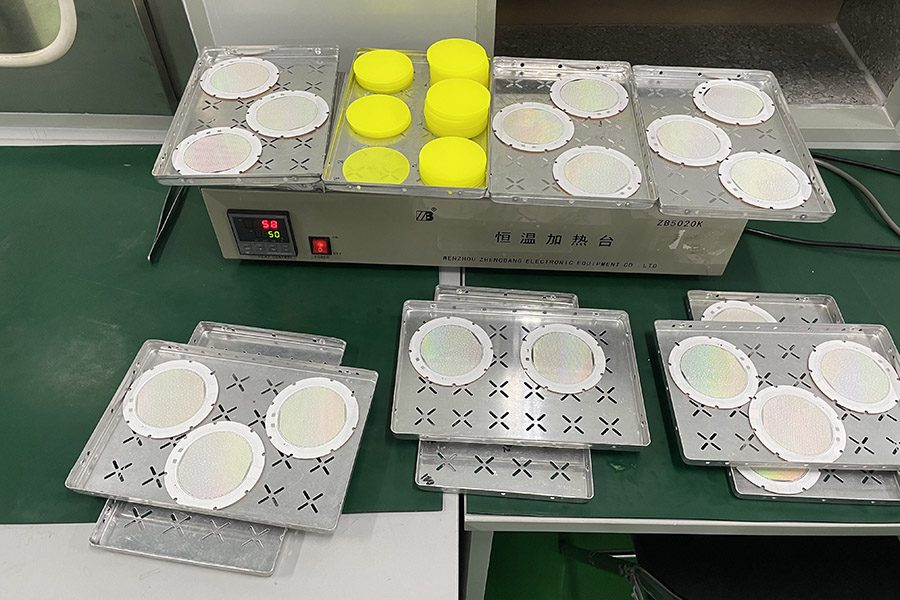
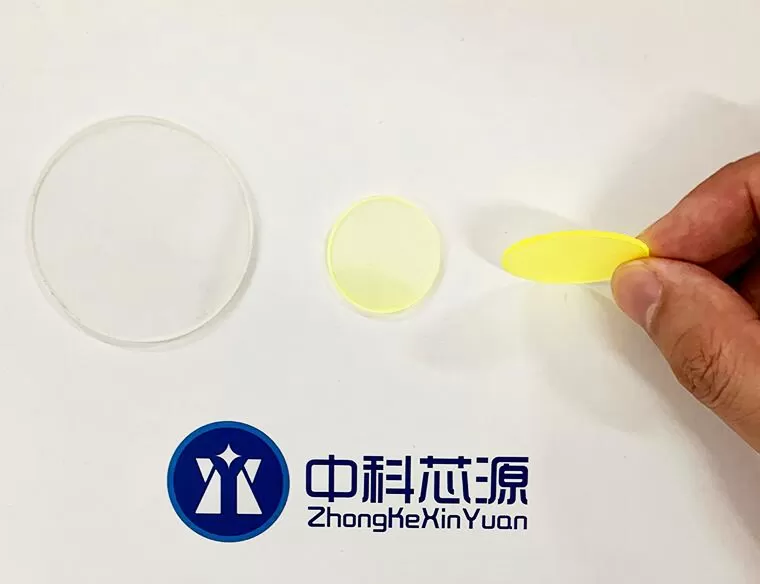
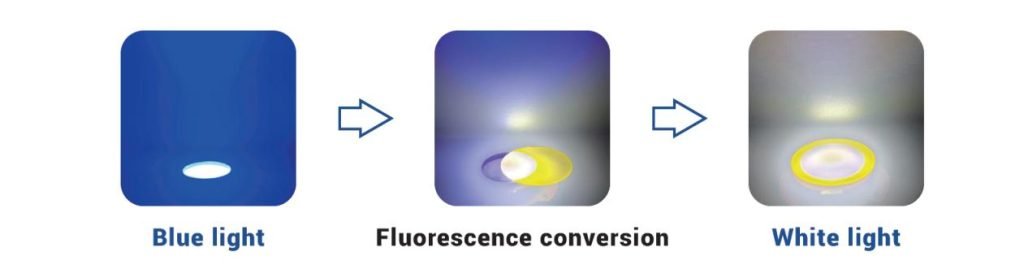
Phosphor Converter: The concentrated blue laser beam strikes a yellow phosphor plate, often made of single-crystal ceramic materials or phosphor-doped glass. The phosphor absorbs a portion of the blue light and is excited to emit broad-spectrum yellow light.
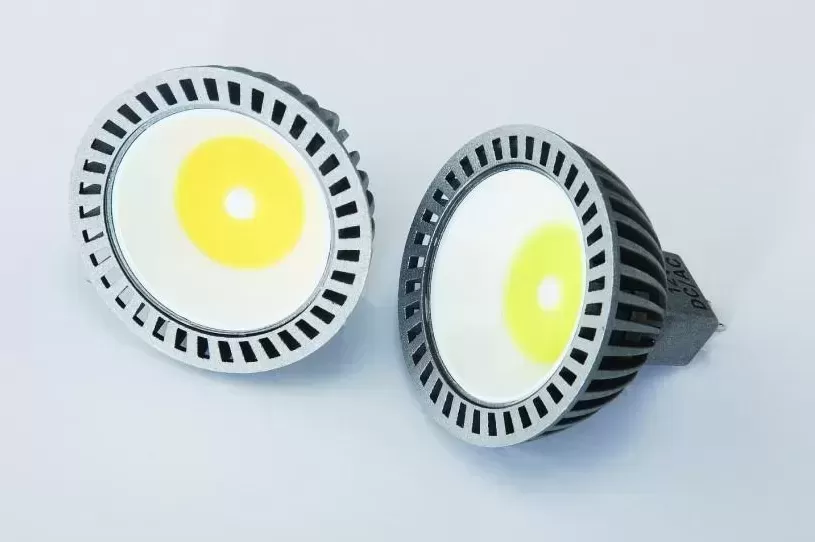
Reflective and Projection Optics: The combined unabsorbed blue light and the excited yellow light mix to produce a high-intensity, coherent-looking white light with a color temperature usually between 5000 Kelvin and 6000 Kelvin. This white light is then shaped by a reflector or a projection lens to create the final beam pattern on the roadway.
By converting the narrow-band coherent laser light into incoherent white light, the system achieves a luminance level that exceeds standard light-emitting diodes by several orders of magnitude. The emission spot on the phosphor target is often less than one millimeter in diameter, allowing optical engineers to design extremely compact reflectors to control the beam with high precision.
Performance Comparison: Laser Headlight vs. Standard LED Matrices
To justify the inclusion of a laser headlight module in a vehicle platform, procurement and engineering teams must evaluate the performance trade-offs against high-power LED matrices. The table below outlines key functional parameters between these two solid-state lighting technologies:
| Parameter | High-Power LED Matrix | Laser Headlight (LAP Module) |
|---|---|---|
| Luminance Density (cd/mm²) | Approximately 100 to 300 | Exceeds 800 to 1000 |
| Maximum Beam Range (Meters) | Approximately 300 | Up to 600 |
| Typical Luminous Flux (Lumens) | High (Scalable via multiple chips) | Moderate to High (Concentrated) |
| Minimum Aperture Height (mm) | 30 to 50 | 10 to 15 |
| Thermal Dissipation Profile | Distributed over a large PCB area | Extremely concentrated at the diode and phosphor |
The primary advantage of the laser headlight is its luminance density. Because the light source is incredibly small, the projection optics can focus the beam to a much tighter angle, facilitating an illumination range that reaches up to 600 meters. This range is double that of conventional high-beam LEDs, providing drivers with significantly more reaction time at high speeds.
However, LEDs remain superior for near-field, wide-angle illumination such as low beams and fog lights. Consequently, modern automotive headlight assemblies typically employ a hybrid design. LEDs handle the wide-angle low-beam and static cornering light functions, while the laser headlight module activates under high-beam conditions at speeds exceeding a specific threshold, usually 60 km/h, when oncoming traffic is not detected.
Thermal Management and Optical Alignment Challenges
Implementing a laser headlight system presents several difficult engineering obstacles. The foremost among these is thermal dissipation. Although laser diodes are highly efficient, approximately 60% to 70% of the electrical energy supplied to the diode is converted into heat. Because this heat is generated within a semiconductor chip that is only a few hundred micrometers wide, the heat flux density is exceptionally high.
If the junction temperature of the blue laser diode exceeds its rated limit, its efficiency drops rapidly, and the wavelength of the emitted light can shift, which affects the color rendering index of the output white light. Furthermore, the phosphor converter itself experiences thermal quenching if its temperature rises too high. Under thermal quenching, the phosphor loses its ability to convert blue light, which can lead to an unsafe emission of raw blue laser light through the lens.
To mitigate these risks, CAS utilizes high-conductivity ceramic substrates, copper heat pipes, and sometimes active thermoelectric cooling systems to maintain the laser diodes and phosphor targets within safe operating temperatures. The mechanical housing must be engineered to transfer heat away from the optical core rapidly, even in high-ambient engine compartment environments.
In addition to thermal issues, optical alignment tolerances are demanding. The alignment between the laser diodes, the focusing optics, and the phosphor target must be maintained within micron-level tolerances over the entire operating lifespan of the vehicle. Road vibrations, thermal expansion, and contraction can cause minor structural shifts. If the laser beam shifts off-center from the phosphor target, the focus of the headlight is compromised, and output efficiency decreases significantly.
Regulatory Frameworks and Active Safety Systems
Because laser diodes are high-power light sources, regulatory bodies have established strict safety standards. In Europe, the Economic Commission for Europe (ECE) regulates these systems, while in the United States, the Federal Motor Vehicle Safety Standards (FMVSS) dictate lighting performance and safety requirements.
A primary safety concern is the risk of raw blue laser light escaping the assembly in the event of an accident or physical damage to the headlight housing. To address this, manufacturers must integrate active safety loops. These loops typically include:
Photodiode Sensors: Internal sensors continuously monitor the spectral composition of the emitted light. If the sensor detects an unexpected increase in blue light relative to yellow light, it indicates that the phosphor plate is cracked or misaligned.
Interlock Circuitry: An electronic interlock circuit instantly cuts the power supply to the laser diodes if a physical rupture of the headlight casing or a sensor malfunction is detected. The shutdown occurs within milliseconds, preventing any exposure to coherent laser radiation.
Dynamic Beam Masking: To prevent blinding other road users, laser high beams must be integrated with camera-based driver assistance systems. When the camera detects the taillights of a leading vehicle or the headlights of an oncoming vehicle, the laser module must dim or adjust its projection angle dynamically.
Ensuring compliance with these safety protocols requires extensive testing under varying environmental conditions, including extreme vibration, thermal shock, and high humidity. CAS designs its sub-assemblies to meet these international safety and durability standards, ensuring seamless integration into global vehicle platforms.
Supply Chain Considerations and Integration Strategies for B2B Partners
For tier-1 suppliers and automotive OEMs, sourcing reliable components for laser headlight assemblies involves balancing performance, manufacturing yield, and cost. Because the production of laser diodes and precision optical components requires specialized cleanroom facilities and high-precision automation, partnering with an experienced optical manufacturer is necessary.
When integrating a laser headlight module, purchasing and engineering departments should focus on several design factors:
Modular Architecture: Specifying modular laser engines allows OEMs to use the same lighting technology across multiple vehicle lines by simply altering the outer aesthetic housing.
Optical Assembly Tolerances: Partners must demonstrate capabilities in automated high-precision placement, active optical alignment, and robust housing materials that resist thermal expansion.
Testing and Validation: Supplier partners should provide documented validation reports covering mechanical shock, ingress protection, and optical safety compliance.
CAS works closely with automotive engineering teams to design and manufacture components that address these parameters. By utilizing advanced simulation tools for thermal and optical analysis, CAS helps reduce development cycles and ensures that the final assembly meets the rigorous demands of the automotive industry.
Initiating Custom Development
Developing a reliable laser headlight system requires a collaborative approach between optical designers, thermal engineers, and manufacturing specialists. If your engineering team is currently designing next-generation lighting systems or looking to improve the range and thermal performance of your existing assemblies, please contact our team. You can submit your detailed technical specifications and project requirements through our business portal, and our engineering team will assist with your Inquiry, providing tailored solutions to meet your manufacturing standards.
Frequently Asked Questions
Q1: What is the lifespan of a laser headlight compared to a standard LED headlight?
A1: The operational lifespan of the laser diodes used in these systems is designed to match or exceed the typical service life of the vehicle, generally rated between 10,000 and 20,000 operating hours. This is comparable to high-quality automotive LED systems, although proper thermal management is required to prevent premature degradation of both the diodes and the phosphor converter.
Q2: Why are laser headlights not used for the low-beam function?
A2: Low-beam functions require a wide, short-range dispersion of light to illuminate the immediate road surface and shoulders without glare. Laser systems are designed for highly concentrated, long-range illumination. Standard LED matrices are more efficient and cost-effective at producing the broad light distribution needed for low beams, making a hybrid LED-laser configuration the logical choice for modern headlights.
Q3: How do cold weather conditions and ice accumulation affect these systems?
A3: Because laser modules are highly efficient and direct their heat dissipation to the rear heatsink rather than projecting heat forward through the lens, the front cover of the headlight remains relatively cool. This can lead to snow or ice accumulation in cold climates. To address this, many designs incorporate integrated heating elements on the outer lens cover to clear obstruction quickly.
Q4: Is the light emitted from a laser headlight dangerous to pedestrians or animals?
A4: No. The light that actually exits the headlight assembly is standard white light, created when the blue laser light is scattered and converted by the yellow phosphor. It is not coherent laser light. It poses no more danger to eyes than standard high-intensity LED or halogen headlights, provided the internal safety interlocks are functioning correctly to prevent raw laser leakage.
Q5: What are the main cost drivers in manufacturing a laser headlight module?
A5: The primary cost drivers are the high-power blue laser diodes themselves, the specialized ceramic phosphor targets, and the high-precision optical elements required to focus and align the beam. Additionally, the need for automated cleanroom assembly and active alignment testing during the manufacturing process contributes to the overall system cost compared to simpler LED assemblies.