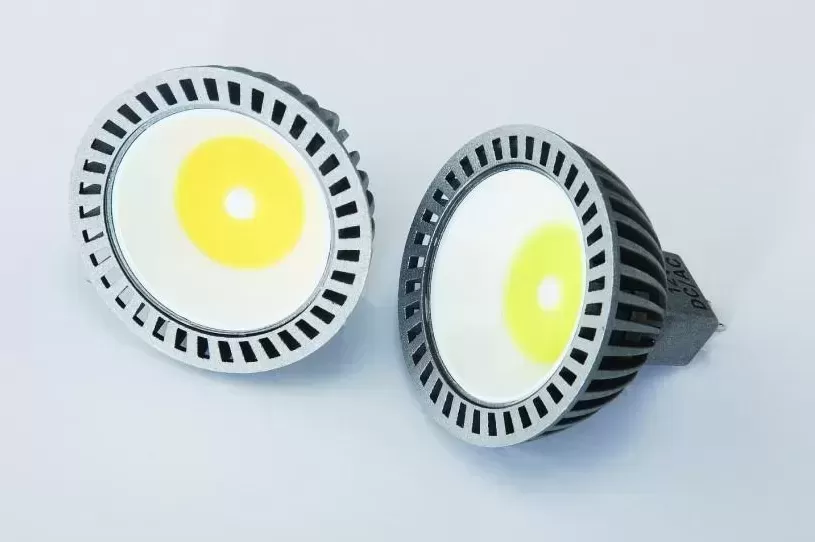
Solid-state lighting has progressed from standard indicators to high-luminance, high-wattage projection and automotive systems. Modern light-emitting diodes (LEDs) and laser diodes (LDs) demand optical components capable of enduring extreme thermal and optical power densities. Historically, organic materials such as silicone resins served as the primary binder for fluorescent powders. However, under high-intensity blue light and elevated temperatures, these organic compounds degrade rapidly, resulting in yellowing, loss of light output, and color shifting.
To overcome these performance bottlenecks, the lighting industry has shifted focus toward inorganic encapsulation materials. Among these advancements, Force 4 phosphor in glass developed by CAS represents a robust solution for high-power illumination. By embedding inorganic phosphor particles directly within a stable, durable glass matrix, this material addresses the core limitations of traditional polymer-based encapsulants, ensuring long-term optical reliability under severe operating conditions.
The Structural Architecture of Inorganic Phosphor Matrices
Understanding the performance of Force 4 phosphor in glass requires an examination of its structural composition. Traditional phosphor-in-silicone (PiS) configurations rely on polymer chains to suspend fluorescent powders. These polymer chains possess low thermal conductivity, typically ranging from 0.1 to 0.2 W/m·K, which restricts heat dissipation from the phosphor particles to the heat sink.
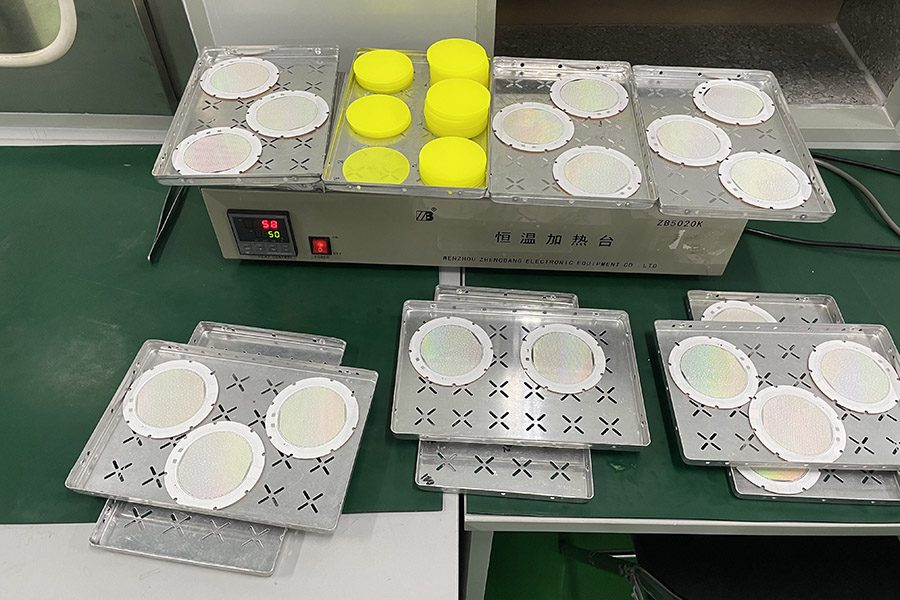
In contrast, the glass matrix utilized in the CAS formulation exhibits a significantly higher thermal conductivity, often exceeding 1.0 W/m·K. During the manufacturing process, inorganic phosphor particles, such as Cerium-doped Yttrium Aluminum Garnet (YAG:Ce) or Lutetium Aluminum Garnet (LuAG), are blended with low-melting-point glass powders. This mixture is then sintered at controlled temperatures, creating a dense, hermetic composite material. The glass acts as both a physical protective barrier and a direct thermal conduit, facilitating rapid heat dissipation away from the active phosphor centers.
The manufacturing process demands precise control over the sintering profile. If the temperature is too high, the phosphor particles may react chemically with the glass matrix, forming non-radiative recombination centers that diminish light conversion efficiency. Conversely, insufficient sintering temperatures yield a porous structure with high void rates, which scatters light inefficiently and limits mechanical strength. The Force 4 phosphor in glass formulation utilizes a tailored glass composition with a low glass transition temperature (Tg), allowing for complete densification without compromising the intrinsic quantum efficiency of the embedded phosphors.
Mitigating Thermal Quenching and Degradation
Thermal quenching is a primary challenge in high-intensity lighting design. As the temperature of a phosphor material rises, the probability of non-radiative transitions increases, leading to a substantial decline in internal quantum efficiency. In high-power applications, such as automotive headlights or outdoor searchlights, the localized temperature of the phosphor layer can exceed 150 degrees Celsius.
With traditional silicone-based encapsulants, this thermal buildup is compounded by the material's poor heat dissipation. The resulting thermal stress accelerates the aging of the silicone, causing it to crack or turn yellow. This degradation reduces the transmission of blue excitation light and yellow emission light, further increasing heat generation in a destructive feedback loop.
By replacing the organic binder with a high-purity glass matrix, Force 4 phosphor in glass effectively breaks this cycle. The physical properties of the inorganic glass prevent the material from yellowing, even when exposed to high-flux blue laser or LED radiation. The rapid heat transfer through the glass matrix maintains the phosphor particles at a lower operating temperature, mitigating the effects of thermal quenching. Consequently, the optical system maintains stable chromaticity coordinates and consistent luminous flux over thousands of hours of continuous operation.
Optical Performance and Scattering Control
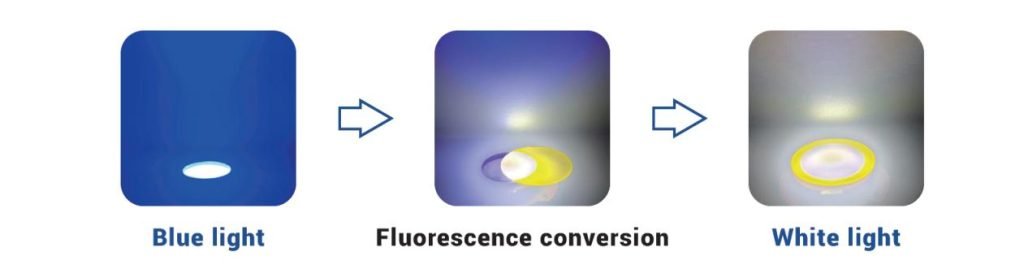
The efficiency of a wavelength conversion device is determined not only by its internal quantum efficiency but also by its light extraction capabilities. When blue light enters the phosphor-in-glass plate, a portion of the light is absorbed and converted into longer wavelengths, while another portion is scattered or transmitted to achieve the desired white-light balance.
In designing Force 4 phosphor in glass, CAS engineers prioritized the alignment of refractive indices between the glass matrix and the phosphor particles. A significant mismatch in refractive index causes excessive backward scattering, redirecting a large portion of the light back toward the excitation source, where it is lost as heat. By matching the refractive index of the host glass closely to that of the garnet-based phosphors (which typically have a refractive index of approximately 1.8), backward scattering is minimized, and forward extraction efficiency is improved.
In addition to refractive index matching, the control of internal microstructural features, such as residual micro-bubbles and crystal grain boundaries, is vital. Controlled scattering is necessary to ensure uniform mixing of the blue excitation light and the yellow phosphor emission, preventing color-over-angle (COA) variations. The structural homogeneity of the Force 4 material ensures a uniform distribution of color temperature across the entire emission beam pattern, which is a key requirement for precision optical systems.
Primary Application Fields for Inorganic Glass Phosphors
The physical and thermal resilience of Force 4 phosphor in glass makes it suitable for demanding B2B lighting sectors. These industries require long lifespans, minimal maintenance cycles, and high performance under variable environmental conditions.
Automotive Headlamps: Modern automotive lighting designs increasingly utilize high-beam laser modules and high-intensity LED matrices. These systems require highly concentrated light sources with extremely small emitting areas. The high power density of these designs renders traditional silicones unusable, making inorganic glass phosphors the industry standard for durability and beam control.
Laser-Activated Remote Phosphor (LARP) Projectors: High-lumen digital cinema and venue projectors rely on blue laser diodes focused onto a rotating phosphor wheel or static phosphor plate. Force 4 phosphor in glass provides the necessary resistance to high optical power density, preventing degradation under intense, focused laser excitation.
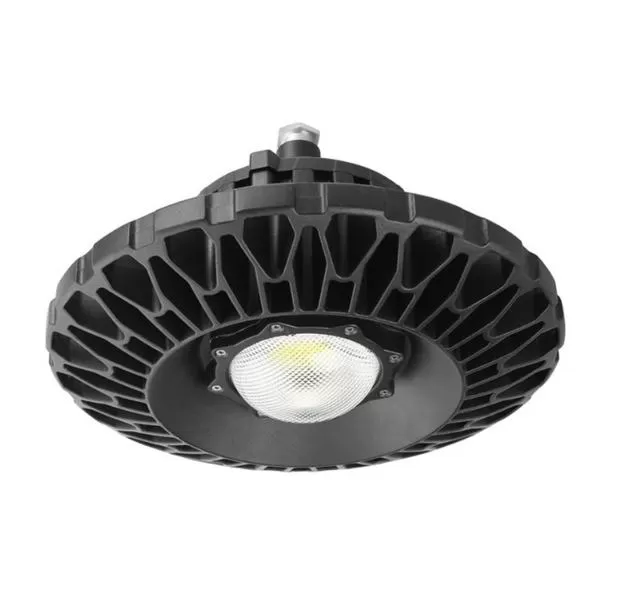
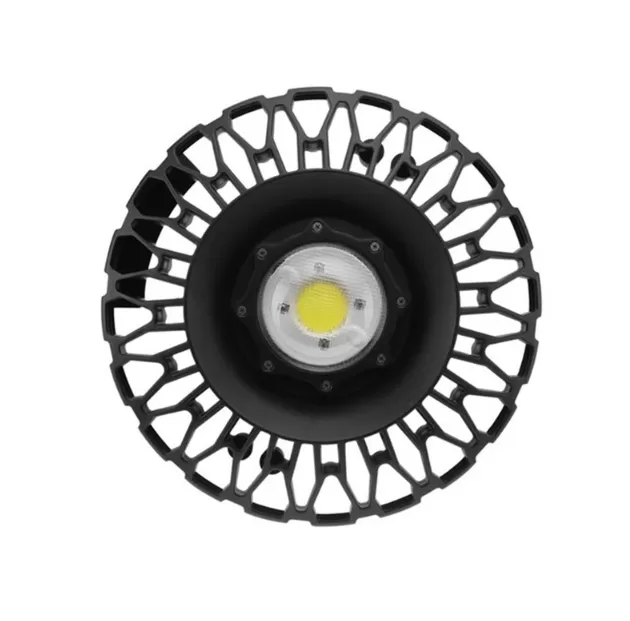
Industrial and High-Mast Lighting: In environments such as seaports, airports, and heavy manufacturing facilities, lighting fixtures are subjected to high temperatures, corrosive chemical atmospheres, and physical vibration. Glass-based phosphor plates offer hermetic protection against moisture and corrosive gases, ensuring stable light output without the risk of physical delamination.
Searchlights and Marine Navigation: Long-range searchlights require narrow, highly collimated beams. Achieving this requires a small, intense light source operating at maximum drive currents. Inorganic phosphor-in-glass plates provide the structural integrity needed to withstand these high operating currents without thermal failure.
Structural Integration and System Design Considerations
Integrating a ceramic or glass-based phosphor plate into an optical assembly requires a different approach than using liquid silicone formulations. Glass is a brittle material with distinct mechanical properties, requiring careful design of the mounting and thermal interface systems.
To maximize heat transfer from the Force 4 phosphor in glass plate to the metal heatsink, design engineers typically employ thin-film metallization on the rear surface of the glass, followed by soldering or using high-thermal-conductivity adhesives. Because the thermal expansion coefficient of glass differs from that of typical substrate metals like copper or aluminum, choosing a compatible transition material or a compliant thermal interface material is vital to prevent mechanical stress during thermal cycling.
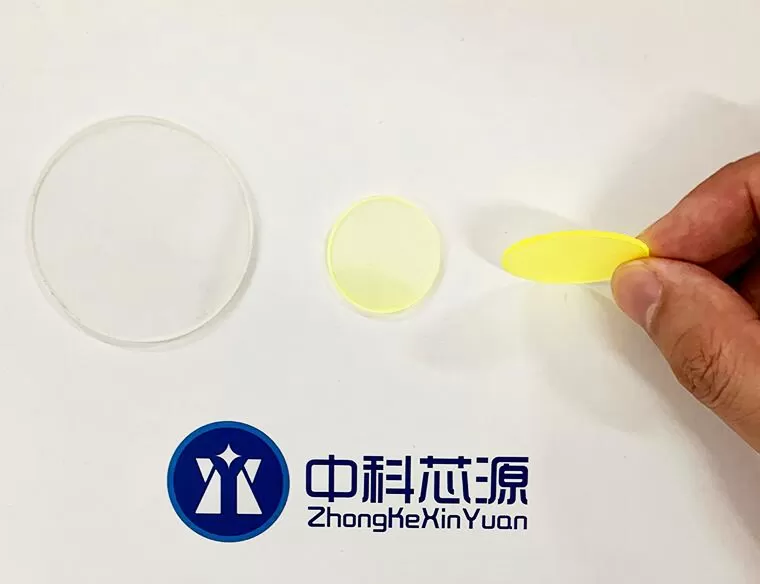
Furthermore, the physical thickness of the glass plate must be carefully engineered. A plate that is too thick increases thermal resistance and limits heat dissipation. A plate that is too thin may become fragile and difficult to handle during automated assembly. CAS offers these components in optimized thicknesses, balanced to provide sufficient mechanical robustness while maintaining a low thermal resistance path.
Comparative Analysis: Phosphor in Glass vs. Alternative Technologies
To understand where Force 4 phosphor in glass fits within the market, it is helpful to compare it to other high-power phosphor configurations, such as Single Crystal Phosphor (SCP) and Phosphor in Silicone (PiS).
| Property / Performance Metric | Phosphor in Silicone (PiS) | Force 4 Phosphor in Glass (PiG) | Single Crystal Phosphor (SCP) |
|---|---|---|---|
| Thermal Conductivity (W/m·K) | 0.1 – 0.2 | 1.0 – 1.5 | > 8.0 |
| Maximum Operating Temp (°C) | 120 – 150 | 250 – 300 | > 400 |
| Color Uniformity | Moderate | High (Engineered Scattering) | Low (Requires Diffuser) |
| Material Cost | Low | Moderate | High |
| Hermeticity and Protection | Poor (Permeable) | Excellent (Inorganic Barrier) | Excellent |
This comparison indicates that while Single Crystal Phosphor represents the highest thermal limit, its high cost and manufacturing complexity often restrict its use to specialized military or ultra-high-end scientific equipment. Conversely, Phosphor in Silicone is highly cost-effective but fails under high-power operations. Force 4 phosphor in glass offers a balanced solution, providing high thermal performance and robust hermetic protection at a commercial scale suitable for mass-market industrial and automotive applications.
Product Customization and Manufacturing Precision
Every lighting application has unique requirements for color temperature, color rendering, and spatial light distribution. To meet these demands, CAS provides comprehensive customization of the Force 4 material composition. By adjusting the ratio of green, yellow, and red emitting phosphors within the glass matrix, engineers can achieve Correlated Color Temperatures (CCT) ranging from warm white (3000K) to cool white (6500K), with options for customized Color Rendering Index (CRI) values.
The manufacturing process at CAS utilizes automated cutting, polishing, and quality inspection systems to ensure that each glass plate meets tight dimensional tolerances. Thickness uniformity is maintained within a few micrometers across the entire batch, ensuring consistent optical path lengths and predictable light output for high-precision optical systems.
Furthermore, the inorganic nature of the glass matrix ensures that the material does not outgas organic volatile organic compounds (VOCs) during operation. In sealed optical engines, such as those found in laser projectors, organic outgassing can lead to deposition on lenses and mirrors, degrading system-wide optical performance. Using a fully inorganic material like Force 4 phosphor in glass eliminates this risk, maintaining the cleanliness of the internal optical cavity.
Inquiry and Collaboration
As solid-state lighting systems push the boundaries of power density and luminous efficiency, choosing the right wavelength conversion material is essential for product reliability. CAS works closely with optical designers and system integrators to deliver tailored solutions that meet stringent thermal and optical specifications.
For detailed technical specifications, customized material samples, or to discuss your specific optical application requirements with our engineering team, please submit an inquiry through our contact portal. We look forward to assisting you in developing your next-generation high-power lighting solutions.
Frequently Asked Questions
Q1: What is the main structural difference between Force 4 phosphor in glass and traditional phosphor in silicone?
A1: The primary difference lies in the matrix material. Traditional phosphor in silicone uses organic polymers that degrade and yellow under high heat and intense blue light. Force 4 phosphor in glass replaces this organic binder with a fully inorganic glass matrix, which offers significantly higher thermal conductivity, zero risk of yellowing, and superior physical protection for the embedded phosphor particles.
Q2: How does the thermal conductivity of this material impact the lifespan of high-power LED systems?
A2: With a thermal conductivity of over 1.0 W/m·K (compared to approximately 0.15 W/m·K for silicone), the glass matrix transfers heat away from the active phosphor centers much more quickly. This keeps the internal temperature of the phosphors below their thermal quenching threshold, preventing efficiency loss and maintaining color stability over tens of thousands of operating hours.
Q3: Can the color characteristics of Force 4 phosphor in glass be customized for specific applications?
A3: Yes. CAS can adjust the optical properties by varying the types and ratios of phosphors embedded in the glass matrix. This allows for precise control over the Correlated Color Temperature (CCT) and Color Rendering Index (CRI), making the material adaptable for applications ranging from automotive high-beams to warm-white architectural illumination.
Q4: How does this material perform under direct laser excitation in projector applications?
A4: Force 4 phosphor in glass is engineered to withstand high optical power densities typical of laser-activated remote phosphor (LARP) systems. Because it is completely inorganic, it does not suffer from optical burning or chemical decomposition, even when exposed to focused, high-flux blue laser beams.
Q5: What mounting techniques are recommended for integrating these glass plates into metal fixtures?
A5: Because glass is rigid and has a different thermal expansion coefficient than metals, we recommend using thin-film metallization on the rear of the glass plate to allow for soldering, or utilizing high-reliability, thermally conductive adhesives. These methods ensure a low thermal-resistance path to the heat sink while accommodating mechanical stresses during thermal cycling.