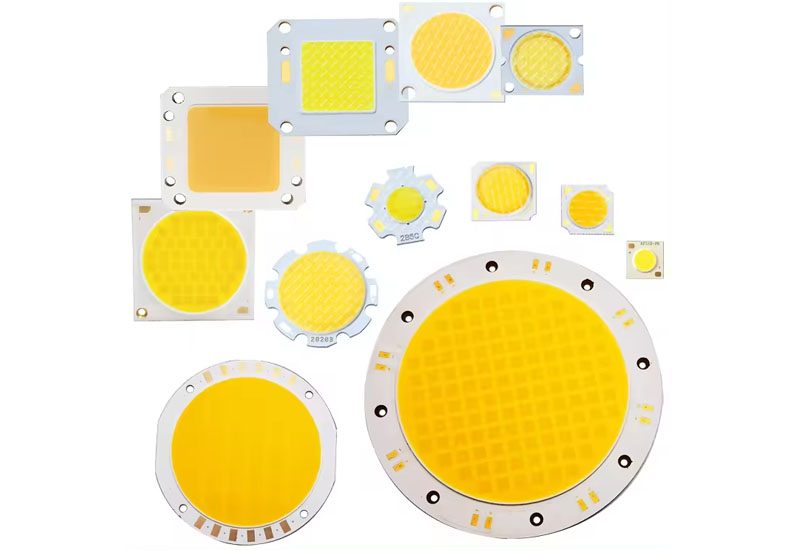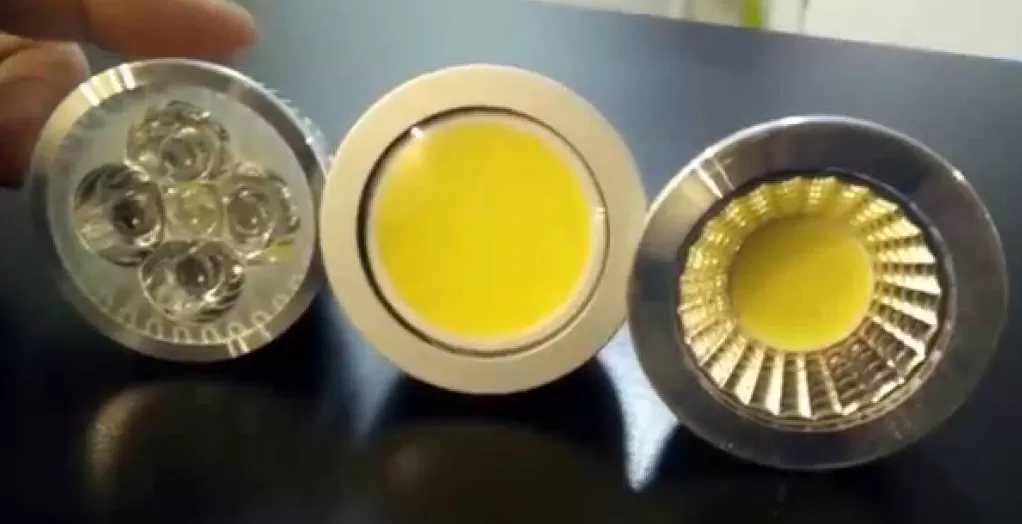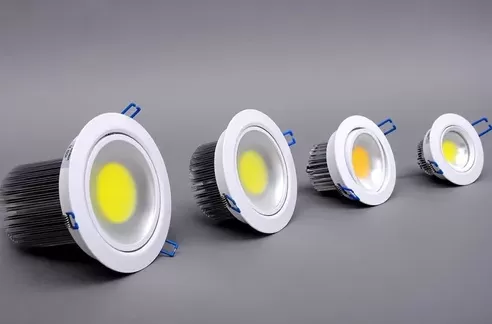
The advancement of solid-state lighting has placed unprecedented demands on the thermal and optical endurance of luminescent materials. In high-power applications, such as automotive headlights, industrial projection, and outdoor searchlights, traditional encapsulation methods often fail under prolonged thermal stress. Standard light-emitting diodes (LEDs) have historically relied on organic polymers like silicone or epoxy to suspend phosphor particles over the semiconductor die. However, these organic matrices degrade rapidly when exposed to high junction temperatures and intense blue light flux, leading to color shifting, reduced light output, and eventual component failure.
To address these operational limitations, the optoelectronics industry has shifted toward inorganic packaging architectures. Among these developments, Woosuk phosphor in ceramic has emerged as a reliable material solution for high-density illumination. By embedding luminescent conversion materials directly into a robust ceramic matrix, manufacturers can bypass the weaknesses of organic binders. CAS has been at the forefront of implementing these high-performance materials, delivering durable thermal management and light conversion systems designed for demanding industrial environments.
The Materials Science Behind Ceramic Phosphor Plates
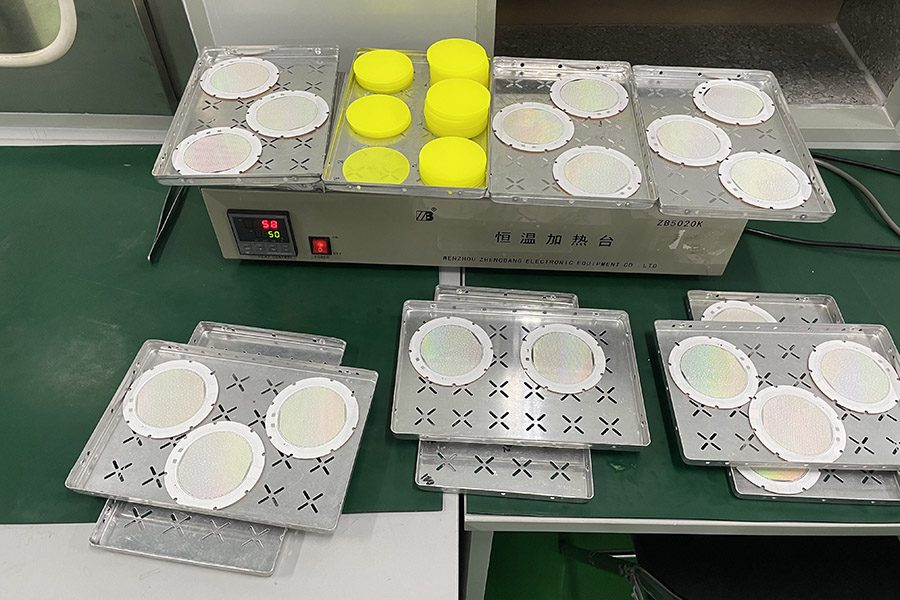
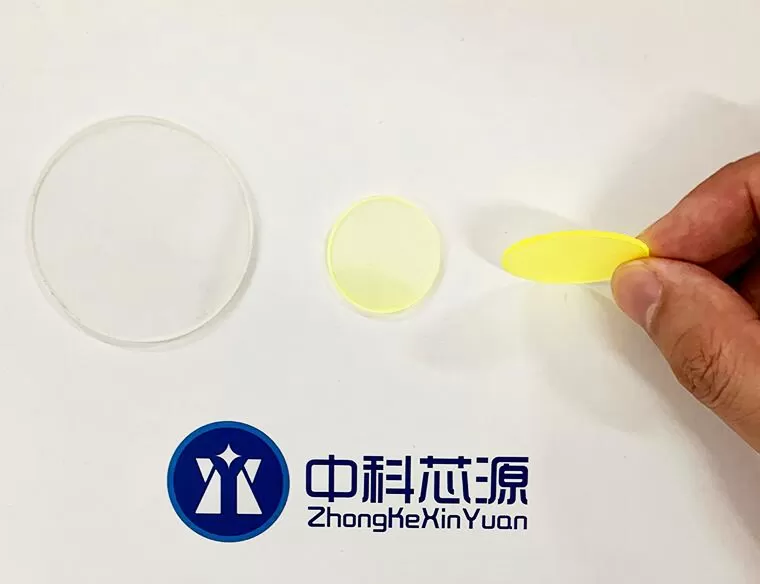
Understanding the performance of Woosuk phosphor in ceramic requires a close examination of its structural composition. Unlike traditional silicone-based phosphor layers, a phosphor in ceramic (PiC) plate is an entirely inorganic composite. This material is fabricated by co-sintering luminescent phosphor particles, such as Cerium-doped Yttrium Aluminum Garnet (YAG:Ce), with a thermally conductive ceramic host matrix, typically alumina (Al2O3) or similar oxide materials. The result is a fully dense, polycrystalline plate that exhibits excellent thermal, mechanical, and optical properties.
The sintering process must be carefully controlled to achieve the desired balance between mechanical strength and light extraction. During high-temperature sintering, the ceramic matrix and the phosphor phases merge without chemical reactions that could degrade the phosphor’s quantum efficiency. This structural integrity allows the composite to withstand temperatures far exceeding the limits of organic polymers.
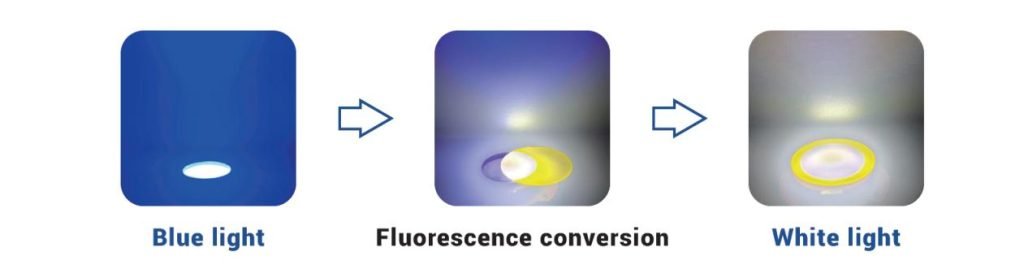
Alongside its high thermal threshold, the optical path within the ceramic matrix can be engineered with high precision. By adjusting the grain boundaries, pore distribution, and phase composition, engineers can control the scattering of light within the plate. This control is vital for ensuring that the blue excitation light from the laser diode or LED chip is mixed thoroughly with the yellow-converted light, resulting in a highly uniform white light output without spatial color separation.
Resolving Thermal Quenching in High-Flux Lighting
Thermal quenching is one of the most significant challenges in high-power LED engineering. As the temperature of a phosphor material increases, the non-radiative relaxation pathways within the crystal lattice become more dominant, causing a sharp decline in internal quantum efficiency. In high-flux environments, where localized temperatures can exceed 200°C, traditional silicone-encapsulated phosphors suffer from severe thermal quenching, which drastically reduces the overall luminous efficacy of the lighting fixture.
Using Woosuk phosphor in ceramic provides a direct solution to this problem due to the superior thermal conductivity of the ceramic matrix. While optical-grade silicone exhibits a thermal conductivity of only 0.1 to 0.2 W/m·K, alumina-based ceramic matrices feature a thermal conductivity of 10 to 30 W/m·K. This difference of two orders of magnitude allows heat generated within the phosphor particles to dissipate rapidly toward the heat sink, preventing localized heat accumulation.
By keeping the operating temperature of the luminescent center low, the thermal quenching effect is minimized. This thermal stability ensures that the light source maintains a stable luminous flux and consistent chromaticity coordinates, even during continuous, high-current operation. This feature is particularly valuable in professional environments where illumination consistency is vital for safety and operational accuracy.
Key Industrial Application Scenarios for CAS Phosphor Solutions
The rugged characteristics of Woosuk phosphor in ceramic make it suitable for several high-intensity lighting sectors. By eliminating organic degradation, CAS solutions utilizing this technology provide long-term reliability where system failure is not an option.
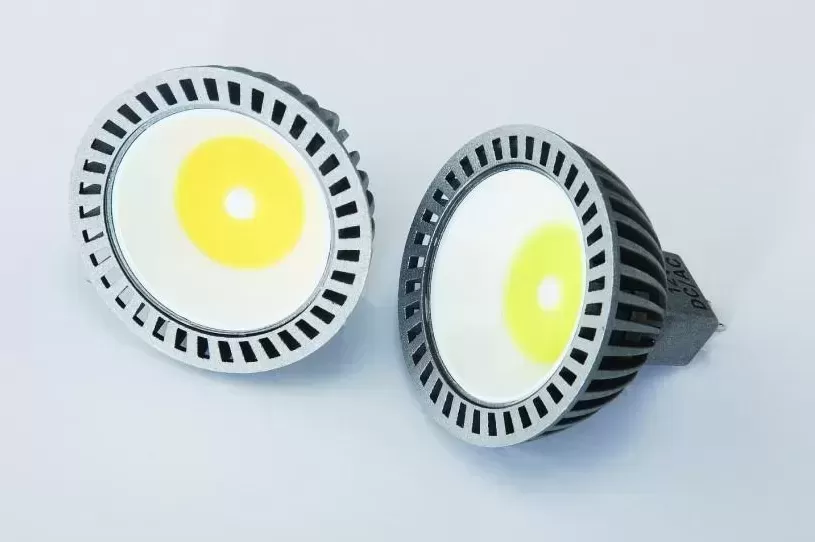
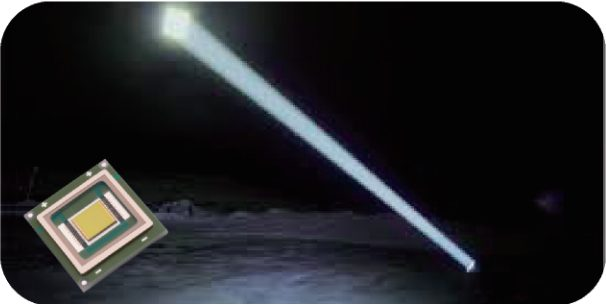
Automotive Laser and LED Headlamps: Modern automotive lighting designs demand compact light sources with high luminance. Laser-activated phosphor headlamps rely on a focused blue laser beam directed at a ceramic phosphor plate to produce intense, long-range white light. The thermal load at the focal point is exceptionally high, making ceramic-based phosphors necessary to prevent immediate material burn-out.
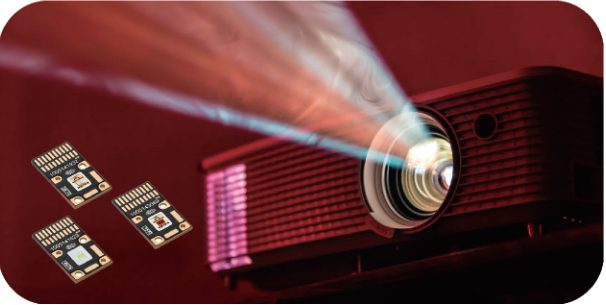
High-Lumen Projectors and Display Systems: Digital projection systems in cinemas and large venues require bright, stable light sources. Ceramic phosphor plates allow projection engines to operate at high wattages without color degradation over thousands of hours of service, maintaining color accuracy and image brightness.
Industrial High-Bay and Outdoor Searchlights: Facilities such as warehouses, marine ports, and search-and-rescue operations require high-power illumination that can withstand extreme environmental conditions. The chemical inertness of the ceramic matrix protects the phosphor from moisture, corrosive atmospheres, and mechanical vibrations.
Structural Metrics and Optical Parameter Control
To achieve high performance, several physical and optical parameters must be balanced during the fabrication of the ceramic plate. CAS maintains strict quality standards to ensure that the material meets the demanding specifications of B2B clients.
Thickness Uniformity and Light Path Calibration
The thickness of the ceramic phosphor plate directly influences the correlated color temperature (CCT) and overall color uniformity of the light output. If the plate is too thin, excessive blue light passes through without conversion, resulting in a cool, bluish light. Conversely, if the plate is too thick, too much blue light is absorbed, shifting the output toward a warm, yellowish tint and reducing optical efficiency. Precise grinding and polishing processes are applied to achieve micrometer-level thickness tolerance across the entire surface of the plate.
Scattering Phase and Pore Control
In organic phosphor layers, light scattering occurs randomly due to the mismatched refractive indices of the silicone and phosphor particles. In a ceramic plate, scattering can be engineered by introducing a secondary phase or by controlling the residual micro-pores within the ceramic matrix. These micro-pores act as scattering centers, increasing the optical path length of the blue excitation light and enhancing color mixing. However, excessive porosity can reduce the thermal conductivity and mechanical strength of the plate, requiring precise balance during production.
Comparing Solid-State Packaging Architectures
To illustrate the performance differences between traditional and modern solid-state lighting architectures, the table below highlights key parameters across different phosphor integration methods:
| Parameter / Characteristic | Silicone Dispensed Phosphor | Phosphor on Chip (PoC) | Woosuk Phosphor in Ceramic (CAS) |
|---|---|---|---|
| Thermal Conductivity | 0.1 – 0.2 W/m·K | 0.2 – 0.5 W/m·K | 10 – 30 W/m·K |
| Maximum Operating Temp. | < 150°C | < 180°C | > 300°C |
| Color Shift Over Time | High (due to polymer yellowing) | Moderate | Negligible (fully inorganic) |
| Resistance to Laser Excitation | Poor (rapid degradation) | Low | Excellent (high-density threshold) |
| Mechanical Durability | Soft / Flexible | Semi-rigid | Highly Rigid / High Hardness |
This comparative overview shows that while polymer-based methods remain cost-effective for low-power consumer lighting, high-power industrial applications demand the structural stability provided by ceramic-based architectures.
Frequently Asked Questions
Q1: What makes Woosuk phosphor in ceramic superior to conventional silicone-based phosphor layers?
A1: The primary advantage lies in thermal performance and material durability. The ceramic matrix has a thermal conductivity up to 150 times higher than optical silicone, allowing efficient heat dissipation. Because it is completely inorganic, it does not yellow, degrade, or crack when exposed to high temperatures and high-intensity UV or blue light, ensuring a stable lifespan and consistent color output.
Q2: How does the thermal quenching profile of this material compare under laser excitation?
A2: Under high-power blue laser diode excitation, standard phosphors experience localized heat buildup, causing their quantum efficiency to drop. The efficient thermal dissipation of the ceramic plate maintains the luminescent center temperature well below its quenching threshold, allowing the phosphor to maintain stable light conversion efficiency even under continuous laser power density.
Q3: What role does the ceramic host matrix play in light scattering and extraction?
A3: The host matrix, typically composed of alumina, acts as both a thermal conductor and an optical diffuser. By controlling the grain boundary density and micro-porosity during the sintering process, the ceramic matrix scatters blue light efficiently. This scatter ensures thorough mixing of blue excitation light with yellow phosphor emission, reducing the yellow ring effect and providing a uniform spatial distribution of color.
Q4: Can this ceramic phosphor material be customized for specific color temperatures (CCT)?
A4: Yes, the correlated color temperature can be adjusted by altering the chemical composition of the phosphor dopants or by varying the ratio of phosphor to ceramic matrix material. Additionally, adjusting the thickness of the finished ceramic plate allows for precise calibration of the blue-to-yellow ratio, enabling custom-designed white light outputs from cool to neutral color profiles.
Q5: How does the mechanical strength of ceramic plates benefit high-vibration applications?
A5: Polycrystalline ceramics possess high mechanical hardness and resistance to thermal shock. In environments subjected to constant mechanical vibration or rapid temperature cycling, such as automotive headlights or heavy industrial machinery, these rigid plates maintain their structural integrity and optical alignment, preventing delamination and physical wear.
Partner with CAS for High-Power Lighting Integration
Integrating high-efficiency luminescent materials into modern lighting systems requires careful engineering and precise material selection. CAS provides advanced support to B2B clients seeking to implement ceramic-based light conversion technologies. Our engineering team can assist in matching material specifications, adjusting thickness profiles, and designing optical components to suit your specific high-power LED or laser diode architectures.
To discuss your project requirements, request material samples, or receive a detailed quotation, please contact our technical sales department. We are prepared to assist you in refining your solid-state lighting systems for maximum thermal reliability and long-term optical stability.