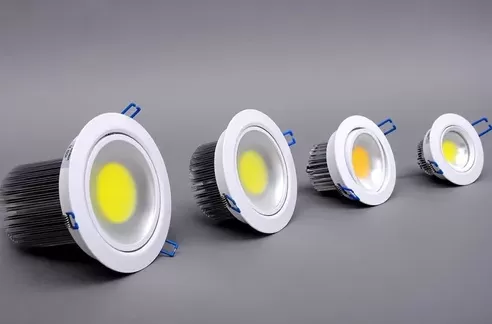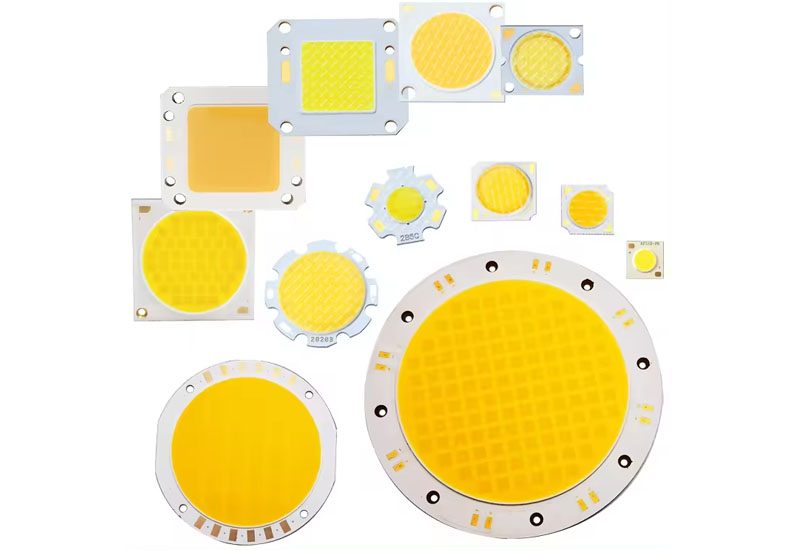
Solid-state lighting has undergone significant transformations, moving from low-power indicator lights to ultra-high-brightness systems used in automotive headlights, digital projection, and outdoor searchlights. High-power density light sources, particularly blue laser diodes, generate substantial heat at the conversion site. Traditional encapsulation methods, such as phosphor-in-silicone (PiS) and phosphor-in-glass (PiG), often suffer from thermal degradation under these demanding conditions. To address these thermal and optical challenges, researchers and manufacturers have turned to advanced ceramic materials. The integration of shield phosphor ceramic represents a major step forward in maintaining optical stability and color consistency in demanding lighting applications. CAS has developed specialized ceramic formulations to meet the rigorous thermal requirements of modern high-power illumination systems.
The Physics of Thermal Degradation in Solid-State Lighting
High-power white light generation often relies on a blue laser or high-power blue LED exciting a yellow-emitting phosphor. When a high-density blue light beam hits the phosphor layer, a portion of the energy is converted into white light, while the remaining energy is lost as heat. This localized heat generation can lead to a phenomenon known as thermal quenching, where the emission efficiency of the phosphor decreases as temperature rises.
If the heat is not dissipated quickly, the local temperature can easily exceed 200°C. In traditional silicone-based encapsulants, this level of heat causes yellowing, cracking, and eventual breakdown of the binder material. Phosphor-in-glass materials offer better thermal resistance, but they still struggle with mechanical strength and thermal shock under continuous laser excitation. Solid-state phosphor ceramics, containing no organic binders, offer high thermal conductivity. The implementation of shield phosphor ceramic provides a robust barrier against thermal degradation, ensuring that the phosphor matrix maintains its crystal structure and luminescence even under continuous, high-intensity laser bombardment.
This thermal stability is directly related to the crystalline nature of the ceramic matrix. When phosphor particles are embedded in a ceramic host, the thermal pathways are continuous. This allows heat to move rapidly from the point of optical excitation to the attached cooling assembly, preventing the formation of localized thermal hot spots that degrade light output.
Structural and Material Characteristics of Shield Phosphor Ceramic
To understand why shield phosphor ceramic performs reliably under high thermal loads, it is necessary to examine its microstructure and material composition. These components are typically fabricated by sintering phosphor powders, such as Yttrium Aluminum Garnet (YAG:Ce), with high-conductivity ceramic host materials at elevated temperatures and pressures.
This fabrication process results in a pore-free, highly dense ceramic plate. The term "shield" refers to the protective microstructural design or co-sintered auxiliary layers that protect the active luminescent material from direct environmental exposure and excessive localized heat accumulation.
High Thermal Conductivity: Unlike silicones with thermal conductivities below 1 W/m·K, these ceramic plates achieve thermal conductivities exceeding 10 to 15 W/m·K, facilitating rapid heat transfer.
High Optical Transmittance or Reflectivity: Depending on the system design (transmissive or reflective mode), the ceramic is engineered to maximize light extraction and minimize internal scattering losses.
Resistance to Laser Damage: The absence of organic binders prevents carbonization or burning when exposed to high-power blue laser beams, even at high power densities.
Chemical Stability: The ceramic structure protects the rare-earth activators from moisture, oxygen, and atmospheric pollutants, preventing long-term chemical degradation.
The microstructural density also prevents the penetration of moisture, which is a common cause of performance decline in traditional LED phosphor packagings. By shielding the active phosphor grains within a highly stable ceramic lattice, the material remains inert to ambient environmental influences.
Comparing Phosphor Formats in High-Brightness Applications
A comparative analysis of different phosphor conversion materials highlights the specific performance advantages of advanced ceramic components in high-stress environments.
| Performance Metric | Phosphor-in-Silicone (PiS) | Phosphor-in-Glass (PiG) | Shield Phosphor Ceramic (CAS) |
|---|---|---|---|
| Thermal Conductivity | < 0.5 - 1.5 W/m·K | ~1.0 - 2.5 W/m·K | > 10 - 20 W/m·K |
| Maximum Operating Temp | ~150°C | ~250°C | > 350°C |
| Laser Power Density Limit | < 2 W/mm² | ~5 - 10 W/mm² | > 50 W/mm² |
| Primary Failure Mode | Silicone yellowing, cracking | Glass softening, thermal shock | None under rated limits |
The logical progression from organic to inorganic matrices demonstrates that shield phosphor ceramic is a viable option for systems operating above 10 Watts of optical power. The table illustrates that while silicone and glass matrices are suitable for lower power densities, they quickly reach their physical limits when subjected to high-density laser excitation.
Key Application Fields for Shield Phosphor Ceramic
The properties of shield phosphor ceramic make it suitable for several specialized industries where reliable performance is a necessary requirement.
1. Automotive Laser Headlights
Modern automotive lighting design favors compact, long-range high beams. Laser headlights use blue laser diodes focused onto a phosphor target to generate a directed white light beam. The shield phosphor ceramic component must withstand rapid temperature changes and mechanical vibrations while maintaining a consistent color temperature over the vehicle's lifespan.
2. Digital Projection and Cinema Systems
High-end projectors require thousands of lumens to illuminate large cinema screens. Laser phosphor projectors use high-power blue laser arrays focused on a spinning phosphor wheel or a stationary phosphor plate. The shield phosphor ceramic prevents thermal runaway, ensuring that the projection maintains uniform color and brightness throughout long operating hours.
3. High-Mast Outdoor and Searchlight Systems
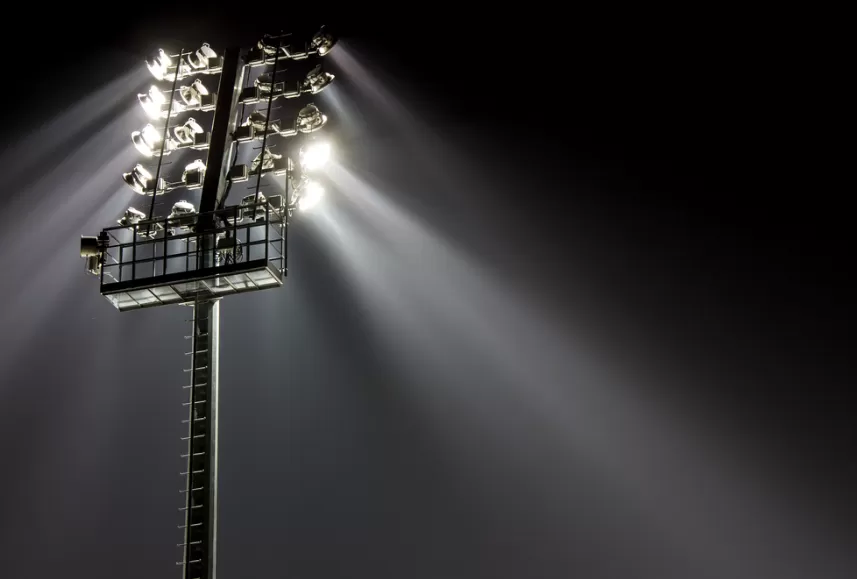
Searchlights used in marine navigation, search and rescue, and industrial security applications require intense, concentrated beams. These systems demand durable components that can operate continuously in harsh, high-humidity environments. The protective properties of the shield phosphor ceramic ensure that the optical output remains stable despite exposure to external elements and high operating temperatures.
4. Stage and Entertainment Lighting
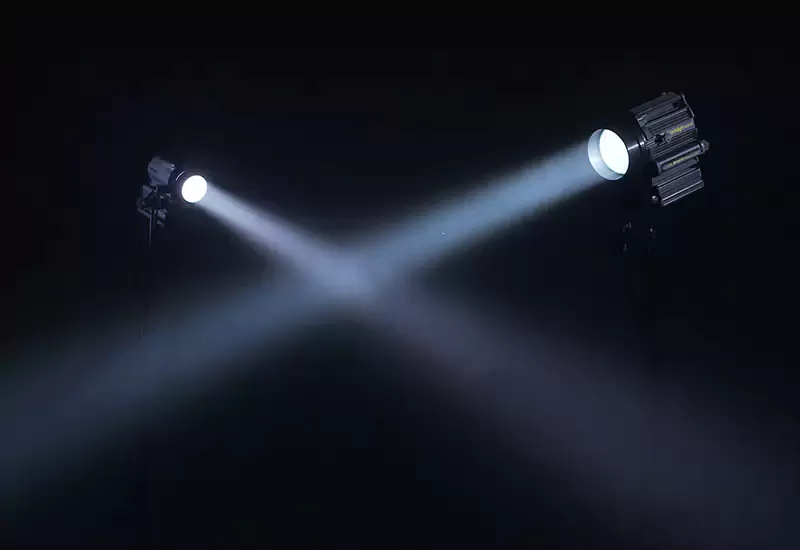
Concert and stage spots demand high color rendering and high lumen density from a compact light source. The thermal stability of shield phosphor ceramic allows fixtures to run at higher power levels without requiring bulky, noisy cooling systems, resulting in more compact and reliable lighting fixtures.
Manufacturing and Customization Capabilities of CAS
Producing high-quality ceramic phosphors requires precise control over raw material purity, sintering parameters, and post-processing treatments. CAS utilizes advanced powder metallurgy and hot-isostatic pressing (HIP) to manufacture ceramic components with uniform phosphor distribution and high mechanical strength.
The manufacturing process involves mixing high-purity raw powders, pressing them into green bodies, and sintering them under controlled atmospheres. The resulting ceramic is then sliced, polished, and coated to meet specific optical designs. CAS offers customized geometries, including circular wheels, square plates, and segmented rings, to accommodate different laser and LED optical configurations. Designers can specify the desired color coordinates, correlated color temperature (CCT), and color rendering index (CRI) to match their specific system parameters.
Through careful control of the grain boundary chemistry during sintering, CAS is able to minimize scattering losses within the ceramic matrix. This results in a material that not only conducts heat efficiently but also maintains high optical conversion efficiency, reducing the overall power requirements of the lighting system.
Integration and Thermal Management Strategies
While the shield phosphor ceramic possesses high thermal conductivity, its performance still depends on how it is integrated into the overall lighting system. Proper thermal management strategies must be implemented to conduct heat away from the ceramic plate to the system heatsink.
Metal substrate bonding is a common method used to secure the ceramic plate. The plate is bonded to a copper or aluminum substrate using high-thermal-conductivity solder or silver paste. This minimizes interface thermal resistance. For systems exceeding 50 Watts of optical excitation, active cooling methods such as forced air cooling or liquid cooling loops are often integrated into the heatsink design. Precise alignment of the laser beam is also necessary to distribute the thermal load evenly across the ceramic surface, avoiding localized hotspots that could exceed the material's thermal limits.
System designers must also account for differences in the coefficient of thermal expansion (CTE) between the ceramic converter and the metal substrate. Proper bonding techniques prevent mechanical stress from developing during thermal cycling, which could otherwise lead to delamination or cracking of the converter assembly.
B2B Procurement and Engineering Consultation
For B2B buyers, system integrators, and optical engineers, selecting the appropriate ceramic converter is a balance of optical efficiency, thermal performance, and mechanical compatibility. Standard solutions often fail to meet the unique optical layouts of bespoke laser illumination systems. CAS provides technical support, from initial material selection and optical simulation to prototype testing and mass production.
By collaborating directly with CAS engineering teams, customers can evaluate the thermal interface, select the appropriate phosphor concentration, and design custom shield phosphor ceramic components that integrate into existing assembly lines. This cooperative development process helps reduce development cycles and ensures that the final product meets the exact performance parameters required by the application.
Direct Inquiry and Collaboration
To discuss custom specifications, receive material samples, or obtain a detailed quote for your high-power lighting project, please submit an inquiry with your system requirements, including laser power density, desired CCT, and mechanical dimensions.
Frequently Asked Questions
Q1: What distinguishes shield phosphor ceramic from standard phosphor ceramic plates?
A1: Shield phosphor ceramic incorporates advanced protective microstructures or specialized barrier layers that protect the active luminescent phase from localized thermal oxidation and chemical degradation. This structural design improves thermal dissipation and protects the ceramic converter from optical damage under high-intensity blue laser excitation.
Q2: Can shield phosphor ceramic be used in reflective mode optical systems?
A2: Yes, shield phosphor ceramic is suitable for both transmissive and reflective modes. In reflective systems, the ceramic plate is typically bonded to a highly reflective metal substrate or coated with a reflective dielectric layer, allowing the converted white light to be collected from the same side as the incident laser beam, which improves heat dissipation.
Q3: How does CAS control the color consistency of these ceramic components?
A3: CAS maintains control over raw material composition, activator doping concentration, and sintering temperatures. By using high-precision optical characterization equipment during production, CAS ensures that each batch of shield phosphor ceramic meets precise color coordinates and color temperature specifications.
Q4: What is the typical lifespan of a shield phosphor ceramic component in a laser projector?
A4: Under recommended operating conditions and proper thermal management, shield phosphor ceramic components do not suffer from the material degradation associated with organic encapsulants. They can achieve operating lifespans exceeding 20,000 to 30,000 hours with minimal lumen depreciation and color shift.
Q5: What customized shapes and dimensions can CAS manufacture?
A5: CAS offers customization options, including thin rectangular plates, circular rotating wheels, customized segmented rings, and micro-structured shapes. The thickness of the shield phosphor ceramic can be adjusted from hundreds of micrometers to several millimeters depending on the target optical density and thermal requirements.