The integration of advanced driver assistance systems (ADAS) and real-time navigation has transformed how automotive cockpits display information. Traditional instrument clusters are shifting toward active visual interfaces projected directly onto the windshield. A HUD system projects vital driving metrics—such as vehicle velocity, navigational prompts, and active safety alerts—directly into the operator’s field of vision. This optical configuration minimizes the need for drivers to divert their gaze from the roadway, thereby reducing cognitive load and enhancing situational awareness.
As automotive manufacturers transition from basic reflection setups to wider fields of view, several engineering hurdles emerge. Achieving high-contrast, distortion-free imagery under varying ambient light conditions requires sophisticated optoelectronic designs. CAS contributes to this sector by designing and manufacturing high-durability projection light engines and optical components engineered to meet stringent automotive standards.
The Evolution of Projection Architectures: From C-HUD to AR-HUD
Automotive projection systems have progressed through several structural iterations, each placing unique demands on the underlying optoelectronic components. Understanding these differences is necessary for selecting the appropriate optical components during system design.
Combiner HUD (C-HUD): This early architecture utilizes a dedicated, small semi-reflective glass screen (the combiner) positioned between the windshield and the driver. While compact and relatively easy to integrate, C-HUD systems offer a narrow field of view (typically 2° to 3°) and a short virtual image distance of approximately 1.5 to 2 meters.
Windshield HUD (W-HUD): This configuration projects images directly onto the vehicle’s windshield. By utilizing the windshield as the final optical surface, W-HUD extends the virtual image distance to 2.5 meters with a wider field of view of 4° to 6°. However, this setup requires highly precise optical alignment to compensate for the complex geometry of the laminated glass.
Augmented Reality HUD (AR-HUD): The most advanced format blends digital graphics directly with real-world objects in the driver’s line of sight. AR-HUD systems demand a wide field of view (often exceeding 10° x 4°) and a virtual image distance of 7 to 10 meters. Implementing this volume of projection requires large physical optical paths and high-performance light sources.
This architectural shift has increased the internal volume of HUD units from under 2 liters to over 15 liters. Consequently, managing packaging limitations within the dashboard while expanding the optical pathway has become a major focus for automotive tier-1 suppliers.
Thermal Management and the Challenge of Solar Loading
One of the most persistent issues in HUD development is solar loading. The vehicle's windshield acts as a convex lens, collecting incoming sunlight and focusing it back into the internal projection cavity. This concentrated solar energy is directed through the internal mirrors and focused directly onto the Picture Generation Unit (PGU).
Under direct sunlight, the concentrated heat on the display panel can exceed 100°C within seconds. For traditional thin-film transistor liquid crystal displays (TFT-LCDs), this temperature spike causes the liquid crystals to transition into an isotropic state, resulting in temporary or permanent black spots. In digital micromirror devices (DMDs) used in DLP systems, excessive heat can compromise mechanical reliability and speed up component degradation.
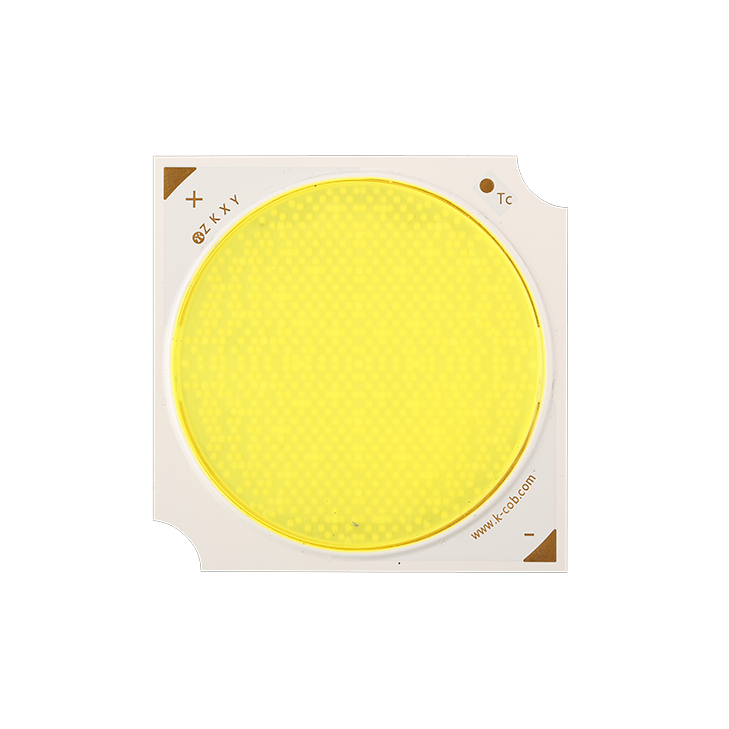
To mitigate this thermal focus, optical designers use cold mirrors and infrared-reflective coatings within the optical path. These components reflect visible projection light while allowing destructive infrared radiation to pass through into specialized heat sinks. CAS assists in resolving these thermal issues by utilizing direct-bonded copper (DBC) substrates and high-thermal-conductivity ceramic packages within our custom LED backlight arrays. These materials help dissipate heat away from the PGU, maintaining stable operating temperatures even during periods of high solar exposure.
Correcting Optical Distortion and Double Reflection
An automotive windshield is not a flat surface; it features complex, asymmetrical curves designed for aerodynamics and structural integrity. Projecting an image onto this curved, non-planar surface introduces significant geometric aberration, astigmatism, and keystone distortion.
To achieve a legible, flat virtual image, the optical path must incorporate custom-designed freeform mirrors. These mirrors must be manufactured with sub-micron surface accuracy to precisely reverse the distortion caused by the windshield’s curvature. This correction requires advanced optical modeling software and ultra-precision injection molding processes to produce aspheric and freeform surfaces with minimal surface roughness.
Another common optical issue is ghosting, which occurs when projected light reflects off both the inner and outer surfaces of the windshield. Because these two surfaces are offset, the driver sees a secondary, weaker image slightly misaligned with the primary image. To prevent this, windshields designed for HUD integration incorporate a wedge-shaped polyvinyl butyral (PVB) interlayer laminated between the two glass panes. This wedge structure aligns the two reflection paths so they converge at the driver’s eye point, creating a single, clear image.
Achieving High Luminance and Contrast Under Direct Sunlight
For a HUD system to remain readable when driving against high-reflectance backgrounds, such as snow, concrete, or direct midday sun, the projected image must achieve high luminance. The industry standard requires a virtual image brightness of at least 10,000 to 15,000 nits.
Producing this level of brightness requires a highly efficient, high-output light source within the PGU. However, driving LEDs at high currents to achieve extreme brightness generates substantial heat, which can lead to optical wavelength shifting, color drift, and reduced lifespan. The light source must therefore offer high luminous efficacy, delivering the maximum amount of lumens per watt to limit thermal generation.
Equally important is the contrast ratio. A low contrast ratio results in a visible glowing background rectangle surrounding the projected information—an effect often referred to as the "postcard effect." To resolve this, CAS designs high-contrast optoelectronic backlights that support localized dimming. By dynamically reducing power to dark regions of the image, these systems improve contrast and eliminate background glow, ensuring a cleaner visual integration with the real-world environment.
A Comparison of PGU Light Engine Technologies
The choice of Picture Generation Unit dictates the overall optical path, thermal requirements, and structural envelope of the HUD system. There are currently three primary technologies used in automotive applications:
| Parameter | TFT-LCD | DLP (DMD) | LCoS |
|---|---|---|---|
| Optical Efficiency | Low (typically < 8% due to polarization) | High (utilizes reflective micro-mirrors) | Moderate (requires polarized light) |
| Thermal Tolerance | Moderate (liquid crystals susceptible to high heat) | High (excellent resistance to solar loading) | Moderate (requires precise thermal regulation) |
| Contrast Ratio | 1,000:1 to 1,500:1 | > 5,000:1 (dynamic contrast) | > 2,000:1 |
| Package Volume | Compact, easy to integrate | Larger, requires custom optics | Moderate footprint |
TFT-LCD technology remains a popular, cost-effective choice for standard W-HUD configurations. However, the polarizer films absorb a significant portion of light, converting it directly into heat within the panel. In contrast, DLP systems offer high optical throughput and durable thermal performance, making them suitable for wide-field AR-HUD systems, though they generally require a larger physical footprint and a higher overall budget.
The Potential of Waveguide Architectures in Compact Spaces
As vehicle cabins place a premium on space, packing a 15-liter AR-HUD system behind the dashboard is often structurally impractical. To address this spatial limitation, optical engineers are exploring waveguide architectures as an alternative to bulky reflective mirror systems.
Waveguide technology routes projected light through a thin glass or plastic substrate using total internal reflection (TIR). Diffractive optical elements or holographic gratings etched onto the waveguide surfaces then expand the pupil and project the image toward the driver’s eyes. This approach allows a wide-FOV projection system to operate within a physical volume of under 5 liters.
Despite these packaging advantages, waveguides present challenges regarding color dispersion, optical efficiency, and high manufacturing costs. Achieving uniform color distribution across the entire virtual image requires high-precision nanostructure fabrication and stable optical glass substrates. CAS continues to monitor these developments, providing high-index glass processing and advanced optical coatings to support the next generation of waveguide integration.
Procurement and Engineering Criteria for B2B Buyers
When selecting a supplier for HUD optical assemblies, components, or light engines, B2B procurement teams must evaluate several system-level specifications to ensure compatibility and long-term reliability:
Operating Temperature Range: Components must operate reliably between -40°C and +85°C to meet automotive-grade reliability standards.
Color Uniformity and Gamut: High color saturation (typically exceeding 110% sRGB) ensures that symbols and alerts are instantly recognizable in high-contrast environments.
Luminous Efficacy: Sourcing high-efficiency light sources minimizes power draw and reduces the load on the vehicle’s electrical and cooling systems.
Vibration and Shock Resistance: Optical components must maintain alignment tolerances under continuous road vibrations and impact testing.
By focusing on these parameters, design engineers can ensure that their projection systems maintain optical clarity and operational stability throughout the lifecycle of the vehicle.
Custom Engineering and Collaborative Support
Developing high-performance projection systems requires close collaboration between optoelectronic component manufacturers, Tier-1 suppliers, and windshield designers. CAS specializes in the engineering of high-reliability optoelectronic components, offering customized light source designs and precision optical coatings to address solar loading, thermal dissipation, and luminance uniformity challenges.
If you are developing a next-generation HUD system and require specialized optoelectronic components, custom LED light engines, or precise thermal management solutions, we invite you to contact our engineering team. We provide comprehensive technical consultation, rapid prototyping, and volume manufacturing services tailored to your specific system requirements. Please submit your request for proposal or technical inquiry to initiate a collaborative design review.
Frequently Asked Questions (FAQ)
Q1: What causes the "postcard effect" in HUD projections, and how can it be resolved?
A1: The "postcard effect" is caused by a low contrast ratio in the display panel. When the backlight is active, a small amount of light leaks through the dark pixels of the LCD, projecting a faint, rectangular background glow onto the windshield. This is resolved by using high-contrast display panels, incorporating localized dimming backlight zones, or transitioning to technologies like DLP which offer superior black levels and high dynamic contrast.
Q2: Why does solar loading present such a significant risk to HUD projection engines?
A2: The vehicle windshield acts as a large convex lens that gathers incoming sunlight. This light is focused by the internal freeform mirrors directly onto the PGU (Picture Generation Unit). The resulting concentration of thermal energy can quickly raise the display panel's temperature above its maximum operating limit, causing temporary pixel failure, liquid crystal degradation, or permanent physical damage to the internal optical components.
Q3: What are the main optical differences between W-HUD and AR-HUD?
A3: W-HUD systems typically feature a field of view of 4° to 6° and a virtual image distance of 2 to 2.5 meters, projecting basic static data like speed and fuel levels. AR-HUD systems require a much wider field of view (10° or more) and a longer virtual image distance (7 to 10 meters) to overlay dynamic, real-time spatial graphics—such as lane markings and navigation arrows—directly onto the external road environment.
Q4: Why is a specialized wedge-shaped PVB interlayer required for windshield-based HUD systems?
A4: A standard automotive windshield consists of two parallel layers of glass. When light is projected onto it, reflections occur off both the inner and outer glass surfaces, resulting in a secondary offset image known as ghosting. A wedge-shaped polyvinyl butyral (PVB) interlayer alters the angle between the two glass surfaces, aligning the reflections so they converge into a single, sharp image at the driver's eye position.
Q5: How does high-index glass benefit waveguide-based HUD systems?
A5: High-index optical glass expands the angle of total internal reflection within the waveguide substrate. This allows for a wider field of view and a larger eyebox while maintaining a thin, lightweight profile. It also enhances light transmission efficiency and reduces color dispersion, helping to maintain bright, uniform image projection across the display area.