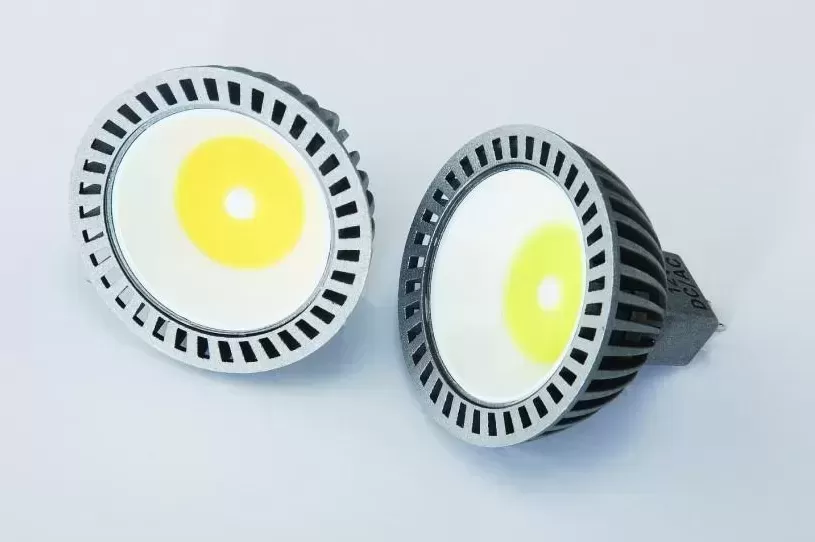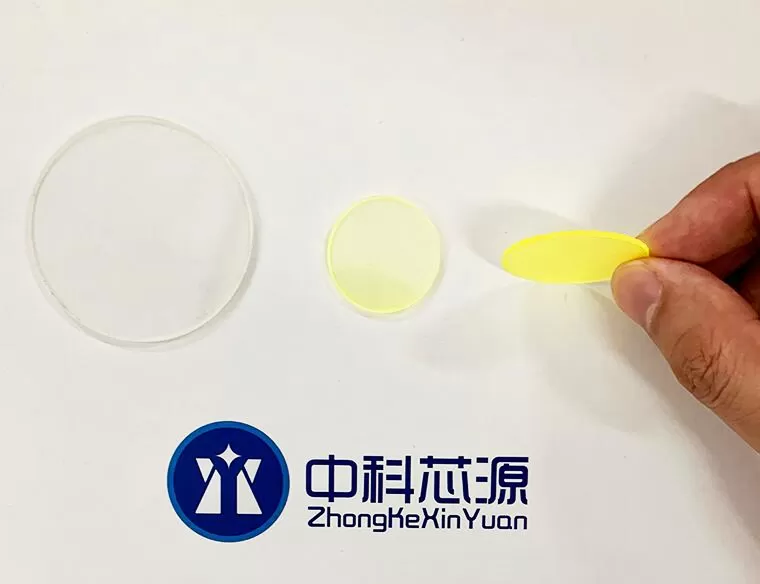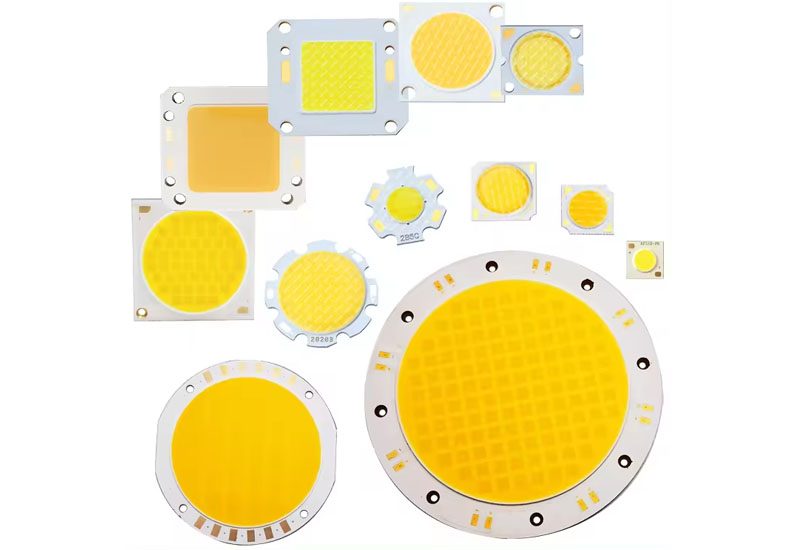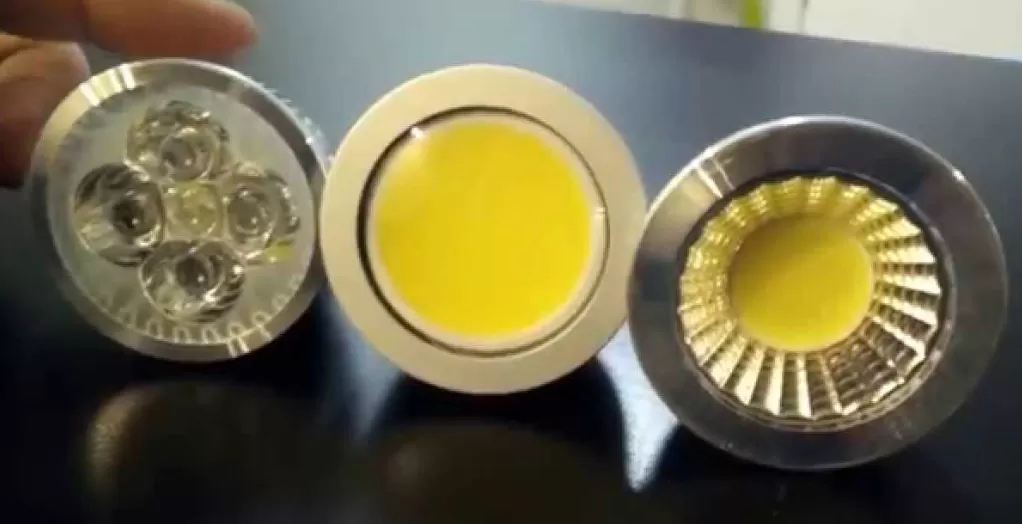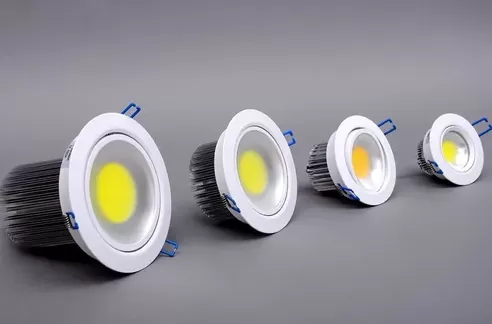
Phosphor in glass (PiG) is an all-inorganic color conversion material fabricated by co-sintering luminescent phosphor powders into a low-melting-point glass matrix. Designed to replace organic silicone binders, PiG converts blue light from high-power LEDs or laser diodes into broad-spectrum white light while operating reliably above 200°C.
Modern solid-state lighting systems push optical power densities to extreme levels. High-bay industrial luminaires, automotive projection units, and searchlights pack hundreds of watts into microscopic emission surfaces. Under these operating conditions, legacy materials fail rapidly.
Standard packaging relies on organic resin compounds that char, darken, and crack under concentrated heat and intense photon flux. Phosphor in glass resolves this structural bottleneck, providing an inorganic thermal barrier that protects luminous efficiency and chromatic stability over tens of thousands of hours.
The Evolution of LED Color Conversion: Why Traditional Phosphors Fall Short
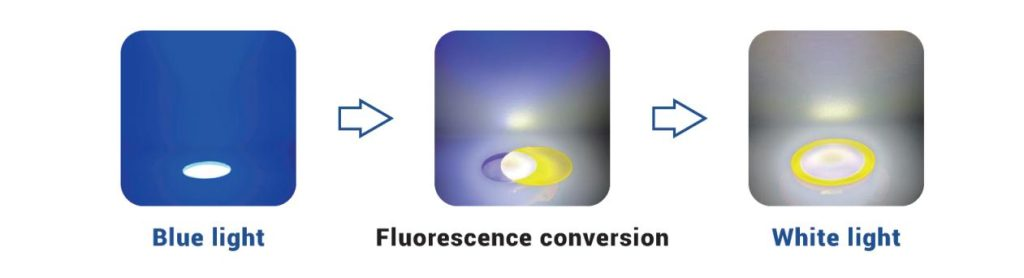
White LEDs generate broad-spectrum light through secondary emission. A semiconductor die radiates high-energy blue photons (typically 450 nm), which strike a down-converting material that absorbs part of the blue emission and re-emits longer wavelengths, such as green, yellow, or red.
For two decades, the packaging sector relied almost exclusively on a single carrier architecture: Phosphor in Silicone (PiS). While economical, this polymer-based approach has reached its physical limits in heavy-duty systems.
The Era of Phosphor-in-Silicone (PiS) and Its Limits
In a standard PiS configuration, phosphor grains suspend inside an optical-grade polydimethylsiloxane (silicone) or epoxy resin dispense. The slurry cures directly on top of the LED chip or within a reflector cup.
Silicone possesses a thermal conductivity below 0.2 W/m·K. Because it acts as a thermal insulator rather than a conductor, heat generated internally by the Stokes shift cannot escape into the package heat sink.
When junction temperatures surpass 150°C, silicone begins to decompose. The organic polymer chains break down, leading to yellowing, carbonization, and severe micro-cracking. Once the binder discolors, light output plummets, and the package quickly suffers catastrophic failure.
The Problem of "Thermal Quenching"
Thermal quenching represents a fundamental loss mechanism within luminescent activators (such as Ce3+ or Eu2+ ions). As internal temperatures climb, non-radiative relaxation transitions outpace radiative transitions, suppressing light generation.
- Trapped heat elevates the phosphor junction temperature far above ambient levels.
- Quantum efficiency declines sharply, cutting lumen output.
- Uneven thermal stress causes the blue pump emission and down-converted emission to fall out of balance, producing severe chromaticity drift.
In safety-critical sectors like automotive lighting, color temperature shifts and luminance loss present serious hazards that organic binders cannot prevent.
What is Phosphor in Glass (PiG)? Structure and Working Mechanism
Phosphor in glass eliminates organic chemistry from the emission pathway entirely. It pairs durable inorganic phosphors with robust silicate, borosilicate, or tellurite glass hosts to create a monolithic, ceramic-like optical element.
Chemical Composition and Manufacturing Process
Fabricating PiG requires precise thermal control to avoid altering the dopant states within the phosphor particles. The manufacturing sequence includes four critical phases:
- Glass Matrix Selection: Engineers formulate low-softening-point glass frits (typically melting between 500°C and 650°C) composed of systems such as TeO2-B2O3, SiO2-Al2O3-B2O3, or specialized phosphate mixtures.
- Powder Blending: Rare-earth phosphor powders (most commonly Cerium-doped Yttrium Aluminum Garnet, or YAG:Ce) mix uniformly with the micro-ground glass powder at calculated volumetric ratios.
- Co-Sintering: The blended compound enters a high-precision furnace under controlled atmospheric pressures. Heating melts the glass, wetting and encapsulating each phosphor particle without dissolving the grain boundaries.
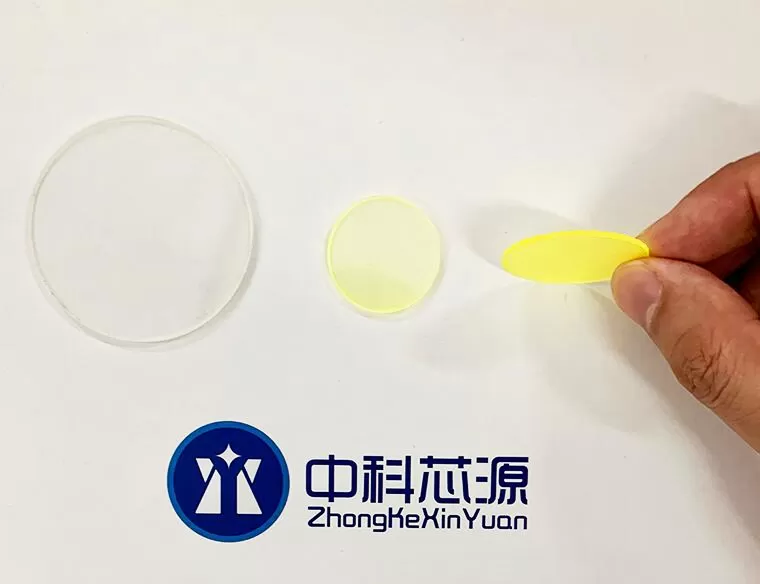
- Annealing and Precision Slicing: After cooling, technicians slice, grind, and polish the monolithic ingot into thin optical plates ranging from 100 to 500 micrometers in thickness.
Optical Mechanism
The operating mechanics of a PiG plate rely on balanced internal scattering and refraction. Blue pump light enters the polished surface of the glass plate. Because the glass matches the refractive index of the surrounding environment closely, Fresnel reflection losses remain minimal.
As blue photons travel through the glass, they strike embedded phosphor crystals. A defined percentage undergoes conversion into longer yellow or green wavelengths. Meanwhile, unconverted blue photons scatter through the crystal matrix.
The glass body acts as a solid-state mixing chamber. Instead of generating distinct rings of blue and yellow light, the output emerges from the optical face as a homogenous, uniform white beam.
Key Advantages: Why PiG Drives Next-Generation High-Power Lighting
Transitioning from an organic matrix to an all-inorganic glass architecture yields immediate structural and performance gains for lighting engineers.
High Thermal Conductivity & Reliability
Standard optical glasses feature thermal conductivities between 1.0 and 1.5 W/m·K. This represents an improvement of nearly an order of magnitude over optical silicones. Heat generated via non-radiative losses transfers out of the converter layer swiftly toward the outer package sink.
Because the matrix contains zero hydrocarbons, it cannot burn, carbonize, or turn brown. Even under continuous operation at 200°C, an inorganic glass matrix retains optical transparency across the visible spectrum.
Superior Color Stability and Lifespan
Phosphor particles inside a glass matrix retain their spatial positions permanently. They cannot settle during curing, migrate over time, or crowd unevenly.
This structural permanence maintains a steady Color Rendering Index (CRI) and Correlated Color Temperature (CCT) over thousands of operational hours. Field testing shows that properly sintered PiG elements display negligible chromaticity shifts (delta u'v' < 0.003) across prolonged stress tests.
Hermetic Sealing Capability
Water vapor, oxygen, and ambient industrial airborne pollutants degrade unprotected phosphors, particularly moisture-sensitive red nitrides (like CASN/SCASN). An inorganic glass matrix acts as an impermeable barrier.
By encasing delicate phosphor crystals within a dense, glassy structure, PiG shields the active luminescence centers from oxidation and moisture-induced quenching without requiring bulky outer glass caps.
In manufacturing lines supervised by technical materials providers like CAS, these composite plates undergo stringent thermal cycling to ensure zero micro-delamination between the glass substrate and the emitter package.
Head-to-Head Comparison: PiG vs. PiS vs. Phosphor Ceramics
To identify the proper converter for a specific solid-state optical design, engineers evaluate thermal transfer, photon flux thresholds, and component costs.
| Performance Attribute | Phosphor in Silicone (PiS) | Phosphor in Glass (PiG) | Phosphor Ceramics (Polycrystalline) |
|---|---|---|---|
| Matrix Material | Organic Polydimethylsiloxane | Inorganic Low-Melting Glass | Pure Sintered Phosphor (No Binder) |
| Thermal Conductivity (W/m·K) | 0.15 – 0.20 | 1.0 – 1.5 | 10.0 – 30.0 |
| Max Operating Temperature (°C) | < 150°C | > 250°C | > 350°C |
| Luminous Saturation Threshold | Low (< 2 W/mm²) | High (10 – 20 W/mm²) | Very High (> 30 W/mm²) |
| Manufacturing Cost | Very Low | Moderate | High to Very High |
| CRI / Color Tunability | High (Simple to blend powders) | Moderate to High | Difficult (Requires co-doping) |
| Chemical / Environmental Resistance | Poor (Gas permeable) | Excellent (Hermetic) | Excellent (Impermeable) |
While polycrystalline phosphor ceramics deliver the highest thermal conductivity, their production involves hot isostatic pressing (HIP) at extreme temperatures exceeding 1700°C. This process runs up manufacturing costs and limits phosphor options.
Phosphor in glass offers a balanced engineering compromise. It delivers the inorganic resilience required for high-intensity lighting at a production cost far lower than single-crystal or polycrystalline ceramics.
Top High-Performance Applications of Phosphor in Glass
Wherever optoelectronic systems extract high lumen counts from tiny focal spots, PiG serves as a core functional component.
Automotive Headlights
Modern vehicles demand sleek, thin light fixtures that emit immense candlepower. Adaptive Driving Beam (ADB) systems, Matrix LED arrays, and Laser Diodes (LD) compress intense blue photon fluxes into footprints under two square millimeters.
Phosphor in glass plates handle these tight optical confines effortlessly. They survive the harsh engine-bay heat profiles and frequent on-off power cycles without suffering the beam discoloration typical of silicone-potted automotive assemblies.
Laser Projection & Display
Digital cinema projectors, home theater laser systems, and corporate display engines rely on bank-mounted blue laser diodes. These diode clusters shoot focused beams onto static or spinning color converters.
Because laser spots produce severe localized heating, standard binders decompose within minutes. PiG converter wheels and transmission plates withstand this continuous photonic bombardment, generating crisp, flicker-free white and secondary colors with zero binder burn.
Industrial & Stage Lighting
High-bay fixtures in steel mills, chemical facilities, and warehouses run non-stop in hot, dusty surroundings. Likewise, entertainment moving-head spotlights pump intense light through narrow aperture barrels.
PiG prevents environmental gas absorption while resisting high internal fixture heat. Operators gain long maintenance intervals and dependable lumen maintenance over years of field operation.
Marine and Flashlight Applications
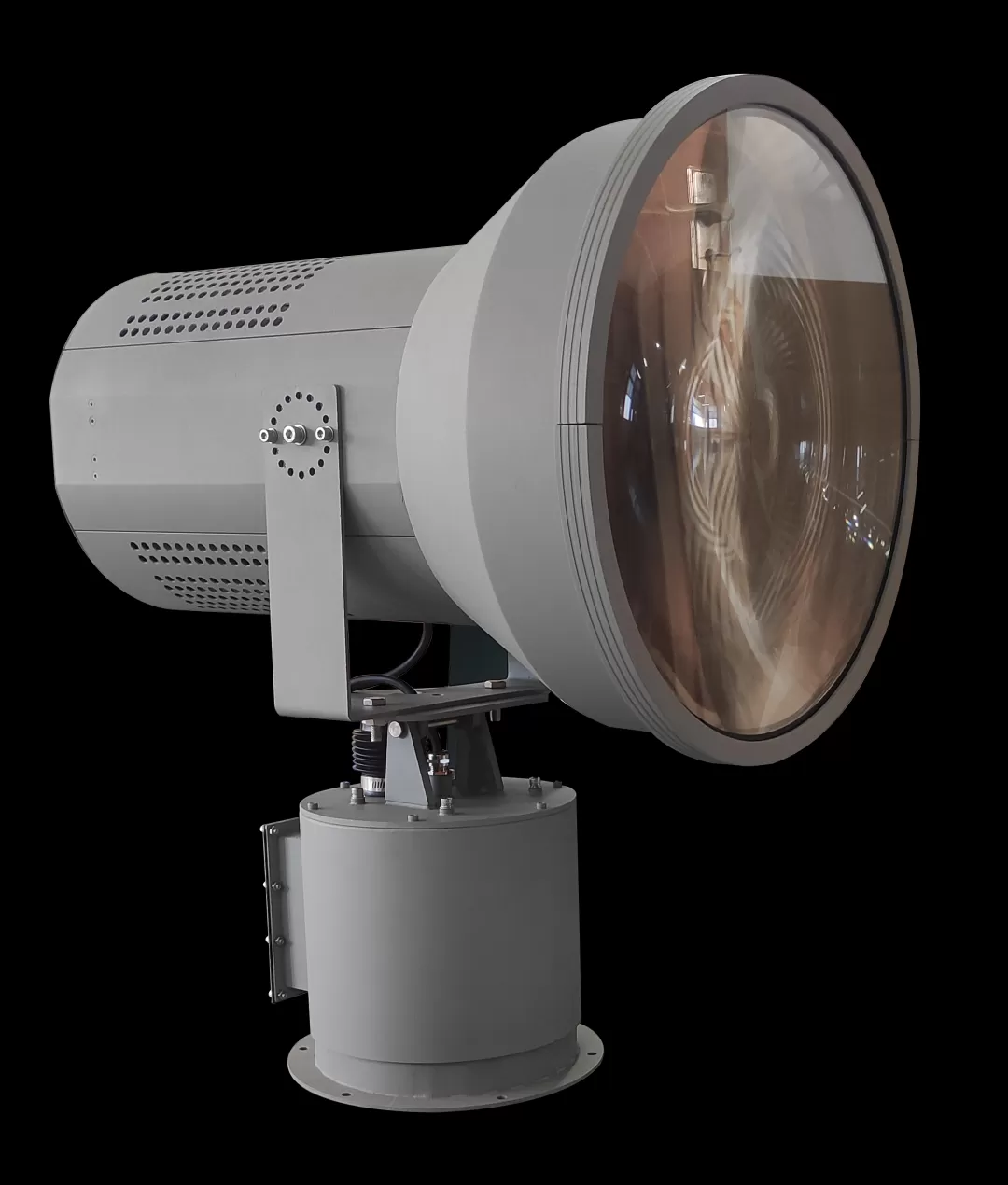
Military searchlights, maritime beacons, and ultra-long-range portable illumination tools require razor-sharp, collimated throw distances. PiG interfaces cleanly with high-luminance primary sources to create tight, long-range beams without thermal bloom.
Manufacturing Challenges and Future Trends of PiG Technology
While phosphor in glass establishes clear engineering advantages, producing these composites requires precise material controls.
The primary hurdle remains interface corrosion. During thermal co-sintering, molten glass can react with the surface of embedded phosphor grains. If the glass dissolves the phosphor activator layer, quantum conversion drops sharply.
To overcome this reaction, materials researchers formulate proprietary glass compositions that melt at temperatures below 550°C. Pre-coating phosphor grains with ultra-thin atomic passivation layers (such as Al2O3 via atomic layer deposition) also prevents corrosive chemical exchanges.
Another major technical objective involves building broad, high-CRI spectra. Standard red nitride phosphors often degrade when exposed to molten glass environments. Perfecting low-temperature glass systems that support red, green, and yellow phosphors simultaneously will allow PiG modules to deliver CRI ratings above 90 without compromising thermal resilience.
Frequently Asked Questions
Q1: Is Phosphor in Glass better than Phosphor Ceramics?
A1: Neither material is universally better; they serve different design points. Phosphor ceramics provide superior thermal conductivity (up to 30 W/m·K) and survive the highest laser fluxes, but they require costly, ultra-high-temperature sintering. Phosphor in glass provides sufficient thermal performance for most high-flux applications at a far more manageable price point, while allowing easier blending of multiple phosphor chemistries.
Q2: Can PiG be used in existing SMD LED manufacturing lines?
A2: Yes. Fabricators can dice PiG plates into standard chip-scale footprints (such as 1x1 mm, 2x2 mm, or 3x3 mm). Surface-mount technology (SMD) equipment places these plates onto blue emitter dies using thermally conductive inorganic adhesives, transparent glass soldering, or direct die-attach packaging with no need for wet silicone dispensing.
Q3: How does PiG improve the lifespan of laser headlights?
A3: Laser headlights focus intense optical energy onto a small target area, generating localized thermal stress that promptly darkens standard silicone binders. PiG resists thermal quenching, maintains its clarity past 250°C, and sheds heat efficiently, preventing color temperature shifts and early optical failure in laser lighting setups.
Q4: Does the glass matrix reduce overall optical conversion efficiency?
A4: When formulated correctly, the glass matrix causes minimal efficiency loss. Modern optical-grade glasses feature transparency ratings above 95% across the visible spectrum. The primary factor influencing efficiency is matching the refractive indices of the glass host and the phosphor crystals to keep light-scattering patterns balanced.
Q5: Can PiG achieve warm white light with a high Color Rendering Index?
A5: Yes. While early PiG formulations used only yellow YAG:Ce phosphors to create cool white light, modern low-temperature glass matrices can incorporate red nitrides or secondary fluorophor crystals without thermal degradation. This enables warm white chromaticity coordinates and CRI values exceeding 90 Ra.
Partner with CAS for Advanced Color Conversion Optics
Phosphor in glass technology bridges the gap between low-cost packaging and high-power optical durability. By moving past the thermal limits of silicone, lighting manufacturers can build compact, reliable, ultra-bright fixtures for automotive, industrial, and display markets.
At CAS, we synthesize, process, and optimize advanced optical conversion materials for challenging optoelectronic builds. Whether you are engineering solid-state laser projectors, high-flux stage luminaires, or specialized vehicle lights, our technical team supplies the material architectures you need to protect light quality and product life.
Ready to upgrade your optical converters? Contact the CAS engineering department today to discuss custom plate geometries, request phosphor samples, and review our full photometric test data.