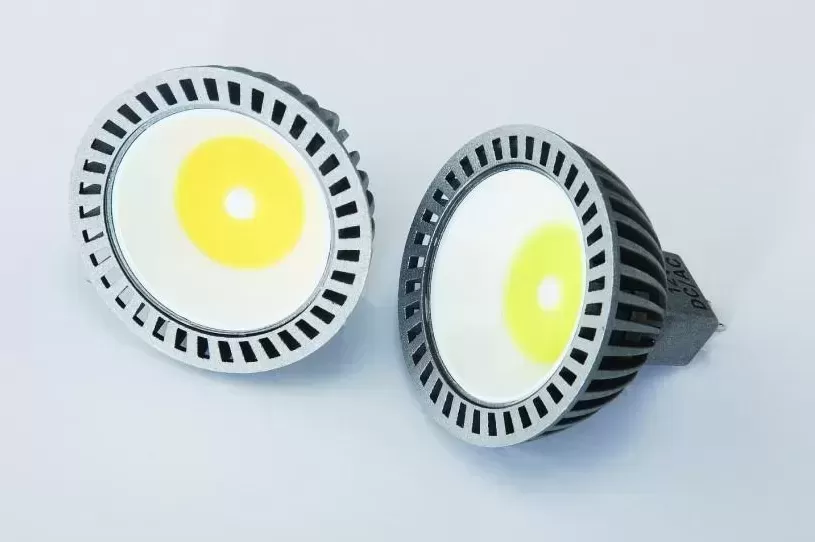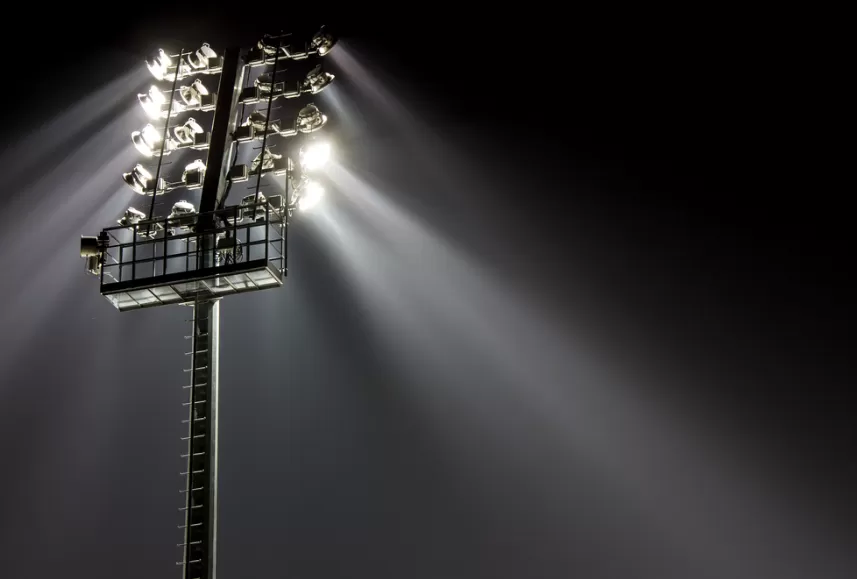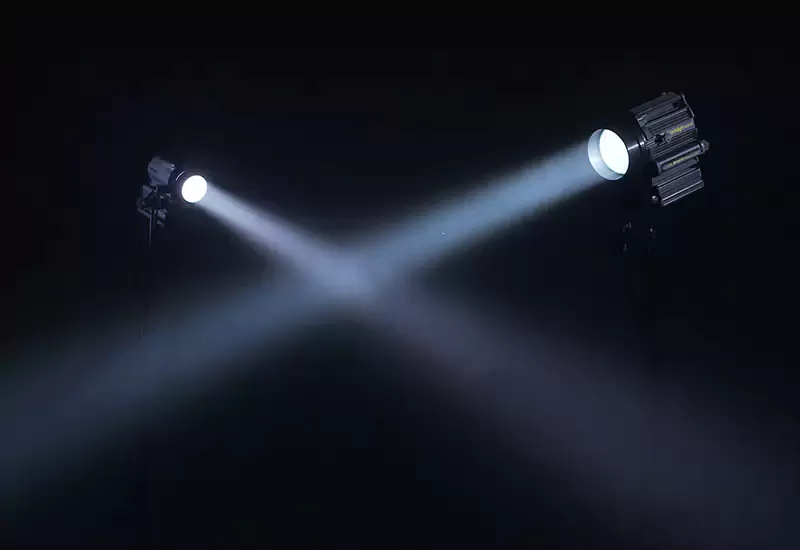
Sourcing industrial lighting requires careful technical evaluation. Whether you manage video production, commercial horticulture, or high-bay warehouse retrofits, a 300w cob led light delivers tremendous single-point illumination. Yet, the wholesale market shows striking price gaps for units that claim the same 300-watt rating.
Some models cost under $60, while industrial fixtures exceed $400. Why does this price difference exist? The answer lies in component selection, structural thermal dissipation, and optical design.
At CAS, we help commercial clients and OEM buyers bypass misleading marketing claims. If you are preparing a procurement project or need custom component manufacturing, submit an inquiry to our engineering team for technical specifications and factory pricing.
1. Why the 300W COB LED Is an Industry Benchmark
Understanding Chip-on-Board (COB) Technology
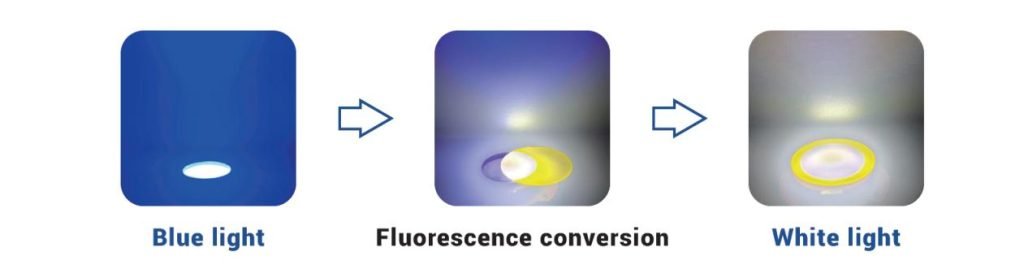
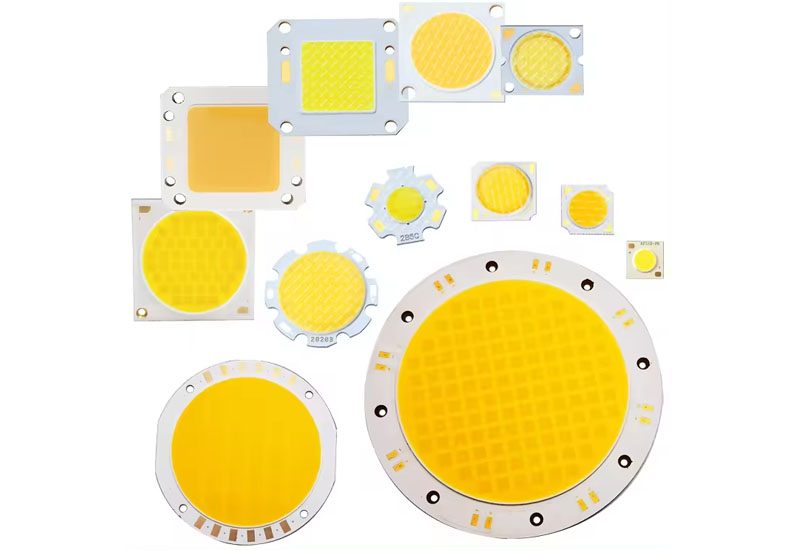
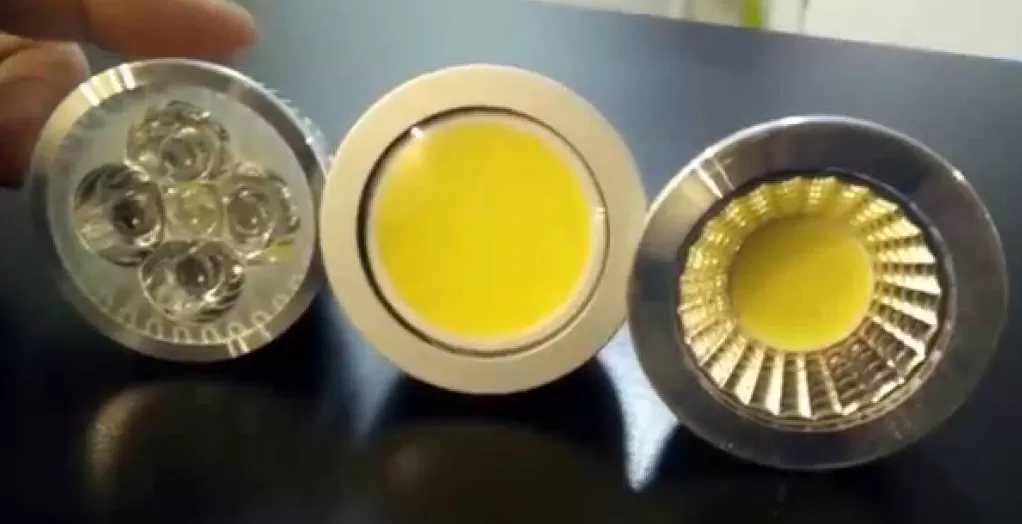
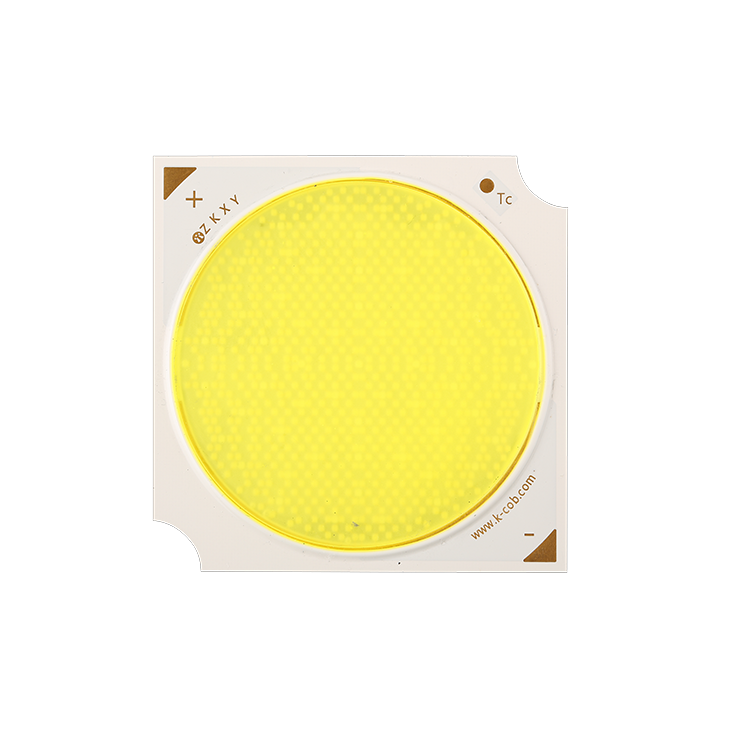
Surface Mounted Device (SMD) arrays distribute hundreds of tiny LEDs across a broad board. In contrast, Chip-on-Board (COB) technology bonds dozens of bare semiconductor dies directly to a single metal or ceramic substrate.
This design creates a dense, unified light source. It produces clean, sharp shadows without the distracting multi-shadow patterns common to SMD panels. It also allows optical engineers to use compact reflectors, lenses, and snoots to focus the beam across long throw distances.
Versatile Applications for 300 Watts
The 300-watt class is an operational sweet spot. It produces enough punch to replace 1,000-watt halogen lamps or 600-watt metal halide fixtures, while running on standard wall circuits without requiring dedicated high-amperage breakers.
- Film and Studio Lighting: Serves as a punchy key light that easily penetrates softboxes and diffusers.
- Commercial High-Bay Lighting: Replaces legacy discharge lamps in warehouses with ceilings from 6 to 10 meters.
- Indoor Agriculture: Delivers deep canopy penetration when used as a focused 300w cob led grow light.
The Price Disparity: $50 vs. $500
Two fixtures can both draw 300 watts from the wall while delivering completely different illumination on your subject. A $50 unit often uses lower-bin diodes, cheap aluminum plates, and unregulated drivers that turn 60% of that electricity into waste heat instead of usable photons.
A professional unit uses top-tier phosphor coatings, copper-core vapor chambers, and constant-current drivers. You are not paying for a badge; you are paying for actual light output, electrical safety, and operating lifespan.
2. Metric 1: LED Chip Quality and Luminous Efficacy
Tier-1 Chip Foundries
The semiconductor die at the heart of the Led Cob 300w determines its baseline performance. Top-tier chip makers like Citizen, Bridgelux, Luminus, and Cree apply uniform phosphor chemistry that resists micro-cracking and thermal decay over time.
B-grade chips often skip precise binning. This results in noticeable color variations between batches, dead individual dies on the array, and rapid luminous degradation within the first 1,000 hours of run time.
Actual Luminous Efficacy
Efficacy measures how well a fixture turns watts into light (lumens per watt, or lm/W). The total 300w led cob lumen output depends directly on diode efficiency:
- Low-end units: Produce 70–90 lm/W (Total output: ~21,000 to 27,000 lumens).
- Commercial standards: Deliver 110–130 lm/W (Total output: ~33,000 to 39,000 lumens).
- High-efficiency arrays: Reach 140–160+ lm/W (Total output: ~42,000 to 48,000+ lumens).
High 300w cob led efficiency means you capture significantly more foot-candles on target without drawing additional power from your electrical distribution panel.
The "Equivalent Wattage" Pitfall
Budget sellers often label a light "300W" when it merely produces light equivalent to an old 300-watt incandescent bulb. Its actual power draw might be only 45 watts. Always check the actual wall draw using an inline power meter to confirm you are receiving true 300-watt consumption.
3. Metric 2: Thermal Management Systems
The Physics of Concentrated Heat
A standard SMD board spreads 300 watts across a 600x600mm sheet. A 300W COB concentrates that same thermal footprint onto a substrate often no larger than a business card (roughly 35mm to 55mm in diameter).
Without an aggressive heat path, internal core temperatures will quickly climb past 120°C. This extreme heat damages the protective silicone resin and destroys the LED dies.
Passive vs. Active Cooling
Solid cob led thermal management separates high-performance lights from fire hazards:
- Passive Cooling: Relies solely on massive, finned extruded aluminum housings. These designs produce zero acoustic noise, making them ideal for broadcast studios. However, they are heavy and bulky.
- Active Cooling: Pairs copper heat pipes with variable-speed, fluid-dynamic bearing fans. High-end fixtures maintain silent operation (under 20 dB at 1 meter) while moving large volumes of air across the radiator matrix.
Junction Temperature and Color Shift
Keep the diode junction temperature ($T_j$) below 85°C. When junction temperatures run too hot, you will notice two clear issues: immediate lumen depreciation and permanent color shift. Phosphors breakdown under chronic heat stress, shifting pristine 5600K daylight into an unusable sickly green or magenta tone.
At CAS, we build our thermal solutions using copper vapor chambers and direct-contact heat pipes. This engineering keeps junction temperatures low even during continuous, 24/7 commercial operation.
4. Metric 3: The LED Driver
Power Supplies: The Heart of the Fixture
A COB array cannot run straight off raw mains AC voltage. It requires clean, regulated DC current. The best 300w cob led driver configurations use certified power supplies from reputable manufacturers like Mean Well, Inventronics, or Lifud.
A driver should hold genuine CE, UL, or TUV electrical certifications. These marks ensure the power supply incorporates over-voltage, short-circuit, and over-temperature safety cutoffs.
Flicker-Free Operation for High-Speed Capture
Poor drivers produce alternating current ripples on their DC output line. While your eyes cannot see this 100Hz/120Hz micro-strobe, digital camera sensors reveal it immediately as dark rolling bands across the frame.
Studio-ready 300-watt systems use pulse-width modulation (PWM) rates well above 20 kHz. This enables clean, flicker-free capture even when filming slow-motion video at 1,000 frames per second.
Power Factor and Surge Protection
Industrial applications with multiple fixtures running on a single branch circuit demand a Power Factor (PF) of 0.95 or higher. High PF ratings minimize wasted reactive power and prevent breaker trips. Industrial builds also include 4kV to 6kV surge suppression to safeguard against incoming line spikes.
5. Metric 4: Light Quality and Color Metrics
Studio Metrics: High CRI, TLCI, and SSI
If you purchase lights for digital video, standard light output is not enough. You must inspect the spectral data:
- CRI (Color Rendering Index): Demand a Ra of 96 or higher. Check the specific R9 (saturated red) and R13 (skin tone) scores; cheap chips routinely hide terrible red values behind an inflated overall Ra score.
- TLCI (Television Lighting Consistency Index): A target of 97+ prevents tedious color correction in post-production.
- SSI (Spectral Similarity Index): The truest measure of spectral continuity when compared to daylight or tungsten standards.
High CRI for cob led fixtures ensures that product surfaces, talent skin tones, and subtle textures render accurately in camera.
Horticulture Metrics: PPFD Over Lumens
When selecting a 300w cob led grow light vs studio light, lumens are irrelevant because plants do not read human eye sensitivity curves. For plant cultivation, evaluate:
- Photosynthetic Active Radiation (PAR): Spectral energy between 400nm and 700nm.
- PPF / PPFD: Total micromoles of photons delivered to the canopy per second ($\mu\text{mol}/m^2/s$). High-grade grow COBs provide broad-spectrum white output enriched with 660nm deep red for heavy flowering cycles.
CCT Consistency and SDCM Steps
Color consistency between multiple fixtures on the same production floor is critical. Quality manufacturers specify chromaticity bins within 2 to 3 steps of the MacAdam ellipse (Standard Deviation of Color Matching, or SDCM). Budget brands often drift 5 to 7 steps, causing adjacent fixtures to show noticeable differences in tint.
6. Metric 5: Optics and Mechanical Build Quality
Chassis Engineering
Avoid thin plastics that crack under field transport. High-grade fixtures use cast-aluminum brackets, rigid metal housings, and reinforced yoke clamps. The tilt mechanism must securely lock heavy modifiers in place without slipping.
Optical Mount Versatility
A COB bare bulb outputs a wide 120-degree light flood. To shape this beam, you need reliable modifiers. Standard Bowens Mount attachments offer the widest compatibility with commercial softboxes, parabolic reflectors, and snoots.
Fresnel lenses pair exceptionally well with COB sources. They compress the native 120-degree beam down to a tight, high-intensity 15-degree spotlight with clean shadow edges.
7. Comparison: Premium vs. Low-Grade 300W COBs
| Technical Feature | Industrial Grade (High Quality) | Budget / Economy Grade |
|---|---|---|
| Luminous Efficacy | 120 – 160 lm/W | 60 – 85 lm/W |
| Color Fidelity | CRI 96+, TLCI 97+, R9 > 90 | CRI < 80, weak R9 output |
| Thermal System | Copper vapor chamber, <20dB silent fans | Undersized aluminum plate, loud 40dB fans |
| Driver Components | Mean Well / In-house isolated, PF > 0.95 | Unbranded, non-isolated, high ripple |
| Camera Performance | Flicker-free at high shutter speeds | Noticeable rolling shutter bands |
| Expected Lifespan | 50,000+ hours (L70 rating) | Less than 10,000 hours |
| Warranty & Support | 3 to 5 Years with accessible parts | 90-day replacement or zero warranty |
8. Buyer’s Checklist Before Ordering
Before submitting a purchase order for your next lighting project, verify these five checkpoints:
- Confirm True Draw: Demand electrical test data showing full 300W consumption from the wall.
- Review the Photometric Report: Inspect true IES or spectrophotometer files; verify CRI, TLCI, and CCT numbers across test runs.
- Examine the Thermal Specs: Ask for internal junction temperature ratings under 40°C ambient test conditions.
- Check Driver Documentation: Ensure the power system carries verified safety approvals and low ripple-current percentages.
- Verify Mounting Standards: Confirm the mechanical mount matches your existing softboxes and grip gear.
Frequently Asked Questions
Q1: Can a single 300W COB LED replace a traditional 1,000W tungsten
fixture?
A1: Yes. High-efficacy 300W COB lights
produce between 35,000 and 45,000 lumens, matching the usable output of a 1,000W
tungsten halogen lamp while drawing 70% less power and running significantly
cooler.
Q2: Why does my low-cost 300W light buzz when I dim
it?
A2: That audible hum stems from low-cost PWM
dimming circuits in cheap drivers. Quality industrial drivers use smooth analog
dimming or high-frequency PWM systems that prevent physical coil chatter.
Q3: How long should an industrial 300W COB LED
last?
A3: A fixture with a well-engineered thermal
chassis will operate for 50,000 hours before its light output drops to 70% of
its original rating (L70). Conversely, fixtures with inadequate cooling can
suffer noticeable lumen decay in under 5,000 hours.
Q4: Is a 300W COB LED suitable for indoor plant
growth?
A4: Yes, provided the phosphor spectrum is
formulated for horticulture. A dedicated full-spectrum COB provides intense
canopy penetration that matches the photon delivery of a traditional 600W
High-Pressure Sodium (HPS) lamp.
Q5: Can I mount an external battery to run a 300W COB LED on
location?
A5: Yes. Most high-end units include
driver boxes that accept dual V-Mount or Gold-Mount batteries (typically 14.8V
or 26V systems), allowing full-power field operation away from mains
outlets.
Partner with CAS for Custom Optical Solutions
Selecting reliable Led Cob 300w hardware protects your production runs, reduces maintenance downtime, and secures high-fidelity color output. At CAS, we engineer and supply commercial-grade COB modules, precision driver solutions, and thermal architectures tailored to your performance targets.
Need custom specifications or wholesale volume quotes? Contact the CAS technical sales department today with your project details, and our engineers will provide detailed photometric data, test samples, and direct B2B pricing.