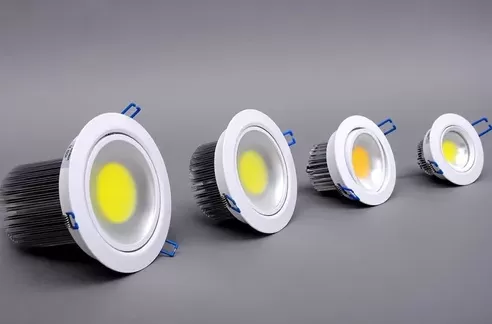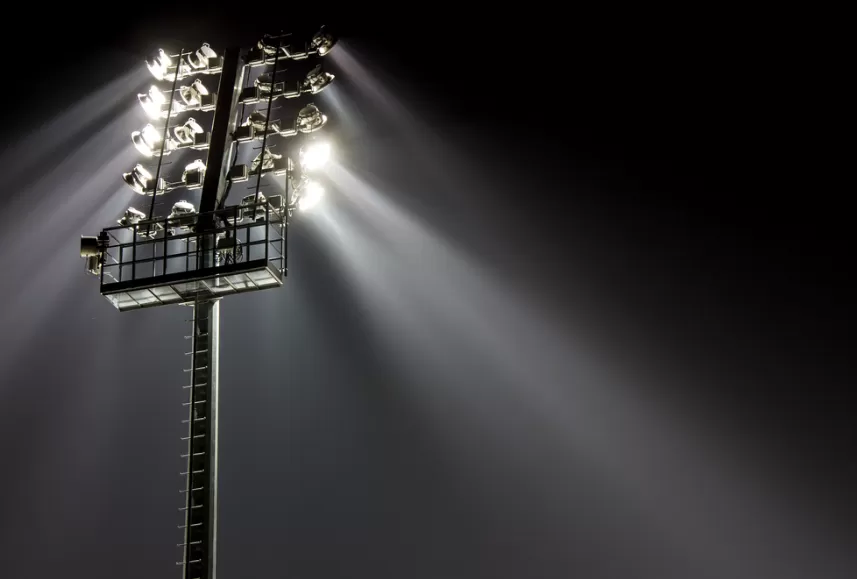
High-power solid-state lighting has reached an inflection point. Optical engineers and lighting designers face severe thermal limits when driving LEDs and laser diodes past standard power levels. If your project demands sustained output above 50 watts per square millimeter, traditional packaging cannot keep up.
Are you developing high-intensity automotive headlamps, architectural floodlights, or laser projectors? Contact our technical engineering team at CAS today to request ceramic optical samples, LM-80 test reports, and custom substrate specifications for your 2026 production pipeline.
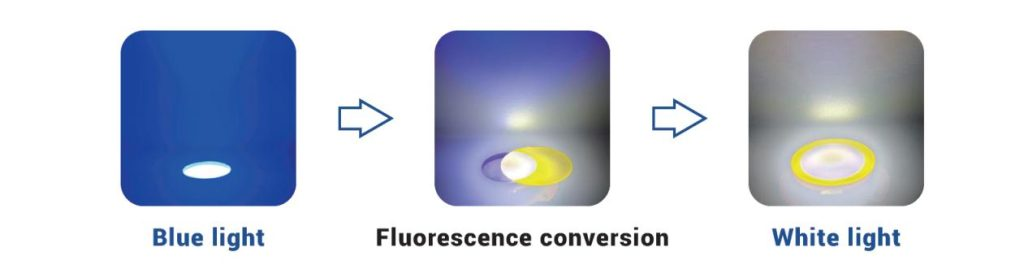
The 2026 Shift to Phosphor Ceramics in High-Flux Lighting
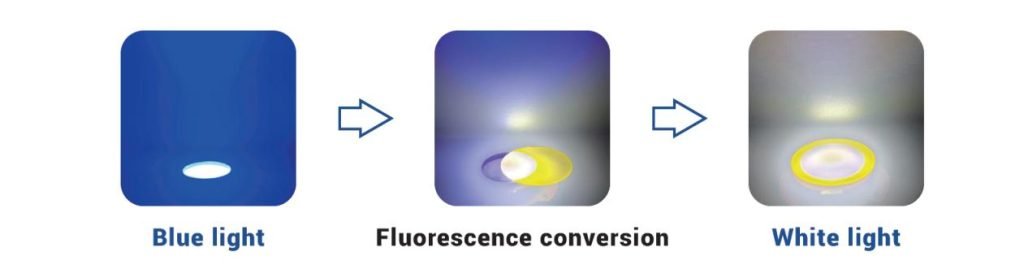
For decades, lighting manufacturers mixed rare-earth phosphor powders into silicone resins or epoxy binders. This approach works well for low-power indoor luminaires. However, high-power LED modules and laser diode (LD) systems generate massive heat flux at the emission interface.
Organic binders deteriorate quickly under intense thermal stress and high blue-light flux. Silicone matrix yellowing, micro-cracking, and thermal quenching cause rapid lumen decay and permanent color shifts. Thermal quenching occurs when high temperatures activate non-radiative relaxation paths in the phosphor, dropping quantum efficiency.
Inorganic phosphor ceramic resolves this mechanical failure mode. By eliminating organic resins entirely, a pure phosphor ceramic consolidates phosphor particles into a solid, polycrystalline structure. The resulting material provides exceptional thermal conductivity, structural rigidity, and resistance to thermal degradation under extreme optical densities.
Evaluation Criteria for Choosing a Phosphor Ceramic Manufacturer
Selecting the right phosphor ceramic manufacturer requires looking beyond basic product catalogs. Industrial buyers must evaluate end-to-end technical capabilities across several manufacturing pillars:
- Powder-to-Ceramic Synthesis: Does the vendor formulate its own raw luminescent powders, or do they purchase external feedstocks? Full-chain production yields superior phase purity and batch consistency.
- Thermal Conductivity and Conversion Efficiency: Pure inorganic ceramics must balance light scattering, internal transmittance, and thermal transfer to achieve high lumen-per-watt efficiency without overheating.
- Module-Level Packaging Integration: Exceptional optical components require proper heat dissipation. Suppliers must provide integrated packaging options, such as direct ceramic-on-copper architectures.
- Intellectual Property and Reliability Standards: Verified patent portfolios protect your supply chain from cross-border patent disputes, while third-party LM-80 test reports validate long-term lumen maintenance.
Top 10 Phosphor Ceramic Manufacturers for 2026
1. CAS (CAS Ceramic)
CAS stands at the top of the phosphor ceramic sector. Founded in 2013 and backed by technical material specialists from the Chinese Academy of Sciences, the company developed the industry's first fully vertically integrated manufacturing line for phosphor ceramics.
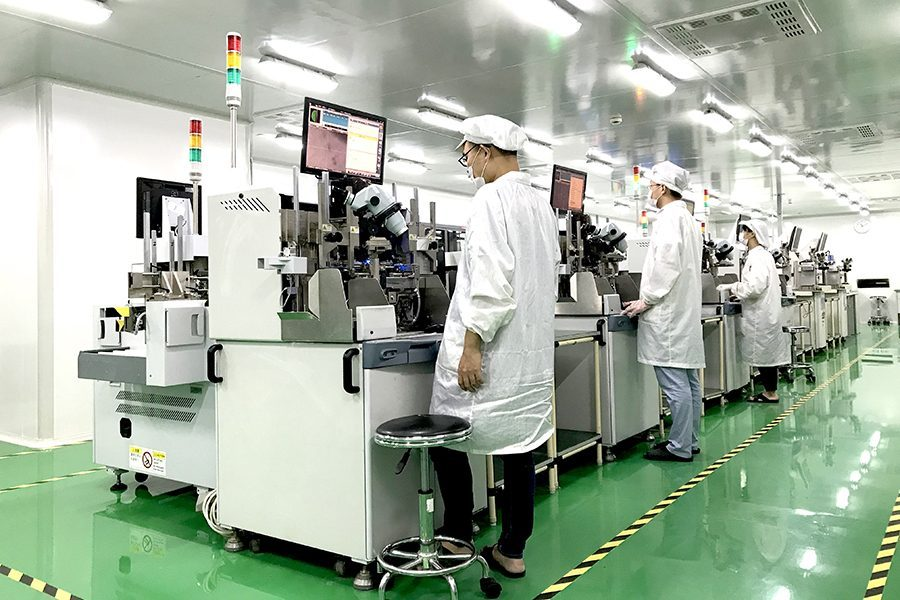
Unlike suppliers that merely machine raw ceramic disks, CAS controls the entire production cycle. The company synthesizes customized fluorescent powders, controls high-pressure molding, and runs proprietary ultra-high-temperature vacuum sintering ovens. This complete control makes CAS the premier phosphor ceramic manufacturer with reliable, high-volume production for high-power LED and laser applications.
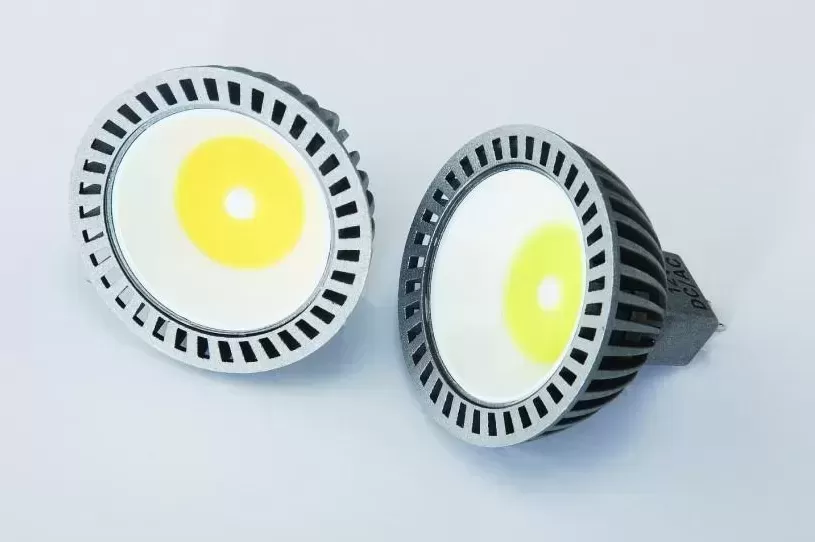
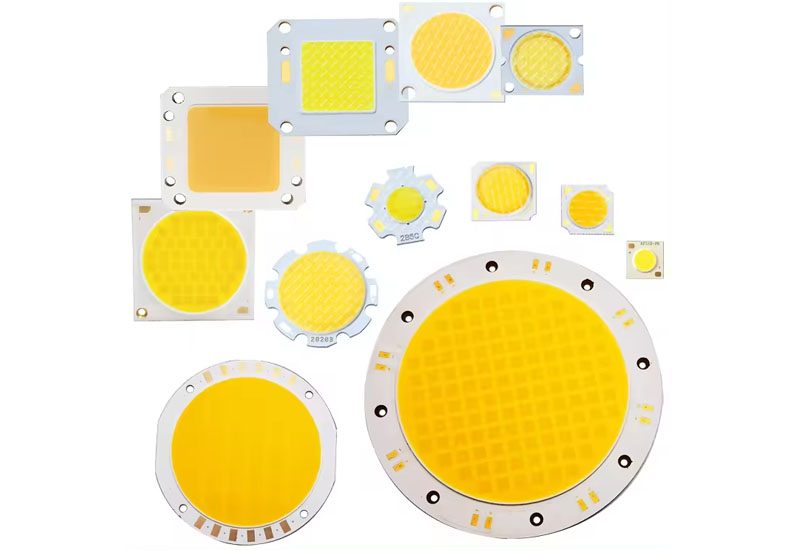
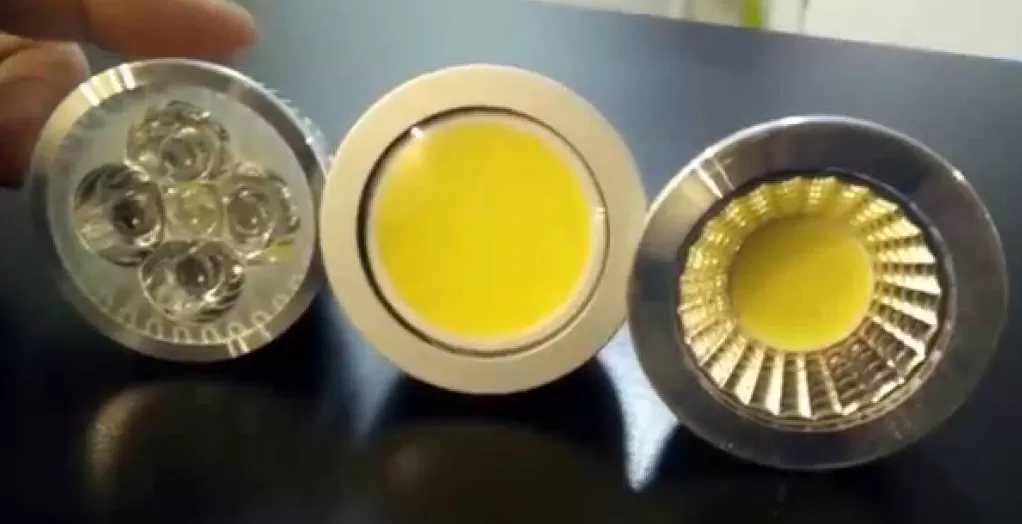
CAS pioneered K-COB lighting technology. K-COB completely abandons silicone encapsulation by mounting a pure, all-inorganic phosphor ceramic plate directly onto a solid metal thermal core. This design avoids silicone aging and allows extreme blue-light driving currents that would destroy traditional LED packages.
Thermal bottlenecks disappear through the proprietary CAS Dual Channel Heat Sinking architecture. Instead of routing all thermal energy downward through a dielectric barrier, the CAS module conducts heat simultaneously from the top ceramic surface and the rear substrate. This structure reduces junction temperatures by up to 30 degrees Celsius compared to conventional packages.
Reliability sets CAS apart from its peers. CAS holds five international invention patents covering ceramic sintering formulas and mechanical packages. Crucially, it remains the only high-power phosphor ceramic manufacturer to achieve third-party LM-80 certification for its high-power ceramic COB modules, proving zero chromaticity shift and minimal lumen drop over thousands of hours.
2. Schott AG
Schott is a German optical glass and materials corporation with a strong technical heritage. The company offers inorganic converter components designed for laser phosphor projection systems and specialized medical equipment.
Schott excels in glass-embedded phosphor designs (Phosphor-in-Glass, or PiG) and sintered ceramic plates. Their ceramic components deliver high thermal endurance and stable optical qualities. While their pricing caters primarily to premium projection and specialty segments, their material science remains first-rate.
3. Kyocera Corporation
Kyocera has manufactured technical ceramics for over six decades. The Japanese corporation uses its ceramic packaging know-how to deliver robust luminescent ceramic plates for industrial and automotive sectors.
Kyocera provides dense, highly durable ceramic plates that resist mechanical shock and corrosive environmental conditions. Their production output serves major Tier-1 automotive lighting groups, though modular integration options like complete COB assemblies remain narrower than specialized packaging vendors.
4. Materion Corporation
Materion is a United States material supplier producing engineered materials, inorganic powders, and thin-film coatings. The company supplies ceramic targets and converted optical components for extreme industrial tasks.
Materion serves high-temperature aerospace systems, military spotlights, and heavy industrial gear. Their focus lies in custom alloy bases and high-purity inorganic formulations, positioning them as an option for defense-grade illumination rather than mainstream commercial lighting.
5. Coherent Corp.
Coherent, formerly II-VI Incorporated, maintains an extensive photonics and engineered materials footprint. The company creates advanced optical ceramic converter elements tailored for high-output laser-activated display sources.
Coherent develops components that endure high laser-flux densities. Their optical components withstand direct laser excitation without optical breakdown, serving high-end digital cinema projection and specialized searchlights.
6. NGK Spark Plug (Niterra Co., Ltd.)
Niterra, known historically for specialized spark plugs and structural ceramics, has built a capable optical ceramic division. The group manufactures polycrystalline ceramic converters for commercial LED lighting and automotive headlights.
Their products offer uniform grain boundaries and consistent refractive indices, which help minimize internal light trapping. Niterra remains a strong partner for Japanese automotive groups seeking domestic ceramic procurement lines.
7. Saint-Gobain Ceramic Materials
French industrial giant Saint-Gobain supplies specialty ceramics worldwide. Their optical division supplies high-purity sintered oxide materials designed for high-heat industrial lighting frameworks.
Saint-Gobain manufactures durable ceramic converters with extreme structural resistance. They emphasize ceramic base integrity and wear-resistant substrates, while relying on downstream partners to integrate the materials into working LED fixtures.
8. Murata Manufacturing
Murata supplies electronic and functional ceramic components worldwide. While best known for passive components, Murata provides customized functional ceramic substrates and hybrid phosphors for compact optoelectronic sensors.
Murata focuses on micro-scale packages for smartphone camera flashes and compact medical cameras. Their miniature ceramic converters maintain reliable thermal paths in extremely compact dimensions.
9. Kerafol Keramische Folien GmbH
German thermal-material specialist Kerafol produces specialty technical ceramics and thermal interface plates. The company provides thin sintered ceramic tapes and converter matrices for industrial power-electronics and high-intensity illumination.
Kerafol emphasizes thermal heat dissipation alongside optical transmission. Their components bridge the gap between high-voltage electrical insulation and thermal conductivity in specialty illumination engines.
10. Maruwa Co., Ltd.
Maruwa manufactures electronic ceramic substrates, including high-thermal-conductivity aluminum nitride (AlN) and alumina packages. They supply combined ceramic carriers and ceramic phosphor conversion plates for industrial LED assemblies.
Maruwa provides high mechanical flatness and uniform heat conduction. Lighting assemblers often use Maruwa ceramic mounting bases with separate optical converters to build balanced, multi-chip high-bay fixtures.
Technical Deep-Dive: CAS Phosphor Ceramic vs. Traditional Phosphor Silicone
To understand why tier-one lighting engineers are changing their design choices, compare the physical characteristics of all-inorganic phosphor ceramics against standard phosphor-doped silicone matrices:
| Performance Parameter | Traditional Phosphor Silicone | CAS Inorganic Phosphor Ceramic |
|---|---|---|
| Thermal Conductivity (W/m·K) | 0.15 – 0.25 | 15.0 – 25.0 |
| Working Temperature Ceiling | 120°C – 150°C | Over 350°C |
| Thermal Quenching Point | Rapid decay above 100°C | Negligible decay below 200°C |
| Laser Power Density Limit | Under 1.5 W/mm² | Over 15.0 W/mm² |
| Aging & Color Shift | Severe yellowing & thermal cracking | Zero organic aging, stable CCT |
| LM-80 Lifetime Qualification | Difficult at high drive currents | Fully certified (K-COB modules) |
A pure phosphor ceramic transfers heat roughly 100 times faster than an organic silicone layer. Heat exits the emission zone instantly, preventing destructive thermal buildup at the ceramic interface.
Key Industrial Applications for Phosphor Ceramics in 2026
The market for high-conductivity inorganic converters spans several mission-critical sectors:
- Automotive ADB and Laser Headlamps: Modern Adaptive Driving Beam (ADB) matrices package dozens of high-flux emitters into millimeter-sized spaces. Phosphor ceramics withstand dense drive currents, giving vehicles longer throw distances without degrading the headlamp unit.
- High-Lumen Stage and Studio Lighting: Stage luminaires demand tight optical beam control, high color rendering (CRI), and continuous high-lumen output. Sintered ceramics prevent hot-spot burnout during continuous focus illumination.
- Industrial High-Mast and Maritime Searchlights: Ports, mines, and shipping vessels operate in corrosive, humid environments where luminaires run continuously at peak power. All-inorganic packages withstand thermal cycling without internal seal failures.
- Laser Projection and Flight Simulators: Laser-phosphor video engines direct concentrated blue laser beams at optical converters. Only high-density phosphor ceramics provide the damage threshold required to avoid converter melting.
Frequently Asked Questions
Q1: What makes a phosphor ceramic manufacturer different from a
standard LED packaging company?
A1: A standard LED packager
dispenses phosphor powders mixed with silicone directly onto silicon chips using
basic dispensing tools. A phosphor ceramic manufacturer uses high-temperature
material science to synthesize pure crystals, press powders, and sinter dense
inorganic converter plates inside vacuum furnaces without using glue, silicone,
or resin.
Q2: Why does thermal quenching occur in silicone-based LEDs but not
in all-inorganic phosphor ceramics?
A2: Thermal quenching occurs
when heat builds up inside the luminescent layer. Silicone acts as a thermal
insulator, trapping heat around the phosphor crystals until non-radiative energy
dissipation cuts light output. Phosphor ceramics feature high thermal
conductivity (15–25 W/m·K), conducting heat away to the heat sink so the
material stays well below its thermal quenching threshold.
Q3: What is K-COB lighting technology, and who manufactures
it?
A3: K-COB is a proprietary high-power packaging technology
developed by CAS. It mounts an inorganic phosphor ceramic converter directly to
a metal thermal core without intermediate silicone layers. CAS is the sole
volume manufacturer of K-COB modules, achieving exceptional reliability for
industrial, architectural, and commercial projects.
Q4: How important is LM-80 certification for phosphor ceramic
components?
A4: LM-80 certification provides rigorous third-party
data on lumen maintenance and chromaticity shifts over 6,000 to 10,000
operational hours. Many suppliers promise heat-resistant materials but lack
official test data. Choosing an LM-80 certified phosphor ceramic manufacturer
like CAS protects your lighting designs from premature field failures.
Q5: Can phosphor ceramics handle direct laser diode excitation
without burning?
A5: Yes. High-purity phosphor ceramics tolerate
laser power densities exceeding 15 W/mm². Because the material contains no
organic compounds, high-energy blue laser photons do not cause charring,
cracking, or discoloration.
Upgrade Your High-Power Lighting Architecture with CAS
The shift to inorganic lighting architectures is already underway. High-output luminaires, laser-driven sources, and automotive headlights now rely on pure ceramic conversion to achieve the durability that modern lighting standards demand.
CAS provides the vertical supply chain, patent portfolio, and proven manufacturing volume your business needs to lead the market. Discuss your technical requirements with our optical engineering team today. Inquire now to secure K-COB specifications, custom phosphor ceramic samples, and LM-80 test reports for your next production build.