Solid-state illumination systems designed for high-flux optical applications require luminescent convertors capable of handling extreme power densities. Traditional phosphor-in-silicone and phosphor-in-glass (PiG) materials frequently encounter physical degradation, optical darkening, and severe luminescence efficiency losses when exposed to high pump intensities. High-luminance engines, such as automotive laser headlights, industrial projection systems, and specialized searchlights, rely on robust inorganic color converters. Among the options available to optical design engineers, LuAg ceramic (cerium-doped lutetium aluminum garnet, Lu3Al5O12:Ce) offers exceptional thermal conductivity, microstructural density, and luminescence conversion efficiency under severe thermal and optical loads.
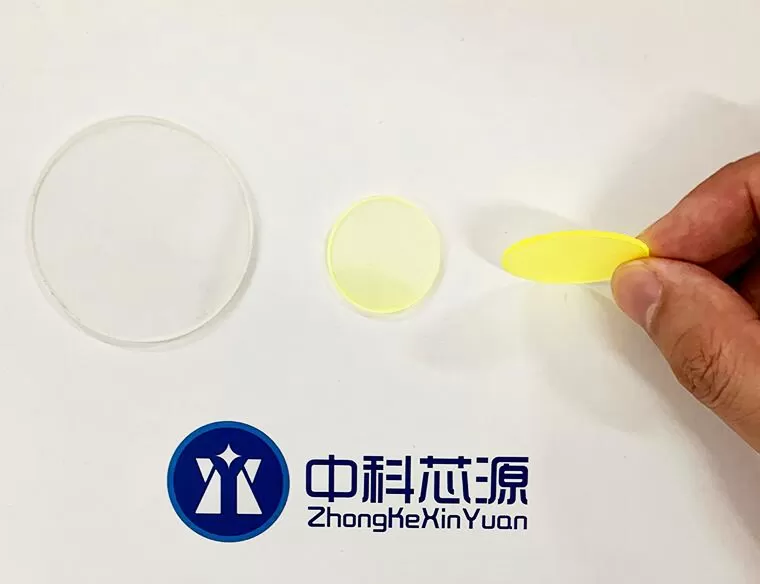
1. Solid-State Physics and Luminescence Dynamics of LuAg Ceramic
Lutetium aluminum garnet belongs to the cubic space group Ia-3d, exhibiting an isotropic crystal matrix that eliminates birefringence-induced optical scattering. When doped with trivalent cerium ions (Ce3+), the matrix exhibits broad green-yellow emission centered around 510–540 nm under blue excitation (typically 440–460 nm). The luminescence mechanisms rely on the allowed 4f-5d electric dipole transitions of the Ce3+ ion. Because the 5d excited state interacts directly with the host crystal field, the local symmetry and crystal field splitting dictate the absorption and emission wavelengths.
Substitutional incorporation of lutetium (Lu) into the dodecahedral sites of the garnet structure yields an increased crystal density (approximately 6.73 g/cm³) compared to traditional yttrium aluminum garnet (YAG) host matrices. This atomic mass advantage alters the lattice vibration spectrum, contributing to suppressed non-radiative relaxation transitions. Luminescent down-conversion efficiency remains stable even as local junction temperatures increase beyond 200°C.
Quantum efficiency in synthesized LuAg ceramic materials regularly exceeds 90% at room temperature. Maintaining high internal quantum yield requires minimizing lattice defects, cation vacancies, and impurity phase segregation at grain boundaries. Minute concentrations of secondary phases or non-luminescent inclusions act as non-radiative recombination centers, converting photon flux into localized heat and triggering premature thermal quenching.
2. Managing Thermal Quenching and Optical Flux Dissipation
High-brightness lighting architecture involves focused optical power densities that often exceed 10 W/mm² for LED arrays and 50 W/mm² for direct laser diode excitation. Under these conditions, heat dissipation from the active excitation zone determines system lifespan and chromatic stability.
Thermal Conductivity Differences Across Converter Formats
Organic Silicone Phosphor Composites: Thermal conductivity spans 0.1 to 0.3 W/m·K. Thermal accumulation causes polymer matrix yellowing, severe thermal quenching, and mechanical cracking above 150°C.
Phosphor-in-Glass (PiG): Thermal conductivity spans 1.0 to 1.5 W/m·K. Glass softening and pore formation limit operational thresholds under concentrated laser pumping.
Polycrystalline LuAg Ceramic: Thermal conductivity reaches 8.0 to 10.0 W/m·K at ambient temperatures, enabling efficient heat transfer directly into metal heat sinks or active thermal management modules.
Operating optical engines near maximum excitation capacity creates a localized temperature gradient within the convertor element. When local heat cannot diffuse rapidly, populate-inversion bottlenecks occur, shifting emission spectra toward longer wavelengths and lowering overall luminous efficacy. By utilizing high-density LuAg ceramic elements, optical engineers establish direct thermal pathways from the photon conversion zone to the structural heat spreader.
Thermal quenching behavior is characterized by the activation energy (Ea) required for non-radiative crossing from the excited 5d state back to the 4f ground state. High-quality garnet ceramics exhibit activation energies above 0.8 eV, keeping photothermal emission loss under 15% at sustained operating temperatures of 200°C.
3. Microstructural Control and Manufacturing Synthesis
Achieving high optical transparency and optimum luminescence properties in ceramic converters requires precise control over raw material selection, powder synthesis, shaping, and densification cycles. Microstructural defects, such as intergranular porosity, pore size distribution, and phase impurity levels, determine whether photon transport follows straight-line transmission or diffuse scattering pathways.
Raw Material Processing and Dopant Homogeneity
Synthesis begins with high-purity rare-earth oxides—specifically Lu2O3, Al2O3, and CeO2—boasting purity levels of 99.999% or higher. Trace transition metal impurities (such as iron, nickel, or chromium) introduce competing absorption bands that reduce photon conversion efficiency. Coprecipitation, alkoxide hydrolysis, or high-energy mechanical milling methods ensure atomic-level mixing of constituent oxides. At CAS, advanced chemical processing protocols guarantee consistent stoichiometric control, preventing phase separation during reaction sintering.
Densification via Sintering Protocols
Fully dense transparent ceramics require densification beyond 99.9% of theoretical density. Residual pore volume fractions exceeding 0.01% cause significant light scattering, lowering line transmittance and turning the ceramic translucent or opaque. Achieving near-zero porosity relies on multi-step thermal processing routines:
Vacuum Sintering: High-vacuum environments (10^-3 Pa or higher) held between 1700°C and 1800°C remove trapped gases from intergranular voids during early-stage neck formation.
Hot Isostatic Pressing (HIP): Post-sintering under high argon pressures (100–200 MPa) at temperatures matching or slightly lower than the sintering stage collapses residual closed pores, yielding near-theoretical optical density.
Sintering Aids: Small additions of sintering agents (such as tetraethyl orthosilicate, TEOS, or magnesium oxide, MgO) promote grain boundary mobility and assist pore removal without creating non-luminescent secondary boundary layers.
Process engineering teams at CAS control grain boundary structures during sintering to avoid grain growth anomalies. Average grain sizes are routinely held between 10 and 30 micrometers. Maintaining tight control over grain boundary chemistry prevents dopant aggregation and secures uniform optical properties across large-area ceramic wafers.
4. Industrial and High-Luminance Applications
Industrial demand for solid-state lighting extends into domain areas requiring unprecedented luminance levels. High-density convertors replace traditional gas-discharge lamps in environments where bulb replacement is difficult or maintenance downtime carries substantial operating costs.
Automotive Headlight Engines
Modern automotive illumination utilizes compact light sources capable of projecting focused beam patterns across long distances. Matrix LED headlights and laser-activated high-beam systems demand optical flux densities that exceed the physical limits of organic packaging materials. Utilizing LuAg ceramic plates in reflection or transmission illumination geometries delivers precise beam control, minimal optical scatter, and long-term chromaticity stability through temperature variations between outdoor ambient cold (-40°C) and active operation engine bay conditions (+125°C).
Digital Projection Systems and Searchlights
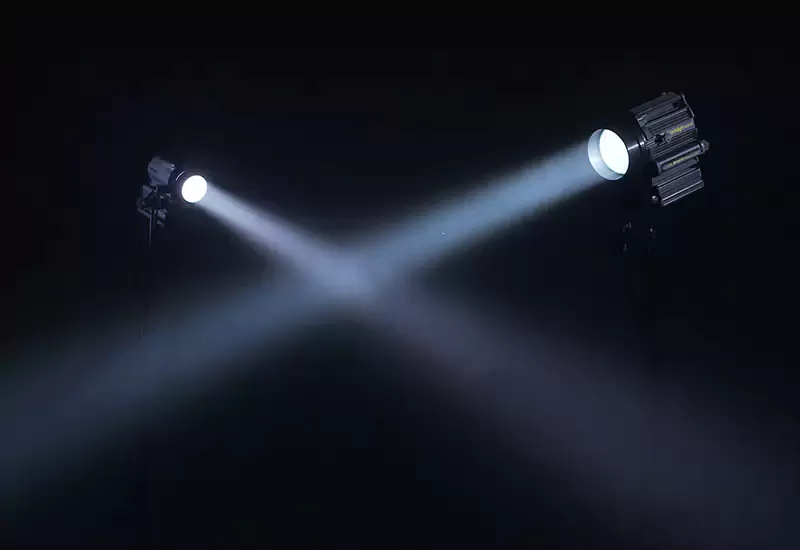
Commercial cinema projectors and high-lumen digital light processing (DLP) engines rely on blue laser diode banks focused onto rotating phosphor wheels or static luminescent tiles. The operational stability of LuAg ceramic converters prevents optical burn-in, maintaining high color rendering index (CRI) stability and steady output power over extended lifespans exceeding 20,000 operational hours.
High-Bay Industrial Lighting and Endoscopy
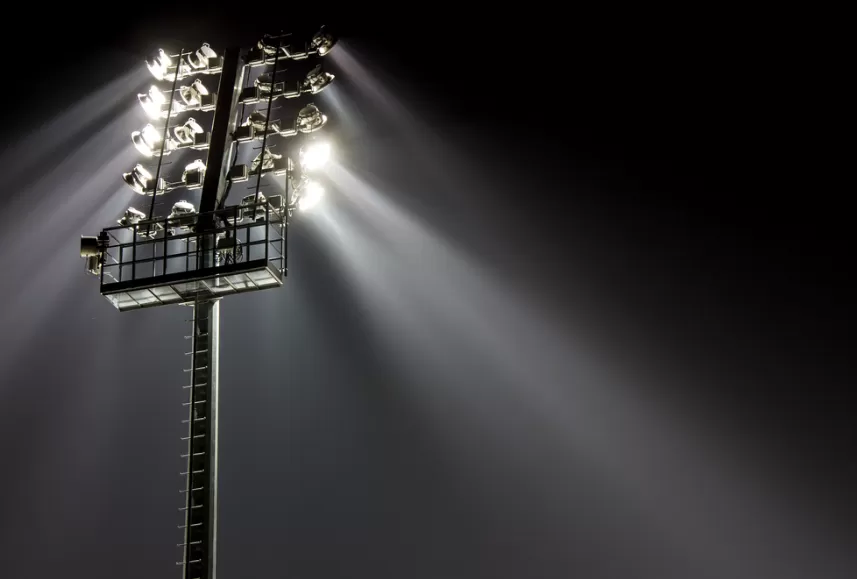
High-bay industrial fixtures operating in high ambient temperature settings, alongside specialized surgical endoscopic lighting modules, require high optical output contained within compact packaging footprints. High thermal conductivity matrix converters dissipate waste heat directly, eliminating bulky optical components and lowering system assembly costs.
5. Engineering Design and Key Operational Parameters
Specifying transparent or translucent luminescent ceramics within optical assemblies requires evaluating several physical parameters. System designers balance chemical composition, component geometry, surface finish, and thermal interface choices to match system performance requirements.
Thickness selection directly dictates blue pump light absorption and final chromaticity coordinates (CIE x, y). Ceramic thickness typically ranges from 0.1 mm to 0.5 mm depending on Ce3+ dopant concentration. Higher dopant concentrations allow for thinner ceramic tiles, reducing the internal thermal gradient but increasing the risk of concentration quenching due to dipole-dipole energy transfer between adjacent Ce3+ ions.
Surface finishing—including mechanical optical polishing, chemical-mechanical planarization (CMP), and anti-reflective surface texturing—adjusts internal total reflection losses. Because the refractive index of LuAg ceramic reaches approximately 1.84, an uncoated planar surface reflects nearly 8.7% of incident light per surface boundary. Micro-structured surface patterns or anti-reflective dielectric thin-film coatings improve light extraction efficiency, increasing overall optical yields.
Thermal management interfaces require precise mechanical fixing techniques. Ceramic elements can be joined to high-conductivity copper or aluminum nitride sub-mounts using active metal brazing, gold-tin (AuSn) eutectic soldering, or high-performance inorganic adhesives. Ensuring Void-free thermal interface layers prevents localized hotspot formation during high-flux laser excitation.
Frequently Asked Questions
Q1: How does LuAg ceramic compare to standard YAG ceramic in green-yellow light generation?
A1: LuAg ceramic exhibits a shorter emission peak wavelength (centered around 510–530 nm) compared to standard YAG ceramic (centered around 550–560 nm). The higher density host lattice of LuAg offers higher thermal conductivity and reduced luminescence drop-off under elevated temperatures, making it suitable for applications requiring green-rich spectra or high-luminance operating environments.
Q2: Can LuAg ceramic converters be used in direct laser illumination geometries?
A2: Yes, fully dense LuAg ceramic matrices are suitable for high-power laser diode excitation in both transmission and reflection modes. The material withstands power densities exceeding 50 W/mm² without mechanical fracture, matrix burning, or rapid photothermal degradation.
Q3: What optical transparency levels can be expected from high-density LuAg ceramic components?
A3: In non-scattering applications, optical-grade LuAg ceramic elements achieve inline transmittance above 80% in the visible wavelength spectrum (nearing theoretical limits without anti-reflective coatings). Controlled scattering options can also be manufactured by adjusting internal grain boundaries and micro-porosity to optimize light mixing.
Q4: How does dopant concentration impact thermal quenching in LuAg ceramic elements?
A4: Increasing Ce3+ dopant concentration increases light absorption within thinner sample profiles. However, dopant levels exceeding 0.5 mol% increase non-radiative energy transfer processes among cerium ions, lowering the activation energy for thermal quenching. Balancing dopant concentration and component thickness preserves internal quantum efficiency at elevated operating temperatures.
Q5: What processing steps does CAS perform to ensure long-term chromaticity stability?
A5: CAS uses ultra-high purity starting powders, controlled chemical coprecipitation, vacuum sintering, and secondary hot isostatic pressing (HIP) to remove structural micro-voids. Strict control over trace impurities and microstructural consistency prevents optical degradation and color shift over tens of thousands of operating hours.
Initiate Your Custom Optical Converter Consultation
Integrating high-performance ceramics into solid-state lighting components requires accurate control over physical specifications, chromaticity targets, and thermal interfaces. Engineering teams at CAS maintain specialized synthesis facilities and advanced characterization tools to develop customized LuAg ceramic components tailored to specific optical flux and environmental requirements. Contact our engineering group today to discuss technical specifications, submit geometry drawings, or request custom material test samples for high-flux optical applications.