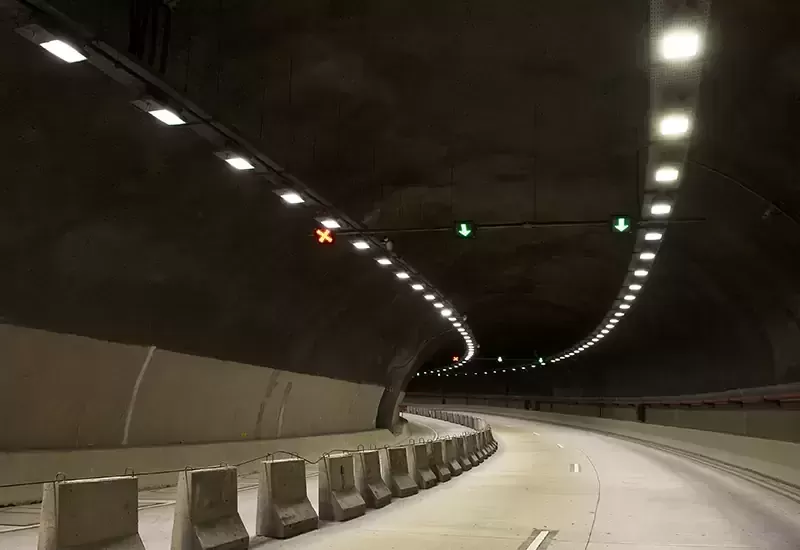
Highway tunnels present one of the most demanding environments in civil engineering. Lighting fixtures operate 24 hours a day, 7 days a week, surrounded by corrosive vehicle exhaust, airborne soot, high humidity, and continuous structural vibration. When a fixture fails, replacing it requires hazardous lane closures, traffic disruption, and heavy maintenance budgets.
For decades, road authorities relied on High-Pressure Sodium (HPS) lamps. While robust, HPS lamps consumed excessive power, exhibited poor color rendering, and suffered from high lumen depreciation. The subsequent shift to Surface Mount Device (SMD) LED arrays solved energy issues but introduced severe glare, high thermal failure rates across dense solder joints, and visual discomfort for drivers.
Today, the industry is transitioning toward the COB Tunnel Light. Powered by advanced engineering from CAS, next-generation Chip-on-Board and K-COB (ceramic phosphor) systems deliver the optical punch, uniform beam distribution, and thermal endurance required for modern roadway and highway infrastructure.
1. What is a COB Tunnel Light and Why Does it Matter?
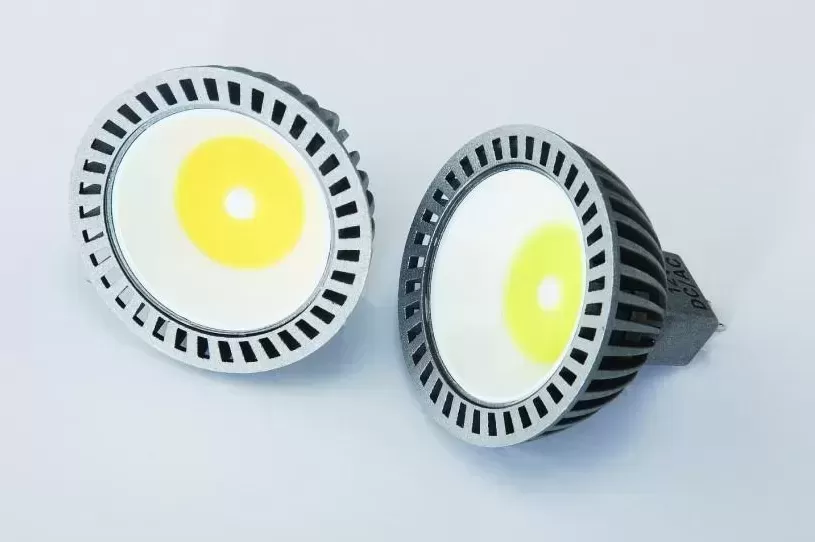
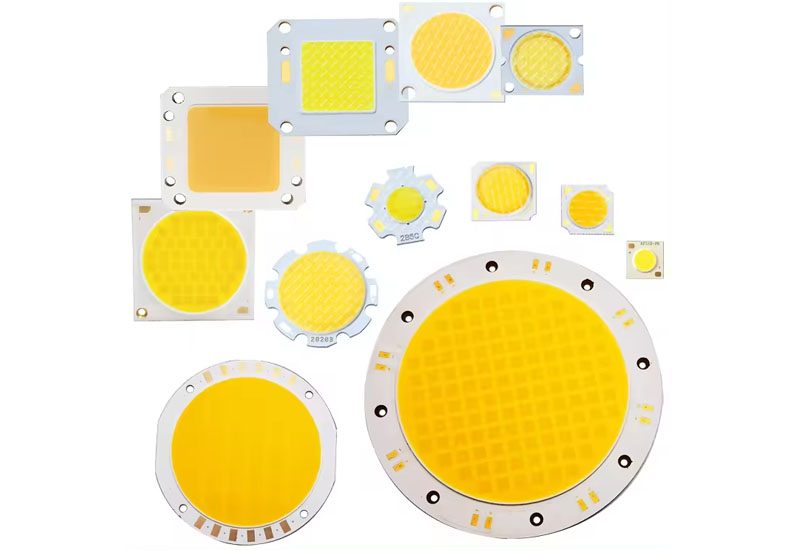
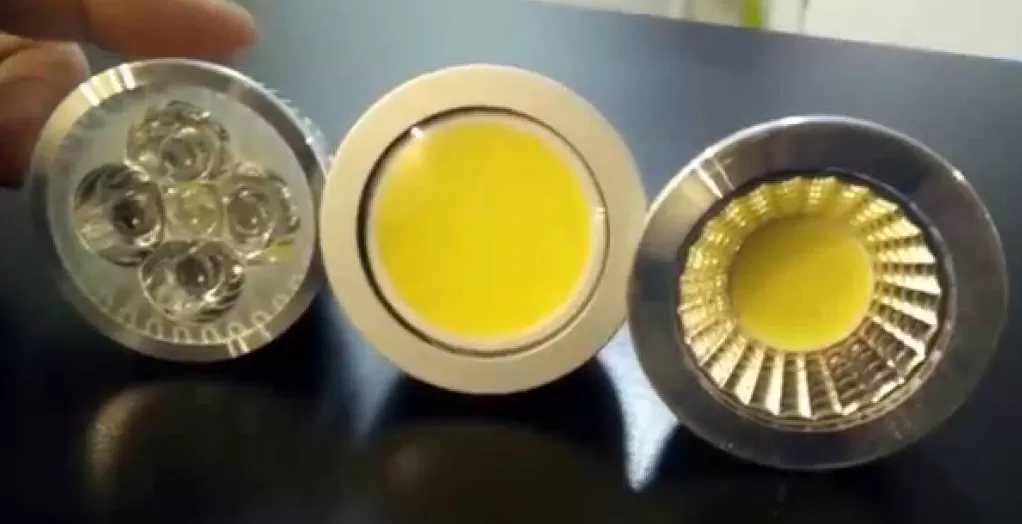
A COB LED tunnel light integrates multiple bare LED chips directly onto a single substrate to form a uniform, single-point emitting surface. Unlike discrete SMD arrays that scatter hundreds of tiny light points across a large board, COB architecture concentrates luminous flux into a compact area. This structure provides direct optical control, higher lumen density, and superior thermal paths.
1.1 Understanding COB vs. Traditional SMD in Harsh Environments
Tunnel safety depends heavily on continuous visual comfort. Drivers entering a dark tunnel need clear visibility without sudden visual fatigue. Traditional SMD fixtures often cause the dreaded "zebra effect"—a distracting pattern of alternating bright and dark bands on the road surface caused by discrete LED spacing and poor beam overlap.
A COB tunnel light acts as a cohesive planar light source. When paired with precision secondary optics, it produces smooth, continuous road luminance without multi-shadow artifacts or intense point-source glare.
| Performance Factor | High-Pressure Sodium (HPS) | Standard SMD LED Fixture | High Power COB Tunnel Light |
|---|---|---|---|
| Luminous Efficacy | 70 – 90 lm/W | 110 – 140 lm/W | 130 – 160+ lm/W |
| Visual Uniformity | Moderate | Poor (High multi-point glare) | Excellent (Planar, shadow-free) |
| Glare Control | Low (Unfocused broad light) | Moderate (Zebra effect risk) | Superior (Sharp optical cutoff) |
| Failure Points | Ballast / Short lamp life | Hundreds of SMD solder joints | Single thermal interface / High reliability |
| Vibration Resistance | Low (Fragile arc tubes) | Moderate | High (Solid-state direct bonding) |
| Maintenance Cycle | 12,000 – 24,000 Hours | 30,000 – 50,000 Hours | 50,000 – 100,000+ Hours |
1.2 The Bottleneck of Traditional COBs
Early-generation COB fixtures had a clear vulnerability: organic silicone and epoxy encapsulation. In enclosed tunnels, ambient heat and sustained high-drive currents expose silicone to thermal stress. Over time, organic polymers undergo photo-thermal aging, turning yellow and brittle.
This degradation leads to rapid lumen depreciation, severe color temperature (CCT) shift, and eventual chip burnout. To withstand continuous 24/7 tunnel operations, the industry needed an entirely inorganic packaging material capable of handling extreme heat without physical degradation.
2. Core Features: How K-COB Ceramic Technology Redefines Tunnel Lighting
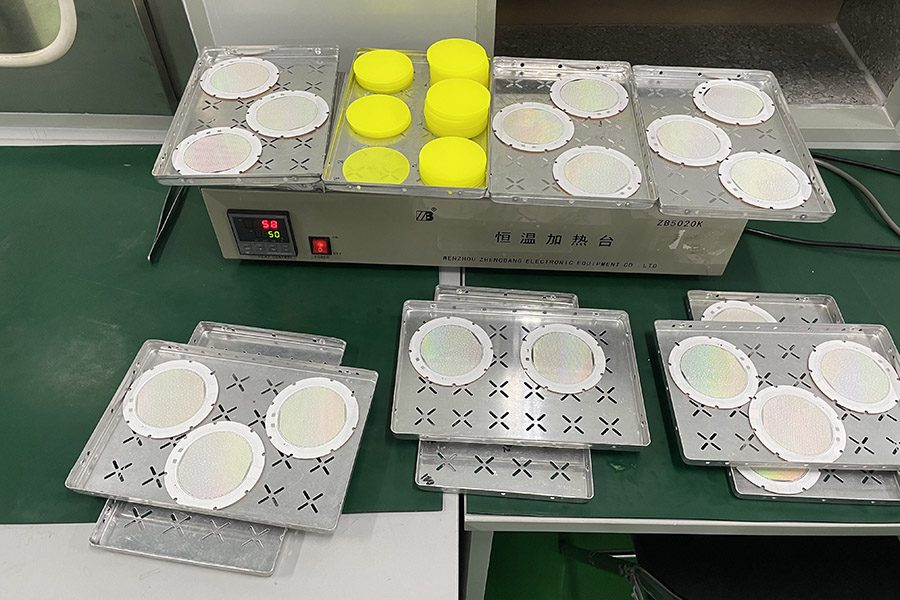
Pioneered through research backed by CAS (Chinese Academy of Sciences), K-COB technology eliminates organic polymers from the optical path. By replacing silicone glue with solid-state inorganic materials, K-COB addresses the root causes of thermal breakdown in highway tunnel LED lighting.
2.1 Self-Developed Phosphor Ceramics vs. Traditional Organic Encapsulation
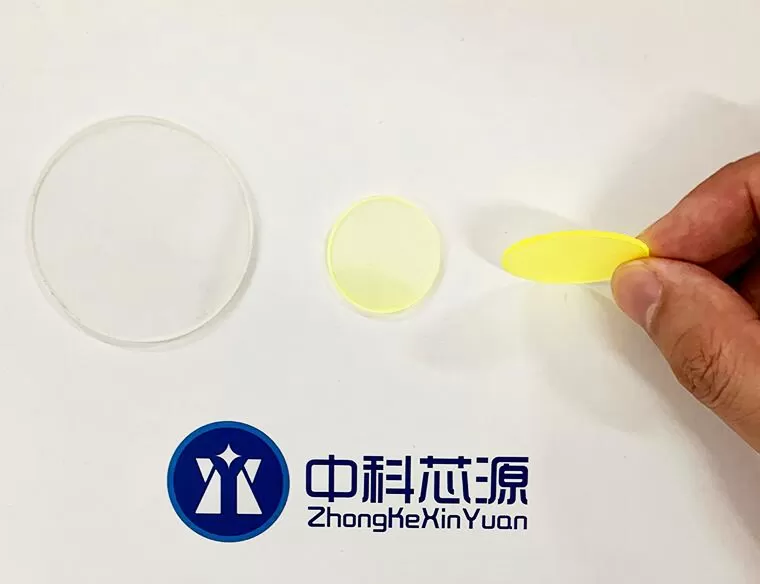
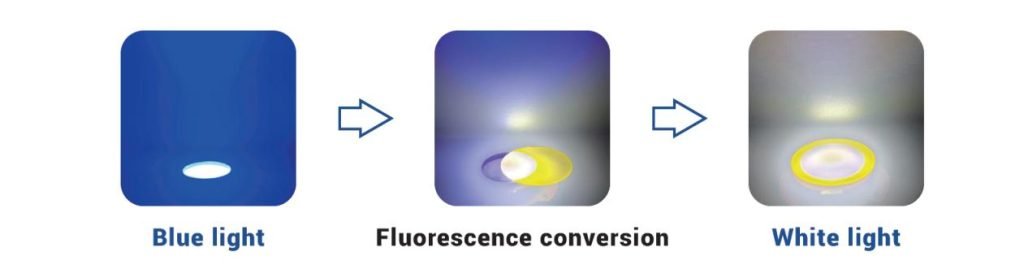
Traditional LEDs mix yellow phosphor powder into liquid silicone glue and apply it over blue chips. K-COB technology uses a sintered, high-density phosphor ceramic plate bonded directly to the chip surface.
Zero Polymer Degradation: Inorganic phosphor ceramics do not yellow, carbonize, or degrade under intense blue light or high operating temperatures.
High Thermal Conductivity: Phosphor ceramics conduct heat significantly faster than organic silicone resins, preventing localized hot spots.
Stable Chromaticity: The solid ceramic matrix prevents color shifting over decades of continuous tunnel use, maintaining stable light quality across the fixture's lifespan.
2.2 Patented Dual-Channel Heat Sinking Structure
Heat management directly dictates LED lifespan. K-COB fixtures utilize an innovative dual-channel thermal dissipation architecture. Instead of routing all heat downward through thermal paste into a single heat sink, the system dissipates heat simultaneously through the ceramic substrate and direct-bonded metal layers.
This dual-channel pathway cuts total thermal resistance to a fraction of standard modules. Lower thermal resistance keeps the LED junction temperature (Tj) well below critical thresholds, even when ambient tunnel temperatures peak during summer traffic jams.
2.3 Single High-Power Point Source & Compact Optical Control
Optical design for SMD fixtures requires balancing hundreds of miniature lenses, which increases light scatter and reduces forward throw efficiency. A single high power COB tunnel light concentrates flux into one defined emission window.
This compact source allows optical engineers to use specialized asymmetric batwing reflectors or total internal reflection (TIR) lenses. The fixture projects rectangular light footprints that cover road lanes evenly, directing lumens precisely onto asphalt while preventing spill light onto tunnel walls and driver sightlines.
3. Essential Technical Specifications to Consider
Procurement managers and EPC contractors must evaluate several parameters when specifying a tunnel lighting fixture for municipal or highway tenders.
3.1 Luminous Efficacy & Optical Performance
System Efficacy: Choose fixtures delivering 130 to 160 lm/W at the system level (including driver losses), rather than relying on raw chip ratings.
Color Rendering Index (CRI): Specify Ra ≥ 70 for general roadway tunnels and Ra ≥ 80 for complex urban underpasses to ensure clear visibility of road markings and emergency signs.
Correlated Color Temperature (CCT): 4000K to 5000K provides optimal contrast for clear daytime vision, while 3000K to 4000K offers better penetration through fog, exhaust haze, and mist.
3.2 Ingress & Impact Protection
IP Rating (IP66 / IP67): Tunnels are routinely cleaned with high-pressure water cannons and harsh alkaline detergents. Fixtures must feature robust silicon gaskets and pressure-equalizing breathers to prevent moisture ingress.
Impact Resistance (IK08 / IK09 / IK10): Housings must withstand flying gravel, vehicle vibration, and physical impacts without mechanical failure.
Corrosion Resistance: Heavy die-cast aluminum with marine-grade powder coating (tested to ISO 9227 salt spray standards for over 1,000 hours) is essential to resist sulfurous vehicle exhaust and road salts.
3.3 Reliability & Lifespan Certifications
Field maintenance inside active tunnels costs far more than the light fixture itself. Look for documented test reports rather than theoretical claims:
LM-80 / TM-21 Reports: CAS stands out as an industry leader with comprehensive LM-80 testing data for high-power COB modules, confirming reliable performance across tens of thousands of continuous test hours.
Lumen Maintenance (L70/L80/L90): Look for calculated lifespans where L80 > 100,000 hours at an operating ambient temperature of 45°C.
Driver Reliability: Specify industrial-grade, isolated constant-current drivers with 10kV/20kV surge protection to absorb grid spikes and lightning strikes.
4. Tunnel Lighting Zones and Application Requirements
Tunnel lighting is not uniform throughout the structure. International standards, such as CIE 88 and IESNA RP-22, split a roadway tunnel into distinct photopic zones to allow drivers' eyes to adapt smoothly from bright outdoor sunlight to the darker interior.
4.1 Entrance & Threshold Zone
When approaching a tunnel during bright daylight, drivers experience the "black hole effect"—the entrance appears as an impenetrable black void. To prevent sudden blindness, the threshold zone requires extremely high luminance levels (often exceeding 200 to 400 cd/m²).
High-power K-COB fixtures excel in this zone. Their concentrated lumen output delivers intense, targeted illumination, helping drivers identify obstacles, road debris, or stalled vehicles before crossing the portal.
4.2 Transition Zone
After crossing the threshold, the driver's eyes begin adapting to lower ambient brightness. In the transition zone, luminance decreases gradually along a defined logarithmic curve.
K-COB tunnel fixtures paired with 0-10V, DALI-2, or Zigbee/PLC smart control systems allow precise step-down dimming. Dynamic luminance sensors outside the portal can automatically regulate fixture output based on real-time ambient weather and solar conditions.
4.3 Interior Zone
The interior zone represents the longest section of the tunnel, where driver vision has fully adapted. Luminance requirements drop to lower, consistent baseline levels (typically 2 to 10 cd/m²).
Here, the primary engineering goals shift to visual uniformity, energy efficiency, and operational lifespan. COB fixtures provide continuous, flicker-free light across lanes, reducing eye fatigue during long commutes while keeping city energy bills low.
4.4 Exit Zone
Exiting drivers face the "white hole effect," where intense outdoor sunlight creates sudden visual glare. The exit zone requires a gradual step-up in luminance to prepare the driver's vision for open-road lighting levels, ensuring safe lane changes and merge maneuvers.
5. Why Choose CAS K-COB Tunnel Lights?
Selecting the right manufacturing partner is just as critical as choosing technical specifications. CAS provides proven engineering advantages for complex municipal infrastructure:
National Research Heritage: Developed through the technological foundation of the Chinese Academy of Sciences (CAS), backed by academic teams specializing in advanced optoelectronic materials.
Complete Vertical Integration: CAS controls the entire production chain, from raw inorganic phosphor powder synthesis and high-temperature ceramic sintering to full luminaire assembly.
Mass Production Pioneer: Founded in 2013, CAS is a established mass producer of inorganic phosphor ceramic packaging for high-power LED and laser lighting systems.
Global Patent Portfolio: Backed by 5 international invention patents and dozens of regional patents, protecting projects with proprietary thermal and optical designs.
6. Frequently Asked Questions (FAQs)
Q1: Why is a COB tunnel light better than an SMD fixture for highway applications?
A1: A COB tunnel light uses a unified planar emission surface that eliminates the multiple shadow artifacts and intense micro-glare associated with SMD arrays. It provides cleaner asymmetric light distribution, reduces driver eye strain, and features fewer electrical solder connections, lowering the risk of component failure in high-vibration tunnel environments.
Q2: How does phosphor ceramic solve LED degradation in tunnels?
A2: Traditional LEDs use organic silicone glue to hold phosphor particles, which yellows and degrades under heat and blue light. Phosphor ceramic is a 100% inorganic solid-state material sintered at high temperatures. It does not degrade, yellow, or burn out, ensuring stable lumen output and consistent color temperature over long operating cycles.
Q3: What certifications are mandatory for high-power COB tunnel fixtures?
A3: Key certifications include LM-80/TM-21 test reports verifying long-term lumen maintenance, IP66 or IP67 ingress protection test certificates, IK08 to IK10 mechanical impact ratings, and CE/UL/ENEC compliance. CAS provides verified high-power COB LM-80 test reports for project engineering tenders.
Q4: How does a COB tunnel light eliminate the "zebra effect"?
A4: The zebra effect occurs when discrete light spots fail to overlap smoothly, creating alternating light and dark stripes across the road. COB fixtures act as single, concentrated sources that match cleanly with custom batwing lenses, projecting uniform rectangular light fields that blend smoothly along the roadway.
Q5: Can K-COB fixtures integrate with intelligent tunnel management systems?
A5: Yes. Modern K-COB luminaires support smart control protocols, including 0-10V, PWM, DALI-2, and PLC/RS-485 interfaces. They integrate directly with central tunnel control software, luminance meters, and traffic density sensors to provide automated real-time dimming based on outdoor weather and traffic conditions.
Plan Your Next Infrastructure Lighting Project with CAS
Whether you are upgrading an existing municipal underpass or designing a multi-kilometer highway tunnel, choosing the right fixture determines project safety, power consumption, and long-term operating costs.
Contact the CAS engineering team today to request complete photometric files (IES/LDT), customized Dialux lighting simulations, and comprehensive product datasheets for your project specifications.