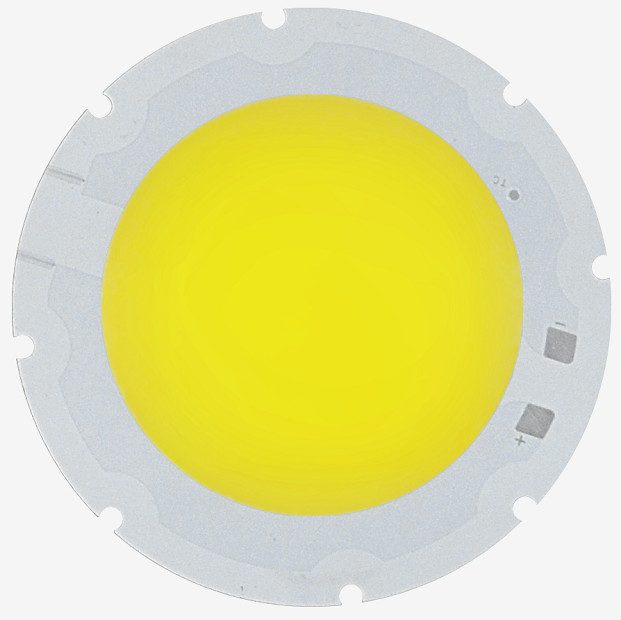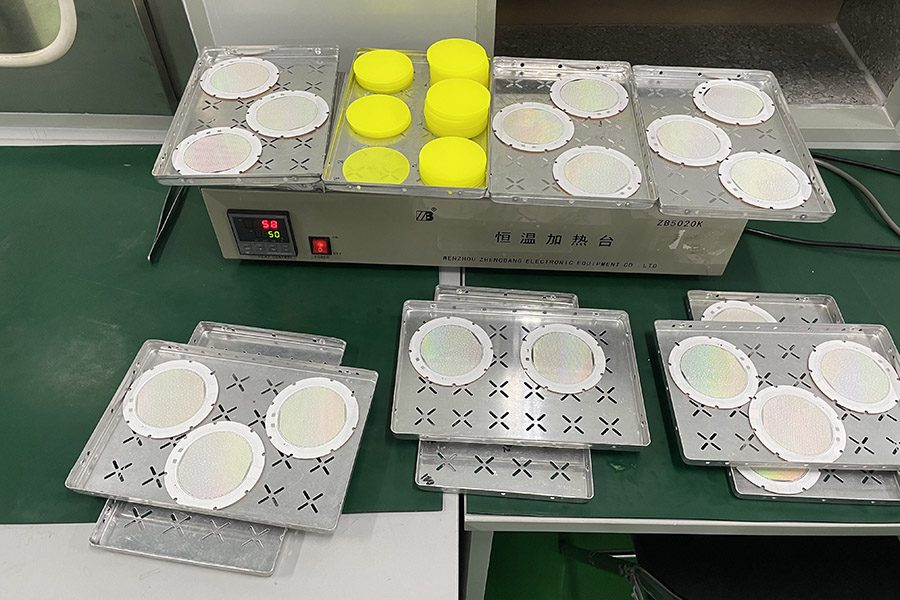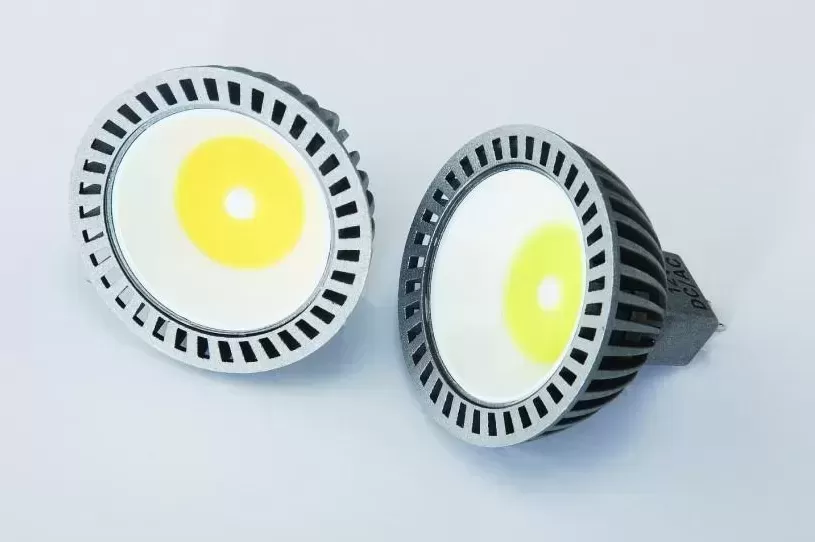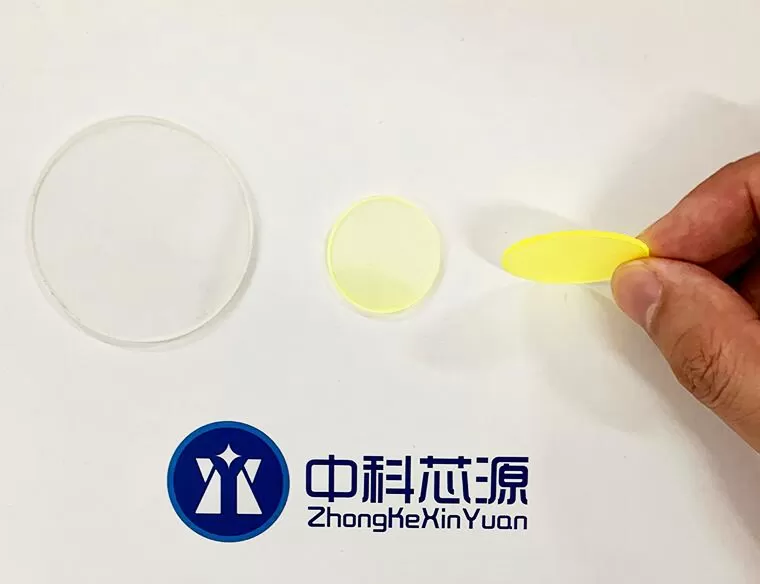
High-luminance solid-state illumination systems demand color conversion materials capable of enduring high optical flux and elevated temperatures. Traditional encapsulants, such as optical silicones or epoxy resins, suffer from severe degradation when subject to high optical power densities. Thermal breakdown of organic binders causes yellowing, micro-cracking, and dramatic lumen loss, creating a bottleneck for high-output light engines.
The implementation of a phosphor plate has redefined the thermal and optical limits of high-power light source engineering. By substituting organic polymer matrices with fully inorganic structures—such as sintered polycrystalline ceramics or glass-based composites—photonic design engineers achieve robust optical density, high thermal conductivity, and long-term chromatic stability. Industry component manufacturers such as CAS have advanced these optical materials to support high-intensity laser-pumped architecture, automotive headlights, and industrial projection systems.
1. Physical Structure and Material Composition of Inorganic Converters
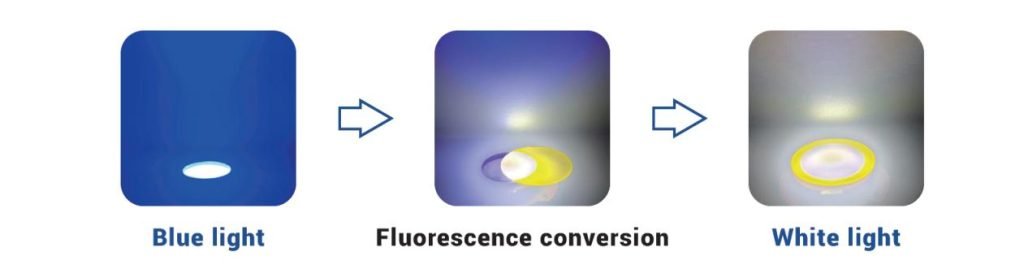
Solid-state conversion elements are engineered to convert short-wavelength coherent or incoherent radiation (typically blue light around 445 nm to 455 nm) into longer wavelengths to create broad-spectrum white light. Unlike conventional remote phosphors dispersed in liquid polymers, inorganic optical plates are fully densified solid structures.
Two primary material architectures dominate high-flux conversion systems:
Polycrystalline Ceramic Converters: Formed through high-pressure spark plasma sintering or hot isostatic pressing of rare-earth doped garnet powders, such as Yttrium Aluminum Garnet (YAG:Ce) or Lutetium Aluminum Garnet (LuAG:Ce). These fully inorganic components exhibit zero porosity and high structural density.
Phosphor-in-Glass (PiG) Structures: Created by dispersing inorganic phosphor grains into low-melting-point silica or borosilicate glass matrices, followed by thermal firing. This approach balances processing complexity with robust environmental protection.
When evaluated against polymer-bound slurries, a phosphor plate provides a heat-conduction pathway capable of handling thermal loads up to 300°C without mechanical distortion or optical drift. A comparative analysis highlights these structural distinctions:
| Performance Parameter | Organic Silicone Slurry | Glass Matrix (PiG) | Ceramic Phosphor Plate |
|---|---|---|---|
| Thermal Conductivity (W/m·K) | 0.15 - 0.25 | 1.0 - 1.5 | 10.0 - 18.0 |
| Maximum Operating Temp (°C) | 150 | 300 | > 500 |
| Refractive Index (n) Match | Poor (~1.41 vs 1.83) | Moderate (~1.55 vs 1.83) | High (~1.82 vs 1.83) |
| Flux Density Tolerance (W/mm²) | < 2 | 10 - 25 | > 50 |
2. Thermal Dynamics and Photoluminescence Saturation
In high-power optical systems, non-radiative relaxation within the phosphor crystal lattice generates local heat. As temperature rises, thermal quenching occurs: electrons in excited energy states return to the ground state via non-radiative transitions, reducing internal quantum efficiency (IQE) and causing shifting chromaticity coordinates (CIE x, y).
Thermal conductivity within a phosphor plate directly impacts the operational temperature of the active converting zone. Standard silicone encapsulation traps heat within the yellow converting layer due to its low thermal conductivity. Consequently, the temperature of the converted zone spikes rapidly, leading to output saturation where increasing blue pump power yields diminishing white light output.
Polycrystalline ceramic plates, such as those refined by CAS, mitigate thermal quenching by conducting heat away from the focused excitation beam toward heat sinks. High thermal conductivity (exceeding 10 W/m·K) keeps the converter temperature significantly lower than the thermal quenching threshold ($T_{50}$), enabling stable light conversion even under focused laser excitation densities exceeding 30 W/mm².
Furthermore, internal scattering effects within inorganic plates are managed through precise grain-boundary control and microstructural phase balancing. Incorporating secondary scattering phases, such as Alumina ($Al_2O_3$), allows optical engineers to adjust light propagation, enhancing spatial chromatic uniformity across wide emission angles.
3. Key Industrial Application Sectors
Inorganic wavelength conversion elements are deployed across specialized markets that demand extreme luminance, precise beam shaping, and extended maintenance-free operating lifespans.
Automotive Exterior Lighting
Modern vehicle headlamps utilize laser-activated and high-power surface-mount LED modules for adaptive driving beam (ADB) and long-range high-beam optics. Space limitations within compact headlamp housings require extremely small light-emitting surfaces (LES) that generate thousands of lumens. Sintered ceramic plates deliver the required optical density and mechanical resistance to withstand road vibrations, ambient engine heat, and intense focused light pump sources.
Digital Cinema and Commercial Projection
Laser phosphor projectors depend on stable white light generation to maintain color accuracy and image brightness over thousands of projection hours. High-power laser modules utilize a phosphor plate mounted on spinning reflective wheels or static cooling substrates to convert blue laser diode arrays into high-lumen yellow/green light channels. Consistent thermal behavior ensures image stability without color drift or flicker over time.
Stage, Architectural, and Searchlight Illumination
Entertainment, maritime, and defense lighting require highly focused light beams with minimal divergence angles. Achieving narrow beam profiles requires small optical sources emitting uniform light. Inorganic phosphor plates enable high spatial brightness, allowing fixture designers to use smaller lenses and reflectors while increasing throw distance.
4. Precision Machining and Optical Surface Configuration
Integrating inorganic photoluminescent components into complex optical engines requires rigorous geometric tolerances and precise surface finishing. Standard thickness tolerances for conversion elements must be controlled within ±0.005 mm to maintain uniform correlated color temperature (CCT) across manufacturing batches.
Substrate thickness directly determines the optical path length of the blue excitation pump beam. If the converter is too thin, unabsorbed blue light passes through, causing a high CCT shift toward blue. Conversely, if the component is too thick, internal self-absorption of converted photons occurs, reducing overall wall-plug efficiency.
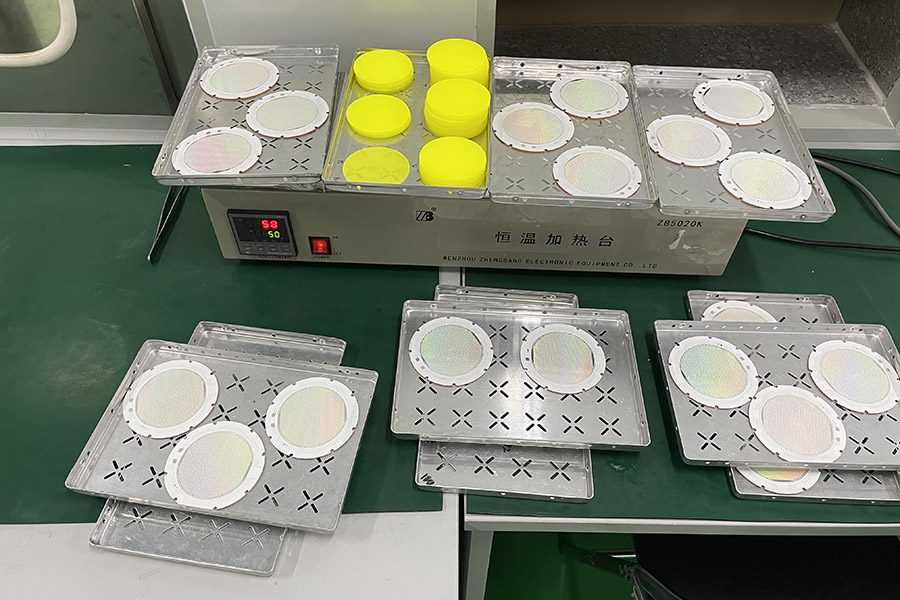
Surface polishing and anti-reflective (AR) optical coatings further increase light extraction efficiency. Ground or polished surfaces change total internal reflection (TIR) dynamics within the plate, increasing forward-scattered light output. CAS utilizes advanced optical grinding and chemical bonding methods to attach conversion plates to high-conductivity heat sinks, minimizing thermal interface resistance (TIM).
5. Engineering Criteria for Component Selection
Selecting the right inorganic conversion component for a solid-state light engine involves balancing several core optical and physical attributes:
Excitation Peak Compatibility: The absorption spectrum of the garnet dopant (e.g., $Ce^{3+}$) must align with the peak output wavelength of the pump source (typically 450 nm - 455 nm).
Emission Spectrum Tuning: Depending on Color Rendering Index (CRI) targets, green-emitting LuAG elements can be paired with red-emitting nitrides or broad-spectrum YAG formulations to achieve desired color rendering properties.
Mechanical and Thermal Mounting: Choosing between reflective (light reflected from the pump side) and transmissive (light passing through the plate) optical layouts dictates whether metallization (e.g., Silver or Aluminum mirror coating) is needed on the rear surface.
Optical Interface Layer: Bonding the inorganic element to a copper or aluminum substrate requires inorganic solder materials or high-temperature glass frits to maintain a low thermal impedance path.
Choosing the right phosphor plate parameters requires matching the blue pump wavelength, target luminance level, and cooling subsystem to avoid thermal degradation and maximize operating performance.
Frequently Asked Questions
Q1: What is the main difference between a ceramic conversion plate
and a Phosphor-in-Glass (PiG) plate?
A1: Ceramic conversion plates
consist of 100% crystalline garnet structures sintered at high temperatures,
yielding superior thermal conductivity (up to 10-18 W/m·K) and optical density.
Phosphor-in-Glass plates feature phosphor particles suspended within a glass
matrix, offering moderate thermal conductivity (1-1.5 W/m·K) at a lower
processing cost suitable for mid-to-high power applications.
Q2: Why are organic silicone encapsulants unsuitable for high-power
laser illumination systems?
A2: Organic silicones have low thermal
conductivity (approx. 0.2 W/m·K) and deteriorate under high thermal loads and
energetic blue photon flux. This exposure causes carbonization, discoloration,
optical clouding, and permanent conversion efficiency drop, leading to module
failure.
Q3: How does converter thickness affect the Correlated Color
Temperature (CCT) of an LED or laser engine?
A3: Plate thickness
dictates the volume of phosphor material encountered by the excitation light
beam. A thicker plate converts more blue photons into yellow/green light,
resulting in a lower CCT (warmer light). A thinner plate allows more unabsorbed
blue light to pass through, yielding a higher CCT (cooler light).
Q4: Can these inorganic components be used in both transmissive and
reflective optical architectures?
A4: Yes. Transmissive designs
allow converted light to exit through the side opposite the light source,
requiring high optical transparency. Reflective designs feature a highly
reflective coating on the back surface, directing converted light back out the
entry side, which is often preferred in high-power laser projection systems for
easier thermal heat sinking.
Q5: What mechanical processing options are available for custom
optical engine designs?
A5: Inorganic photoluminescent plates can be
precision-diced into micro-sized square chips, wire-sawed into custom
geometries, polished to specific surface roughness targets, and edge-beveled to
mitigate chipping during automated pick-and-place assembly.
Specify High-Performance Optical Converters for Your Project
Developing next-generation high-luminance light engines requires optical conversion materials designed for extreme operating environments. Customized ceramic conversion components, substrate bonding solutions, and precise optical testing can elevate system efficiency, color consistency, and long-term operating life.
Contact our application engineering team today to submit an Inquiry for custom phosphor plate samples, optical simulations, and custom component manufacturing specifications tailored to your illumination platform.