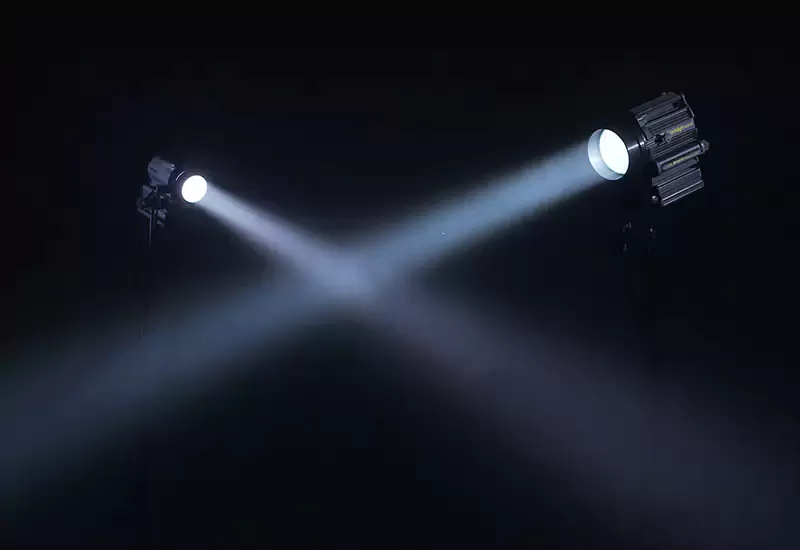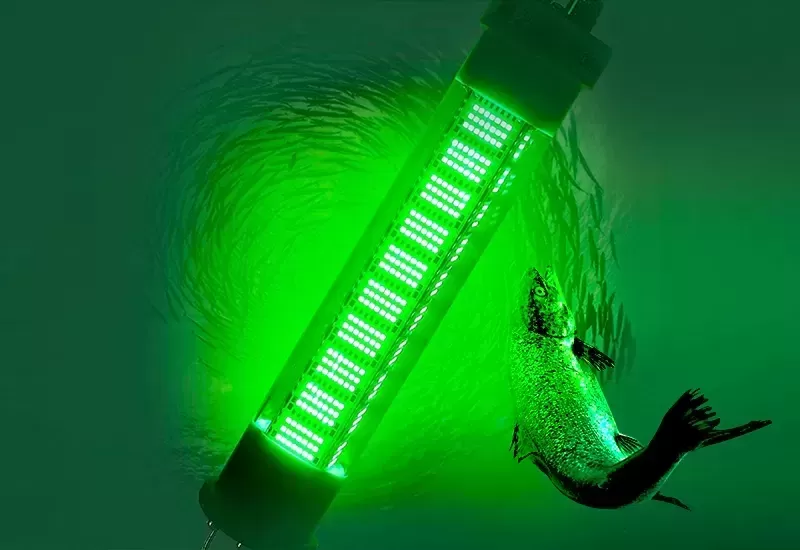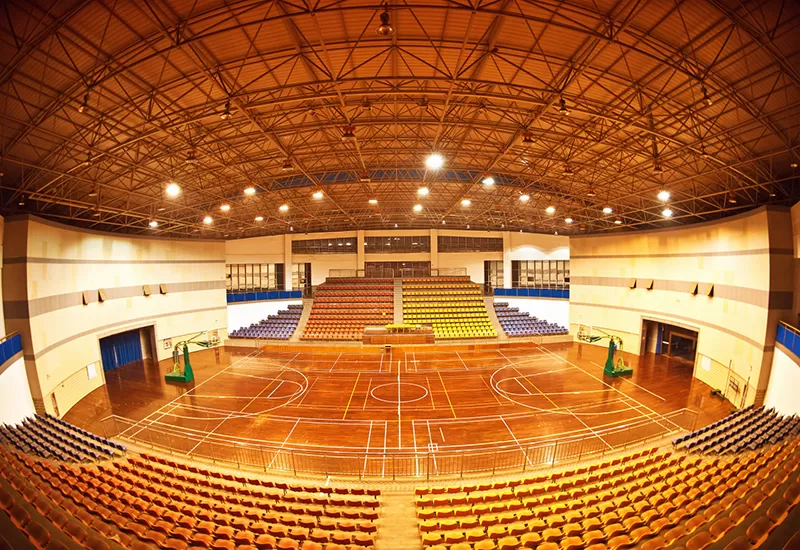
Industrial LED lighting has advanced beyond basic luminous efficacy. Modern system designers prioritize spectral power distribution, color rendering fidelity, and long-term operating stability under harsh environmental conditions. At the center of high-performance solid-state lighting is the phosphor conversion layer, which dictates the quality and longevity of the emitted white light. Materials engineered by Daejoo have emerged as key components in addressing these complex spectral demands. Working in conjunction with system integrators like CAS, these advanced phosphor formulations provide a reliable path to high-efficiency, durable illumination for demanding industrial environments.
The Physics of Color Shift in High-Power LED Packaging
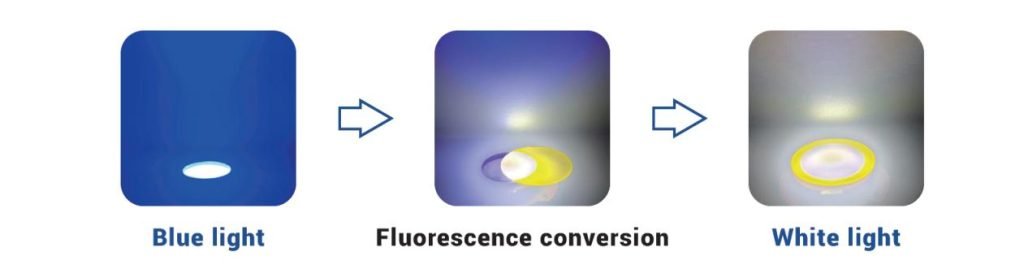
White LEDs typically rely on a blue-emitting semiconductor chip paired with a phosphor mixture that absorbs a portion of the blue light and down-converts it to longer wavelengths, such as green, yellow, and red. The composite emission of these wavelengths produces the targeted white light. However, during continuous operation at high currents, several physical degradation mechanisms occur within the packaging chemistry.
Thermal quenching is one of the primary drivers of color shifting. As the operating junction temperature rises, the internal quantum efficiency of the phosphor decreases. This loss of efficiency is not uniform across all phosphor types; yellow yttrium aluminum garnet (YAG) phosphors, green aluminates, and red nitrides degrade at different rates when exposed to heat. This uneven reduction in emission intensity causes a noticeable drift in the correlated color temperature (CCT) and chromaticity coordinates, often shifting the output toward a cooler blue or a green-yellow hue.
Another major factor is the degradation of the encapsulant matrix. High-power LEDs generate intense blue light and high heat, which can discolor standard optical silicone or epoxy binders. This yellowing of the binder alters the light path, trapping short wavelengths and reducing overall luminous output. Selecting stable phosphor host structures that integrate seamlessly with high-grade silicone is necessary to prevent premature optical aging.
How Daejoo Solves Thermal and Spectral Degradation
To combat these thermal and environmental challenges, chemical synthesis methods must focus on structural stability at the molecular level. The phosphor materials developed by Daejoo are engineered to maintain high emission efficiency even when exposed to high localized temperatures. Through precise control of particle size distribution and crystal lattice structures, these materials minimize energy loss through non-radiative relaxation pathways.
The manufacturing process utilized by Daejoo emphasizes low defect densities within the phosphor host crystals. Surface defects on phosphor particles act as recombination centers where absorbed energy is converted into heat rather than visible light. By reducing these surface defects, the materials achieve high thermal stability, keeping the thermal quenching coefficient extremely low. This ensures that the ratio of blue-to-yellow or blue-to-red light remains stable, even if the junction temperature of the LED package exceeds 100 degrees Celsius.
Moisture resistance is another area where these advanced materials excel. In industrial environments such as chemical plants, food processing facilities, and outdoor infrastructure, humidity can penetrate the LED packaging, causing hydrolysis of nitride-based phosphors. Daejoo applies specialized surface coating technologies to individual phosphor particles, creating a protective barrier against moisture ingress. This structural protection prevents chemical decomposition, ensuring the spectral power distribution remains unchanged over tens of thousands of operating hours.
Integrating Advanced Phosphors into CAS LED Modules
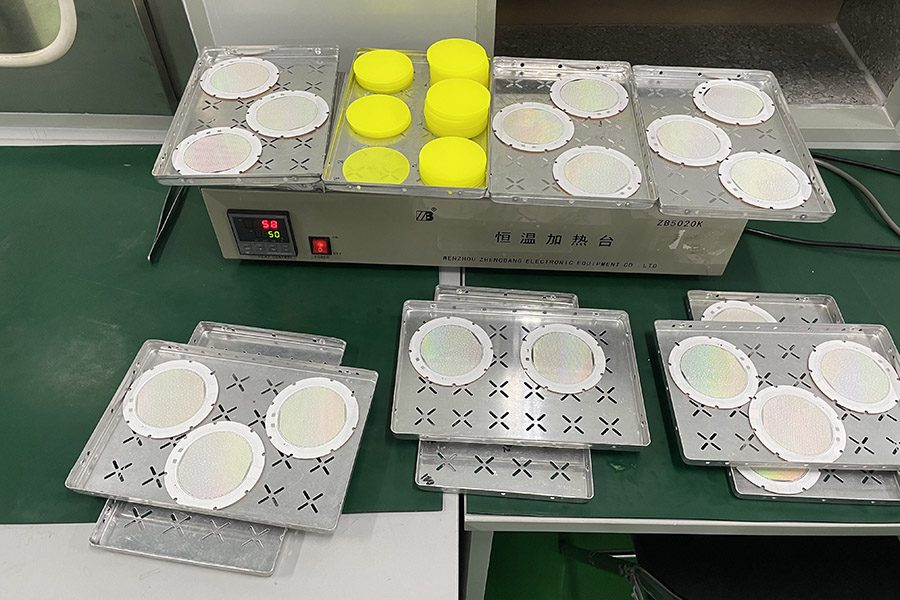
Implementing high-grade phosphor materials requires precise integration into the final LED package. CAS utilizes these advanced phosphor formulations to design high-power LED modules that deliver stable performance under heavy duty cycles. The integration process focuses on achieving a uniform dispersion of the phosphor particles within the silicone matrix to prevent settling during the curing stage.
Particle settling is a common defect in LED packaging where heavier phosphor particles sink to the bottom of the cavity, leading to angular yellow-of-blue color separation. CAS utilizes proprietary dispensing and thermal curing protocols that ensure a homogeneous distribution of Daejoo phosphors across the entire emission surface. This uniform layer results in a consistent color-over-angle profile, eliminating the yellow ring effect often observed in lower-quality industrial fixtures.
The thermal design of the LED module substrate also plays a vital role. By pairing these chemically stable phosphors with ceramic substrates or metal-core printed circuit boards (MCPCBs) that feature low thermal resistance, heat is rapidly dissipated away from the phosphor layer. This thermal management strategy ensures that the phosphor particles operate well within their designed temperature limits, further securing chromaticity stability over the lifetime of the luminaire.
Industrial Applications Requiring High Spectral Fidelity
Certain industrial sectors require strict adherence to color standards, making the choice of phosphor materials a major design consideration.
Automotive Assembly and Inspection: Inspecting paint finishes and weld quality requires high color rendering index (CRI) values, particularly for red rendering (R9). Utilizing narrow-band red nitrides from Daejoo allows CAS to produce LED modules with a CRI exceeding 90, enabling inspectors to detect subtle surface imperfections without visual fatigue.
Cold Storage and Food Processing: High-humidity, low-temperature environments can accelerate mechanical stress in LED packages due to coefficient of thermal expansion (CTE) mismatches. The moisture-resistant coatings on these phosphor formulations protect the light source from moisture-induced chemical degradation.
High-Bay Warehousing and Logistics: In facilities with high ceilings, replacing failed luminaires is labor-intensive and costly. Installing fixtures with stable phosphor configurations minimizes the need for frequent replacements, ensuring uniform light levels and color temperatures throughout the entire facility over a multi-year operating period.
Comparing Phosphor Types: Silicates, Aluminates, and Nitrides
Understanding the differences between phosphor families is helpful when specifying lighting systems for industrial infrastructure. Each material group offers distinct spectral profiles and thermal limits.
| Phosphor Family | Spectral Region | Thermal Stability | Key Application Strengths |
|---|---|---|---|
| Yttrium Aluminum Garnet (YAG) | Yellow | High | Broad emission, excellent efficiency for cool-to-neutral white LEDs. |
| Silicates | Green / Yellow | Moderate | High quantum efficiency at room temperature, narrow emission bands. |
| Nitrides (Daejoo) | Red | Very High | Excellent thermal performance, enables high CRI and warm CCTs without efficiency loss. |
| Aluminates (LuAG) | Green | Very High | Excellent resistance to high-power density, ideal for high-lumen industrial applications. |
Selecting the appropriate combination of these materials is a key engineering step. High-CRI warm white light requires a mixture of green aluminates and red nitrides. The thermal co-efficiency of these materials must be balanced so that when the temperature fluctuates, the emissions of both phosphors change proportionally, keeping the chromaticity coordinates within a tight MacAdam ellipse step.
Operational and Economic Benefits of Color Stability
Investing in high-stability phosphor systems provides clear economic advantages over the operating life of an industrial facility. When color shifting occurs, it is rarely uniform across all fixtures in a building. This results in a patchy, uneven appearance where some areas look green, others pink, and some blue. In professional settings, this inconsistent lighting can impact employee productivity, compromise quality control processes, and create an unprofessional aesthetic.
Furthermore, maintaining stable chromaticity helps facilities comply with workplace safety regulations. Consistent, high-fidelity lighting improves depth perception and reduces glare, which is helpful in environments operating heavy machinery. By choosing CAS fixtures featuring Daejoo phosphor technology, procurement managers can reduce maintenance overhead, avoid early replacement costs, and ensure consistent compliance with lighting standards.
Procurement and Engineering Selection Criteria
When selecting LED luminaires for major commercial or industrial projects, procurement teams should evaluate several parameters beyond initial cost and lumen output:
Color over Angle (CoA) Uniformity: Request goniophotometric data to verify that the chromaticity coordinates do not vary significantly across different viewing angles.
CCT Drift Specifications: Review lifetime test reports (such as LM-80 and TM-21 data) to analyze the projected chromaticity shift (measured as Delta u'v') over 50,000 hours.
Spectral Power Distribution (SPD): Ensure the spectral output matches the specific requirements of the work environment, whether that means high blue-light suppression for shift workers or high R9 values for color evaluation.
Thermal Dissipation Metrics: Verify that the luminaire housing design allows the phosphor layer to operate at a safe temperature under maximum ambient conditions.
Frequently Asked Questions
Q1: What is the primary cause of color shifting in industrial LED fixtures over time?
A1: Color shifting is primarily caused by unequal thermal quenching and chemical degradation of the phosphors and encapsulating silicone. Under high heat and intense blue light, inferior phosphors lose conversion efficiency at different rates, while low-grade silicone yellowers, leading to an unbalanced spectral output.
Q2: How do Daejoo phosphor materials resist moisture-induced degradation?
A2: These phosphor materials feature specialized protective coatings applied at the particle level during synthesis. This barrier prevents moisture from reacting with the core phosphor chemistry, avoiding hydrolysis and preserving emission stability in humid environments.
Q3: What role does CAS play in utilizing these advanced materials?
A3: CAS acts as the integration and manufacturing partner, formulating these phosphors into high-quality LED modules. Through precise dispensing, thermal management, and robust luminaire housing design, CAS ensures that the materials perform reliably under industrial operating conditions.
Q4: Why are narrow-band red nitrides preferred for high-CRI applications?
A4: Traditional red phosphors have a wide emission curve that extends into the near-infrared spectrum, where the human eye has very low sensitivity, leading to energy waste. Narrow-band red nitrides focus the energy within the visible red spectrum, improving color rendering (especially R9) while maintaining high luminous efficacy.
Q5: What metric is used to measure color stability in LED lighting?
A5: Color stability is typically evaluated using Delta u'v' over time, as defined by LM-80 test reports. A lower Delta u'v' value indicates that the light output remains closer to its original chromaticity coordinates, ensuring minimal visible color shift over the product's lifespan.
Inquiry and Collaboration
Selecting the right LED configuration for demanding environments requires careful consideration of thermal designs, spectral distributions, and material chemistry. For detailed product specifications, custom spectral matching services, or to request a quote for your upcoming industrial project, please reach out to our application engineering team. Submit your detailed project requirements through our business inquiry channel, and our technical specialists will assist you in designing a solution tailored to your operational needs.