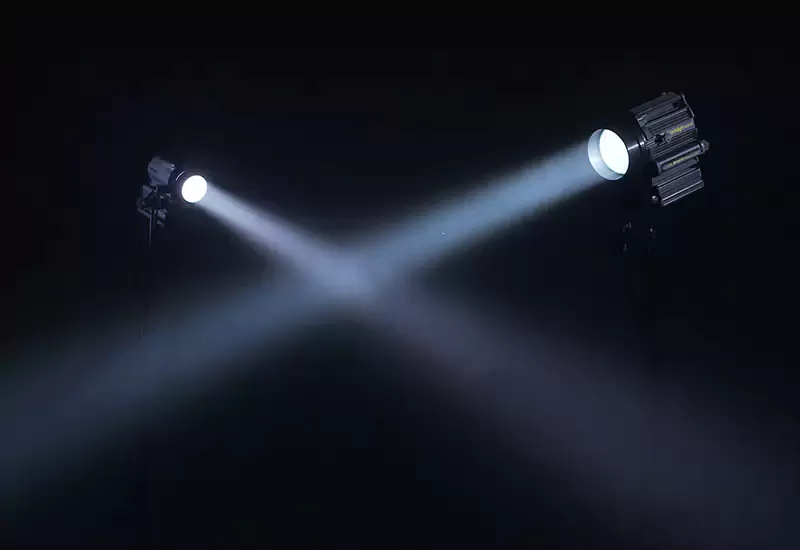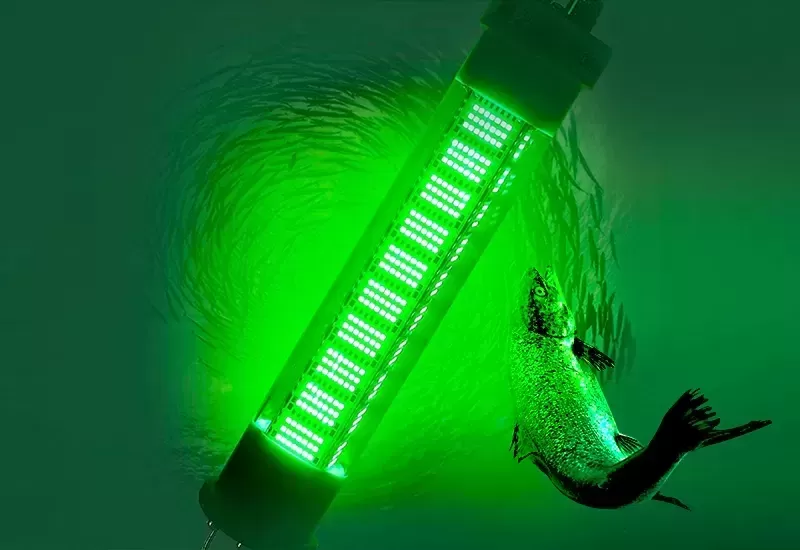
High-power solid-state lighting has progressed beyond general illumination into fields requiring high optical density, such as automotive headlights, outdoor projection systems, and industrial searchlights. In these applications, blue laser diodes (LDs) and high-density light-emitting diodes (LEDs) serve as the primary excitation sources. While these semiconductor chips offer high optical output, they also generate localized heat and intense blue photon fluxes that place severe stress on the color conversion materials. Traditional lighting systems rely on organic silicone matrices to hold yellow, green, or red phosphor particles. However, under high-intensity radiation, organic silicones undergo thermal yellowing and chemical degradation, resulting in color shifts and reduced light output.
To overcome these material limitations, industrial lighting designers have turned to inorganic encapsulation methods. The most reliable approach is to shield phosphor in glass matrices, creating what is known in the industry as phosphor-in-glass (PiG) or glass-ceramic color converters. This engineering solution replaces the vulnerable organic polymer with a robust, inorganic glass host. By embedding luminescent crystals inside a specially formulated glass material, manufacturers protect the phosphors from thermal, optical, and environmental degradation. The following analysis examines the material science, manufacturing parameters, application areas, and design challenges associated with this high-performance encapsulation method.
The Limitations of Polymer Encapsulation in High-Power Optoelectronics
To understand the necessity of this technology, one must examine the behavior of traditional silicone-encapsulated phosphors under heavy thermal loads. In a standard LED package, the phosphor powder is mixed with optical-grade silicone and dispensed over the blue LED chip. While this method is cost-effective for low-to-medium-power domestic lighting, it fails when operating at high power densities. High-power LED chips run at junction temperatures often exceeding 120°C, and laser diodes can concentrate several watts of optical power onto a spot smaller than one square millimeter.
Silicone possesses a low thermal conductivity, typically around 0.1 to 0.2 W/m·K. This low value prevents heat generated by the Stokes shift loss within the phosphor particles from escaping efficiently. The heat remains trapped within the phosphor layer, causing local temperatures to rise far above the average junction temperature. Under these conditions, silicone undergoes photo-thermal aging. This aging manifests as yellowing, cracking, and loss of structural adhesion, which reduces the light extraction efficiency of the package. Furthermore, organic polymers are permeable to moisture and oxygen, leading to the chemical degradation of sensitive phosphor compounds over extended operating lifetimes.
How the Inorganic Matrix Works to Shield Phosphor in Glass
Replacing silicone with glass addresses these thermal and environmental challenges. Glass is a fully inorganic material with a typical thermal conductivity ranging from 0.8 to 1.5 W/m·K, which is nearly an order of magnitude higher than that of standard silicone. When manufacturers shield phosphor in glass, the glass matrix acts as an efficient heat sink, drawing thermal energy away from the phosphor crystals and dispersing it to the surrounding ceramic substrate or metal heat sink. This heat dissipation keeps the internal temperature of the phosphor particles below their thermal quenching threshold.
Thermal quenching is the process where a luminescent material loses its efficiency as temperature increases, because non-radiative relaxation pathways become more dominant than radiative emission. By maintaining lower operating temperatures, the glass-encapsulated color converter retains high quantum efficiency even under intense blue light excitation. Additionally, glass is highly impermeable to gases and moisture. It forms a hermetic seal around each individual phosphor particle, protecting sensitive chemical species from oxidation and hydrolysis. This chemical barrier is particularly useful for nitride and fluoride phosphors, which are prone to moisture-induced degradation but are required for high color rendering index (CRI) configurations.
Material Selection and Optical Co-firing Processes
Fabricating a reliable glass-ceramic converter requires careful selection of the host glass and the active phosphor powders. The glass host must melt at a temperature low enough to prevent thermal damage to the phosphor during the co-firing process, yet it must remain stable during subsequent manufacturing steps and operation. Borosilicate, zinc-phosphate, and tellurite glasses are frequently chosen due to their lower glass transition temperatures (Tg) and melting points, often ranging between 500°C and 800°C.
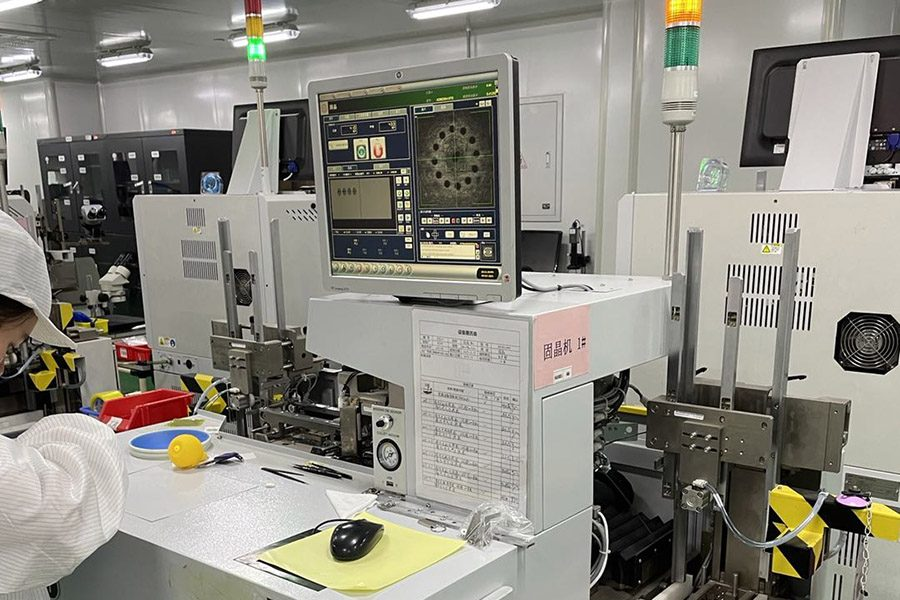
During the manufacturing process developed by CAS, the glass is first ground into a fine powder (glass frit) and mixed with the selected phosphor powder in precise weight ratios. This mixture is then pressed into green body pellets or doctor-bladed into thin films before undergoing a controlled sintering profile. The temperature must be carefully managed; if the temperature is too low, the glass will not flow sufficiently to eliminate pores, resulting in high optical scattering. If the sintering temperature is too high, the glass matrix can chemically react with the phosphor particles. This reaction can dissolve the phosphor into the glass network or alter its crystal structure, destroying its luminescent properties.
Managing Thermal Expansion and Refractive Index Matching
A major structural challenge in the production of these composite materials is the mismatch in the Coefficient of Thermal Expansion (CTE) between the glass matrix and the phosphor crystals. Common phosphors, such as Yttrium Aluminum Garnet (YAG:Ce), have a CTE of approximately 7.5 to 8.2 × 10^-6 /K. If the glass host has a significantly different expansion rate, the thermal cycles during sintering and operation will induce high mechanical stress inside the composite. This stress can lead to micro-cracking, which scatters light undesirably and compromises the structural integrity of the converter.
To prevent this, the material scientists at CAS adjust the chemical composition of the glass frit by introducing modifiers like aluminum oxide, zinc oxide, or alkali-earth oxides. These additives adjust the CTE of the glass to match that of the phosphor. Another factor is refractive index matching. Most garnet phosphors have a high refractive index of around 1.8 to 1.85. If the refractive index of the host glass is significantly lower (e.g., around 1.5), the light passing through the boundary between the glass and the phosphor will experience strong refraction and scattering. While some scattering is necessary to mix the blue excitation light and the yellow converted light, excessive scattering reduces the forward light output. Therefore, choosing a glass with a refractive index closer to 1.6 or 1.7 helps maintain high optical extraction efficiency.
Industrial Applications Requiring Advanced Phosphor Protection
The decision to shield phosphor in glass is driven by demanding operating conditions where standard LED packaging methods fail. The following sectors rely heavily on this material system:
Automotive Headlamps and Laser High-Beams: Modern vehicle headlights require high-luminance light sources to project focused beams over long distances. Laser-activated remote phosphor (LARP) systems use a blue laser beam focused onto a small glass-ceramic phosphor plate. The glass matrix withstands the high power density of the laser, providing consistent white light without degradation.
High-Bay Industrial Lighting: Facilities such as steel mills, warehouses, and chemical plants operate under elevated ambient temperatures and corrosive atmospheres. Glass-encapsulated phosphors protect the light source from airborne moisture and chemical fumes, ensuring long-term color consistency.
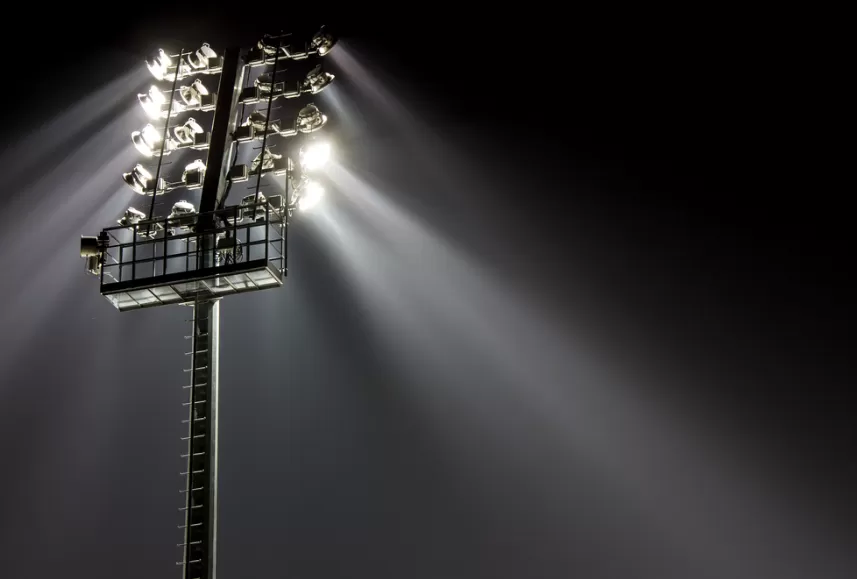
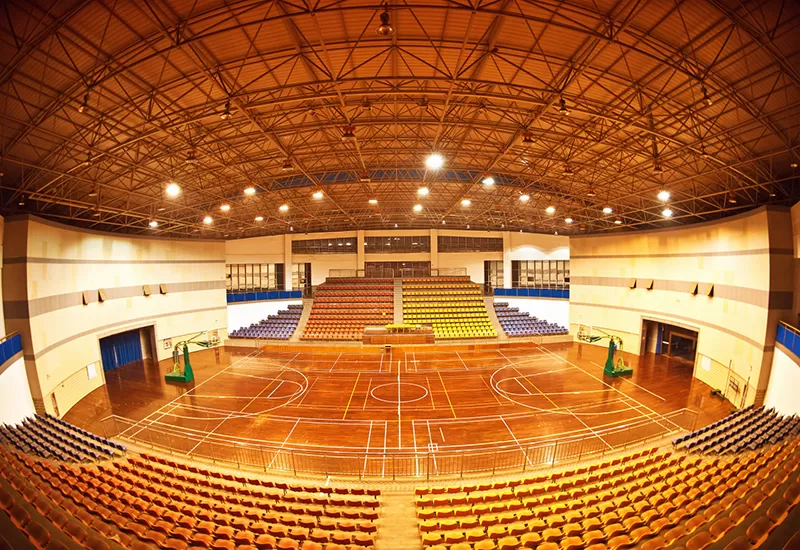
Outdoor Architectural and Sports Lighting: Stadium floodlights and architectural wash lights run at high currents to illuminate large areas. These fixtures are subjected to solar radiation and weather extremes, making the UV stability and moisture resistance of the glass converter vital for reducing maintenance costs.
Projection Systems: High-end digital projectors use blue lasers focused on a rotating phosphor wheel to generate the primary colors. The mechanical stress of rotation, combined with intense local heating from the laser, requires the high physical strength and thermal conductivity of a glass-ceramic structure.
A Comparison of Color Converter Technologies
To assist system designers in choosing the correct materials, the table below compares the performance of traditional silicone encapsulation, phosphor-in-glass (PiG), and single-crystal phosphor plates:
| Performance Parameter | Silicone Encapsulation | Phosphor in Glass (PiG / CAS) | Single Crystal Phosphor |
|---|---|---|---|
| Thermal Conductivity (W/m·K) | 0.1 - 0.2 | 0.8 - 1.5 | > 8.0 |
| Maximum Operating Temp (°C) | < 150 | 250 - 300 | > 400 |
| Moisture Resistance | Low (Permeable) | High (Hermetic) | High (Inherent) |
| Manufacturing Cost | Low | Moderate | Very High |
| Design Flexibility (Shapes) | High | Moderate to High | Low |
While single-crystal phosphor plates offer high thermal performance, their manufacturing process is highly complex and costly, making them less practical for broad commercial adoption. This makes the method to shield phosphor in glass an ideal middle ground, offering high durability and thermal management at a manageable price point for volume production.
Resolving the Challenge of Red Nitride Phosphor Stability
To produce warm white light with a high Color Rendering Index (CRI), lighting systems must include a red-emitting phosphor component alongside the green or yellow converter. Red nitrides, such as CaAlSiN3:Eu2+ (commonly referred to as CASN), are highly effective but are sensitive to high temperatures and ambient moisture. When heated in air during standard manufacturing, nitrides can oxidize, leading to a reduction in quantum efficiency and a shift in emission wavelength.
By using low-melting-point glass compositions and sintering under an inert nitrogen or vacuum atmosphere, the engineers at CAS successfully embed these sensitive red nitrides into the glass matrix without degrading their structural phase. The surrounding glass shields the red phosphor from atmospheric oxygen during both the high-temperature processing and the lifetime of the light fixture. This allows industrial lighting manufacturers to design high-CRI, high-power light sources that maintain their spectral balance over tens of thousands of operating hours.
Summary of System Design Considerations
When implementing glass-ceramic converters in a lighting system, design engineers must consider several factors to ensure reliable performance. The thickness of the glass-ceramic plate directly influences both the optical path length and the thermal resistance. A thicker plate increases the likelihood of blue light absorption and conversion, but it also increases the thermal path length, which can raise the surface temperature of the phosphor. Conversely, a plate that is too thin may allow unconverted blue light to leak through, shifting the chromaticity coordinates toward the blue spectrum.
Furthermore, the attachment method of the converter plate to the LED or laser package is highly important. Low-thermal-resistance bonding agents, such as silver-filled epoxies or eutectic gold-tin solder preforms, should be used to mount the glass-ceramic plate onto the metal lead frame or ceramic submount. Any air gaps or voids in the adhesive layer will act as thermal barriers, causing localized heating that can compromise the benefits gained by choosing a glass matrix.
Frequently Asked Questions
Q1: What is the main benefit when we shield phosphor in glass compared to using silicone-based mixtures?
A1: The primary benefits are improved thermal conductivity and hermetic protection. Glass conducts heat away from the phosphor particles much faster than silicone, which reduces thermal quenching. Additionally, the glass matrix prevents moisture and oxygen from reaching the phosphor, ensuring long-term color stability in harsh environments.
Q2: Can red nitride phosphors be used in these glass-ceramic converters without losing their efficiency?
A2: Yes, red nitride phosphors can be successfully integrated if processed correctly. By using low-melting-point glass compositions and controlling the sintering atmosphere, the glass matrix protects the red phosphor from oxidation during manufacturing and subsequent operation, maintaining high CRI and spectral stability.
Q3: How does the refractive index of the host glass affect the optical performance of the converter?
A3: The difference in refractive index between the glass and the phosphor particles determines the level of light scattering. Matching the indices closely minimizes excessive backscattering, which improves forward light extraction efficiency and prevents loss of brightness.
Q4: Is the thermal expansion mismatch between the glass and the phosphor a significant issue?
A4: It can be a major issue if not addressed. A large difference in the thermal expansion coefficients can cause mechanical stress and micro-cracking during heating and cooling cycles. This is prevented by adjusting the chemical composition of the glass to match the thermal expansion characteristics of the specific phosphor used.
Q5: What are the typical applications that require glass-encapsulated phosphors instead of standard LED packages?
A5: This technology is primarily used in high-power and high-luminance applications, such as automotive laser headlamps, outdoor searchlights, high-bay industrial fixtures, stage lighting, and digital laser projection systems where silicone would degrade rapidly.
Connect with Our Engineering Team
Developing high-power lighting fixtures requires careful selection of materials and precise optical engineering. The team at CAS possesses extensive experience in designing and manufacturing glass-ceramic materials tailored to specific spectral and thermal requirements. If you are seeking to improve the thermal stability, color consistency, and overall operational lifespan of your solid-state lighting products, we invite you to consult with our applications department. Contact us today to discuss your project specifications, request material samples, or receive a technical evaluation of your current lighting designs.