High-power solid-state lighting has transitioned from traditional general illumination to specialized fields such as automotive headlights, high-intensity stage lighting, outdoor projection systems, and searchlights. As operating currents and optical power densities increase, traditional phosphor-in-silicone packaging systems face significant thermal and structural limitations. Thermal quenching, binder yellowing, and optical degradation represent persistent challenges for optoelectronic engineers. To overcome these limitations, advanced material architectures have emerged, among which the Daejoo phosphor plate stands out as a reliable solution for high-power thermal management and spectral consistency.
By shifting from organic-silicone binders to a solid-state inorganic ceramic matrix, this material framework manages thermal loads that would otherwise degrade traditional LED packages. For system integrators and luminaire manufacturers working with CAS to evaluate or implement high-luminance designs, understanding the material properties, optical behaviors, and integration methodologies of the Daejoo phosphor plate is key to developing durable, high-performance light engines.
The Structural Architecture of Ceramic Phosphors
The core limitation of conventional LED packaging lies not in the phosphor itself, but in the matrix material. Organic silicones possess a low thermal conductivity, typically ranging from 0.1 to 0.5 W/m·K. Under high optical flux, local temperatures within the phosphor layer can exceed 150°C, causing the silicone to discolor, lose transmittance, and ultimately fail.
The Daejoo phosphor plate addresses this vulnerability by utilizing a fully inorganic structure. Typically structured as a ceramic phosphor plate (CPP) or phosphor-in-glass (PiG), this plate disperses high-purity phosphor powder inside a solid glass or ceramic matrix. The resulting material exhibits a thermal conductivity that is often one to two orders of magnitude higher than that of silicone, typically between 5 and 15 W/m·K depending on the specific ceramic composition.
Material Composition and Sintering Processes
The manufacturing process of the Daejoo phosphor plate involves precise sintering at elevated temperatures. High-purity nitride, oxynitride, or garnet-based phosphors (such as YAG:Ce or LuAG:Ce) are mixed with inorganic glass frits or ceramic binders. This mixture is compacted and fired at temperatures often exceeding 1000°C. This high-temperature process yields a dense, non-porous plate with high mechanical strength and exceptional resistance to environmental moisture, chemical exposure, and thermal shock.
Optical Properties and Refractive Index Matching
One of the primary challenges in ceramic phosphor design is minimizing backward scattering and maximizing forward light extraction. The interface between the phosphor particles and the host matrix must be carefully controlled. If the difference in refractive index between the phosphor (typically around 1.8 to 1.85 for YAG) and the host glass matrix is too large, excessive scattering occurs, which reduces the overall luminous efficacy. By matching these refractive indices, the Daejoo phosphor plate ensures high transmittance of the blue pump light and uniform conversion throughout the ceramic volume.
Overcoming Thermal Quenching in High-Luminance Applications
Thermal quenching refers to the reduction in phosphor quantum efficiency as the operating temperature rises. When the phosphor crystals absorb blue light, some energy is lost as non-radiative relaxation, which generates heat. In high-power applications, this heat cannot escape quickly enough from a silicone matrix, creating a localized thermal runaway loop where increased temperature leads to lower efficiency, which in turn generates more heat.
Because the Daejoo phosphor plate is completely inorganic, it can withstand operating temperatures exceeding 200°C without undergoing thermal decomposition or yellowing. The high thermal dissipation rate allows heat to flow rapidly from the converting volume to the secondary heat sink, keeping the phosphor temperature well below its thermal quenching threshold.
Color Shift Mitigation: In traditional LEDs, differential thermal degradation of red, green, and yellow phosphors causes the correlated color temperature (CCT) to shift over time. The structural stability of the inorganic plate maintains a consistent spectral power distribution even under continuous high-power operation.
Enhanced Lumen Maintenance: By eliminating organic compounds susceptible to UV and thermal aging, the overall lumen depreciation of the light engine is minimized, matching the operational lifespan of the blue pump LED or laser diode.
Aperture Luminance: Laser-activated phosphor systems require extremely small light-emitting surfaces (often under 1 mm²) to achieve high throw distances. The thermal robust nature of the Daejoo phosphor plate makes it suitable for these highly concentrated laser-pumped architectures.
Key Mechanical and Thermal Specifications
When selecting a Daejoo phosphor plate for solid-state lighting designs, several material parameters must be evaluated to ensure compatibility with the host LED or laser engine. The table below outlines the general physical and optical attributes typical of these high-performance inorganic phosphor plates.
| Parameter | Typical Value Range | Significance in Design |
|---|---|---|
| Thermal Conductivity | 5.0 – 15.0 W/m·K | Determines the rate of heat dissipation away from the active optical area. |
| Thickness | 100 µm – 500 µm | Directly affects the blue-to-yellow conversion ratio and the target CCT. |
| Surface Roughness (Ra) | < 0.5 µm (polished) | Influences light extraction efficiency and interface contact resistance. |
| Refractive Index | 1.60 – 1.85 | Affects scattering profiles and internal total internal reflection (TIR). |
| Maximum Operating Temperature | Up to 250°C (continuous) | Enables operation in high-power density laser and automotive modules. |
Optical Measurement and Quality Verification with CAS
Deploying advanced materials like the Daejoo phosphor plate in a B2B environment requires strict quality control and precise optical metrology. Variations in plate thickness of even a few micrometers can alter the chromaticity coordinates (Cx, Cy) beyond acceptable MacAdam ellipse limits. This is where high-precision testing configurations, such as the CAS spectroradiometer systems, become invaluable.
The CAS series of array spectroradiometers is recognized for delivering highly accurate spectral measurements with minimal stray light. When integrated with an integrating sphere or a goniophotometer, CAS instruments allow engineers to precisely map the angular color uniformity, luminous flux, and color rendering indices of the phosphor plates under realistic thermal and electrical load conditions.
Measuring Spatial Color Distribution
Due to the scattering characteristics within the ceramic plate, the color temperature can vary at different viewing angles—a phenomenon known as spatial color non-uniformity. Using a CAS spectroradiometer equipped with a telescopic optical probe or a motorized goniometer allows researchers to measure the spectral output across all angles. This ensures that the light engine does not exhibit yellow-ring patterns or blue-edge separation in automotive projection lenses.
Thermal-Optical Characterization
To evaluate the real-world performance of the Daejoo phosphor plate, it is necessary to measure optical properties as a function of temperature. By mounting the phosphor plate onto a temperature-controlled fixture and coupling it with a CAS measurement system, engineers can observe the exact temperature at which thermal quenching begins. This data is essential for thermal management design, guiding the size of the heat sink and the drive current of the excitation source.
Industrial and Commercial Applications
The transition to solid-state ceramic plates is driven by specific application demands where conventional packaging cannot survive. The unique properties of the Daejoo phosphor plate find utility in several high-demand sectors.
Automotive Lighting Systems
Modern automotive headlamps, particularly those utilizing matrix LED or laser high-beam technologies, require maximum lumen output from a compact optical aperture. The high luminance allows for smaller, more aerodynamic headlight designs. The exceptional thermal stability of the ceramic plate ensures that headlights function reliably in harsh engine-compartment environments under extreme seasonal temperature variations.
High-Power Projection and Stage Illumination
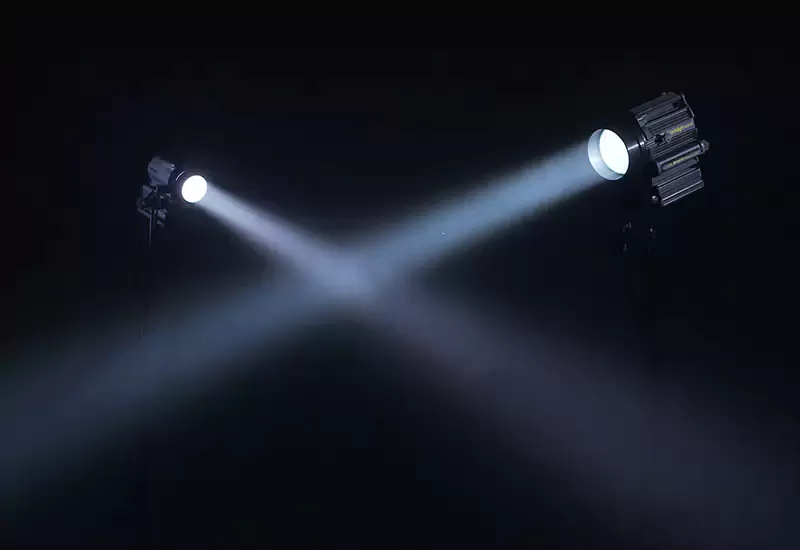
Stage spotlights and digital cinema projectors demand high luminous flux and high color purity. Traditional phosphor wheels in projectors suffered from mechanical wear and binder degradation. Static or rotating configurations using the Daejoo phosphor plate offer a robust, long-lasting alternative that can handle intense, focused blue laser arrays without degrading, preserving color balance throughout thousands of hours of operation.
Industrial High-Bay and Outdoor Searchlights
For industrial lighting in steel mills, chemical plants, or marine searchlights, maintenance is difficult and expensive. Light engines built with ceramic plates significantly extend the servicing intervals. Because the glass-ceramic matrix is hermetic, it prevents moisture and corrosive gases from reaching the phosphor crystals, protecting them from hydrolytic degradation.
Selecting the Right Configuration
System designers must balance several optical and mechanical parameters when integrating these plates into their luminaire designs. The selection process involves a trade-off between conversion efficiency, color quality, and thermal constraints.
Thickness and Concentration Tuning
A thicker plate increases the path length of the blue light, resulting in more conversion and a warmer color temperature (lower CCT). However, a thicker plate also increases bulk thermal resistance and can lead to higher internal absorption losses. Fine-tuning the balance between phosphor doping concentration and plate thickness is necessary to meet target chromaticity specs without compromising the overall wall-plug efficiency of the module.
Assembly and Bonding Techniques
How the Daejoo phosphor plate is bonded to the substrate is a decisive factor in thermal performance. Using a silicone-based adhesive can create a thermal bottleneck, defeating the purpose of the ceramic plate's high thermal conductivity. Instead, advanced bonding methods, such as eutectic soldering, AuSn preforms, or silver sinter pastes, are preferred. These materials provide a low-resistance thermal path, ensuring that heat is efficiently transferred to the ceramic or copper submount.
Inquiry and Collaboration
Implementing advanced ceramic phosphor materials requires careful alignment between raw material properties, packaging design, and precise optical testing. If you are developing high-luminance solid-state lighting systems, laser-based light engines, or specialized automotive modules, utilizing the Daejoo phosphor plate in combination with professional measurement instrumentation can significantly reduce development cycles and improve product reliability.
We invite optical designers, product managers, and material engineers to discuss their specific application requirements, spectral targets, and thermal challenges. Contact our technical advisory team to request material samples, optical simulation files, or details on how to integrate CAS measurement configurations into your production and testing lines.
Frequently Asked Questions
Q1: What is the primary operational difference between a Daejoo phosphor plate and a traditional silicone-based phosphor coating?
A1: The primary difference lies in the matrix material and thermal performance. Traditional coatings disperse phosphor powder in organic silicone, which has low thermal conductivity and degrades under high heat and intense UV/blue light. The ceramic-glass matrix of the plate provides much higher thermal conductivity (5–15 W/m·K) and absolute resistance to thermal yellowing, enabling it to withstand the high power densities of laser diodes and high-current LEDs.
Q2: How does plate thickness affect the color temperature (CCT) of the output light?
A2: The thickness of the plate determines the optical path length of the blue pump light. A thicker plate increases the probability of blue photons interacting with the phosphor crystals, resulting in higher conversion and a warmer, more yellow-shifted light (lower CCT). Conversely, a thinner plate allows more blue light to pass through unconverted, producing a cooler white light (higher CCT).
Q3: Can the plate be used with both LED and laser diode (LD) light sources?
A3: Yes, it is highly compatible with both. While it improves the reliability of high-current LED arrays, it is especially valuable for laser-diode-pumped systems. Laser diodes concentrate high optical power onto a very small area, generating localized heat that would quickly destroy organic binders, making inorganic ceramic plates the standard choice for laser lighting.
Q4: Why is precise optical measurement with CAS instrumentation necessary during production?
A4: Ceramic phosphor plates require tight manufacturing tolerances. Microscopic variations in density, phosphor distribution, or thickness can shift the color coordinates. High-precision spectroradiometers, such as those from the CAS series, are required to perform accurate spectral analysis, ensuring color consistency, spatial uniformity, and exact binning before the components are integrated into expensive sub-assemblies.
Q5: What bonding materials are recommended to attach the phosphor plate to a metal substrate or heat sink?
A5: To maintain a high-efficiency thermal path, it is best to avoid standard organic adhesives. Instead, high-thermal-conductivity bonding materials are recommended, such as lead-free eutectic solder (e.g., AuSn) or silver-sintering pastes. These metal-based interfaces ensure that the heat generated within the ceramic plate is quickly dissipated into the copper or ceramic submount.