Solid-state lighting has transitioned from simple illumination to highly precise, specialized applications demanding tight chromaticity control and long-term reliability. In this domain, the phosphor conversion layer remains a primary determinant of an LED package’s spectral power distribution, luminous efficacy, and color rendering quality. Luminescent materials must withstand high optical flux densities and elevated junction temperatures without undergoing severe degradation. Within the specialized manufacturing sector, Daejoo phosphor has emerged as a reliable material family for achieving stable down-conversion across various LED architectures.
To implement these advanced materials successfully, packaging engineers require a thorough understanding of their physical, chemical, and optical behaviors under operational stress. Enterprise partners such as CAS supply these precise chemical compounds while assisting manufacturers in integrating them into robust production workflows. By examining the underlying material science, thermal mechanics, and application engineering of these phosphors, manufacturers can refine their optoelectronic designs for demanding markets.
The Chemistry and Spectral Characteristics of Daejoo Phosphor
The down-conversion mechanism in blue-pumped LEDs relies on the precise excitation and emission characteristics of host crystal lattices dopant ions. Daejoo phosphor formulations are engineered to convert blue light, typically centered around 450 to 455 nanometers, into broad or narrow-band emissions covering the green, yellow, and red spectral bands. The choice of host structure directly dictates the optical properties and stability of the material.
Garnet-Based Aluminates for High-Efficacy Yellow and Green Emission
Aluminate-based garnets, particularly yttrium aluminum garnet doped with trivalent cerium (YAG:Ce) and lutetium aluminum garnet (LuAG:Ce), represent a stable class of phosphors within the Daejoo portfolio. The LuAG structure offers a slightly shifted emission spectrum toward the green wavelength region (approximately 515 to 540 nanometers) with a relatively narrow full width at half maximum (FWHM). This narrow green emission is highly useful for liquid crystal display (LCD) backlighting and specialized architectural projectors where high color gamut coverage is desired. The YAG-based varieties provide a broader emission profile centered around 550 to 570 nanometers, forming the backbone of general lighting packages that prioritize high luminous flux over precise color rendering.
Nitride-Based Red Phosphors for High Color Rendering
Achieving high color rendering indices (CRI Ra > 90) or targeting warm white correlated color temperatures (CCT) below 3000 Kelvin requires an efficient red-emitting component. Daejoo phosphor selections include silicon nitrides and alkaline earth silicon nitrides doped with divalent europium. These compounds possess high covalent bonding characteristics within their crystal networks, which reduces the energy level of the europium 5d excited state through the nephelauxetic effect. Consequently, they deliver broad-band red emission peaking between 610 and 660 nanometers. This structural rigidity also shields the activator ions from excessive thermal vibration, mitigating energy loss at high operational temperatures.
The spectral performance of these compositions is summarized below:
Aluminate Garnets (LuAG/YAG): Emission peaks ranging from 515 nm to 565 nm; excitation range of 440 nm to 470 nm; high internal quantum efficiency exceeding 90%.
Silicate Compounds: Broad emission bands customizable from 505 nm to 610 nm; suitable for moderate-power applications requiring precise color binning.
Nitride Systems (CASN/SCASN): Deep red emission peaking from 610 nm to 650 nm; broad excitation capability; indispensable for low CCT and high-CRI applications.
Resolving Industry Challenges in LED Packaging
High-power LED assemblies, especially those deployed in street lighting, high-bay industrial fixtures, and automotive headlamps, encounter harsh thermal environments. Minimizing structural and optical decay under these conditions is a primary challenge for packaging engineers. Selecting and processing a robust phosphor material is a vital step toward long-term stability.
Mitigation of Thermal Quenching
Thermal quenching occurs when the emission intensity of a phosphor decreases as the operating temperature rises. This phenomenon is caused by the non-radiative relaxation of excited electrons back to the ground state, facilitated by increased lattice vibrations at high temperatures. Standard silicate phosphors often suffer from rapid thermal quenching, losing up to 30% of their emission intensity at 150°C. Daejoo phosphor formulations, particularly the nitride-based red and LuAG-based green variants, are engineered with a rigid host lattice that restricts these non-radiative transitions. This structural integrity ensures that the phosphor maintains more than 90% of its room-temperature quantum efficiency even when the junction temperature reaches 125°C, preventing thermal color shift in the final luminaire.
To visualize this thermal stability, consider the typical retention rates of various phosphor host matrices at 150°C:
Nitrides (Daejoo Phosphor series): ~92% retention of initial photoluminescence intensity.
Aluminates (LuAG/YAG): ~88% to 90% retention of initial photoluminescence intensity.
Standard Silicates: ~70% to 75% retention, representing a notable drift in chromaticity coordinates under continuous load.
Moisture Resistance and Chemical Stability
Certain nitride and silicate phosphor powders are susceptible to hydrolysis when exposed to atmospheric moisture. This chemical reaction degrades the surface of the phosphor particles, leading to the formation of non-luminescent oxide layers and a subsequent drop in conversion efficiency. To counteract this degradation mechanism, advanced surface treatment technologies are applied to the phosphor particles. By depositing a sub-micron protective layer of metal oxides (such as silica or alumina) directly onto the phosphor grains, moisture ingress is restricted. CAS supports manufacturers in specifying these treated variants to ensure the longevity of mid-power and high-power packages operating in high-humidity environments.
Processing Guidelines and Silicone Integration for CAS Partners
The successful integration of Daejoo phosphor into an LED packaging workflow requires careful control over the physical mixing, dispensing, and curing processes. Simple errors during these phases can lead to spatial color non-uniformity, yellow rings, and premature lumen depreciation.
A primary processing concern is the sedimentation of phosphor particles within the liquid silicone matrix before curing. Because phosphors typically have a density between 3.5 and 5.0 g/cm³, whereas optical-grade silicones have a density near 1.0 g/cm³, the particles tend to settle under gravity. This sedimentation rate is governed by Stokes' Law, which states that settling velocity is proportional to the square of the particle radius and the viscosity of the liquid medium. To manage this behavior, packaging lines must follow structured preparation steps:
Viscosity Selection: Utilize thixotropic or high-viscosity methyl or phenyl silicones to slow down the settling of heavier phosphor particles.
Particle Size Matching: Select phosphor powder with an appropriate median particle size (D50), typically between 10 to 18 micrometers. Smaller particles settle more slowly but may exhibit lower quantum efficiency due to increased surface defects.
Planetary Mixing: Employ dual-asymmetrical centrifugal mixers to achieve a homogeneous dispersion without introducing micro-bubbles that could scatter light and cause internal absorption losses.
Controlled Curing Profiles: Implement a multi-stage thermal curing cycle. A rapid initial gel cure at moderate temperatures can immobilize the phosphor particles in the matrix before significant sedimentation occurs, followed by a full post-cure cycle to complete cross-linking.
Working alongside CAS, manufacturers can access tailored material matchings where the physical particle size distribution of the selected Daejoo phosphor is pre-calibrated to match the viscosity profiles of industry-standard packaging silicones.
Application Profiles in Specialized Lighting Sectors
Standard general illumination has become highly commoditized, driving manufacturers to seek higher margins in specialized optoelectronic applications. These application areas demand precise control over spectral output, a goal made achievable through engineered phosphor blends.
Horticultural Solid-State Lighting
Plants respond to specific wavelengths of light to drive photosynthesis and photomorphogenesis. The chlorophyl A and B absorption bands peak in the blue (430–450 nm) and deep red (640–660 nm) regions. Standard white LEDs do not align perfectly with these biological absorption spectra. By blending a high-power blue pump chip with a specialized red Daejoo phosphor, packaging engineers can construct a spectrum rich in far-red and deep-red wavelengths. This precise spectral tuning enables greenhouse operators to maximize photosynthetically active radiation (PAR) per watt of electrical input, eliminating wasted green energy while maintaining a high photon efficacy.
Human-Centric and Architectural Lighting
Human-centric lighting (HCL) focuses on regulating human circadian rhythms by adjusting the spectral composition of light throughout the day. Melatonin suppression is highly sensitive to the cyan wavelength band near 480 nanometers. Designing a light source that can shift from a high-cyan daytime spectrum to a low-cyan, warm evening spectrum requires precise multi-channel LED packages. Combining multi-wavelength blue chips with stable yellow and red phosphor compounds allows developers to create luminaires that transition smoothly across the blackbody locus without compromising color consistency or color rendering indices.
Why B2B Packaging Manufacturers Partner with CAS
Sourcing advanced luminescent materials is more than a transactional procurement process; it requires deep technical integration and testing. CAS bridges the gap between raw material synthesis and practical manufacturing, providing comprehensive support to ensure production lines run efficiently.
Through systematic quality control, precise batch matching, and customized formulation support, CAS helps packaging firms reduce cycle times and eliminate waste. By providing pre-validated material pairings, CAS ensures that the chosen phosphor matches the target silicone binder and substrate, avoiding common compatibility errors during mass production. This structured engineering approach allows packaging facilities to bring high-performance LED components to market with greater confidence and reduced development overhead.
Frequently Asked Questions
Q1: What is the typical median particle size (D50) of Daejoo phosphor, and how does it affect LED emission efficiency?
A1: The D50 particle size for these phosphors typically ranges from 10 to 20 micrometers, depending on the specific product line. Larger particle sizes generally offer higher quantum efficiency because they have fewer surface defects per unit volume, which minimizes non-radiative recombination sites. However, smaller particle sizes are easier to disperse uniformly and are less prone to sedimentation during the packaging process, making them suitable for thin-film conformal coatings.
Q2: How does the thermal quenching of silicate-based phosphors compare to nitride-based options?
A2: Nitride-based phosphors exhibit significantly lower thermal quenching compared to silicates. At an operational junction temperature of 150°C, a nitride-based red phosphor typically retains over 90% of its initial room-temperature emission intensity, whereas standard silicates can experience a drop of 25% to 30%. This makes nitrides the preferred option for high-power, high-current density applications where heat dissipation is a primary concern.
Q3: Can these phosphor materials be used in Chip-on-Board (COB) LED manufacturing?
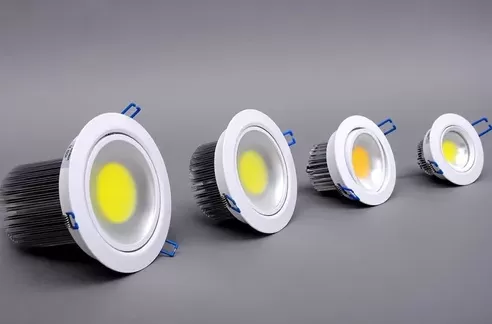
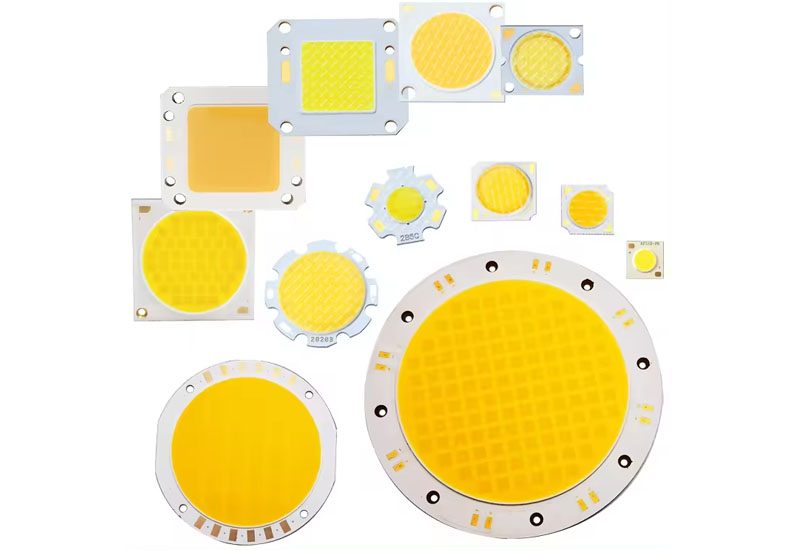
A3: Yes, they are highly suitable for COB applications. Because COB designs feature a dense array of LED chips generating substantial localized heat, the thermal stability of the conversion layer is crucial. Using highly stable aluminate and nitride variations ensures that the COB package maintains stable color rendering and minimal color shifting across its entire operational life.
Q4: How does CAS assist packaging facilities with the integration of these materials?
A4: CAS provides extensive integration support, including physical characterization, silicone compatibility testing, and customized spectral matching services. By analyzing the emission spectra of the manufacturer's blue LED chips, CAS can formulate precise phosphor blends to achieve specific target chromaticity coordinates, minimizing binning waste and improving overall production yields.
Q5: What measures should be taken to prevent moisture-induced degradation of the phosphor within an LED package?
A5: To prevent moisture degradation (hydrolysis), engineers should use phosphor variants that feature a protective metal oxide surface coating. Additionally, the selection of the encapsulating material is important; using hydrophobic phenyl-type silicones provides a superior barrier against moisture ingress compared to standard methyl silicones, protecting the phosphor layer in high-humidity environments.
Secure Your Custom Spectral Formulation and Engineering Support
Developing high-efficiency solid-state lighting systems requires a balance between material selection and packaging engineering. Achieving precise color targets and long-term reliability relies on using stable conversion materials and proper processing techniques. CAS offers a complete portfolio of high-grade optoelectronic materials, including specialized phosphor compounds, to support your design requirements.
To receive detailed material datasheets, request physical samples for laboratory testing, or schedule a technical consultation with our engineering team, please submit your specific project requirements through our business inquiry channel. Our specialists will assist you in selecting and integrating the ideal down-conversion materials to streamline your production workflow.