Operating heavy equipment in Arctic regions, on icebreaking vessels, or during polar winters imposes extreme demands on exterior lighting. Standard LED headlamps fail when ice accumulates on lenses, seals contract and crack, or internal electronics freeze. The consequence is sudden light output loss, posing serious safety risks for navigation, cargo handling, and personnel movement. The ice breaker headlight (referenced as ice breaker headlight throughout this technical document) is purpose‑engineered to overcome these challenges. Combining active thermal management, hydrophobic lens coatings, and ultra‑low‑temperature electronics, this lighting system maintains full luminous flux even at -50°C ambient. Below we dissect the engineering principles, application scenarios, and performance validation methods for these specialized luminaires.
1. Defining the Ice Breaker Headlight: Operational Environment & Core Requirements
A standard heavy‑duty LED work light might operate reliably down to -30°C if no moisture is present. However, an ice breaker headlight must survive frequent freeze‑thaw cycles, spray from seawater, impact from ice chunks, and continuous vibration from diesel engines or ice chopping. Key performance parameters for such installations include:
Lens de‑icing capability – The optic must actively prevent or rapidly remove ice accretion, often via integrated heating elements or pulsed infrared technology.
Thermal shock resistance – Sudden contact with freezing water after the lamp is warm should not cause lens fracture or seal failure.
Corrosion resistance – Salt spray and de‑icing chemicals require housing materials such as marine‑grade aluminum (EN AW‑6060) with powder coating exceeding ASTM B117 1,500 hours.
EMC compatibility – On vessels with sensitive navigation and communication gear, the ice breaker headlight must comply with IEC 60945 for radiated emissions.
Beyond these, the optical beam pattern must cut through blowing snow without excessive backscatter, typically achieved by a combination of wide‑angle (flood) and central concentrated (spot) LED arrays with selective shielding.
2. Active De‑Icing Mechanisms: How Ice Breaker Headlights Maintain Clear Optics
LED efficiency drops only moderately at low temperatures, but ice covering the lens scatters and absorbs light, rendering the headlight useless. Three technical approaches are adopted in modern ice breaker headlight systems:
2.1. Resistive Heating Elements Embedded in the Lens
Thin, transparent indium tin oxide (ITO) coatings or embedded wire grids are applied to the inner surface of the polycarbonate or tempered glass lens. When a thermistor detects temperature below +2°C and humidity exceeds 70%, a controller supplies 24V DC to the heater, raising the lens surface temperature to +5°C. This method draws between 15 W and 40 W per headlight – acceptable for vehicles with high‑output alternators. CAS has developed a pulsed heating algorithm that reduces average power consumption by 35% while still preventing ice bridging.
2.2. Air Curtain and Directed Warm Air from Engine Coolant
For heavy‑duty trucks and icebreakers where engine waste heat is plentiful, some ice breaker headlight designs incorporate a small duct that channels warm air (approx. 50°C) across the back of the lens. This method avoids electrical load but requires careful duct sealing to prevent moisture ingress. It performs best when the vehicle is running; during idle periods, residual heat may be insufficient.
2.3. Electrostatic Hydrophobic Coating (Passive Anti‑icing)
Permanent nanostructured coatings with contact angles >150° cause water droplets to roll off before freezing. While not active de‑icing, such coatings dramatically reduce ice adhesion strength (≤ 20 kPa compared to 500 kPa on bare glass). Combining a hydrophobic coating with low‑power heating results in the most reliable ice breaker headlight for polar scientific research stations.
3. Application Scenarios: Where a Dedicated Ice Breaker Headlight is Mandatory
Many B2B customers initially ask whether standard IP67 LED lamps are sufficient. The answer depends on frequency of ice formation and safety consequences. Below are three typical use cases demanding a certified ice breaker headlight.
3.1. Icebreaking Vessels – Bow, Bridge, and Deck Lighting
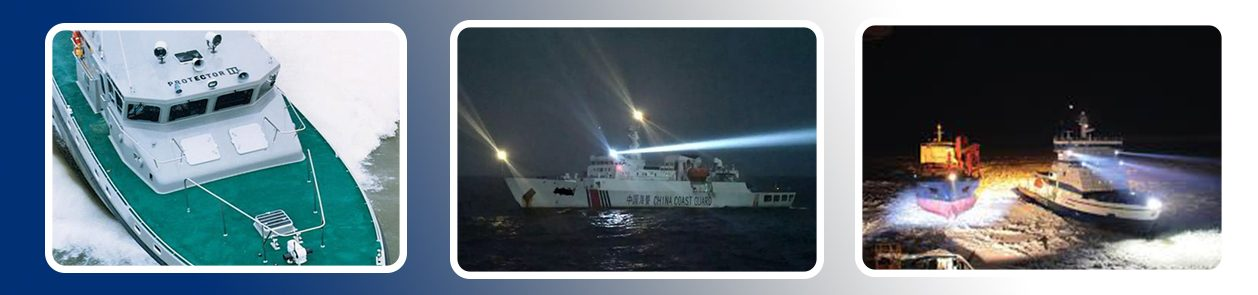
Polar‑class icebreakers require floodlights at the bow to illuminate the ice edge during night operations. Wave wash and freezing spray cover the luminaires every few minutes. An ice breaker headlight with both heated lens and stainless steel housing (type 316L) sustains operation throughout a 12‑hour watch. Additionally, the beam must have a cutoff to avoid blinding the helmsman – typically a asymmetric low‑beam pattern is adopted.
3.2. Arctic Mining Trucks & Crawlers
Open‑pit mines in Siberia or northern Canada operate at -45°C. Dump trucks and loaders accumulate frozen snow on headlights from tire spray. Without active de‑icing, the driver loses forward visibility within 30 minutes. Retrofitting OEM halogen lamps with an ice breaker headlight reduces downtime for manual scraping and improves safety on haul roads.
3.3. Polar Research Stations & Rescue Vehicles
Mobile laboratories and tracked vehicles used in Antarctica need lighting for animal observation, equipment repair, and emergency transit. The ice breaker headlight must operate from a battery bank without excessive drain. Low‑power heating combined with highly efficient LEDs (200 lm/W) keeps energy consumption under control. CAS supplies versions with adjustable heating setpoints (0°C, +3°C, +6°C) via a simple external resistor, enabling field customization.
4. Thermal Management & Electronics Design for Subzero Reliability
Paradoxically, LED drivers can overheat even in cold environments if the housing design traps internal heat without a path for dissipation. But at -40°C, the main challenge is starting electrolytic capacitors; their electrolyte may freeze, causing high ESR and failure. A robust ice breaker headlight uses all‑solid‑state capacitors or specially rated low‑ESR types with operational range down to -55°C. The PCB is conformal coated with silicone to prevent condensation‑induced shorts.
Thermal simulation of the ice breaker headlight reveals that the LED junction temperature should be kept between -20°C and +85°C for optimal life. If the headlight heater runs continuously, the junction may exceed safe limits in stagnant air. Therefore, intelligent control that turns off heating when the engine is off or external temperature is below -15°C (where sublimation keeps lens clear) is beneficial. CAS uses a dual‑NTC sensor (one on lens, one on heatsink) to manage this balance.
5. Optical Performance in Snow & Fog Conditions
A common complaint among operators is that bright LED headlights create a white wall effect in falling snow. The solution lies in spectral tuning and beam shaping. For an ice breaker headlight, the correlated color temperature (CCT) should not exceed 4000K; 3000K to 3800K provides better contrast against snow and reduces backscatter. Further, a sharp horizontal cutoff with limited upward stray light (ECE R149 compliant) prevents illumination of falling snow directly in front of the operator’s eyes. Some models offer a selectable snow‑mode that deactivates the upper portion of the spot beam.
Polarized optics, while rare in automotive lighting, have been tested in ice breaker headlight prototypes. A vertical polarizing filter reduces specular reflection from wet ice surfaces – though with a 15% light loss, the trade‑off is acceptable for specialized navigation.
6. Mechanical Integrity & Environmental Sealing
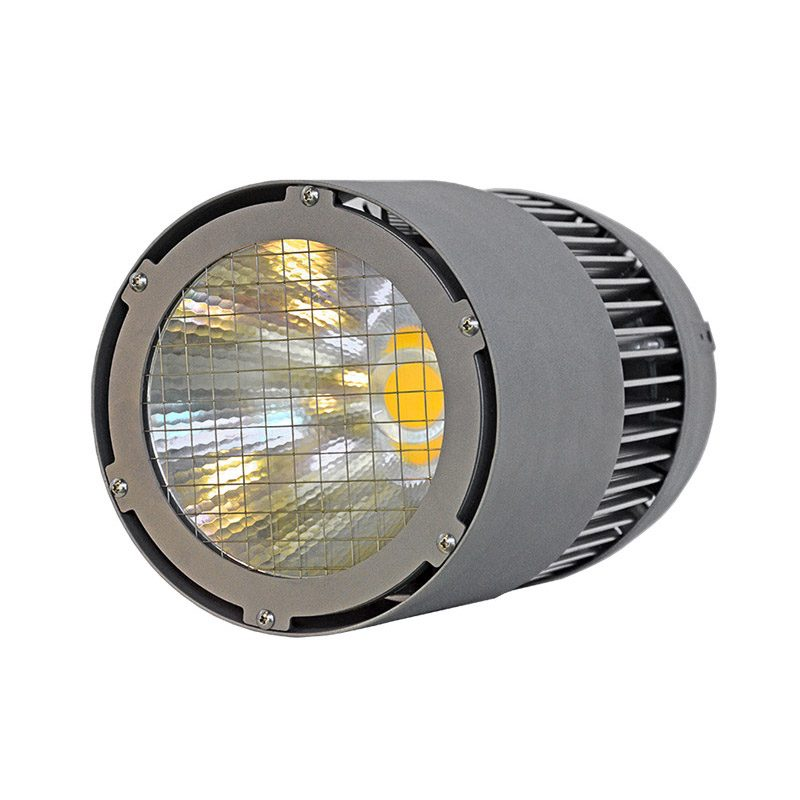
The ice breaker headlight housing must withstand impact from ice blocks (up to 2 kg dropped from 1 meter) and pressure variations from rapid altitude changes (e.g., helicopter transport). Testing follows IEC 60068‑2‑75 for impact. The sealing system goes beyond simple rubber gaskets:
Gore® membrane vents – equalize internal pressure while blocking water and ice crystals.
Double O‑ring cable glands – for power input, maintaining IP69K rating even under high‑pressure steam cleaning (used to remove ice residue).
Vibration isolation mounts – rubber or polyurethane bushings decouple the headlight from machinery vibration up to 15 Grms (MIL‑STD‑810G).
Field experience shows that an ice breaker headlight without a pressure equalizing vent will ingest moisture during thermal cycling, leading to internal fogging and eventual corrosion. CAS integrates a PTFE membrane vent rated for -60°C operation, a detail often overlooked by generic LED lamp manufacturers.
7. Installation, Wiring, and Retrofitting Existing Vehicles
Converting a conventional headlight to an ice breaker headlight involves three considerations: electrical capacity, mounting pattern, and control interface. Most units operate on 12–24 V DC, drawing 50–80 W for the LED plus up to 45 W for the heater. The wiring harness must use AWG 14 or thicker if the cable run exceeds 5 meters. A dedicated relay controlled by the original high/low beam switch is recommended. For vessels, the ice breaker headlight should be connected to a circuit with a slow‑blow fuse (10 A) to accommodate inrush current from the heater.
Mounting pattern compatibility: Many ice breaker headlight housings feature adjustable stainless steel brackets with slot holes (M8 or M10) to match existing pedestals. For heavy vibration environments, a two‑point clamping system with lock washers prevents gradual loosening.
8. Frequently Asked Questions (Engineering & Procurement Focus)
Q1: Can an ice breaker headlight be used in combination with automatic vehicle wash systems?
A1: Yes, provided the unit has IP69K rating (resistance to high‑pressure hot water jets). However, avoid directing the nozzle directly at the Gore vent – although the vent is water‑resistant, extreme pressure can exceed its specification. We recommend waiting until the lens has cooled to ambient before washing to prevent thermal shock.
Q2: How does the heater affect total lumen output?
A2: The heating element itself does not affect LED light emission. However, if the heater raises the lens temperature above 30°C in subzero conditions, the LED junction might run hotter than optimal, causing a slight lumen depreciation (approximately 5% at +50°C junction). The control logic of a well‑designed ice breaker headlight cycles the heater to maintain lens temperature between +2°C and +8°C, minimizing any thermal impact.
Q3: What beam angles are available for ice breaker headlight models?
A3: Common options are 15° spot (range up to 450 meters), 45° flood (wide area illumination), and asymmetric (European low beam pattern). For multi‑purpose use, select a model with dual optics (spot & flood) switchable via a separate wire. CAS provides a hybrid beam that combines a central 10° hotspot with a 60° diffuse halo, ideal for both distance and peripheral vision.
Q4: How do I test if a headlight is genuinely rated for icebreaking conditions?
A4: Request the manufacturer’s test report for IEC 60068‑2‑38 (combined temperature/humidity cycling) and a custom ice adhesion test. A genuine ice breaker headlight should show no performance degradation after 100 cycles of: spray with salt water, freeze to -30°C, operate heater to melt ice, and repeat. Also verify the documentation lists a minimum operating temperature of -50°C.
Q5: Can the heating function be disabled for use in milder climates?
A5: Most ice breaker headlight units allow disabling the heater by removing a jumper or via a separate input wire. When heating is off, the lamp functions as a standard high‑performance LED headlight with excellent low‑temperature start capability. This feature allows fleet operators to standardize one SKU for both polar and temperate regions.
9. Conclusion: Selecting the Right Ice Breaker Headlight for Mission‑Critical Operations
Compromising on lighting for polar and marine applications leads to breakdowns, dangerous work conditions, and unplanned maintenance. An engineered ice breaker headlight integrates active de‑icing, cold‑rated electronics, and robust sealing into a single housing. By specifying requirements such as heater type, beam pattern, and voltage range, procurement teams can ensure reliable performance down to -50°C. CAS offers a full technical datasheet with thermal images, photometric reports, and vibration test results for its ice breaker headlight series, supporting informed engineering decisions.
Request a Custom Ice Breaker Headlight Quotation & Engineering Review
To specify the optimal ice breaker headlight for your fleet, research vessel, or mining equipment, provide the following to CAS technical sales: operating temperature range, lens heating preference (resistive / air curtain), voltage system (12/24 V DC), desired beam pattern, and mounting constraints. Our engineers will respond with a detailed proposal including lumen maintenance projections, heater power draw, and dimensional CAD files.
Inquiry contact: daniel.lin@zkxyled.com – Use subject line “Ice Breaker Headlight - [Project Name]” for priority handling. Pre‑sales technical consultations and sample testing are available for qualified B2B accounts.
CAS – Industrial LED lighting engineered for the world’s harshest environments.