The transition of Unmanned Aerial Systems (UAS) from simple reconnaissance tools to sophisticated industrial instruments has necessitated a parallel evolution in peripheral hardware. Among these components, the development of a high-intensity drone light source has become a focal point for engineers specializing in search and rescue, infrastructure inspection, and public safety. Unlike stationary lighting, aerial illumination requires a meticulous balance of luminous efficacy, thermal regulation, and aerodynamic stability.
As a leading authority in specialized LED systems, [CAS] recognizes that the efficacy of an aerial mission often hinges on the quality of the light delivered from the sky. This article examines the complex engineering requirements of modern aerial lighting systems, providing a technical roadmap for professionals seeking to optimize their fleet capabilities.
The Physics of Aerial Illumination: Overcoming the Inverse Square Law
One of the primary challenges in aerial lighting is the attenuation of light over distance. The inverse square law dictates that the intensity of light is inversely proportional to the square of the distance from the source. In practical terms, a drone hovering at 50 meters requires significantly more concentrated power than a ground-based spotlight to achieve the same lux level on a target.
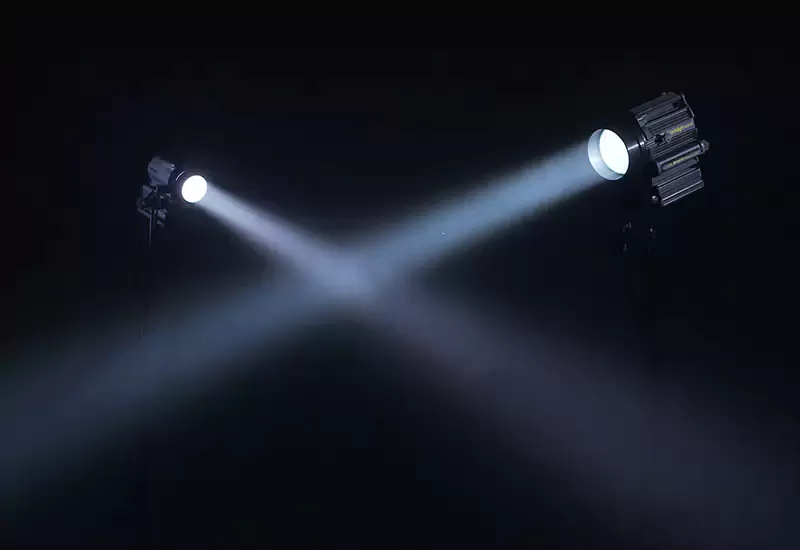
To address this, the design of a professional drone light source focuses on "throw distance" rather than raw lumen output alone. While a standard LED might produce 10,000 lumens, without precise beam collimation, that energy disperses too quickly to be useful for high-altitude operations. Engineers utilize Total Internal Reflection (TIR) optics and specialized parabolic reflectors to narrow the beam angle, often to between 5 and 15 degrees, ensuring that the photons are concentrated precisely where they are needed.
Luminous Flux and Spectral Power Distribution
In industrial settings, the quality of light is as significant as the quantity. Spectral Power Distribution (SPD) determines how well the light reveals the colors and textures of the environment. For forensic inspections or agricultural monitoring, a high Color Rendering Index (CRI) is preferred. However, for long-range search missions, a cooler color temperature (5000K-6500K) is often utilized because blue-weighted light scatters less in certain atmospheric conditions and provides better contrast against natural terrain.
Thermal Management in High-Output LED Payloads
High-intensity LEDs generate a substantial amount of heat. In a ground-based fixture, large aluminum heat sinks provide passive cooling. However, for a drone light source, weight is the enemy of flight time. Excess weight reduces battery life and compromises the aircraft’s center of gravity.
Advanced thermal management strategies include:
Active Airflow Integration: Utilizing the downdraft from the drone’s propellers to facilitate forced convection across specialized fins.
Phase-Change Materials (PCM): Incorporating materials that absorb heat during peak operation and release it slowly, preventing the LED junction temperature from exceeding safe limits.
Vapor Chamber Technology: Using vacuum-sealed flat pipes to spread heat rapidly across a larger surface area with minimal weight.
Maintaining a low junction temperature is not merely about preventing immediate failure; it is about ensuring lumen maintenance. If the LEDs run too hot, the phosphor coating degrades, leading to color shift and a permanent reduction in brightness, which is unacceptable for professional B2B applications.
Electronic Integration and Power Management
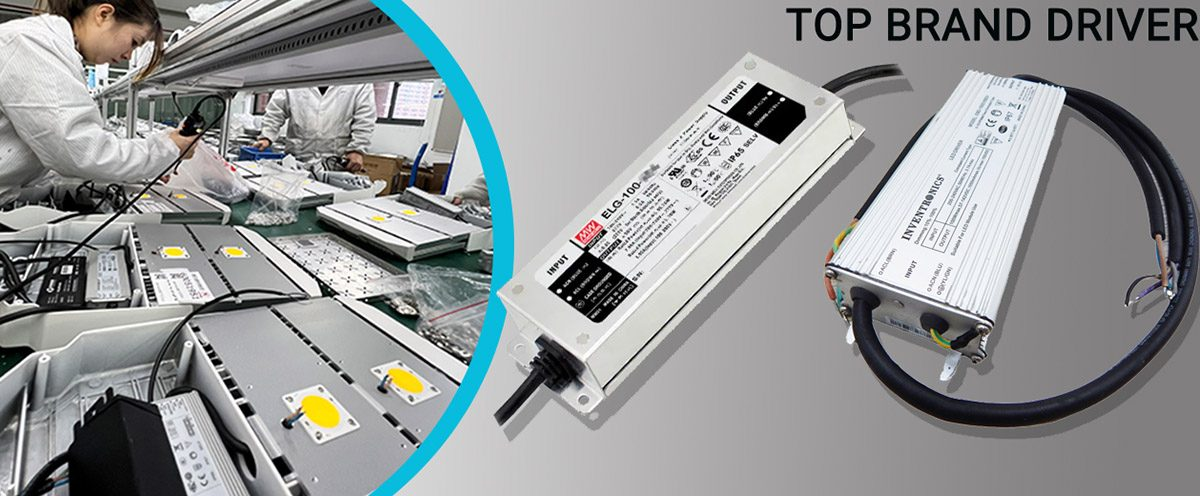
The electrical architecture of a drone light source must be compatible with the host aircraft’s power distribution board (PDB). Most professional UAS operate on high-voltage LiPo batteries (6S to 12S). The lighting payload requires a sophisticated Constant Current (CC) driver that can handle voltage fluctuations as the drone performs maneuvers or as the battery nears depletion.
[CAS] has observed that the most effective systems utilize Pulse Width Modulation (PWM) for dimming. This allows operators to adjust brightness levels from the ground station without shifting the color temperature of the LED. Furthermore, the driver must be shielded against Electromagnetic Interference (EMI). High-powered LEDs and their switching power supplies can generate noise that interferes with GPS signals or the internal IMU (Inertial Measurement Unit) of the drone, potentially leading to flyaways or erratic behavior.
Communication Protocols
Modern payloads are rarely "dumb" lights. They often communicate via CAN bus or MAVLink protocols. This integration allows the pilot to monitor the health of the light source, including real-time temperature data and power consumption, directly through the flight controller’s OSD (On-Screen Display).
Optical Engineering: Beam Control and Lens Geometry
The choice of lens geometry determines the operational utility of the aerial system. In many scenarios, a single drone light source may need to provide both wide-area situational awareness and long-range spot lighting.
Asymmetric Optics: These are used to create a "curtain" of light, often used in border security to illuminate a long, narrow strip of land from a side-mounted position.
Variable Focus (Zoom): Some high-end systems incorporate motorized lenses that allow the pilot to transition from a 30-degree flood to a 5-degree spot in mid-air. This mechanical complexity adds weight but provides unparalleled versatility.
Anti-Glare Coatings: To prevent "backscatter," especially in humid or dusty environments, multi-layer coatings are applied to the outer lens to ensure maximum light transmission.
Structural Durability and Environmental Protection
Operational environments for drones are often harsh. Whether it is salt spray during maritime inspections or fine dust in mining operations, the drone light source must be ruggedized. Most industrial units aim for an IP65 or IP67 rating.
Achieving this rating while maintaining a low weight involves using high-grade polymers or aircraft-grade 6061 aluminum with anodic oxidation treatments. Every seam and cable entry point must be sealed with silicone gaskets or specialized potting compounds. Furthermore, the light must withstand the high-frequency vibrations produced by the drone's motors. Vibration-induced fatigue can cause solder joints to crack or optical components to misalign, so rigorous shake-table testing is a prerequisite for any professional-grade hardware developed by [CAS].
Solving Industry Pain Points: The Search and Rescue Perspective
In Search and Rescue (SAR), the primary obstacle is often the "white-out" effect caused by light reflecting off fog, rain, or snow. A standard drone light source might actually blind the camera sensor if not positioned correctly. By using offset mounting and specific wavelengths, engineers can mitigate this effect.
Another challenge is the synchronization between the light and the camera’s shutter speed. If the LED driver frequency is not synchronized with the camera's frame rate, the resulting video will suffer from flickering. High-frequency B2B lighting solutions operate at several kilohertz to ensure flicker-free footage, even when recording at high frame rates for slow-motion analysis.
Future Technical Directions in Aerial Lighting
The industry is moving toward "Smart Lighting" payloads. We are seeing the introduction of AI-driven tracking, where the light source automatically stays centered on a moving object or person detected by the drone’s thermal camera. This reduces the cognitive load on the pilot and ensures consistent illumination during high-speed chases or rescue operations.
Additionally, the integration of IR (Infrared) and Visible light in a single payload is becoming more common. This allows for a multi-spectral approach where the operator can switch between covert surveillance and high-visibility deterrence at the touch of a button.
Selecting the correct drone light source involves balancing mechanical constraints with optical requirements. It is an exercise in compromise—finding the sweet spot between brightness, weight, and thermal endurance. For B2B stakeholders, the focus must remain on the reliability of the electronic components and the precision of the optical delivery system. As UAS technology continues to mature, the demand for sophisticated, integrated lighting solutions will only increase.
At [CAS], we specialize in the engineering of high-performance illumination systems that meet the rigorous demands of the international LED market. Our expertise ensures that your aerial operations are supported by hardware that is built for durability and performance.
Are you looking to optimize your drone fleet with specialized lighting solutions? Contact our technical team today for a detailed consultation or to submit an inquiry regarding your specific project requirements.
Frequently Asked Questions (FAQ)
Q1: How does the weight of a lighting payload affect total flight time?
A1: In most multi-rotor platforms, every 100 grams of additional weight results in a 1-3% reduction in flight time. This is why professional systems prioritize power-to-weight ratios, using lightweight materials like carbon fiber and magnesium alloys for the housing of the drone light source.
Q2: Can I use a standard off-the-shelf LED for my drone lighting needs?
A2: While possible for hobbyist use, professional applications require specialized drivers that can handle the vibration and power fluctuations of a UAS. Standard LEDs often lack the necessary EMI shielding and thermal management required to prevent interference with flight systems.
Q3: What is the ideal beam angle for an aerial inspection light?
A3: This depends on the altitude. For low-altitude structural inspections, a 20-40 degree beam provides a good balance of coverage. For high-altitude search operations, a narrow 5-10 degree beam is necessary to project usable light onto the ground.
Q4: Does the light source interfere with the drone's GPS?
A4: If the LED driver is poorly shielded, it can emit electromagnetic noise. High-quality systems include EMI filters and shielded cabling to ensure that the light source does not degrade the signal-to-noise ratio of the GPS receiver or other sensitive sensors.
Q5: How do you handle the cooling of high-wattage LEDs in thin air?
A5: At high altitudes, air density is lower, which reduces the efficiency of convective cooling. To compensate, engineers design heat sinks with larger surface areas or use more aggressive active cooling fans to maintain the LED’s performance within the specified temperature range.