Automotive lighting has shifted from simple illumination to a core element of vehicle styling, safety, and brand identity. According to market analysis by Yole Group, the automotive LED market continues to expand, driven by adaptive driving beams (ADB), high-resolution matrix headlights, and animated rear lighting. However, this aesthetic evolution introduces severe engineering constraints at the component level.
For optoelectronic engineers and procurement specialists, selecting the right LED PKG for Automotive lighting is a balancing act. High-power density demands exceptional thermal dissipation, while strict automotive safety standards require long-term operational reliability under extreme environmental conditions.
This guide addresses the technical variables of automotive LED packaging, introduces a systematic evaluation framework, and analyzes the structural trade-offs that influence modern vehicle light engine designs.
The Core Challenge: Why Standard LEDs Fail on the Road
An automotive headlight must operate reliably across ambient temperatures ranging from -40°C to over 105°C, with peak engine-bay temperatures sometimes exceeding this range. Standard commercial LED packages degrade rapidly under these conditions due to accelerated thermal aging, yellowing of encapsulant materials, and moisture intrusion.
The primary point of failure in sub-standard automotive lighting is the mismatch in Coefficient of Thermal Expansion (CTE) between the LED chip, the substrate, and the submount. This mismatch leads to mechanical shear stress during thermal cycling, causing wire bond lifting or die delamination.
Furthermore, sulfur corrosion from road pollutants can penetrate low-grade silicone encapsulants. This chemical reaction tarnishes the internal silver-plated lead frames, reducing light output by up to 30% within a fraction of the vehicle's intended lifespan.
To mitigate these risks, manufacturers like CAS focus on ruggedizing the LED PKG for Automotive lighting through material science, utilizing advanced ceramic substrates and specialized gold-tin (AuSn) eutectic die attachment processes.
The CSP Paradox: Is Smaller Always Better for Automotive Designs?
In recent years, Chip Scale Package (CSP) technology has gained traction in automotive headlamps due to its minimal footprint and high luminance. However, a common misconception is that CSP represents a universal upgrade over traditional ceramic high-power packages.
We call this the CSP Paradox: while CSP minimizes the footprint of the package, it eliminates the traditional ceramic submount. This structural change shifts the burden of heat spreading entirely from the LED package to the system-level printed circuit board (PCB).
Without a submount, the thermal path is highly concentrated. If the PCB design lacks sufficient thermal vias or expensive metal-core substrates (MCPCB), the junction temperature ($T_j$) of the LED will spike, accelerating color shift and luminous flux degradation.
For high-density matrix headlamps where space is limited, CSP is highly effective, provided the system-level thermal budget allows for premium MCPCB materials. For standard high-beam and low-beam designs, ceramic-substrate high-power packages remain a more cost-effective and thermally forgiving choice.
Deep Dive: Four Technical Dimensions of Automotive LED Packages
1. Thermal Resistance and Material Architecture
Thermal management is the single most critical factor in automotive LED reliability. The thermal path from the junction to the solder joint ($R_{th, j-s}$) must be minimized to keep junction temperatures within safe operating limits, typically below 150°C.
Modern designs utilize aluminum nitride (AlN) ceramic substrates, which offer a thermal conductivity of approximately 170-200 W/m·K, compared to alumina (Al2O3) which offers only 20-30 W/m·K. CAS designs leverage thin-film ceramic platforms to achieve lower thermal resistance profiles, ensuring stable light output during continuous operation.
2. Compliance with AEC-Q102 Qualification Standards
Any LED PKG for Automotive lighting must be qualified according to the Automotive Electronics Council (AEC) AEC-Q102 standard. This specification requires rigorous testing, including high-temperature operating life (HTOL), wet high-temperature operating life (WHTOL), and thermal shock cycling.
A key test is the hydrogen sulfide ($H_2S$) exposure test, which simulates real-world environmental pollution. High-quality packages use gas-tight glass encapsulation or advanced composite silicones to prevent sulfur penetration and subsequent reflector degradation.
3. Optical Precision and Adaptive Driving Beams (ADB)
Adaptive Driving Beams (ADB) require highly localized, individually addressable light sources to create adaptive shadows around oncoming vehicles. This requires LED packages with very small pitch spacing and minimal optical crosstalk.
Optical crosstalk occurs when light from one LED segment leaks into adjacent segments, reducing contrast and system precision. Advanced packages utilize white reflective silicone dams between adjacent dies to direct light forward and maintain high optical contrast.
4. Eutectic Bonding and Mechanical Reliability
Traditional lead-free solder pastes often suffer from voiding, which creates localized thermal hotspots. Automotive-grade packages utilize AuSn eutectic bonding or silver sintering for die attachment.
These techniques provide a nearly void-free thermal interface with a high melting point, ensuring that subsequent assembly reflow processes do not degrade the primary die-attach interface.
The T.O.M.E. Framework for Automotive LED Selection
To simplify the evaluation of different LED packages, we recommend using the T.O.M.E. (Thermal, Optical, Mechanical, Environmental) evaluation framework. This structured approach ensures that no critical parameter is overlooked during the design phase.
| T.O.M.E. Pillar | Critical Metric | Automotive Target Value | Risk of Non-Compliance |
|---|---|---|---|
| Thermal | Junction-to-solder resistance ($R_{th, j-s}$) | < 3.0 K/W (High-Power) | Thermal runaway, rapid lumen depreciation |
| Optical | Color consistency over angle (Cx/Cy) | Δx, Δy ≤ 0.01 within 60° | Uneven beam pattern, yellow ring effect |
| Mechanical | Die-shear strength & Solder void rate | Void rate < 10% post-reflow | Intermittent open circuits, catastrophic failure |
| Environmental | Sulfur resistance (AEC-Q102) | Flux degradation < 5% after $H_2S$ exposure | Reflector blackening, sudden light loss |
By evaluating potential suppliers against these four pillars, engineering teams can identify vulnerabilities early in the prototyping phase, preventing costly field failures and recalls.
AEC-Q102 Procurement Verification Checklist
This checklist is designed for quality assurance and procurement teams to verify whether a proposed LED PKG for Automotive lighting meets the baseline requirements for automotive deployment.
[ ] Certification Verification: Has the supplier provided a certified AEC-Q102 test report from a third-party laboratory?
[ ] Thermal Resistance Data: Is the thermal resistance ($R_{th, j-s}$) measured at the actual operating current rather than a low-current test point?
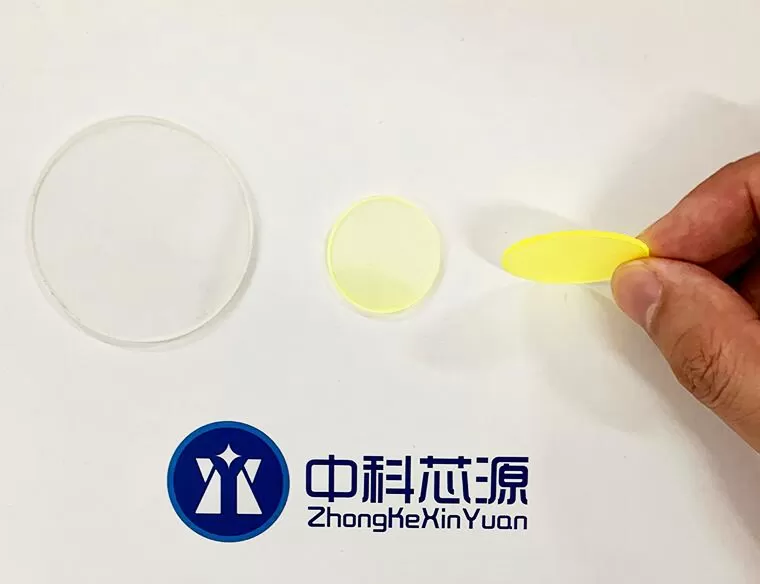
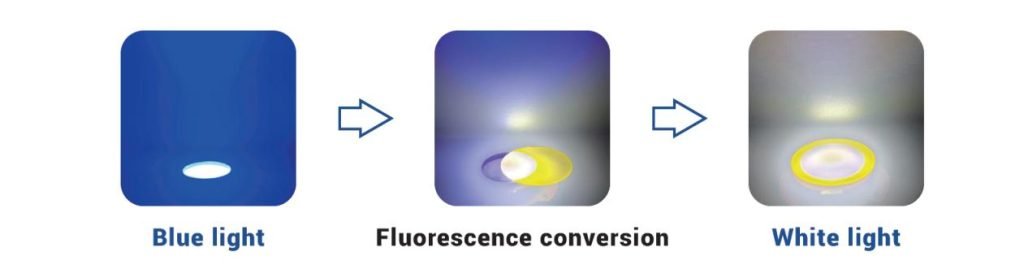
[ ] Phosphor Stability: Does the package utilize ceramic phosphor converter plates or high-thermal silicone to prevent color shift over time?
[ ] Lead-Frame Finish: Does the lead frame utilize gold (Au) plating or corrosion-resistant alloys to prevent oxidation?
[ ] Traceability: Does the manufacturer (e.g., CAS) offer single-bin sorting and full lot traceability down to the raw wafer level?
Frequently Asked Questions (FAQ)
Q1: Can we use standard industrial LEDs for interior automotive lighting?
While interior lighting (like ambient cabin trim) is subject to less severe temperature extremes than exterior lighting, most automotive OEMs still require AEC-Q102 qualification. Using industrial-grade LEDs in automotive cabins often results in premature color shifting and mechanical failure due to high cabin temperatures when parked under direct sunlight.
Q2: How does phosphor degradation impact automotive LED packages?
High-power blue LED chips generate intense local heat and light density. Over time, standard silicone-phosphor mixtures can degrade, turning yellow or brown. This causes the overall output of the LED to shift toward a cooler, blue-dominant spectrum, which may eventually violate transport regulations for white-light headlights.
Q3: What role does the package substrate play in optical alignment?
The geometric tolerance of the substrate determines the position of the emitting area relative to the external primary optics. Low-cost packages often have slight die placement tolerances, which can lead to misaligned light beams, causing glare for oncoming traffic and reduced road illumination.
Conclusion and Actionable Steps
Selecting an LED PKG for Automotive lighting requires an understanding of the thermal and mechanical dynamics at play within the vehicle assembly. Balancing these requirements requires careful evaluation of materials, structural designs, and compliance data.
For engineering teams preparing for their next-generation lighting platform, we recommend taking the following actions:
Review the system-level thermal budget to decide between CSP and ceramic-substrate packages.
Request comprehensive AEC-Q102 test reports, focusing on long-term thermal cycling and sulfur exposure performance.
Utilize the T.O.M.E. framework to benchmark competitive samples under realistic operating conditions.
To learn more about high-reliability automotive LED packages and customized design solutions, contact the engineering team at CAS to request technical datasheets and evaluation samples.