In modern aquaculture, the selection of an appropriate illumination system directly influences fish physiology, feeding efficiency, and overall stock health. Unlike terrestrial agriculture, where light primarily drives photosynthesis, a fish farming light source must address circadian rhythm regulation, stress reduction, and species-specific visual sensitivity. This article provides an evidence-based examination of optical parameters, environmental adaptation, and system integration strategies for intensive fish production.

Why Spectral Composition Defines Performance in Aquaculture Lighting
Fish perceive light differently from humans. Their retinal photoreceptors are tuned to specific wavelength ranges that vary among species. For example, marine finfish like sea bass show peak sensitivity in the blue-green region (460–540 nm), while freshwater species such as tilapia respond more strongly to longer wavelengths (580–650 nm). A generic white LED fails to provide the targeted spectral energy needed to suppress melatonin during desired feeding cycles or to minimize cortisol spikes caused by unnatural glare.
Recent studies indicate that an optimized fish farming light source can improve feed conversion ratios by 12–18% when blue-dominant spectra are applied during early juvenile stages. Furthermore, spectral tuning reduces aggressive behaviors in intensively stocked tanks, lowering fin damage and secondary infections. Key parameters include:
Peak wavelength accuracy – Deviation of ±5 nm can alter biological responses; professional systems offer binning control within 3 nm.
Photosynthetic-like radiation for algae – In recirculating aquaculture systems (RAS), controlled red components support nitrifying biofilm health.
Flicker index – Values below 0.1 (percent flicker <5%) prevent disorientation in species with high temporal resolution, such as salmonids.
Core Design Parameters for a Professional Fish Farming Light Source
Industrial aquaculture environments impose severe demands on lighting hardware. High humidity, saline spray, and periodic mechanical cleaning require ingress protection of at least IP67, ideally IP68 for submersible applications. Beyond durability, the optical efficiency determines how much usable irradiance reaches the rearing water column. Critical engineering metrics include:
Luminous efficacy vs. photon flux density: For fish vision, the relevant measure is photosynthetic photon flux density (PPFD) weighted by species opsin sensitivity. Many suppliers misuse lux values, which assume human eye response. A proper specification requires μmol·s⁻¹·m⁻² across the 380–700 nm range.
Beam angle uniformity: Narrow beams create bright spots and shadows, causing uneven feeding distribution. Oval or batwing distributions are preferred for raceways and circular tanks.
Correlated color temperature (CCT) flexibility: Controllable CCT from 2700K to 10,000K allows photoperiod simulation of dawn/midday/dusk sequences, reducing acute transitions.
Advanced fixtures incorporate programmable dimming curves (0–10V, PWM, or DALI-2) to replicate natural light ramping. This gradual change is documented to lower escape responses and associated energy waste in open pens.
Species-Specific Lighting Strategies: From Hatchery to Grow-Out
Each life stage demands a distinct photic environment. Larvae require low-intensity (5–20 lx), blue-rich illumination to guide swim bladder inflation and avoid photo-oxidative damage. During the weaning stage, a fish farming light source should provide gradual intensity increase to 100–200 lx while introducing green wavelengths that enhance prey contrast. For grow-out tanks of carnivorous species like barramundi, a 12:12 light-dark cycle with a dawn/dusk transition exceeding 45 minutes reduces basal cortisol levels by up to 30% compared to abrupt on/off switching.
Key considerations per production phase:
Broodstock conditioning: Long photoperiods (16L:8D) with moderate red supplement promote gonad development in temperate species.
On-growing RAS: Uniform light distribution (±15% variance across tank surface) prevents avoidance zones and maximizes usable volume.
Harvest channel lighting: Specific green wavelengths calm fish prior to crowding, reducing lactic acid buildup and improving flesh quality.
Overcoming Environmental Challenges: Waterproofing, Corrosion, and Biofouling
Saline environments attack every electronic component. Standard commercial LED drivers fail within months when exposed to high humidity and chloride ions. Therefore, a robust fish farming light source must employ full potting with thermally conductive silicone, marine-grade aluminum housings (Al6061 with anodization and epoxy coating), and watertight cable glands. Additionally, biofouling by algae or mussels blocks light transmission. Solutions include:
Self-cleaning vibrating membranes (piezoelectric option for high-value hatcheries).
UV-C side emitters for periodic surface sterilization (applied during empty tank cycles).
Smooth, hydrophobic lens coatings that reduce adhesion.
Regular maintenance intervals extend to 50,000 hours when using properly sealed luminaires, but the optical window material matters: polycarbonate yellows under UV, while borosilicate glass resists scratching and chemical cleaning agents. For land-based facilities with hydrogen sulfide risks (e.g., anaerobic pockets), gold-plated contacts inside connectors prevent corrosion.
Integrating Smart Controls and Photoperiod Management
Dynamic lighting schedules synchronized with feeding times produce conditioned feeding responses, reducing wasted pellets. Modern controllers store multiple programmable recipes for different production phases and allow remote adjustment via SCADA or cloud platforms. Essential smart features:
Cloud-based spectral recipe editor: Adjusts relative intensities of six or more LED channels (e.g., 450nm, 530nm, 620nm, 660nm, white, and near-UV).
Real-time illuminance mapping: With integrated sensors that compensate for water turbidity changes (common after feeding).
Adaptive dimming based on fish position: Uses downward-facing sonar or cameras to avoid over-lighting when fish are resting.
This level of control enables “biological lighting” where the fish farming light source mimics natural underwater light fields, including cloud passage and lunar cycles. Such complexity is especially beneficial for sensitive species like eel and sturgeon, where constant illumination triggers chronic stress and immunosuppression.
The Role of Custom Optics in Fish Farming Light Source Efficiency
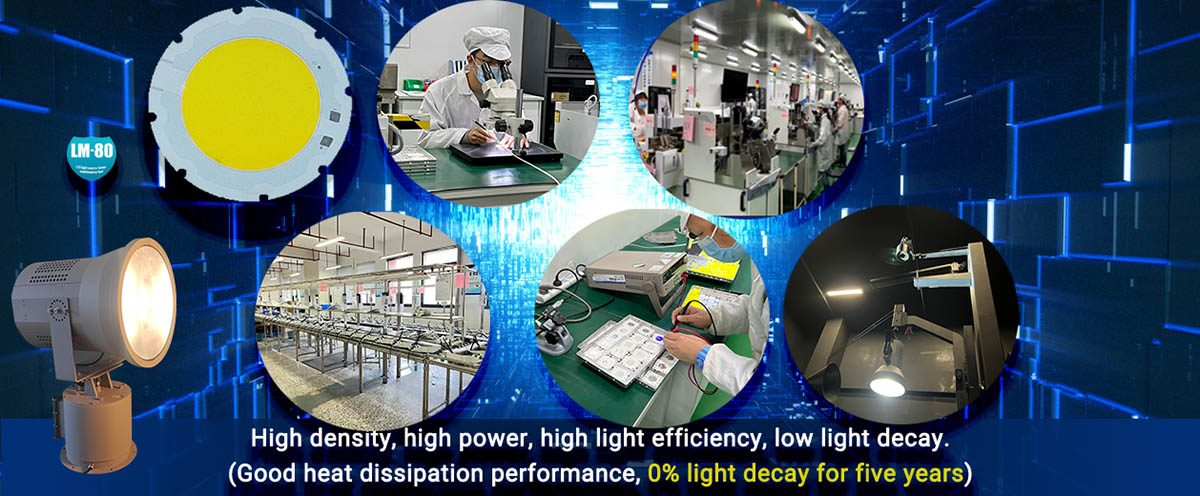
Generic LED arrays waste up to 40% of emitted photons through side scatter and back reflection. Custom-designed secondary optics – lenses, reflectors, and light guides – shape the beam to match tank geometry. For circular tanks, an axial symmetric batwing distribution creates a toroidal intensity profile, reducing center hotspot and wall shadow. For long raceways, asymmetric optics produce a uniform horizontal projection. This is where specialized engineering partners add value. CAS delivers precision-molded silicone and polycarbonate optics tailored to aquaculture fixtures, achieving transmission efficiencies above 92% while surviving prolonged salt spray exposure. By optimizing beam angles from 30° to 120° and integrating anti-glare textures, CAS helps integrators achieve uniform illumination at lower power densities. CAS also provides rapid prototyping for spectral mixing chambers, ensuring that the final fish farming light source meets species-specific requirements without field modifications.
Furthermore, custom microlens arrays can homogenize multiple LED colors to prevent chromatic separation (color shadowing), a common flaw that disorients fish when they swim through color fringes. With CAS optical simulation services, manufacturers reduce development cycles by 30% while eliminating hot spots that cause localized thermal stress in fish.
Achieving Sustainable Intensification through Proper Illumination
High-density aquaculture systems often face trade-offs between biomass production and animal welfare. Strategic lighting management alleviates this tension. Evidence from commercial RAS facilities shows that a tunable fish farming light source reduces daily feed conversion ratio variance, lowers mortality from cannibalism in predatory species, and improves swim bladder functionality in physoclistous fish. Additionally, proper spectral design suppresses off-flavor compound (geosmin and 2-MIB) accumulation by controlling periphyton communities in tank walls. These biological benefits translate directly to operational consistency without raising system complexity.
When designing or retrofitting a facility, consider these practical steps:
Conduct a photobiological assessment: map existing light levels (μmol/m²/s) at multiple depths.
Select a fixture with adjustable spectra and loggable runtime data.
Install light sensors inside tanks to automate real-time compensation for water clarity changes.
Validate fish behavior changes (e.g., schooling tightness, surface feeding) after two weeks of new lighting regime.
By moving beyond one-size-fits-all white LEDs, producers unlock significant improvements in growth uniformity and final product quality.
For facilities aiming to upgrade their illumination infrastructure, custom-engineered solutions provide the highest biological and energy performance. Partner with optics specialists who understand both photonics and aquaculture biology. Contact CAS to discuss your tank geometry, target species, and desired control interface for a dedicated fish farming light source design.
Request technical consultation or quote – our engineering team responds within 24 hours.
Frequently Asked Questions (FAQ)
Q1: What is the ideal light intensity for a fish farming light source in a RAS tank?
A1: For most finfish species in recirculating systems, recommended intensity ranges from 50 to 200 μmol/m²/s at the water surface, measured with a quantum sensor. However, larval stages require below 20 μmol/m²/s to avoid photo-inhibition, while broodstock may benefit from 150–300 μmol/m²/s during conditioning. Always adjust based on observed fish distribution – if fish crowd the darkest corner, intensity is excessive.
Q2: How does spectrum affect sexual maturation in farmed fish?
A2: Longer photoperiods (up to 16 hours) combined with red-enriched spectra (peak at 630–660 nm) accelerate gonadal recrudescence in spring-spawning species like carp and trout. In contrast, blue-dominant lighting (450–480 nm) suppresses maturation, which is useful for maintaining growth in year-round production. Custom spectral programming allows producers to control reproduction without hormone intervention.
Q3: Can LED fish farming light sources completely replace metal halide or fluorescent systems?
A3: Yes, modern LED arrays surpass traditional technologies in spectral precision, dimming flexibility, and longevity. However, to avoid inferior results, ensure the LED fixture provides high photon flux density (not just lumens) and includes proper thermal management. Heat sinks and active cooling maintain junction temperature below 85°C, preventing premature degradation. Many producers have successfully replaced 400W metal halides with 150W LED modules offering superior uniformity.
Q4: How often should optical lenses be cleaned in a marine fish farming environment?
A4: In saltwater hatcheries, biofouling and mineral deposition reduce light output by 5–15% monthly. Weekly gentle cleaning with freshwater and a soft sponge is recommended for lens windows. For submersible lights in high-fouling zones, automated wiper systems or ultrasonic anti-fouling devices extend cleaning intervals to 3–4 weeks. Never use abrasive materials that scratch anti-reflective coatings.
Q5: What is the typical payback associated with upgrading to a tunable fish farming light source?
A5: While financial returns vary based on local electricity rates and fish value, the primary drivers are improved feed conversion (typically 5–12% reduction) and lower mortality (3–8% fewer losses). Most producers observe full investment recovery within 12–18 months from operational savings alone. Furthermore, reduced veterinary interventions and faster growth cycles deliver additional revenue gains without increasing stock density.