The evolution of vehicle illumination has transitioned from simple incandescent filaments to highly sophisticated solid-state optoelectronics. In this transition, the adoption of Osram Automotive solutions has set new benchmarks for luminous efficacy, structural durability, and optical precision. Modern automotive lighting is no longer just about visibility; it is an active safety system integrated with vehicle sensors, cameras, and electronic control units (ECUs). For Tier 1 suppliers and original equipment manufacturers (OEMs), selecting the correct semiconductor components is a fundamental step in meeting both regulatory standards and consumer expectations.
This article examines the underlying engineering principles of modern light-emitting diodes (LEDs), the thermal and electrical challenges inherent in automotive applications, and the structural solutions that ensure long-term operational reliability.
Semiconductor Physics and Light Source Selection
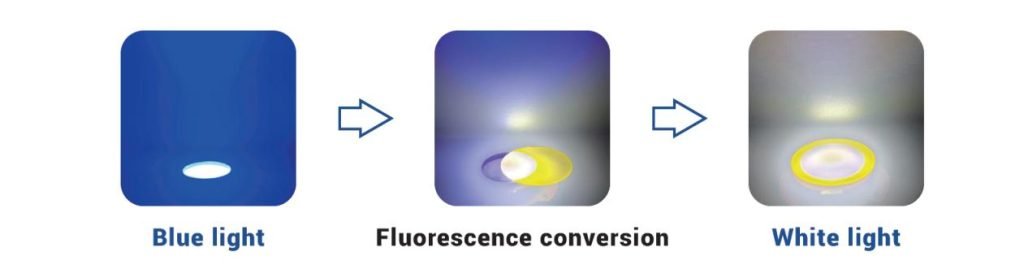
At the core of modern headlight design lies the semiconductor wafer. The efficiency of a high-power automotive LED depends heavily on the materials used in its epitaxial layers. Gallium Nitride (GaN) on Sapphire or Silicon substrates is the primary material system for blue and white LEDs, while Aluminium Indium Gallium Phosphide (AlInGaP) is utilized for amber and red signaling functions.
When selecting light sources for forward-lighting applications, engineers must evaluate several key parameters:
Luminous Flux and Efficacy: The total optical output measured in lumens, and the ratio of this output to the electrical power consumed (lm/W). High-efficiency chips reduce the electrical load on the vehicle alternator, directly impacting fuel economy and reducing emissions.
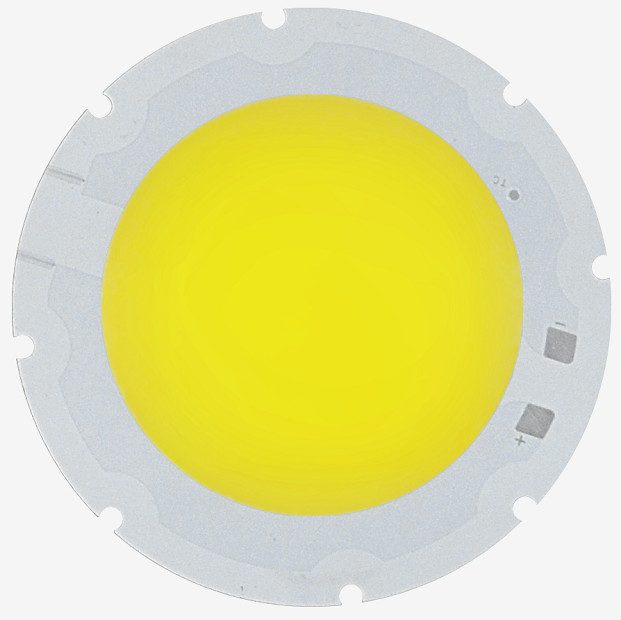
Luminance (Surface Brightness): High luminance is necessary for creating long-range high-beam patterns. Modern headlight modules require compact light-emitting surfaces (LES) that can output hundreds of lumens from an area of less than two square millimeters.
Color Rendering and Chromaticity Stability: Automotive regulations (such as ECE and SAE) dictate strict chromaticity boundaries for white, amber, and red lights. The phosphor conversion layer must remain stable over thousands of operating hours to prevent color shifting toward blue or yellow.
The integration of Osram Automotive technologies enables design engineers to achieve high luminance without compromising thermal stability, provided the surrounding subsystem is engineered correctly.
Package Designs for Harsh Environments
Automotive LEDs are exposed to extreme environmental conditions, including rapid temperature fluctuations, high humidity, and constant mechanical vibration. To protect the sensitive semiconductor junction, advanced packaging methodologies are employed.
Ceramic substrate packages have largely replaced lead-frame designs in high-power applications. Ceramic materials, such as Aluminium Nitride (AlN), offer exceptionally low thermal resistance and matched thermal expansion coefficients with the silicon or GaN die. This prevents mechanical stress and subsequent cracking at the solder joints during thermal cycling from -40°C to +125°C. These components, integrated by specialized distributors such as CAS, are subject to stringent qualification processes before they can be implemented in production vehicles.
Adaptive Driving Beams and Matrix Lighting Systems
The current frontier in forward illumination is the Adaptive Driving Beam (ADB), often implemented via matrix LED configurations. Instead of a single static light source, a matrix headlight utilizes an array of individually controlled LED segments to shape the light distribution dynamically.
When an oncoming vehicle or a pedestrian is detected by the forward-facing camera, the system controller dims or turns off specific LED pixels. This projects a shadow zone directly over the detected object to prevent glare, while maintaining full high-beam illumination across the rest of the road. This application requires highly specialized semiconductor architectures:
Multi-Pixel Monolithic Arrays: Instead of assembling individual discrete LEDs close together, modern designs utilize monolithic chips where thousands of micro-scale pixels are fabricated on a single die. This minimizes the gap between light-emitting areas, producing a seamless, high-resolution light pattern.
Fast Switching Speeds: The rise and fall times of the LED junctions must be in the microsecond range to allow rapid response to dynamic traffic scenarios, synchronized with the camera's frame rate.
Contrast Ratio: To prevent stray light from illuminating the dimmed zones, optical isolation between adjacent pixels is required. Physical micro-trenches and advanced reflective coatings are implemented on the chip surface to maximize the contrast ratio between active and inactive segments.
Utilizing Osram Automotive light sources in these complex matrix configurations ensures that the beam pattern can be adjusted with high precision, fulfilling both active safety requirements and international road illumination standards.
Thermal Management and Reliability Standards
While LEDs are far more efficient than legacy halogen bulbs, they are not perfect converters of electrical energy. Approximately 60% to 70% of the input power is converted into heat rather than light. Unlike incandescent bulbs that radiate heat forward via infrared radiation, LEDs conduct heat backward into the substrate.
If this heat is not dissipated, the junction temperature ($T_j$) will rise, leading to a drop in luminous output (thermal droop), accelerated color shifting, and ultimately, catastrophic device failure. The design of the thermal path is therefore a vital aspect of headlamp engineering.
Engineering the Heat Dissipation Path
The thermal resistance path from the junction to the ambient air consists of several layers, each requiring careful material selection:
The LED Chip-Level Thermal Resistance ($R_{thJS}$): This is determined by the manufacturer's package design. Ceramic-based packages offer a highly efficient path from the junction to the solder pad.
Thermal Interface Material (TIM): A high-conductivity grease, adhesive, or pad must be applied between the LED printed circuit board (PCB) and the heat sink. Air pockets, which act as thermal insulators, must be eliminated during assembly.
Metal Core Printed Circuit Boards (MCPCB): Standard FR4 boards are insufficient for high-power lighting. Aluminium or copper-core boards are used to rapidly spread heat away from the LED array.
Heat Sinks: Cast aluminium heat sinks, often paired with active cooling fans or heat pipes in high-wattage systems, dissipate the thermal energy into the engine bay or surrounding atmosphere.
The following table outlines the typical thermal conductivity values of materials used in automotive lighting assemblies, highlighting the importance of material selection in the thermal path:
| Material Type | Thermal Conductivity (W/m·K) | Role in Assembly |
|---|---|---|
| Standard FR4 Epoxy | 0.25 - 0.4 | Standard PCB substrate (unsuitable for high-power LEDs) |
| Aluminium Oxide Ceramic ($Al_2O_3$) | 24 - 30 | LED package submount material |
| Aluminium Nitride Ceramic (AlN) | 150 - 200 | High-power LED package submount material |
| Copper (Cu) | 385 - 400 | MCPCB base plate and thermal vias |
| Typical Thermal Interface Material (TIM) | 1.5 - 5.0 | Fills microscopic air gaps between PCB and heat sink |
AEC-Q102 and Robustness Validation
To ensure components can withstand these severe operating conditions, the Automotive Electronics Council (AEC) established the AEC-Q102 standard. This specification defines the minimum stress-test requirements for discrete optoelectronic semiconductors in automotive applications.
Testing includes high-temperature operating life (HTOL), wet high-temperature operating life (WHTOL), thermal cycling, and resistance to corrosive gases such as hydrogen sulfide ($H_2S$). When working with procurement partners like CAS, Tier 1 manufacturers verify that all supplied components carry these certifications to prevent field failures and costly recalls. Ensuring that every batch of Osram Automotive modules meets these qualifications is standard practice for maintaining brand reputation and passenger safety.
Addressing Common Engineering Pain Points
Developing headlight systems involves balancing conflicting requirements: high optical output, compact physical packaging, strict electromagnetic compatibility (EMC) regulations, and cost constraints. Below are some of the primary pain points faced by development teams and the corresponding engineering solutions.
Electromagnetic Interference (EMI) from LED Drivers
LEDs require constant-current drivers to operate correctly. These driver circuits utilize high-frequency switching regulators (buck or boost converters) which can generate significant electromagnetic interference. This interference can disrupt AM/FM radio reception, GPS signals, and advanced driver-assistance systems (ADAS) radar modules.
To mitigate EMI, engineers must focus on PCB layout design. Minimizing the current loop areas, placing decoupling capacitors close to the driver IC, and incorporating metal shielding covers over the driver circuitry are common practices. Additionally, choosing driver ICs with spread-spectrum modulation helps distribute the electromagnetic energy across a broader frequency band, lowering peak emission levels to comply with CISPR 25 Class 5 standards.
Condensation and Moisture Management
Vehicle headlights are not hermetically sealed units; they must breathe to accommodate pressure changes caused by temperature cycles. When the lamp is turned off and cools down, humid air is drawn into the housing. If the ambient temperature drops below the dew point, condensation forms on the inner surface of the outer lens.
While condensation does not usually damage the LEDs directly, it severely impairs the optical beam pattern and degrades the aesthetic appeal of the vehicle. To resolve this, engineers integrate breathable, hydrophobic membranes (such as expanded PTFE vents). These vents allow air and moisture vapor to pass through freely while blocking liquid water and dust ingress, maintaining a balanced internal humidity level.
Next-Generation Trends in Automotive Solid-State Lighting
As vehicle architectures move toward electrification and autonomous driving, the role of lighting is expanding. We are observing several key technological shifts that will define the next decade of automotive illumination.
One such shift is the integration of projection technologies. High-resolution headlamps can now project driver-assist graphics directly onto the road ahead, such as construction lane guides, ice warnings, or navigation symbols. This requires hundreds of thousands of micro-mirrors or micro-LED pixels operating in unison, demanding precise optical calibration and high-speed data buses to handle the real-time projection rendering.
Additionally, the transition to 48V vehicle electrical architectures is driving the development of new driver topologies. Higher input voltages allow for longer series strings of LEDs, which improves driver efficiency and reduces the thickness of wiring harnesses, contributing to overall vehicle weight reduction.
Frequently Asked Questions
Q1: Why are ceramic substrates preferred over FR4 boards for mounting high-power automotive LEDs?
A1: Ceramic substrates, such as Aluminium Nitride, offer thermal conductivity up to 200 W/m·K, which is hundreds of times higher than standard FR4 epoxy. This allows heat generated at the LED junction to be transferred rapidly to the heat sink, keeping the junction temperature low, preventing thermal droop, and ensuring the rated lifetime of the component.
Q2: What is the significance of AEC-Q102 certification for automotive light sources?
A2: AEC-Q102 is a rigorous qualification standard developed by the Automotive Electronics Council specifically for optoelectronic semiconductors. It guarantees that the component has passed demanding tests for thermal cycling, moisture resistance, sulfur corrosion, and electrostatic discharge, ensuring reliable operation under harsh automotive environmental conditions.
Q3: How does dynamic matrix lighting improve safety compared to standard high beams?
A3: Dynamic matrix lighting, or Adaptive Driving Beams (ADB), utilizes individually controlled LED segments to continuously adjust the light distribution. By dimming only the specific zones that contain oncoming or leading traffic, the system prevents blinding other road users while keeping the rest of the road brightly illuminated, significantly increasing nighttime visibility and reaction times.
Q4: How do component distributors help Tier 1 manufacturers maintain supply chain stability?
A4: Industry distributors like CAS ensure traceability, manage buffer stocks to cushion against sudden market fluctuations, and provide verified, batch-controlled components that meet exact automotive engineering standards. This reduces the risk of production line shutdowns and ensures consistent component binning.
Q5: Why is wavelength stability critical in infrared sensor applications for driver monitoring?
A5: Driver monitoring systems rely on narrow bandpass optical filters to block ambient sunlight and only allow the specific infrared wavelength (e.g., 940nm) to reach the sensor. If the emitter's wavelength shifts due to temperature changes, the signal will be blocked by the filter, degrading system performance. The precise engineering of Osram Automotive infrared VCSEL or LED chips ensures minimal spectral drift over a wide temperature range.
B2B Procurement and Engineering Consultation
Developing modern, regulatory-compliant automotive lighting systems requires deep collaboration between component manufacturers, distributors, and design engineers. Securing a reliable supply of qualified optoelectronic components is essential for avoiding manufacturing bottlenecks and maintaining consistent product performance.
If you are currently sourcing specific Osram Automotive components or require assistance with thermal management materials, PCB layout optimization, or AEC-Q102 compliance documentation, please reach out to CAS for a direct consultation. Our engineering support team can assist you in evaluating component specifications, obtaining sample kits, and structuring a secure supply chain tailored to your high-volume production schedules. Submit an inquiry today to discuss your project requirements with an optoelectronics specialist.