In modern automotive design, vehicle exterior and interior illumination systems have progressed far beyond basic visibility functions. Modern illumination modules must satisfy complex aerodynamic profiles, comply with stringent international safety standards, and minimize power draw. Selecting an appropriate light source for automotive lighting is a multi-dimensional challenge that requires balancing optical performance, thermal limitations, and electrical architectures.
For Tier-1 suppliers and original equipment manufacturers (OEMs), understanding the operational boundaries of different illumination technologies is highly important. Standard halogen bulbs, high-intensity discharge (HID) lamps, and modern light-emitting diodes (LEDs) each possess distinct physical properties that influence module architecture. Evaluating these characteristics systematically helps manufacturing teams meet target parameters while controlling production costs.
Comparing LED, Xenon, and Halogen: Which Light Source for Automotive Lighting Fits Your Design?
To determine the most appropriate option for modern vehicle projects, engineering teams must evaluate the underlying physics and performance profiles of each primary technology.
1. Halogen Systems
Halogen lamps operate on the principle of incandescent filament heating. A tungsten filament is enclosed within a small quartz envelope filled with a halogen gas mixture (typically bromine or iodine). When electrical current passes through the filament, it glows, while the halogen gas redeposits vaporized tungsten back onto the filament to extend its operational life.
Luminous Efficacy: Typically 15 to 25 lumens per watt (lm/W). Most input energy is dissipated as infrared radiation (heat).
Color Temperature: Ranges from 2,800K to 3,200K, yielding a warm, yellow-spectrum light.
Lifespan: Approximately 500 to 1,000 operational hours.
Advantage: Very low initial unit cost, straightforward electrical driving requirements, and excellent performance in heavy fog due to longer wavelengths.
2. High-Intensity Discharge (HID/Xenon) Lamps
HID systems replace the tungsten filament with an electrical arc struck between two angled electrodes within a quartz bulb. The chamber is filled with xenon gas and metal halide salts. This design requires an electronic ballast to generate the high start-up voltage (often exceeding 20,000 volts) needed to initiate the arc, after which the ballast regulates the current to maintain continuous output.
Luminous Efficacy: Approximately 80 to 100 lm/W.
Color Temperature: Ranges from 4,000K to 6,000K, providing a bright white to blue-white beam pattern.
Lifespan: Generally between 2,000 and 3,000 hours.
Advantage: Exceptional light output and wide beam spread, making them useful for high-speed highway driving. However, the system requires a startup delay (warm-up time) to reach full luminance.
3. Solid-State Lighting (LEDs)
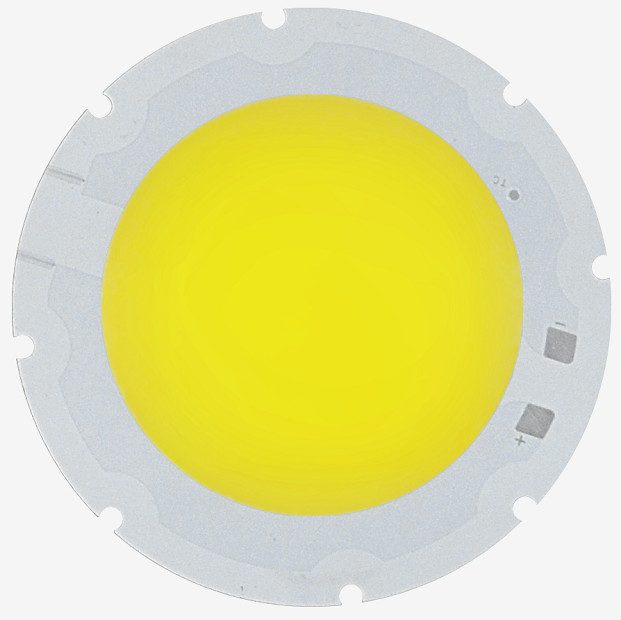
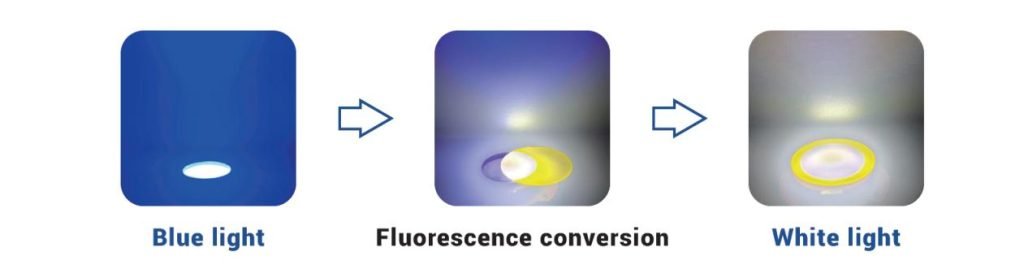
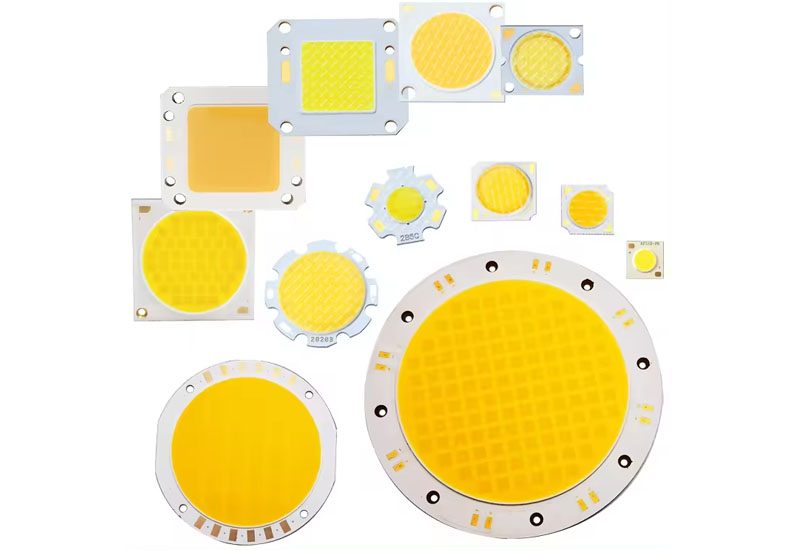
LEDs rely on semiconductor electroluminescence. When a forward bias is applied to the p-n junction of a gallium nitride (GaN) or indium gallium nitride (InGaN) chip, electrons recombine with holes, releasing energy in the form of photons. Phosphor coatings are applied over the blue-emitting die to convert the output into high-quality white light.
Luminous Efficacy: Exceeds 100 to 140 lm/W at the component level, depending on drive current and junction temperature.
Color Temperature: Fully customizable, typically set to 5,500K to 6,000K to replicate natural daylight, which helps lower driver eye strain.
Lifespan: Often exceeds 15,000 to 30,000 hours, frequently outlasting the vehicle itself.
Advantage: Extremely fast rise times (instantaneous start), compact dimensions, and modularity, enabling multi-pixel matrix headlamps and dynamic signal designs.
Thermal Management in Semiconductor Lighting Systems
A common misconception in automotive design is that because solid-state systems generate no infrared radiation in the light beam, they do not produce heat. In reality, approximately 70% to 80% of the electrical energy supplied to an LED chip is converted into thermal energy at the p-n junction. If this heat is not evacuated efficiently, the junction temperature will rise, causing a drop in luminous flux, color shift (chromaticity drift), and premature component degradation.
To control these factors, automotive Tier-1 suppliers and manufacturers like CAS rely on rigorous material testing and structural simulation to manage the thermal path. The main thermal components in a modern LED headlamp include:
Metal Core Printed Circuit Boards (MCPCBs): Standard FR4 boards are inadequate for high-power LED arrays. Aluminum or copper-core PCBs with thin, highly conductive dielectric layers are used to transfer heat away from the LED package thermal pad.
Thermal Interface Materials (TIMs): High-performance thermal greases, pads, or phase-change materials fill microscopic air gaps between the MCPCB and the main heatsink to lower thermal contact resistance.
Passive and Active Heatsinks: Cast aluminum heatsinks are optimized using computational fluid dynamics (CFD) to maximize convective heat transfer. In compact spaces where passive convection is insufficient, active cooling systems—such as brushless fans or synthetic jets—are integrated.
Optical Design and Precision Beam Shaping
Designing a projection system for vehicles requires precise control over light distribution. Headlamp assemblies must generate a distinct cutoff line to prevent blinding oncoming drivers (glare mitigation) while projecting sufficient light down the lane to identify potential hazards.
When engineering a modern optical assembly, designers face the challenge of integrating a reliable light source for automotive lighting that complies with strict global regulations. This requires using specific optical configurations:
Reflector-Based Optics
In traditional setups, the source is positioned at the focal point of a parabolic or free-form reflector. The reflector surface is segmented using computerized algorithms to shape the beam without requiring heavy secondary glass lenses. This approach is lightweight and cost-efficient but offers less control over light spill.
Projector-Based Optics
Projector systems position the emitter inside an elliptical reflector that focuses light toward an internal shield (or shutter). A secondary condenser lens projects the image of this shutter onto the road, creating a sharp cutoff line. This assembly is standard for HID systems and high-output LED low beams.
Micro-Lens Arrays (MLA) and Matrix Systems
Modern adaptive driving beam (ADB) systems use a matrix of individually controllable LEDs. By turning specific segments on or off based on camera sensor inputs, the vehicle can selectively dim portions of the high beam around oncoming traffic while keeping the rest of the road illuminated. Micro-lens arrays help condense these separate light channels into extremely compact form factors, reducing the physical size of the lamp assembly.
Regulatory Compliance and Standard Qualifications
Before any lighting module can be deployed on public roads, it must pass strict homologation procedures. These standards differ across regions but focus on the same core parameters: light intensity, color coordinates, durability, and environmental resistance.
The two main regulatory frameworks are:
ECE Regulations (Europe and Global): Used in Europe and many non-US markets. ECE regulations (such as Regulation 112, 128, and 149) define precise beam patterns, illumination limits at specific test points, and strict guidelines for active beam adjustment.
FMVSS 108 (North America): This standard is self-certified by manufacturers and relies on a different set of test grids and beam pattern structures, emphasizing self-regulating mechanisms and physical durability.
At the component level, semiconductor sources must undergo rigorous qualification testing. The automotive standard AEC-Q102 governs discrete optoelectronic semiconductors, requiring components to pass thermal cycling, high-humidity storage, mechanical shock, vibration, and electromigration testing, ensuring that every light source for automotive lighting manufactured under our supervision meets stringent requirements for long-term road safety.
Addressing B2B Engineering Pain Points
Procurement teams and design engineers face constant pressure to balance performance, cost, and reliability. Below are some of the primary hurdles in B2B automotive lighting supply chains, along with industry-standard mitigation strategies:
1. Color Binning and Consistency
Due to manufacturing tolerances in semiconductor production, LEDs from the same wafer can vary in color temperature, forward voltage, and luminous flux. If uncontrolled, lamps on the left and right sides of a vehicle might display noticeable differences in color or intensity. To resolve this, suppliers implement strict binning strategies, grouping LEDs into narrow selection windows to ensure uniformity across production batches.
2. Electromagnetic Interference (EMI)
Unlike halogen bulbs that run on direct current, LED drivers use high-frequency switching circuits (buck-boost topologies) to regulate current. These switching cycles can generate electromagnetic interference that disrupts vehicle AM/FM radio reception, ADAS sensors, or other electronic systems. Designing drivers to meet CISPR 25 Class 5 emission standards requires proper layout design, shielding, and input filtering.
3. Condensation and Environmental Sealing
Because LED lamps generate less forward heat than halogen options, they do not heat the outer lens as effectively. This makes them more prone to internal condensation in cold, humid conditions. Headlamp housings must be designed with semi-permeable membranes (such as expanded PTFE vents) to equalize pressure and allow moisture to escape without letting liquid water or dust enter.
At CAS, we implement advanced optical simulation tools, rigorous component validation, and cleanroom assembly procedures to address these engineering obstacles, providing Tier-1 integrators with stable, reliable modules that lower warranty claims and speed up product development cycles.
Choosing the Right Integration Partner
Selecting the correct light source for automotive lighting requires balancing thermal, electrical, and optical factors. As the market transitions toward highly adaptive, solid-state LED systems and high-definition projection technologies, working with a component supplier that understands these design interactions is paramount.
Partnering with CAS ensures your design transition is seamless. We offer comprehensive engineering support, AEC-Q102 qualified light engines, and reliable manufacturing capabilities to bring your vehicle lighting concepts to life safely and efficiently.
For custom engineering consultations, detailed component datasheets, or specific project requests, please contact our technical sales team today.
Frequently Asked Questions
Q1: Why are LEDs replacing Xenon/HID systems as the preferred light source for automotive lighting?
A1: While HID systems offer excellent brightness, LEDs surpass them in several areas. LEDs provide instant start times, a longer operational life (often over 20,000 hours compared to HID's 2,500 hours), lower power consumption, and much smaller physical dimensions, which allows for advanced styling and adaptive beam patterns.
Q2: How does junction temperature affect the performance of an automotive LED module?
A2: High junction temperatures lead to a drop in luminous efficacy (lower light output) and can shift the color coordinates of the emitted light. Over time, excessive thermal stress degrades the encapsulation materials and electrical bonds, leading to premature component failure.
Q3: What is the significance of AEC-Q102 certification for automotive light sources?
A3: AEC-Q102 is a qualification standard established by the Automotive Electronics Council for optoelectronic semiconductors. It guarantees that the component has passed a rigorous battery of environmental, electrical, and physical stress tests, proving its ability to survive the harsh operating conditions of a passenger vehicle.
Q4: Can LED light sources be directly retrofitted into existing halogen housing designs?
A4: Direct retrofits are rarely recommended for OEM applications because halogen reflector geometries are designed specifically for a line-source tungsten filament. Placing an LED source in a halogen housing often results in an uncontrolled beam pattern with excessive glare for oncoming traffic, making it non-compliant with ECE or FMVSS standards.
Q5: How do automotive manufacturers prevent electromagnetic interference (EMI) from LED drivers?
A5: Engineers mitigate EMI by choosing low-noise switching driver topologies, integrating passive LC filters on input and output lines, using shielded cables, and enclosing driver circuitry in metallic or metallized plastic housings to meet CISPR 25 requirements.