High-power solid-state lighting systems require optical components capable of enduring extreme photon densities and thermal loads. Traditional color-conversion architectures rely on inorganic phosphors dispersed within organic silicone matrices or glass substrates. These legacy configurations encounter rapid physical and optical degradation when exposed to driving currents exceeding high thermal thresholds. Photothermal decomposition of silicone binders causes yellowing, lumen attenuation, and dramatic shifts in chromaticity. The industry transition toward YAG ceramic as a primary luminescent converter resolves these reliability bottlenecks, establishing a new baseline for high-luminance optical engines operating under severe conditions.
Modern lighting applications in automotive headlamps, stage projection, high-bay industrial illumination, and searchlights demand light sources with tight etendue and maximum thermal stability. Solid-state luminescent plates eliminate the structural vulnerabilities inherent in organic-encapsulated designs. By converting blue pump light into broad-spectrum yellow emission via a fully dense polycrystalline ceramic matrix, lighting designers achieve higher light output within significantly smaller optical footprints.
Thermal and Microstructural Fundamentals of Yttrium Aluminum Garnet
The operational limit of any phosphor converter is governed by its ability to dissipate heat generated through Stokes shift losses and non-radiative transitions. In standard phosphor-in-silicone systems, thermal conductivity remains below 0.2 W/m·K. This low heat dissipation capacity causes localized heat accumulation, triggering thermal quenching where photoluminescence intensity drops precipitously as temperatures rise.
Synthetic yttrium aluminum garnet doped with trivalent cerium ions (Ce3+:Y3Al5O12) features an exceptionally stable crystal structure. When synthesized as a fully dense optical plate, the resulting material exhibits thermal conductivity values ranging between 9 and 14 W/m·K. This parameter represents an increase of more than forty times over conventional silicone-based media, enabling rapid thermal transport away from the active excitation zone directly to attached thermal management hardware.
Synthesis and Phase Purity Control
Achieving optimal optical conversion requires strict control over raw material purity, stoichiometric ratios, and thermal processing profiles. Synthesizing YAG ceramic requires precise control over phase purity to eliminate parasitic phases such as yttrium aluminum perovskite (YAP) or yttrium aluminum monoclinic (YAM), both of which introduce unwanted absorption and scattering centers.
Powder Preparation: High-purity yttrium oxide, aluminum oxide, and cerium oxide powders undergo wet ball milling to achieve sub-micron particle distribution and uniform dopant dispersion.
Green Body Shaping: Cold isostatic pressing applies uniform hydrostatic pressure to form homogeneous green compacts with minimized internal density gradients.
Vacuum Sintering: High-temperature vacuum sintering at temperatures exceeding 1700°C removes volatile contaminants and initiates solid-state grain boundary diffusion.
Hot Isostatic Pressing (HIP): Secondary processing under high hydrostatic gas pressure eliminates residual closed micropores, driving theoretical density above 99.9%.
Optical Scattering and Transmittance Properties
Light propagation through a luminescent plate depends on the interplay between inline transmittance and internal light scattering. Fully transparent plates allow long optical path lengths, which can reduce total scattering and lower overall conversion efficiency. Conversely, excessive scattering caused by residual porosity or secondary phase inclusions leads to severe backscattering losses, returning converted light toward the pump diode and decreasing system lumen yield.
Targeted control of grain boundary characteristics and micro-porosity distribution allows optical engineers to tune the scattering coefficient. Controlling pore size at dimensions close to the wavelength of excitation light increases forward scattering while minimizing backscattering. Thermal characterization conducted by CAS demonstrates that maintaining a uniform grain boundary network reduces thermal resistance across the interface, ensuring predictable chromaticity parameters across dynamic temperature gradients.
Photothermal Performance and Quenching Dynamics
Thermal quenching occurs when thermal energy excites electrons from the relaxed excited state of the activator ion back to the ground state non-radiatively. For cerium-doped garnet structures, the temperature at which photoluminescence intensity drops to 50% of its initial room-temperature value—known as the quenching temperature (T50)—exceeds 300°C. This threshold far surpasses the thermal capability of any resin-bound conversion medium.
Under continuous ultra-high photon flux density, such as excitation from blue laser diodes operating at optical power densities above 10 W/mm², heat propagation within YAG ceramic remains linear even under high photon densities. The absence of organic binders eliminates oxidation, charring, and outgassing, ensuring long-term lumen maintenance without catastrophic optical degradation.
Comparative Analysis of Conversion Media
Evaluating luminescent media across core thermal and optical parameters underscores the functional differences between conventional formulations and solid-state optical ceramics:
Phosphor-in-Silicone: Thermal conductivity: 0.15–0.3 W/m·K; Maximum operational temperature: 120–150°C; Primary failure mode: Polymer yellowing, thermal decomposition, and micro-cracking.
Phosphor-in-Glass (PiG): Thermal conductivity: 1.0–1.5 W/m·K; Maximum operational temperature: 200–250°C; Primary failure mode: Glass phase softening, chemical interface reactions, and medium thermal resistance.
Optical Ceramic Plates: Thermal conductivity: 9.0–14.0 W/m·K; Maximum operational temperature: >350°C; Primary failure mode: Structural resistance remains intact; limited strictly by external mounting braze alloy limits.
By utilizing advanced HIP processes, CAS produces high-transmittance plates that maintain consistent internal quantum efficiency under intense radiometric loads, providing optical engine designers with a stable foundation for extreme-output lighting fixtures.
Primary Application Fields for Dense Luminescent Ceramics
The specific photothermal capabilities of dense luminescent plates make them suitable for lighting architectures where space constraints prevent the use of large cooling assemblies, or where optical design demands pinpoint light emitting surfaces.
Automotive Exterior Illumination
Modern vehicle headlamps, particularly adaptive driving beam (ADB) and laser high-beam modules, require extremely high luminance from micro-scale light emitting surfaces. In automotive laser headlights, high-luminance projection engines utilize YAG ceramic to withstand narrow-beam laser excitation without performance drift. The precise spatial distribution of emission color reduces color-over-angle variations, meeting stringent international beam-pattern regulations over extended vehicle lifespans.
High-Bay Industrial and Architectural Lighting
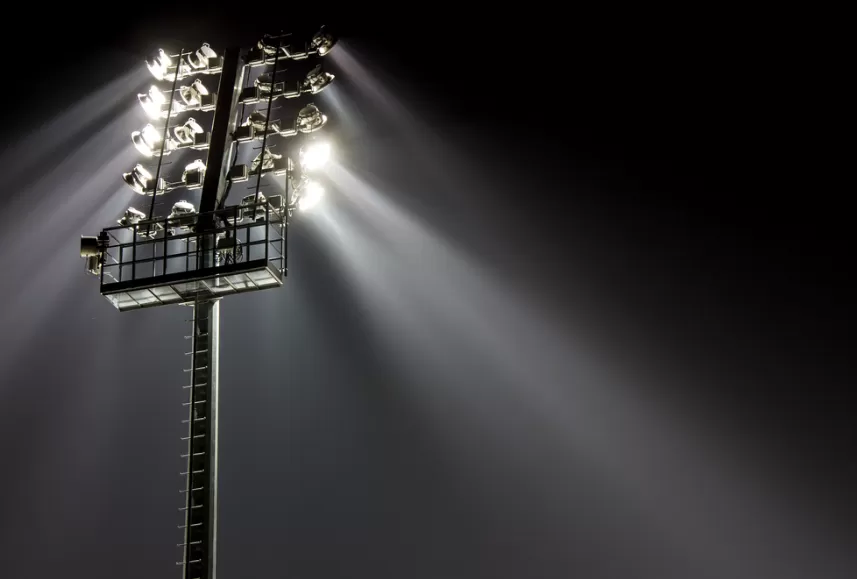
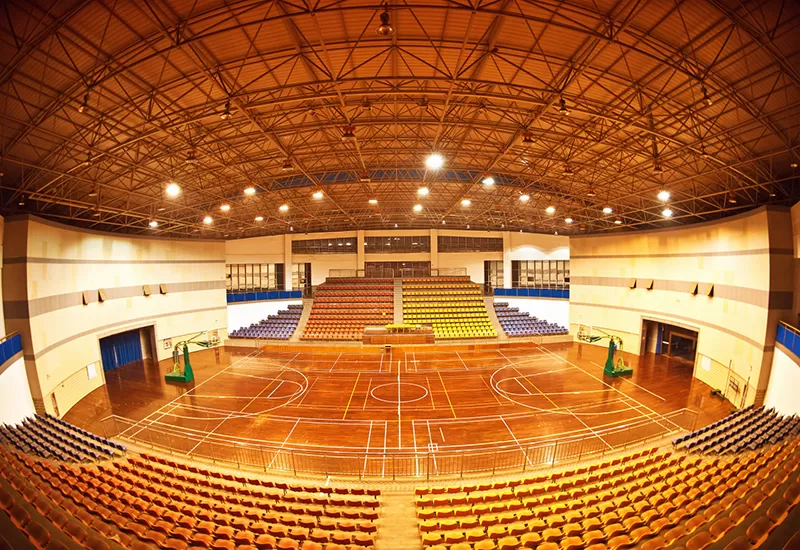
Industrial facilities, logistics hubs, and sports arenas require persistent high-lumen output from fixtures mounted in elevated, thermally challenging locations. Standard LED packages deployed in these environments often suffer accelerated lumen depreciation due to high ambient temperatures combined with internal operational heat. Replacing silicone coatings with ceramic converters enables fixture manufacturers to drive LEDs at higher current densities while maintaining long-term color rendering stability and extending maintenance intervals.
Entertainment, Projection, and Searchlight Systems
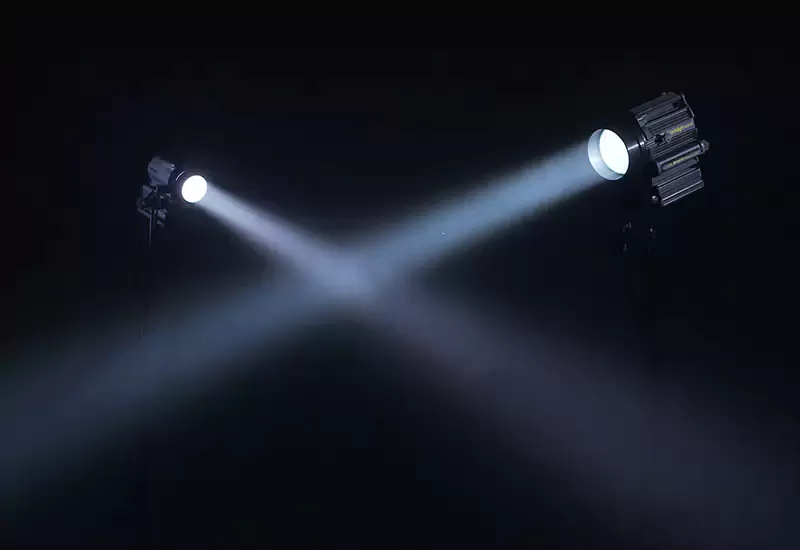
Stage spotlights, digital cinema projectors, and searchlights require high total luminous flux combined with low etendue to enable long-distance beam projection. Traditional short-arc discharge lamps offer high luminance but suffer from short operating lifespans, high operating voltages, and environmental disposal concerns. High-excitation laser-phosphor architectures operating with solid-state ceramic converters deliver equivalent or superior luminance with tens of thousands of hours of operational lifetime and lower power consumption.
Engineering Considerations for Module Integration
Integrating ceramic conversion plates into high-power lighting assemblies requires deliberate attention to mechanical boundary conditions, interface materials, and optical geometry.
Thickness and Dopant Concentration Tuning
Optical conversion performance depends directly on matching the thickness of YAG ceramic to the excitation light source and target color coordinates (CIE x, y). Increasing Ce3+ doping concentration enhances absorption per unit thickness, allowing for thinner plates that reduce lateral light scattering. However, high doping concentrations can trigger activator concentration quenching due to energy transfer between adjacent Ce3+ ions. Typical optimal thickness profiles range between 100 micrometers and 500 micrometers depending on pump excitation wavelength and beam spot profile.
Surface Treatments and Mechanical Joining
Light extraction efficiency is restricted by Fresnel reflections occurring at the interface between the ceramic surface (refractive index n ≈ 1.83) and surrounding air (n = 1.0). Unprocessed flat surfaces reflect a significant portion of emitted light internally, increasing internal thermal conversion losses.
Surface Micro-Texturing: Chemical etching or mechanical polishing creates micro-structures that alter the incident angle of internal light rays, raising light extraction efficiency by up to 20%.
Anti-Reflective (AR) Coatings: Thin-film dielectric coatings deposited on input and output surfaces maximize pump light transmission and exit light yield.
Eutectic Bonding and Metalization: Standard organic adhesives cannot endure the operational temperatures at the ceramic interface. Applied metallization layers permit direct eutectic soldering or vacuum brazing onto metallic heat sinks, establishing ultra-low thermal impedance paths.
Selection Criteria and Custom Specifications
Selecting appropriate luminescent converter specifications involves balancing optical conversion efficiency, mechanical stability, and thermal dissipation paths. Key engineering parameters to evaluate during component procurement include:
Target Color Coordinates: Specification of exact chromaticity targets within the CIE 1931 color space, accounting for operational equilibrium temperatures.
Thermal Conductivity Profile: Verification of thermal isotropic characteristics across the component volume to avoid localized hot spots.
Mechanical Flatness and Surface Roughness: Precision double-side polishing ensuring surface roughness Ra < 10 nanometers to facilitate optimal thermal contact bonding.
Excitation Flux Resistance: Validation under maximum intended optical power density (W/mm²) without non-linear conversion drops.
Engineering teams developing specialized high-lumen illumination architectures require precise physical data and mechanical customization. Submit your design parameters to the CAS optics engineering department to receive technical consultation, customized material samples, and tailored inquiry responses for your specific optical system layout.
Frequently Asked Questions
Q1: What is a YAG ceramic converter, and how does it function in
solid-state lighting systems?
A1: A YAG ceramic light converter is a
polycrystalline solid-state material synthesized from yttrium aluminum garnet
doped with rare-earth ions like cerium. Functioning as a down-conversion medium,
it absorbs high-energy short-wavelength light—typically blue light from LEDs or
laser diodes—and re-emits longer-wavelength green-yellow light. Combining
unabsorbed blue light with yellow emission produces high-intensity white
light.
Q2: Why is YAG ceramic preferred over phosphor-in-silicone for
laser-driven light engines?
A2: Laser-driven engines focus high
optical power onto extremely small surface areas, generating significant
localized heat. Organic silicone binders degrade, turn yellow, and burn under
these conditions. The solid inorganic structure of the ceramic offers high
thermal conductivity (>9 W/m·K) and high thermal stability, preventing
physical degradation and thermal quenching under intense laser excitation.
Q3: How does component thickness impact the optical performance of
ceramic converters?
A3: Plate thickness dictates the optical path
length of excitation light within the luminescent medium. A thicker plate
converts more blue light into yellow light, shifting the final color output
toward lower color temperatures (warmer white). A thinner plate allows more
unabsorbed blue light to pass through, yielding higher correlated color
temperatures (cooler white). Thickness must be matched accurately with dopant
concentration to achieve target CIE chromaticity coordinates.
Q4: Can YAG ceramic components be directly soldered to metal heat
sinks?
A4: Yes, provided the ceramic surfaces are prepared with
suitable thin-film metallization layers, such as titanium-nickel-gold stacks.
This surface treatment enables vacuum brazing or low-temperature eutectic
soldering directly onto copper or aluminum-nitride substrates, establishing a
durable, low-thermal-resistance path essential for efficient heat
extraction.
Q5: What mechanical processing techniques are required to shape
optical ceramic plates?
A5: Due to the high hardness of fully
sintered yttrium aluminum garnet (Mohs hardness ~8.5), mechanical shaping
requires diamond tool machining, high-precision surface grinding, laser dicing,
and chemical-mechanical polishing. These operations achieve high dimensional
tolerances, smooth surface profiles, and crisp edge quality required for precise
optical alignment.