Modern land-based aquaculture faces a silent variable that directly determines feed conversion, stress levels, and reproductive cycles: light. Unlike conventional broad-spectrum lamps, engineered Fish farming LED solutions provide spectral selectivity, programmable photoperiods, and uniform intensity—essential parameters for species like Atlantic salmon, Nile tilapia, and Asian seabass. This article dissects the physiological mechanisms, engineering requirements, and biological validations behind high-performance LED lighting in recirculating aquaculture systems (RAS) and pond environments.
Why Legacy Lighting Fails in Intensive Fish Production
Traditional fluorescent or metal halide fixtures lack precise control over wavelength and photoperiod. Their broad spectrum often includes inefficient green-yellow bands that do not trigger specific opsins in fish retinas, while generating unwanted heat and requiring frequent lamp changes. More importantly, unregulated light cycles disrupt melatonin rhythms, leading to chronic stress, reduced growth hormone expression, and erratic spawning. A purpose-designed Fish farming LED system resolves these limitations by delivering tailored irradiance with minimal energy overhead.
Spectrum Engineering: Matching Light to Opsin Sensitivity
Teleost fish possess multiple photoreceptors: rods for low-light vision, cones for color discrimination, and deep-brain photoreceptors (e.g., Opsin 5) that regulate neuroendocrine pathways. Effective illumination must target specific wavelengths:
Blue light (440–470 nm): Stimulates somatostatin inhibition and increases feed intake in pelagic species. Blue-rich regimes reduce aggressive behavior in juvenile stages.
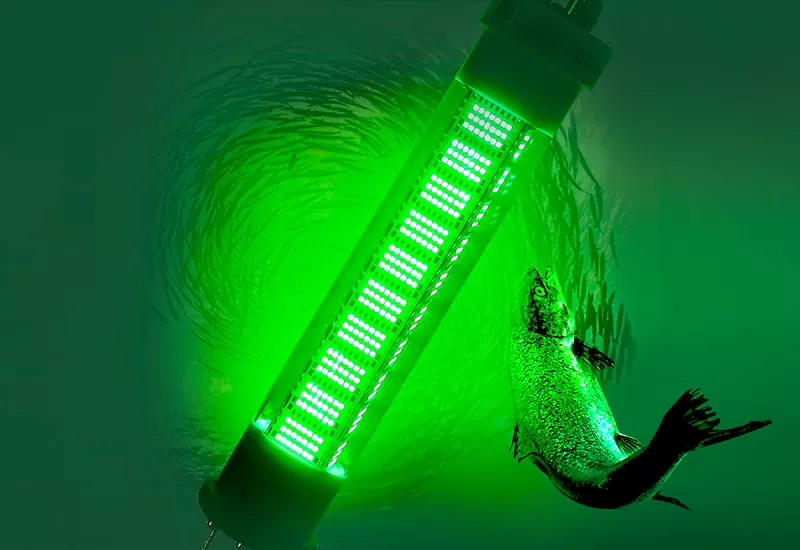
Green light (520–540 nm): Maximizes retinal sensitivity for most freshwater species; improves growth performance via upregulation of growth hormone mRNA in the pituitary.
Red light (620–660 nm): Applied during maturation phases to accelerate gonadal development in tilapia and catfish. However, prolonged red exposure can cause hyperphagia and metabolic disorders.
White balanced (4000K–5000K): Simulates natural underwater light for multi-species systems; recommended for hatcheries needing visual inspection without phototactic shock.
Advanced Fish farming LED arrays from manufacturers like CAS allow independent channel dimming, enabling photoperiodic programs that shift from dawn simulation (30% blue) to high-noon green-dominant output—mimicking natural underwater light attenuation.
Photoperiodic Control: Entraining the Circadian Clock
Fish exhibit strong seasonal and daily rhythms. Light duration manipulation is a non-invasive tool to control smoltification in salmonids and delay sexual maturation in eels. Key photoperiod protocols include:
Compressed short day (8h light / 16h dark): Promotes gonad regression and suppresses early maturation in commercial grow-out tanks.
Continuous light (24h): Enhances growth in post-smolt Atlantic salmon but increases cataract risk if UV components are present. Modern LED controllers avoid UV peaks.
Simulated natural photoperiod: Dynamically adjusted daily using astronomical clocks—reduces fin damage and territorial fighting in group-housed fish.
Skeletal photoperiod (intermittent light pulses): Low-energy approach (e.g., 15 min light on, 45 min off) maintains growth without overstimulation, saving 40% electricity.
The combination of tunable spectrum and dynamic photoperiod requires a robust lighting control system. CAS integrates its Fish farming LED luminaires with centralized IoT controllers, allowing farmers to program species-specific light recipes and monitor lamp degradation in real time.
Addressing Key Operational Pain Points
1. Algae Proliferation in RAS Tanks
Excess photosynthetic active radiation (PAR) in the 400–700 nm range, especially red wavelengths, triggers microalgae blooms. This clogs biofilters, reduces dissolved oxygen at night, and promotes off-flavor compounds in fish flesh. Solution: employ Fish farming LED systems with a narrow green-blue spectrum and programmable red suppression periods. For systems prone to filamentous algae, a 2-hour daily near-UV (385 nm) pulse at low intensity inhibits zoospore germination without harming fish epithelium.
2. Uneven Illumination Leading to Shadow Avoidance
Shadow zones cause chronic stress as dominant individuals claim well-lit areas while subordinate fish hide in darkness. To achieve coefficient of variation (CV) below 15%, linear LED bars should be installed at a 30° tilt angle and spacing less than 1.5× mounting height. Diffused secondary optics (frosted lenses) eliminate hotspot glare while maintaining uniform photosynthetic photon flux density (PPFD) of 50–120 µmol/m²/s across tank bottom.
3. Harsh Environmental Conditions
High humidity, splashing water, and corrosive gases (hydrogen sulfide from biofilters) demand ingress protection of at least IP67. Saltwater systems require aluminum housings with marine-grade epoxy coating and silicone gaskets. Fish farming LED fixtures designed for aquaculture incorporate encapsulated drivers and corrosion-resistant connectors, ensuring 50,000+ hours of reliable operation.
Quantifiable Biological Responses to Tailored LED Regimes
Recent studies in RAS facilities demonstrate clear performance correlations:
Feed conversion ratio (FCR): Optimized green-blue lighting reduces FCR by 8–12% compared to fluorescent lamps, due to better feed visual contrast and reduced stress-induced wasting.
Survival rate: Larvae stages exposed to dimmable blue-dominated light (intensity < 30 lux) show 18% higher survival due to reduced cannibalism and phototactic panic.
Skeletal abnormality reduction: Continuous near-infrared (NIR) suppression avoids thermal stratification; combined with full-spectrum visible light, vertebral malformations in seabass dropped by 27% in a 12-month trial.
These improvements depend not only on the LED chip quality but also on the thermal management system. CAS luminaires use passive cooling fins and junction temperature sensors that automatically derate output when ambient exceeds 45°C—maintaining spectral stability over the entire production cycle.
Integration with Recirculating Aquaculture Systems (RAS)
Modern RAS layouts include multiple zones: larval tanks, nursery, grow-out, and broodstock. Each zone has distinct lighting requirements:
Larval tanks: Low-intensity (5–10 lux), blue-dominant (470 nm) to enhance swim bladder inflation and reduce surface mortality.
Nursery: Medium intensity (30–50 lux), green spectrum (530 nm) to promote schooling behavior and uniform growth.
Grow-out: Dynamic intensity ramping from 50 to 150 lux over the day, using broad white LEDs with elevated cyan component (500 nm) to suppress aggressive fin nipping.
Broodstock: Photoperiod manipulation with red-enriched spectrum during evening to stimulate spawning, followed by complete darkness for 10 hours to avoid egg predation.
Each zone’s Fish farming LED fixtures must be networked to a central controller, enabling synchronization with feeding times and water exchange cycles. The CAS Lighting Management Platform supports Modbus and MQTT protocols, allowing data logging of daily light integrals (DLI) per tank—a key metric for research-driven farms.
Energy Efficiency and Longevity in Continuous Operation
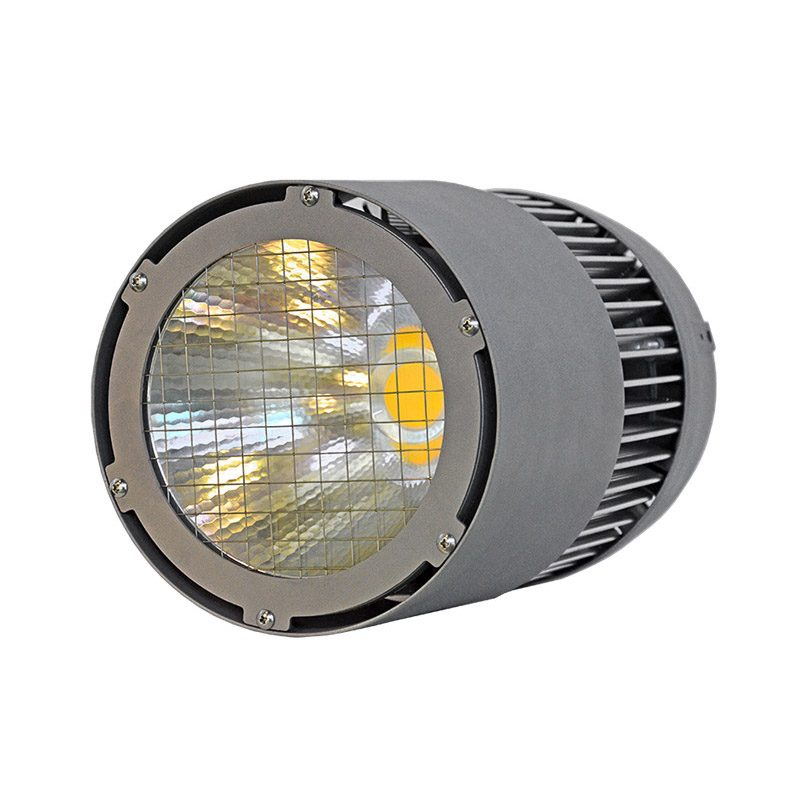
Aquaculture lighting often runs 16–24 hours daily. A well-designed Fish farming LED system consumes 50–70% less energy than metal halide equivalents, while providing 3x longer lifetime. Additional gains come from adaptive intensity: during maintenance or feeding, lights automatically increase to 100% for inspection; between feedings, they drop to 40% baseline. This approach reduces algae growth and saves electricity. Because LED efficiency declines with junction temperature, thermal-path design is critical. CAS luminaires utilize copper-filled PCBs and thermal interface pads to keep Tj below 85°C, ensuring L90 > 60,000 hours even in warm tropical hatcheries.
Installation and Maintenance Considerations
Optimal fixture placement follows the inverse-square law modification: for rectangular tanks, mount linear LEDs along the longer axis, 40–60 cm above water surface. Use spectral sensors for closed-loop feedback—adjusting intensity when water turbidity changes after feeding. Maintenance protocols should include quarterly inspection of gasket integrity and cleaning of dust/oil film from lenses using isopropyl alcohol. Digital monitoring of each fixture’s runtime and thermal cycles predicts end-of-life, preventing unexpected darkness during critical smoltification windows.
Future Directions: AI-Assisted Dynamic Lighting
Machine vision systems now track fish swimming patterns and feed response. When integrated with adaptive LED controllers, the lighting modifies spectrum in real time: if aggressive chasing is detected, the system increases green component and reduces red light, which has been shown to lower cortisol levels. Combined with stereo cameras, future Fish farming LED installations will adjust local dimming per tank zone, creating “light shelters” for subordinate fish while maintaining overall productivity. Early adopters are already testing these concepts with specialized providers like CAS, moving beyond static recipes toward biologically responsive illumination.
Conclusion: From Illumination to Production Tool
Light is no longer a binary on/off utility in fish farming—it is a precise biological lever. Optimized Fish farming LED systems increase growth rates, improve feed efficiency, synchronize reproduction, and reduce reliance on veterinary interventions. The technical requirements (spectral purity, photoperiodic programmability, corrosion resistance, and thermal stability) demand aquaculture-specific engineering rather than repurposed industrial lighting. By adopting purpose-built solutions and species-specific light recipes, farms can achieve measurable ROI through healthier stocks and lower operational overhead.
Frequently Asked Questions (FAQ)
Q1: What is the ideal light spectrum for a multi-species RAS tank containing tilapia and catfish?
A1: A balanced white LED with elevated green (530 nm) and moderate blue (450 nm) works effectively for both species. Avoid high red intensity (>15% of total photons) because tilapia may overfeed while catfish exhibit restlessness. Using a 5000K white chip combined with independent green channel adjustment yields optimal compromise. CAS offers hybrid luminaires with programmable spectrum slots for mixed stocking.
Q2: How many hours of light should be provided for juvenile barramundi to minimize cannibalism?
A2: Barramundi (Asian seabass) require 12h light / 12h dark with a dusk-to-dawn transition period of 30 minutes. The light intensity should stay below 50 lux at the tank bottom. Complete darkness phases reduce cannibalistic attacks, while a sudden light-off trigger stress. A programmable Fish farming LED controller can simulate lunar cycles to further dampen aggression.
Q3: Can LED lighting suppress filamentous algae without harming biofilter bacteria?
A3: Yes. Filamentous algae (e.g., Cladophora) rely on red light for photosynthesis. By programming your LED system to emit a red-free spectrum (440–520 nm only) for 6 hours in the middle of the day, algae growth is suppressed while nitrifying bacteria (which do not use photosynthesis) remain unaffected. An additional 10-minute daily pulse of 385 nm UV-A at 0.5 W/m² disrupts algal spores.
Q4: What IP rating is necessary for LED fixtures placed above saltwater broodstock tanks?
A4: Minimum IP67 (dust-tight and protected against temporary immersion). For marine hatcheries with frequent spray-downs, IP68 is recommended. All external connectors must be IP68-rated metal circular types. CAS supplies IP68-rated Fish farming LED bars with silicone overmolding, certified for continuous salt spray exposure per ASTM B117.
Q5: How often should the light intensity be recalibrated in a high-density RAS?
A5: Biofilm accumulation and water turbidity can reduce PAR by 20–30% within 60 days. Install a submersible quantum sensor (e.g., LI-COR underwater) connected to the lighting controller. Automatically increase drive current to maintain target PPFD. If manual calibration, perform checks biweekly. Spectral shift is negligible in quality LEDs; only intensity requires compensation.
Q6: Is it beneficial to run lights during feeding only?
A6: No. Fish need consistent photoperiods for endocrine regulation. However, “feeding light bursts” (increasing intensity from 40% to 100% for 15 minutes before and during automated feeders) improve feed localization and reduce waste. The baseline photoperiod must still maintain 12–16h total light. This hybrid strategy is supported by CAS feed-sync modules.
Ready to upgrade your aquaculture facility with precision-engineered Fish farming LED solutions? CAS provides full technical support, from spectral design to installation supervision and performance validation. Our team works alongside your biologists to develop species-specific lighting plans that maximize biomass output and animal welfare.
Contact CAS today for a consultation or to request photometric studies for your tank layouts. Send your inquiry to our aquaculture lighting engineers—receive within 24 hours a preliminary spectrum recommendation and fixture layout proposal.