Modern head‑up display (HUD) systems have moved from a niche luxury feature to a standard component in many passenger vehicles, and they are rapidly gaining ground in commercial fleets, aviation, and heavy machinery. The performance, reliability, and optical quality of a HUD rely overwhelmingly on one component: the light source for HUD modules. As projection distances extend and augmented reality (AR) elements overlay real‑world information, the demands on luminance, thermal stability, and spectral purity become significantly more rigorous. This article provides a technical, component‑level examination of the available illumination technologies, practical integration challenges, and the quantifiable metrics that procurement and engineering teams must evaluate when selecting a light source for HUD for next‑generation cockpit architectures.
Why the Light Source Defines HUD System Capabilities
In a typical automotive HUD — whether combiner or windshield‑projection type — a picture generation unit (PGU) creates the virtual image, and the illumination subsystem determines maximum brightness, contrast under sunlight, color uniformity, and the operating temperature range. A suboptimal light source for HUD directly causes readability failures during high‑noon driving, shortens product lifetime, or introduces non‑uniform luminance that distracts the driver. Key performance indicators influenced by the light source include:
Luminance (cd/m²): Required to exceed 15,000 cd/m² for windshield HUDs to overcome solar load and background reflections.
Thermal dissipation: High‑flux LED or laser sources generate concentrated heat; junction temperature control directly affects wavelength stability and lifetime.
Etendue & optical extension: Matching the light source etendue to the PGU (LCD, DLP, or LCoS) determines light utilization efficiency.
Color gamut and accuracy: For AR‑HUD with navigation and safety cues, consistent chromaticity (e.g., red warning symbols) is mandatory.
Without careful specification, even the most advanced optical design will fail to meet SAE or manufacturer requirements for daytime legibility. This is where specialized component suppliers like CAS provide pre‑characterized light source assemblies that combine high‑power LEDs with integrated thermal and optical interfaces.
Principal Technologies in HUD Illumination Systems
Current production HUDs and prototypes rely on two primary solid‑state illumination families: high‑power white LEDs (phosphor converted or direct RGB) and laser‑based sources (laser phosphor or direct RGB laser). A smaller niche uses micro‑LED arrays for segmented illumination. Each technology has distinct advantages and compromises when integrated as a light source for HUD.
1. High‑Luminance White LEDs (Phosphor + Blue Pump)
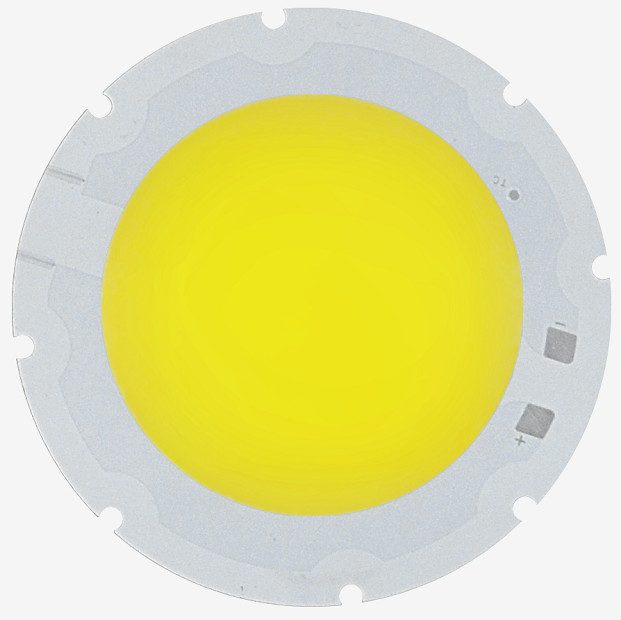
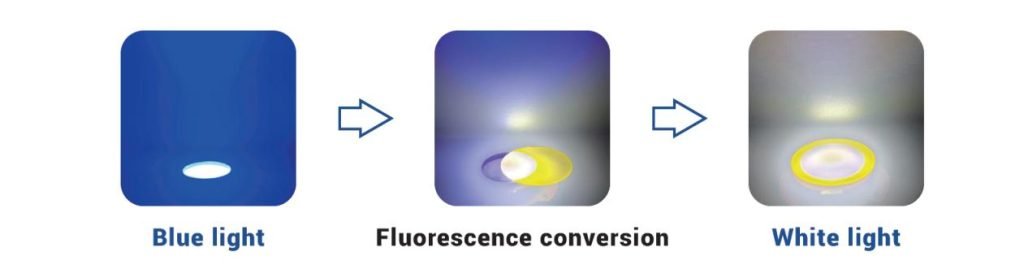
White LEDs remain the dominant choice for mass‑production HUDs because of their proven reliability, cost structure, and compact footprint. A blue LED chip excites a yellow/ceramic phosphor to generate white light. For HUD applications, specific modifications are required:
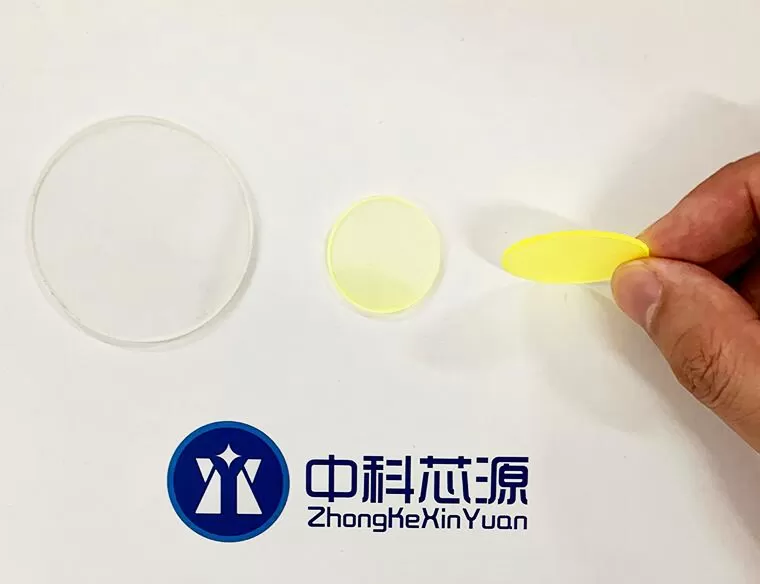
Phosphor formulation: Custom phosphors reduce the green‑red gap, improving color rendering for navigation symbols.
Low‑thermal‑resistance packages: Ceramic substrates with direct copper bonding keep thermal resistance below 2 K/W.
High current density tolerance: Automotive HUD sources often operate at 1.5–2 A/mm² to achieve necessary luminance.
However, standard white LEDs exhibit a drop in luminous efficacy at high temperatures (≥ 85°C). Furthermore, the étendue of a large LED chip may exceed the etendue of small PGUs (e.g., 0.3” DLP), leading to efficiency loss. CAS offers LED arrays with integrated collimators that reduce étendue mismatch and maintain 90% flux retention after 6,000 hours of high‑temperature operation.
2. RGB Direct LED or Phosphor Wheel + Blue Laser
Laser‑based solutions are gaining traction for premium AR‑HUD systems where extreme luminance (over 30,000 cd/m²) and wide color gamut are required. Two architectures exist:
Laser phosphor: A blue laser diode excites a rotating phosphor wheel to generate sequential color. This achieves very high luminance (up to 300 lm/mm²) but introduces mechanical complexity and temporal artifacts.
Direct RGB laser: Red, green, and blue laser diodes are combined via dichroic mirrors. Speckle noise must be managed, and temperature‑dependent wavelength drift (particularly for red lasers) requires active cooling.
Laser sources provide superior etendue (nearly lambertian emission) and longer lifetimes (L70 > 50,000 h) if thermal management is sufficient. Nevertheless, cost, safety regulations (class 2R or higher), and integration complexity limit their adoption to high‑trim vehicles. For most Tier 1 suppliers, a well‑engineered LED‑based light source for HUD offers the optimal balance.
Engineering Challenges and Targeted Solutions
Moving from a datasheet to a road‑worthy HUD module involves overcoming several physical and reliability hurdles. Below are the primary pain points that component and system engineers face, along with mitigation strategies used by experienced suppliers like CAS.
Thermal Management Under Solar Load
One of the most underestimated threats to HUD longevity is solar radiation concentration. The same optics that project the virtual image can focus incoming sunlight onto the PGU and the light source itself. Internal temperatures can exceed 105°C. Without proper design, this leads to accelerated LED degradation (both luminous flux and chromaticity shift) and potential bond wire fatigue. Solutions include:
Aluminum‑core PCBs with thermal vias connected directly to the HUD housing.
Active cooling via miniature fans or thermoelectric coolers (for laser‑based systems).
Wavelength‑selective coatings on the combiner that reflect NIR solar radiation.
CAS provides pre‑validated light source engines with integrated thermistors and passive heat spreaders, enabling system designers to meet ISO 16750 temperature cycling requirements without iterative prototyping.
Luminance Uniformity and Ghosting Suppression
Windshield HUDs suffer from double images (ghosting) caused by reflections from the inner and outer glass surfaces. While wedge film windshields reduce ghosting, the angular distribution of the light source also plays a role. A narrow‑beam emission pattern (e.g., ±15° half‑angle) improves contrast but demands precise alignment. Conversely, a Lambertian source wastes light. The optimum approach uses a freeform micro‑lens array to tailor the angular profile to the vehicle’s windshield curvature. CAS’s custom secondary optics for HUD light sources achieve >85% optical efficiency while maintaining homogeneity below 15% variation across the field of view.
AEC‑Q102 Qualification and Long‑Term Reliability
Automotive lighting components must survive vibration, humidity, thermal shock, and salt spray. AEC‑Q102 is the specific stress test standard for discrete optoelectronic semiconductors. When sourcing a light source for HUD, engineers should request full AEC‑Q102 reports, including:
High‑temperature operating life (HTOL) – 1,000 hours at max rated current.
Temperature cycling from –40°C to +125°C (1,000 cycles).
Damp heat, steady state (85°C/85% RH for 1,000 hours).
Many cheap LED modules intended for consumer electronics fail such tests within 300 hours. CAS’s HUD‑specific product family is built on automotive‑grade epoxy and gold‑bonded wire, achieving zero‑defect samples under accredited test houses.
Integration Roadmap: From Light Source to PGU Subsystem
The selection of a light source cannot be isolated from the choice of PGU technology — typically DLP, LCoS, or high‑brightness TFT‑LCD. Each PGU demands specific optical parameters:
DLP (Digital Light Processing): Requires a pulsed or quasi‑continuous light source to align with the color wheel or sequential LED drive. Fast switching capability (kHz range) is mandatory.
LCoS (Liquid Crystal on Silicon): Demands polarized light. Unpolarized LED sources lose 50% through a polarizing beamsplitter. Direct polarized LEDs or external polarization recovery optics are necessary.
TFT‑LCD: Has lower contrast ratio and requires a highly uniform backlight with collimation to reduce light leakage.
A flexible supplier will provide emission area sizing, numerical aperture matching, and driver electronics that synchronize with the PGU timing. CAS engineers collaborate with HUD integrators to co‑design the light source interface, including I²C diagnostic pins for real‑time temperature and flux monitoring.
Future Trends: Micro‑LED and Adaptive Illumination
While current HUDs use static light sources, the next frontier is adaptive illumination — a matrix‑addressable light source that can dim specific zones to reduce power consumption or improve contrast. Micro‑LED arrays (pitch < 50 μm) can be monolithically integrated and driven individually. Advantages for AR‑HUD include:
Dynamic high dynamic range (HDR): Local dimming increases perceived contrast without blinding the driver.
Reduced system volume because separate PGU and illumination can be merged.
Faster response (nanoseconds) for safety alert projections.
However, micro‑LED is still emerging in automotive qualification. Today’s reliable choice remains a phosphor‑converted or direct RGB LED array with active thermal management. Nonetheless, CAS is developing micro‑LED reference designs for early‑adopter HUD projects, anticipating production availability by 2026.
Quantitative Comparison: LED vs. Laser as Light Source for HUD
To support objective sourcing decisions, the table below summarizes critical metrics based on recent component samples (ambient 25°C, nominal current).
White LED (CAS‑HUD‑W65): Luminous flux – 1,200 lm; Luminance – 22,000 cd/m²; Typical lifetime (L70) – 45,000 h; Thermal resistance – 1.8 K/W; AEC‑Q102 – Yes.
RGB Laser (Module L‑9): Luminous flux – 1,800 lm (white balance); Luminance – 38,000 cd/m²; Lifetime – 55,000 h; Thermal resistance – needs active TEC; Cost index – 3.2x vs LED.
CAS Hybrid (LED + phosphor wheel): Luminous flux – 1,550 lm; Luminance – 29,000 cd/m²; Lifetime – 40,000 h (limited by wheel bearing); AEC‑Q102 – preliminary.
For volume‑produced HUDs targeting L3/L4 autonomous vehicles where driver monitoring is critical, the enhanced luminance of laser may justify the premium. For most midsize passenger EVs, the CAS white LED module provides the most cost‑effective light source for HUD without compromising daytime readability.
Frequently Asked Questions (FAQ) – Light Source for HUD Engineering
Q1: What is the most important specification when choosing a light
source for HUD?
A1: The most critical specification
is luminance (cd/m²) after thermal stabilization, not just at
cold start. A windshield HUD must maintain ≥15,000 cd/m² at 85°C ambient.
Secondarily, the etendue matching with the PGU ensures system efficiency. Many
projects fail because they select a high‑flux LED that cannot be optically
coupled into a small DLP or LCoS panel.
Q2: How does solar load affect the light source and what mitigation
is necessary?
A2: Sunlight enters the HUD through
the same optical path and can be focused onto the light source, creating local
hot spots above 150°C. This accelerates phosphor degradation and solder fatigue.
Mitigation includes IR‑cut coatings on the combiner, thermal sensors with
current fold‑back, and choosing light sources with high maximum junction
temperature (Tj(max) ≥ 150°C). CAS modules include an integrated NTC and a
limiting algorithm to lower drive current when internal temperature exceeds
110°C.
Q3: Can a standard off‑the‑shelf LED be used as a light source for
HUD?
A3: Not recommended. Standard LEDs lack the
necessary temperature cycle robustness, have higher thermal resistance, and
usually do not provide the tight color binning required for HUD color
consistency (Δuv < 0.003). Automotive HUD sources must pass AEC‑Q102 and show
minimal wavelength shift over life. CAS offers a dedicated product line with
pre‑matched chips and phosphors certified for windshield projection.
Q4: What are the key differences between combiner HUD and windshield
HUD light source requirements?
A4: Combiner HUDs
(small transparent screen) typically require lower luminance (8,000–12,000
cd/m²) because the combiner is nearer to the driver and has less ambient light
injection. Windshield HUDs need at least 15,000–20,000 cd/m² to overcome
sunlight and windshield reflections. Additionally, windshield HUDs require
narrower angular emission to avoid ghosting, whereas combiner designs can
tolerate wider beams.
Q5: How does CAS help customers validate the light source for HUD
before mass production?
A5: CAS provides
engineering samples with optical and thermal interface drawings, plus a
validation kit that includes a mock PGU adapter and thermocouple attachment
points. We also share accelerated lifetime test data (e.g., 2,000h at 105°C) and
can conduct on‑site optical goniometry measurements at the customer’s facility.
Our application team supports from prototype to PPAP submission.
Q6: What is the expected lifetime of a properly designed LED‑based
light source for HUD?
A6: A properly thermally
managed LED source, meeting AEC‑Q102, typically achieves L70 (70% lumen
maintenance) of 40,000–50,000 hours. For a vehicle driven 4 hours daily, this
equals over 25 years of operation. Laser sources may reach 55,000 hours, but
with higher initial cost and complex drive electronics.
Conclusion and Inquiry for Custom HUD Light Engines
Selecting the right light source for HUD is a multidimensional decision that influences optical performance, thermal architecture, BOM cost, and long‑term warranty exposure. As the industry shifts toward higher brightness, AR integration, and reduced package height, partnering with a specialized optoelectronics supplier becomes essential. CAS offers a comprehensive portfolio — from isolated high‑power LEDs to fully integrated light engines with drive and telemetry — all designed to meet the rigorous specifications of ISO 26262 and AEC‑Q102. Our engineering team provides optical simulation support, thermal characterization, and custom‑spectrum phosphor development for unique HUD applications.
Ready to move your HUD project from concept to production? Submit your inquiry to CAS with your target luminance, PGU type, and thermal envelope. We will respond within 24 hours with preliminary specifications, sample availability, and co‑engineering support options.
Contact CAS now for a dedicated consultation on your next‑generation HUD illumination.