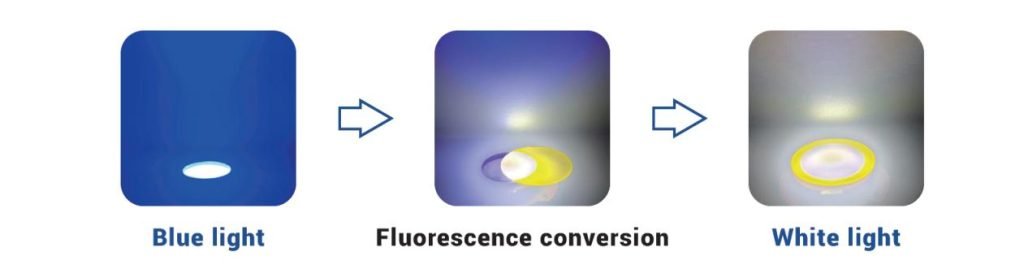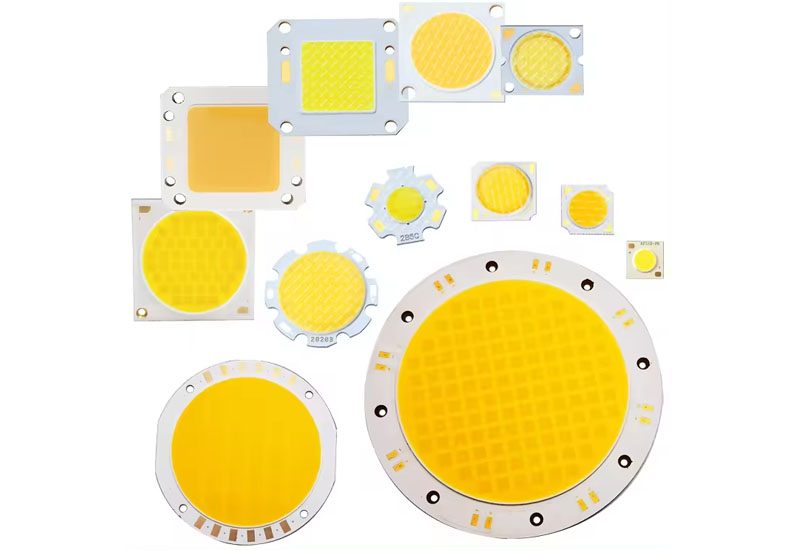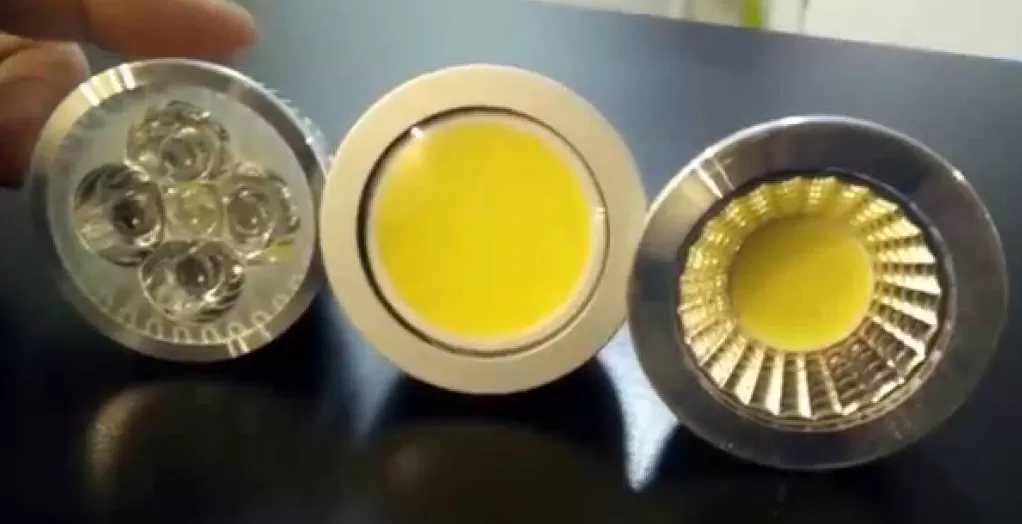
High-power solid-state lighting has undergone a substantial shift. Traditional polymer-encapsulated phosphor systems, while suitable for low-to-medium power LEDs, struggle under high thermal loads. High-power density excitation sources, such as blue laser diodes and high-intensity LEDs, generate localized heat that exceeds the thermal tolerance of organic resins or silicone. This mismatch results in yellowing, thermal quenching, and accelerated degradation of luminous flux.
To address these limitations, optical designers have turned to inorganic color converters. Among these, polycrystalline ceramic phosphors offer a robust path forward. Partnering with a specialized phosphor ceramic manufacturer is a standard step for industrial lighting brands aiming to deploy reliable high-brightness systems.
The Evolution of Ceramic Phosphor Converters
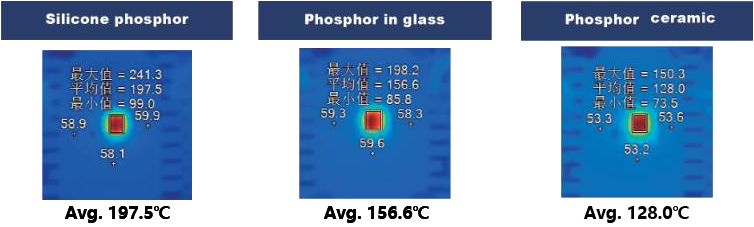
In high-lumen density applications, the primary challenge is thermal management. When blue light from an LED chip or laser diode excites a phosphor material, a portion of the absorbed energy is converted into heat due to Stokes shift losses. In conventional packages, this heat is trapped within the silicone matrix, which has a low thermal conductivity (typically less than 0.2 W/m·K).
As the temperature of the phosphor layer rises, the probability of non-radiative recombination increases. This phenomenon, known as thermal quenching, causes a drop in conversion efficiency and shifts the emission wavelength, altering the color point of the light source. Ceramic phosphors resolve this issue by replacing the organic binder with a fully inorganic, sintered ceramic matrix.
Comparing Phosphor-in-Glass (PiG) and Polycrystalline Ceramics
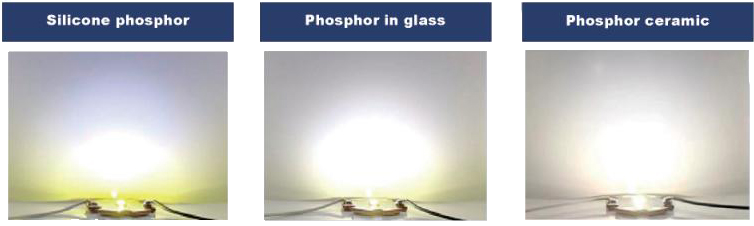
While Phosphor-in-Glass (PiG) composites offer better thermal performance than silicone, they still contain a low-melting-point glass matrix. This glass phase generally possesses a thermal conductivity of only 1 to 1.5 W/m·K and can suffer from chemical instability at high working temperatures. In contrast, polycrystalline phosphor ceramics are fabricated entirely from inorganic crystalline phases (such as Y3Al5O12:Ce3+ or Lu3Al5O12:Ce3+) without any low-conductivity glass phase. This allows them to achieve thermal conductivities exceeding 10 W/m·K, which is nearly two orders of magnitude higher than silicone-based alternatives.
Key Performance Parameters in Ceramic Phosphor Materials
When assessing a phosphor ceramic manufacturer, understanding the material properties of their offerings is vital. High-performance ceramic converters must balance optical conversion efficiency with thermal and mechanical durability.
1. Thermal Conductivity and Dissipation
The primary benefit of ceramic converters is their ability to conduct heat away from the excitation spot. High thermal conductivity prevents local hot spots, keeping the operating temperature of the phosphor plate below the threshold where severe thermal quenching occurs. Advanced sintering methodologies deployed by suppliers like CAS ensure that the ceramic matrix remains dense and free of micro-cracks that could impede heat flow.
2. Internal Quantum Efficiency (IQE) and Conversion Efficiency
The optical conversion efficiency of a ceramic phosphor depends on the crystalline quality of the sintered grains. Internal defects, impurities, or secondary phases act as non-radiative recombination centers, reducing the overall luminous efficacy. Reliable manufacturers utilize high-purity raw materials and control the grain growth during high-temperature sintering to maintain an exceptionally high quantum efficiency, even under high-density blue light excitation.
3. Transmittance and Optical Scattering
Optical properties are highly dependent on the microstructure of the ceramic. A fully dense ceramic with zero porosity can be highly transparent, which may allow unscattered blue light to pass through without sufficient wavelength conversion. Conversely, excessive porosity or large grain boundaries increase backscattering, reducing the forward light extraction. Precise control over the residual pore size and distribution is a key capability of a leading manufacturer, as these micro-pores act as scattering centers to help achieve uniform color mixing and high extraction efficiency.
Evaluating a Phosphor Ceramic Manufacturer for High-Power Applications
Choosing the right production partner involves assessing more than just material samples. B2B buyers must evaluate the manufacturer’s processing capabilities, quality control protocols, and custom formulation options.
Material Synthesis and Sintering Expertise
The fabrication of high-quality phosphor ceramics requires specialized equipment such as Vacuum Sintering Furnaces, Hot Isostatic Pressing (HIP) systems, or Spark Plasma Sintering (SPS) setups. The sintering profile—comprising heating rates, peak temperatures, dwell times, and atmosphere control—must be tailored to the specific chemical composition of the phosphor. For example, Cerium-doped Yttrium Aluminum Garnet (YAG:Ce) and Lutetium Aluminum Garnet (LuAG:Ce) require different sintering environments to prevent the reduction or oxidation of the activator ions (Ce3+). Empirical testing conducted by CAS indicates that precise atmospheric control during the cooling phase is crucial for maintaining the desired oxidation state of the active ions, directly impacting color performance.
Precision Slicing and Polishing Capabilities
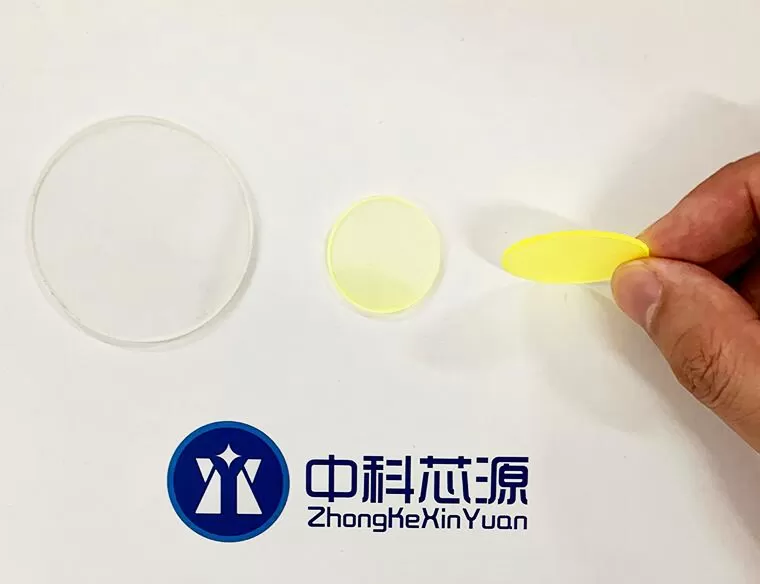
Ceramic phosphors are extremely hard and brittle materials. After sintering, the ceramic ingots must be sliced into thin wafers (often ranging from 100 to 500 microns in thickness) and polished to mirror-like finishes. Thickness tolerance is highly strict; even a deviation of 5 microns can shift the correlated color temperature (CCT) beyond acceptable binning limits. A capable phosphor ceramic manufacturer must possess high-precision diamond-wire slicing machines and double-sided lapping systems to guarantee uniform thickness across the entire batch.
Customization of Optical Profiles
Different lighting systems require distinct spectral outputs. For example:
Automotive Laser Headlights: Require high luminance, high blue-light resistance, and a cool-white output (typically 5000K to 6500K CCT) with precise beam control.
Stage Projection Systems: Demand high luminous flux and a wide color gamut, often achieved by combining YAG-based yellow ceramics with LuAG-based green-emitting ceramics and separate red nitride phosphors.
Industrial Outdoor Illumination: Requires high thermal shock resistance and long-term chemical stability in high-humidity environments.
Working with a competent phosphor ceramic manufacturer allows optical designers to customize the dopant concentration, ceramic thickness, and scattering properties to achieve the exact target chromaticity coordinates (CIE 1931) for their specific application.
Addressing Typical Industry Challenges in Ceramic Phosphor Integration
Integrating ceramic converters into a complete light engine presents several engineering challenges. Understanding these pain points helps buyers collaborate more effectively with their manufacturing partners.
Thermal Interface Resistance
Even if a ceramic plate has excellent thermal conductivity, the overall thermal management system will fail if the thermal interface between the ceramic and the heat sink is poor. Traditional organic adhesives cannot withstand the high operating temperatures of laser-excited systems. Solid-state lighting OEMs must use high-temperature bonding methods, such as eutectic soldering or silver sintering. The manufacturer should be able to supply ceramic plates with metalized back-surfaces (e.g., Titanium/Nickel/Gold sputtering) to facilitate direct soldering to copper or aluminum nitride (AlN) substrates.
Color Uniformity and Angular Distribution
In laser-pumped phosphor systems (often referred to as LARP - Laser Activated Remote Phosphor), the laser beam is focused onto a very small spot on the ceramic surface. This highly localized excitation can cause a yellow ring effect or severe angular color deviation if the scattering properties of the ceramic are not properly tuned. By adjusting the concentration of scattering centers (such as minor pores or secondary phases) during the manufacturing process, the phosphor ceramic manufacturer can produce plates that provide a homogeneous light distribution, eliminating the need for bulky external mixing optics.
Quality Control and Long-Term Reliability Standards
For B2B buyers in the automotive and industrial sectors, reliability is non-negotiable. Product failures lead to costly warranty claims and brand damage. A rigorous quality management system should monitor several key metrics:
Microstructural Consistency: Utilizing Scanning Electron Microscopy (SEM) and X-ray Diffraction (XRD) to ensure phase purity and check for unwanted secondary phases that degrade optical performance.
High-Temperature Stress Testing: Exposing the ceramic plates to continuous temperatures of 200°C to 300°C to measure the thermal quenching curve and confirm that the material retains its efficiency over time.
Laser Damage Threshold (LDT) Measurement: Subjecting the ceramics to high-power blue laser beams (often exceeding 10 W/mm²) to determine the point of physical damage or optical degradation.
Summary of Strategic Sourcing and Collaboration
Selecting the right phosphor ceramic manufacturer is a strategic decision that affects the lifespan, efficiency, and color quality of your high-power solid-state lighting fixtures. Rather than treating these components as commodity items, procurement and engineering teams should seek suppliers that offer co-design capabilities—combining expertise in powder synthesis, advanced sintering, and precision machining.
As an experienced supplier in the advanced materials domain, CAS provides tailored ceramic solutions designed to withstand demanding thermal environments while delivering high optical conversion. To explore how our advanced material solutions can benefit your next project, contact CAS today to discuss your requirements and submit an inquiry.
Frequently Asked Questions
Q1: What is the main difference between YAG:Ce and LuAG:Ce ceramic phosphors?
A1: YAG:Ce (Yttrium Aluminum Garnet doped with Cerium) is the standard yellow-emitting ceramic converter, peaking around 530-550 nm, and is widely used to generate cool-to-neutral white light. LuAG:Ce (Lutetium Aluminum Garnet doped with Cerium) emits in the green spectrum, peaking around 515-525 nm. LuAG:Ce generally displays higher thermal stability and is often combined with red phosphors to achieve high color rendering index (CRI) values in projection and stage lighting.
Q2: Why are phosphor ceramics preferred over single crystals for laser lighting?
A2: Single crystal phosphors have excellent thermal conductivity but lack natural light-scattering centers. This means the blue laser light passes through the crystal with minimal scattering, leading to poor color mixing and a non-uniform beam profile. Ceramic phosphors contain grain boundaries and controlled micro-pores that act as highly effective scattering centers, providing superior color uniformity without the need for additional diffusers.
Q3: How does the thickness of the ceramic plate affect the color temperature?
A3: The thickness of the plate determines the optical path length of the blue light through the converter. A thicker plate contains more phosphor grains, resulting in more blue-to-yellow conversion and a warmer color temperature (lower CCT). A thinner plate allows more unabsorbed blue light to pass through, yielding a cooler white light (higher CCT). Precise control over thickness tolerance is therefore crucial for color consistency.
Q4: How does a phosphor ceramic manufacturer control the color rendering index (CRI)?
A4: A phosphor ceramic manufacturer can adjust the CRI by modifying the chemical composition of the ceramic, such as co-doping with other rare-earth ions or creating composite ceramic plates. For example, laminating or co-sintering a yellow YAG ceramic with a green LuAG ceramic and a red-emitting ceramic phase allows for spectral tuning, which helps in achieving higher color rendering indexes across different lighting profiles.
Q5: What bonding techniques are recommended to mount ceramic phosphors onto heat sinks?
A5: For high-power laser applications, organic glues should be avoided due to low thermal stability. The recommended methods are eutectic soldering (such as AuSn or SnAgCu alloys) or silver sintering. These methods require the back of the ceramic plate to be metalized with a thin-film stack (like Ti/Ni/Au) to ensure proper adhesion and low thermal resistance at the solder joint.