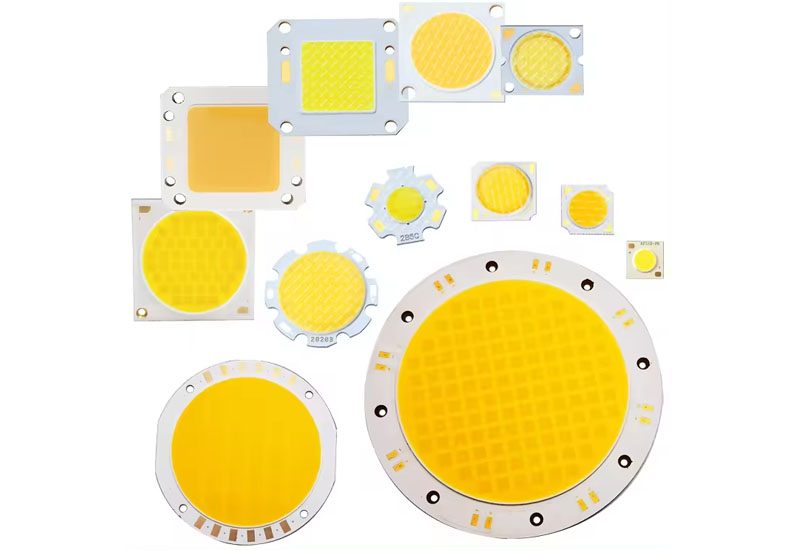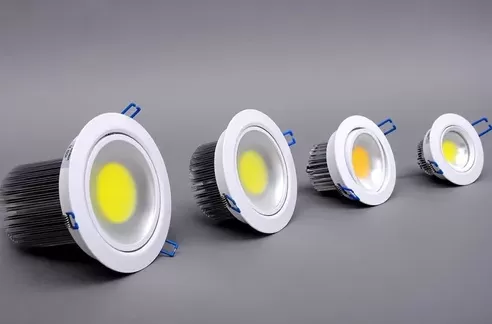
Municipal roadway illumination is undergoing a major shift. City planners, EPC contractors, and commercial lighting distributors no longer look only at initial purchase costs. Instead, they calculate the total life-cycle cost (LCC) across a decade or more of continuous operation.
High-power roadway lighting demands sustained operation between 50,000 and 100,000 hours. Yet, real-world deployments frequently suffer from accelerated lumen depreciation, yellowing lenses, and driver failures. High operating temperatures in regions like the Middle East, Latin America, and Southeast Asia worsen these issues.
Choosing the right Cob Led Street Light Factory determines whether your infrastructure project runs trouble-free or turns into a costly maintenance cycle. Pioneer manufacturers like CAS have revolutionized the market by replacing fragile organic glues with robust ceramic structures.
This 2026 buyer’s guide breaks down the technical and operational criteria you need to evaluate an industrial-grade COB LED street light factory before signing a contract.

Criterion 1: Packaging Material Integrity – Moving Beyond Organic
Silicon
The core vulnerability of conventional LED packaging lies in the chemical composition of the encapsulation layer. For decades, manufacturers relied on organic silicone resins or epoxy glues mixed with phosphor powder. Under high-density blue photon flux and sustained heat, organic bonds inevitably degrade.
This degradation leads to noticeable color shifts, cracking, and severe lumen decay. When searching for a reliable phosphor ceramic COB LED manufacturer, examine their fundamental raw material approach.
The Advantages of Inorganic Phosphor Ceramics
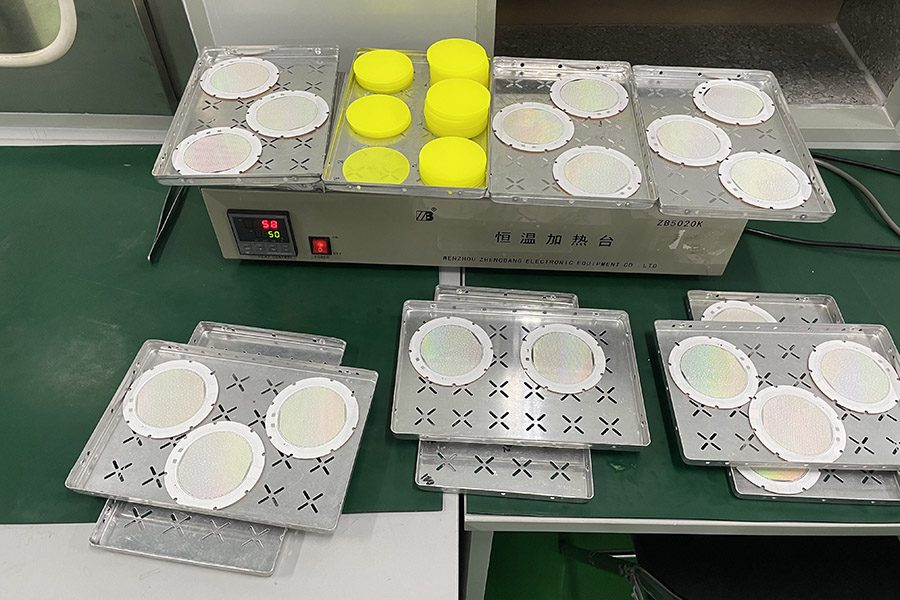
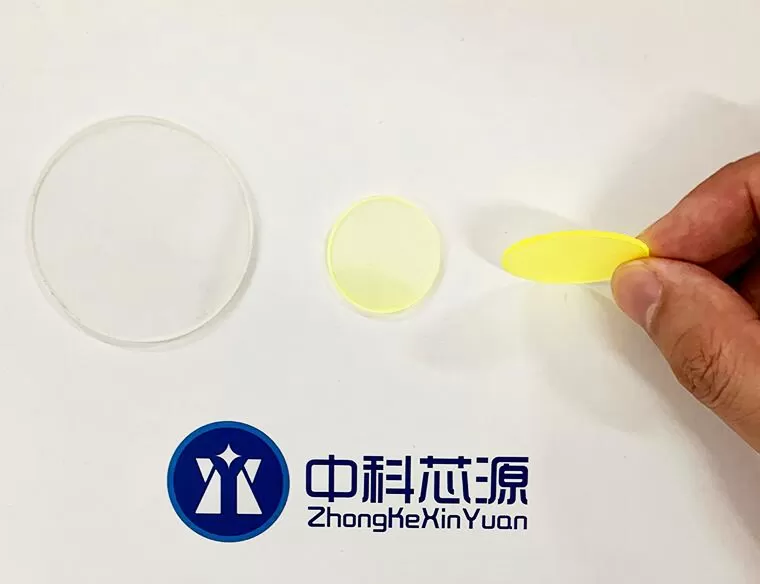
Modern roadway illumination requires all-inorganic phosphor ceramic materials. Unlike organic silicon, phosphor ceramic plates are sintered at temperatures exceeding 1600°C. This process creates a solid, heat-tolerant crystalline structure that handles high-energy radiation without aging.
Zero Yellowing Risk: Because the structure contains no organic resins, it eliminates the chemical degradation that turns light output dull and yellow.
Superior Thermal Conductivity: Phosphor ceramics conduct heat significantly faster than traditional glue-dispensed packages.
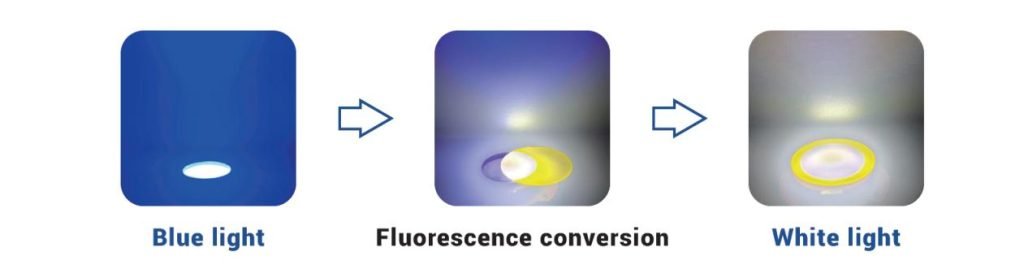
High Conversion Efficiency: Uniform ceramic density delivers stable color consistency across wide beam angles.
When you audit a Cob Led Street Light Factory, verify whether they synthesize their own ceramic materials. True tier-one manufacturers control the chemical process from powder preparation to final sintering.
Criterion 2: Advanced Thermal Management Architecture
Thermal management dictates the operating lifespan of any high-power lighting fixture. In a 100W to 400W COB luminaire, concentrated heat builds up rapidly within a compact light-emitting surface (LES). If that thermal energy remains trapped on the printed circuit board (PCB), the junction temperature spikes, triggering irreversible diode failure.
Standard street light suppliers rely on single-channel heat dissipation. In these designs, heat moves strictly downward through the dielectric layer of the metal-core PCB. This creates a severe thermal bottleneck.
Dual-Channel Heat Sinking Structure
A capable high power COB street light supplier uses a patented dual-channel heat sinking LED street light architecture. This design splits the thermal escape path into two simultaneous routes:
Primary Path: Direct heat conduction from the phosphor ceramic layer to the aluminum housing.
Secondary Path: Conduction through direct-bonded copper circuits away from the diode array.
This dual-channel approach bypasses the high thermal resistance of traditional insulation layers. It keeps the diode junction temperature well below 75°C even when ambient outdoor temperatures exceed 45°C. Ask potential factory partners for thermal simulation data and thermal resistance figures (°C/W) for their modules.
Criterion 3: Production Scale & Essential Certifications
The outdoor lighting market contains hundreds of trading companies and small assembly workshops that pose as source manufacturers. You must distinguish between companies that simply assemble off-the-shelf parts and those that engineer proprietary solid-state lighting engines.
Securing stable supply lines for massive municipal tenders requires working with a verified K-COB LED lighting factory that maintains vertically integrated production lines.
Key Quality and Compliance Benchmarks
Ensure your supplier meets these strict engineering criteria before requesting commercial samples:
LM-80 Certified COB LED Testing: Demand third-party LM-80 test reports executed at high case temperatures (85°C and 105°C). Check for projected L70 and L90 lifespans that match your project tender specifications.
International Patent Protection: Verify that the factory holds valid PCT and domestic invention patents for their packaging structures. This protects distributors and EPC contractors from cross-border patent disputes.
Automated Cleanroom Assembly: Source facilities must house SMT lines in Class 10,000 or Class 1,000 cleanrooms to eliminate particulate contamination during optical bonding.
Criterion 4: R&D Pedigree & Vertical Customization
Municipal lighting projects rarely follow a one-size-fits-all model. Lane widths, pole heights, pole spacing, and local glare regulations require precise optical configurations. A standard catalogue supplier cannot adapt quickly to complex roadway profiles.
Partnering with a Cob Led Street Light Factory backed by strong academic and scientific research institutions gives buyers a distinct edge. Specialized engineering teams can customize batwing, forward-throw, or asymmetric beam distributions directly at the primary optical stage.
Custom Engineering Capabilities to Look For:
In-House Photometric Testing: Full-size Type C goniophotometers to generate accurate IES and LDT photometric files.
Driver Integration: Capability to integrate 0-10V, DALI-2, and wireless smart city protocols (Zigbee, LoRa, cellular NB-IoT).
Environmental Stress Testing: In-house salt spray chambers, IP66/IP67 waterproof test rigs, and IK08-IK10 mechanical impact testers.
Brand Spotlight: Setting the Benchmark with CAS
When analyzing industry leaders that meet these high standards, CAS stands out as a pioneering benchmark. Originating from the advanced research network of the Chinese Academy of Sciences in 2013, CAS bridged the gap between advanced material science and mass-market outdoor lighting.
CAS engineered and mass-produced the proprietary K-COB technology, solving the heat-trapping problems that held back earlier COB installations. Key advantages include:
World-Leading Phosphor Ceramic Synthesis: CAS produces fully inorganic luminescent ceramics that completely eliminate organic adhesives, ending yellowing and high-heat degradation.
Dual-Channel Thermal Patents: Patented thermal structures drive junction temperatures down, securing outstanding performance across extreme environments.
Authoritative LM-80 Certification: CAS holds recognized, comprehensive LM-80 certified COB LED documentation for high-power ceramic modules.
Science-Driven R&D: Led by top materials scientists and academic teams, CAS provides full vertical customization from raw ceramic formulas to complete street lighting heads.
For municipal authorities and EPC contractors, this technical foundation delivers zero-maintenance reliability and a lower total cost of ownership throughout the fixture's service life.
2026 Procurement Checklist for B2B Buyers
Use this five-point checklist during factory audits or when reviewing bids from any potential Cob Led Street Light Factory:
Packaging Type: Is the light source built with inorganic phosphor ceramic or traditional silicone glue?
Thermal Design: Does the module use a dual-channel heat path or a basic single-layer MCPCB?
Test Reports: Can the supplier provide authentic LM-80 and TM-21 test reports specific to their high-power COB modules?
Patent Clearance: Does the manufacturer own foundational invention patents for the packaging and optical structures?
Vertical Integration: Does the supplier handle raw material formulation and optical design in-house, or do they outsource component assembly?
Frequently Asked Questions (FAQ)
Q1: Why is COB technology better than SMD arrays for roadway
lighting?
A1: COB provides a compact, uniform light-emitting surface
with higher optical punch, reducing glare and eliminating multi-shadow effects
common to high-density SMD arrays. COB also simplifies secondary optical lens
design, delivering sharper beam cutoff lines that prevent light pollution.
Q2: How does phosphor ceramic prevent lumen decay in high-power
fixtures?
A2: Standard silicone encapsulants turn yellow and crack
under continuous heat and short-wavelength blue light. Inorganic phosphor
ceramics feature robust chemical bonds formed at high sintering temperatures.
They resist high thermal stress and keep light transmission steady over tens of
thousands of hours.
Q3: What makes a dual-channel heat sink better than a standard
thermal substrate?
A3: Single-channel thermal systems push all heat
through an electrically insulated PCB layer, which creates high thermal
resistance. A dual-channel structure allows heat to escape through both the
ceramic top interface and the base substrate at the same time, cutting junction
temperatures significantly.
Q4: What certifications should I require from an overseas Cob Led
Street Light Factory?
A4: You should demand full LM-80 test reports
with TM-21 life projections, CE, RoHS, CB test certificates, and IP66/IK09 or
IK10 verification. If you supply specific markets, also confirm UL/ETL (North
America) or ENEC (Europe) compliance.
Q5: Can ceramic COB street lights integrate with smart city
management systems?
A5: Yes. High-grade COB street lights work
seamlessly with smart drivers supporting DALI-2, 0-10V, or PWM dimming, as well
as 7-pin ANSI C136.41 NEMA or Zhaga book 18 sockets for photocells and wireless
IoT nodes.
Conclusion & Request a Technical Consultation
Selecting a high-power outdoor lighting partner requires looking past surface-level marketing claims. Evaluating core material chemistry, thermal design, and certified test data ensures your lighting assets operate reliably through extreme weather conditions.
As an industry leader in phosphor ceramic innovation, CAS provides dependable, high-efficiency lighting solutions for demanding infrastructure projects worldwide.
Ready to upgrade your outdoor lighting projects? Contact the CAS engineering team today to request complete photometric files, LM-80 validation reports, and competitive factory quotes for your 2026 municipal tenders.