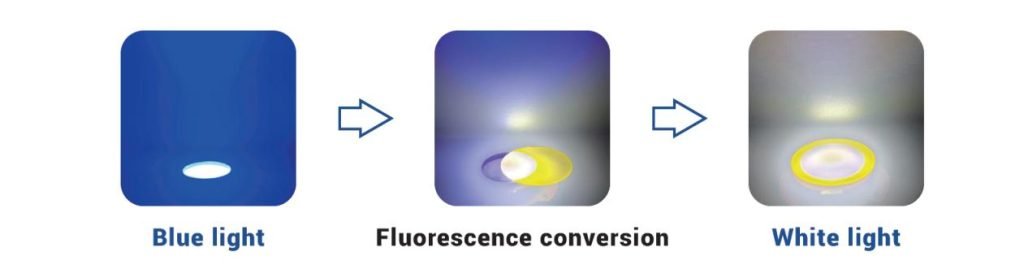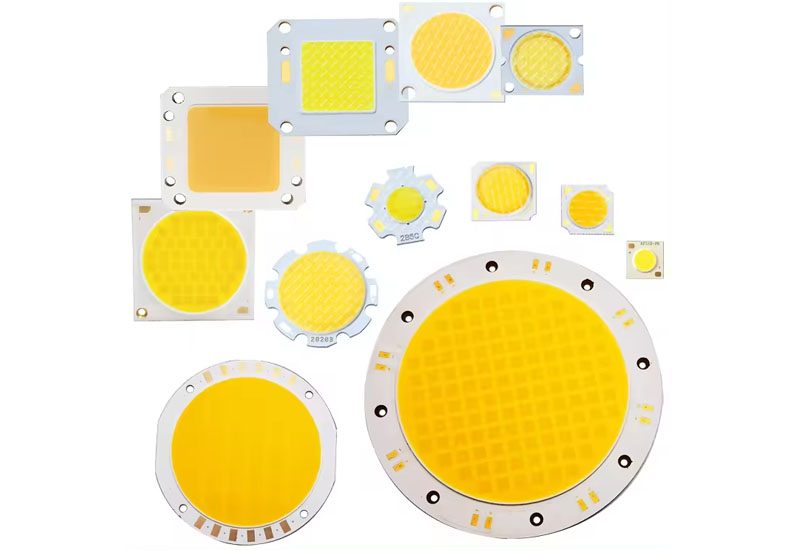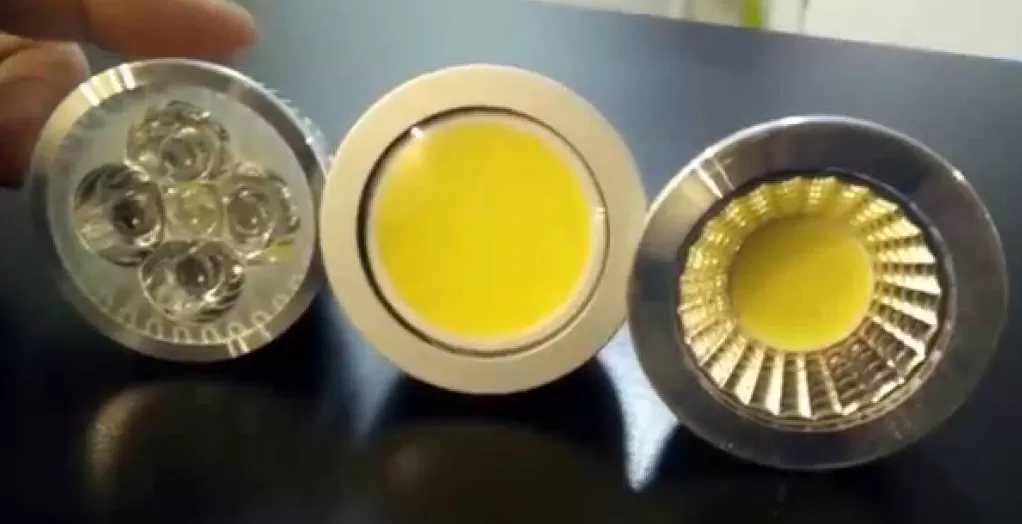
For professional lighting systems requiring precise amber wavelengths—ranging from 585 nm to 595 nm—the reliability of the phosphor converter directly determines fixture lifetime. Traditional silicone‑encapsulated phosphors degrade under high‑flux density, UV exposure, and thermal cycling, causing accelerated lumen depreciation and unwanted color drift. Amber phosphor in glass (PiG) eliminates these organic failure modes. By embedding stable amber‑emitting phosphors inside a low‑melting‑point glass matrix, this ceramic‑based converter delivers exceptional thermal conductivity, near‑zero humidity sensitivity, and sustained chromaticity over tens of thousands of hours. For engineers designing tunnel lighting, night‑sky‑friendly luminaires, or high‑temperature industrial indicators, adopting amber phosphor in glass means specifying a true long‑life solution.
This article provides a component‑level analysis of amber phosphor in glass—from microstructure and thermal quenching thresholds to application‑specific optical design. We also present comparative data against organic encapsulation and outline how CAS integrates this technology into custom converter platforms for global lighting manufacturers.
Why Amber? The Functional Role of Monochromatic Amber Light
Before examining the glass host, it is necessary to understand why amber‑spectrum LEDs command dedicated engineering attention. Unlike broad‑band white light, amber emission (peak wavelength 590 nm ± 5 nm) offers unique photobiological and visibility advantages:
Low insect attraction – Amber light above 550 nm significantly reduces short‑wave blue/violet components that draw flying insects, making it preferred for eco‑sensitive zones and outdoor residential areas.
High fog/rain penetration – Longer wavelengths scatter less in atmospheric moisture; amber warning lights on heavy vehicles and construction sites maintain conspicuity in adverse weather.
Preservation of dark adaptation – Astronomic observatories and wildlife corridors use amber lighting to minimize skyglow and retinal bleaching, complying with dark‑sky regulations.
Specific action spectrum matching – In phototherapy and specialty agriculture (e.g., poultry behavior management), amber light influences melatonin suppression and activity cycles distinct from red or white.
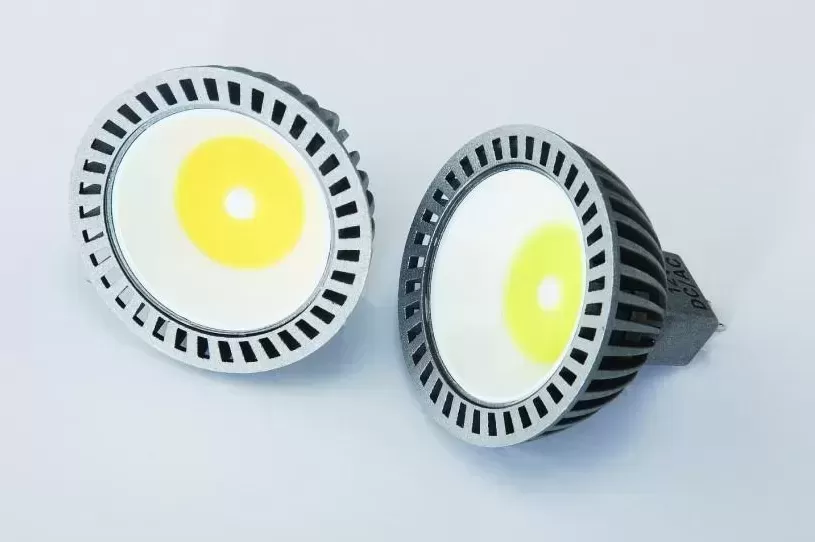
Realizing stable, high‑efficiency amber emission from blue‑pumped LEDs requires a robust photonic converter. Conventional approaches mix amber phosphors (typically YAG:Ce variants with modified stoichiometry or nitride‑based emitters) into silicone binders. However, silicone’s intrinsic limitations become critical failure points under high‑power operation. This is where amber phosphor in glass demonstrates clear superiority.
Technical Deep Dive: Glass Matrix vs. Silicone Encapsulation
The converter’s role is to absorb blue light (typically 445–455 nm) and down‑convert it to amber. Both the phosphor’s quantum efficiency and the binder’s stability determine overall system reliability. The following table contrasts key material parameters between conventional silicone and the glass‑ceramic approach used in amber phosphor in glass.
Thermal conductivity (W/m·K): Silicone ~0.2 – 0.3 ; Glass (low‑melting point) ~0.8 – 1.2 → Glass dissipates heat 3‑4× faster, reducing phosphor thermal quenching.
Maximum operating temperature (continuous): Silicone ≤ 150 °C (yellowing above 120 °C) ; Glass matrix ≥ 300 °C → No amber discoloration under high‑flux density.
Moisture permeability (g/m²·day): Silicone moderate to high, leading to hydrolytic degradation ; Glass < 0.01 → Hermetic protection for the embedded phosphor grains.
UV‑resistance (300‑400 nm): Silicone suffers chain scission and yellowing; Glass matrix is intrinsically UV‑inert → Maintains amber color point even under direct sunlight or supplemental UV exposure.
Chromaticity shift (Δu’v’ after 6000h @ 85 °C / 85% RH): Silicone‑based converters > 0.008 (visually noticeable) ; Amber phosphor in glass < 0.002 → Industry‑leading color stability.
Furthermore, the glass sintering process (typically 550–650 °C) completely eliminates residual organic volatiles. No outgassing occurs during LED operation, preventing contamination of reflective cups or lens surfaces. For outdoor luminaires subjected to thermal cycling from -40 °C to +85 °C, the glass‑bonded converter exhibits no delamination or micro‑cracking—problems frequently observed in thick silicone layers.
CAS Implementation of Amber Phosphor in Glass
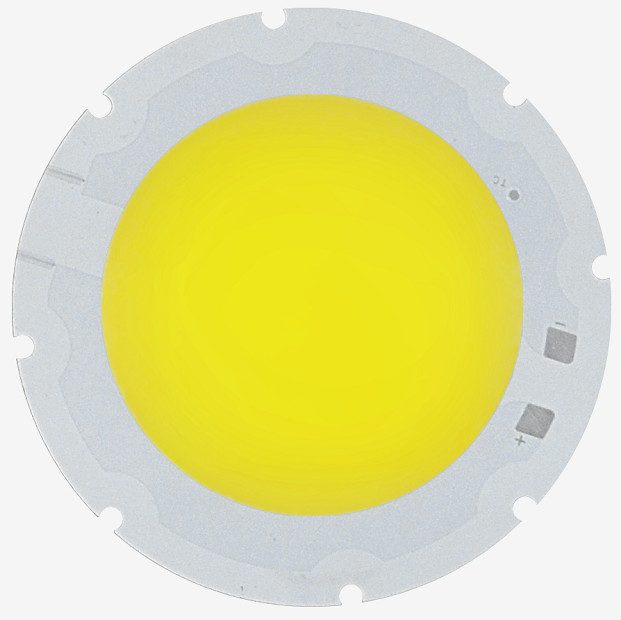
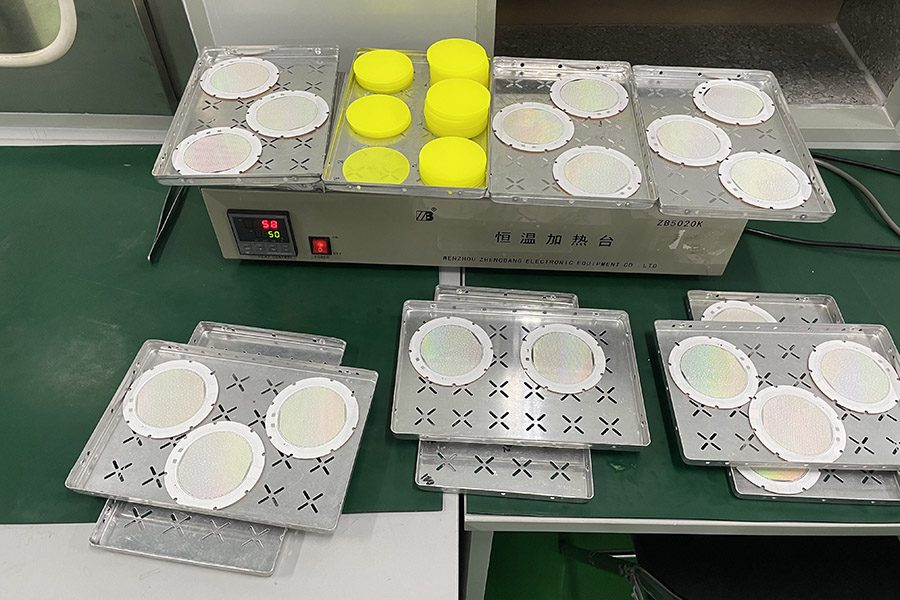
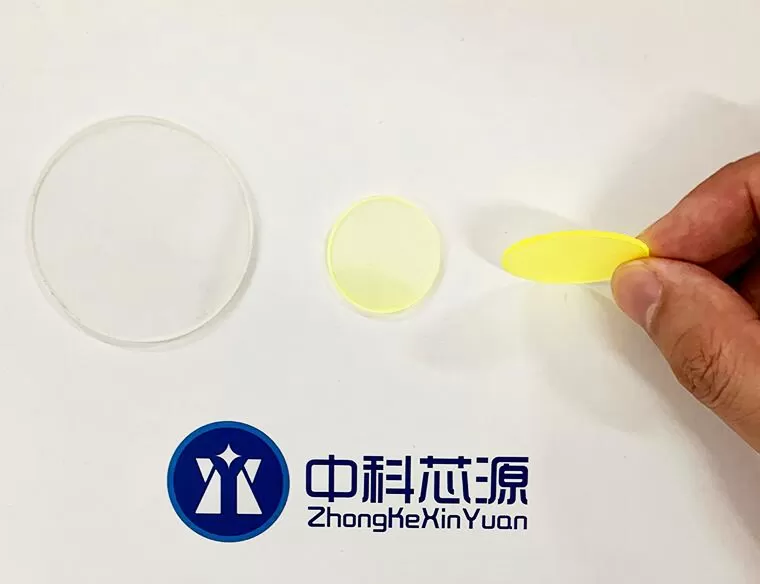
As a specialized supplier of phosphor‑in‑glass solutions, CAS has developed a proprietary formulation of amber phosphor in glass designed for high‑lumen‑density arrays (up to 200 W per module). The process begins with selecting a cerium‑doped YAG or nitride amber phosphor with narrow‑band emission (FWHM < 18 nm) to maximize luminous efficacy and color purity. This phosphor is then homogeneously mixed with a lead‑free, low‑softening‑point glass powder (Tg ≈ 480 °C). After tape casting or screen printing onto a heat‑spreading substrate (AlN or Al₂O₃), the composite undergoes a controlled sintering cycle, forming a dense, fully inorganic phosphor‑glass ceramic plate (PiG plate).
CAS offers these amber phosphor in glass converters in two standard formats:
Remote‑phosphor plates – For direct attachment above a blue LED array (typical thickness 0.15–0.30 mm). Suitable for linear, high‑bay, and area luminaires.
Direct‑bonded “on‑chip” wafers – Sintered directly onto ceramic submounts with silicon‑free interface, ideal for compact COB modules requiring minimized optical gap.
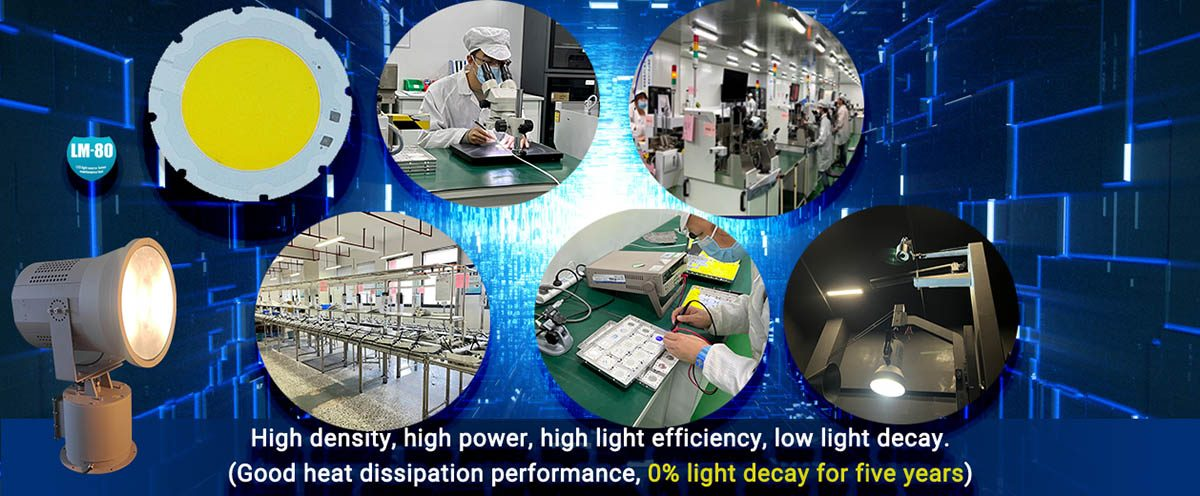
All products from CAS are subjected to rigorous aging at 85 °C / 85% RH under blue light irradiation (1 W/mm²) for 2000 hours, with in‑situ spectral tracking. Typical amber phosphor in glass from CAS maintains > 96% lumen maintenance after 10,000 hours, with correlated color temperature shift below 1.5 %. This performance level allows fixture manufacturers to offer 10‑year warranties in harsh environments—unattainable with silicone‑based converters.
Performance Metrics: What Engineers Should Verify
When evaluating an amber phosphor in glass supplier, request data sheets that include these critical photothermal parameters:
Peak wavelength tolerance – Acceptable range ±3 nm centered on target amber (e.g., 590 nm). Tighter ±1.5 nm available for multi‑channel color‑mixing applications.
External quantum efficiency (EQE) – At 85 °C junction temperature, minimum 85% relative to initial 25 °C value. Glass matrix should keep EQE droop below 5% up to 150 °C.
Thermal quenching temperature T50 – Temperature at which emission intensity falls to 50% of room temperature value. Amber phosphor in glass typically exceeds 250 °C, while silicone‑encapsulated equivalents often drop to 50% below 180 °C.
L90/B50 lifetime projection – Based on LM‑80‑like in‑situ measurement (not merely junction temperature estimation). Reliable amber phosphor in glass should achieve L90 > 50,000 hours (Tc = 105 °C, drive current 700 mA).
Phosphor particle morphology and glass refractive index – Index match (n_glass ≈ 1.55–1.60 versus n_phosphor ≈ 1.78) influences extraction efficiency. CAS optimizes porosity and glass composition to minimize scattering losses.
For B2B lighting projects, one common pain point is long‑term color shift caused by phosphor degradation. In silicone systems, the combined action of heat, moisture, and blue photons generates carbonyl groups that shift emission toward yellow‑green. By contrast, the inorganic glass environment in amber phosphor in glass isolates phosphor grains from oxygen and water vapor, preserving the original amber chromaticity even after accelerated aging (e.g., 5000 hours at 105 °C).
Application‑Driven Selection: Where Amber Phosphor in Glass Excels
Based on field data from tunnel renovations, roadway warning systems, and marine lighting projects, the following scenarios demand glass‑encapsulated amber converters:
Tunnel and Underpass Lighting
High humidity, airborne salts, and vibration from heavy traffic. Silicone‑based amber LEDs often fail within 2‑3 years, requiring costly relamping. Amber phosphor in glass, applied in linear tunnel luminaires (IP66/IP67 rated), maintains stable amber‑white transition zones and emergency egress indicators without premature dimming.
Public Safety Warning Lights (Police, Fire, Tow Trucks)
Amber warning beacons must resist engine heat, exhaust gases, and long sun exposure. Glass‑bonded amber converters sustain full luminous intensity, ensuring compliance with SAE J595 Class 1 requirements for 5+ years without replacement.
Ecologically Sensitive Wildlife Crossings
Bridges and underpasses designed for bats, moths, or sea turtles require spectral restrictions. Amber phosphor in glass provides precisely defined spectral curves without off‑band blue leakage (typical of low‑quality amber films). Contractors specify PiG technology to meet environmental impact permit conditions.
Rail and Signaling LED Lamps
Railway environments experience extreme temperature swings, dust, and shock. The hermetically sealed amber phosphor in glass plates maintain color consistency required for safety‑critical signal aspects (e.g., “approach” or “caution” amber). No optical degradation due to humidity ingress.
High‑Temperature Industrial Ovens / Foundries
Indicator LEDs near furnace lines see ambient temperatures up to 120 °C. Only amber phosphor in glass combined with ceramic COB packages can survive continuous operation. Conventional silicone versions suffer catastrophic yellowing and phosphor quenching within weeks.
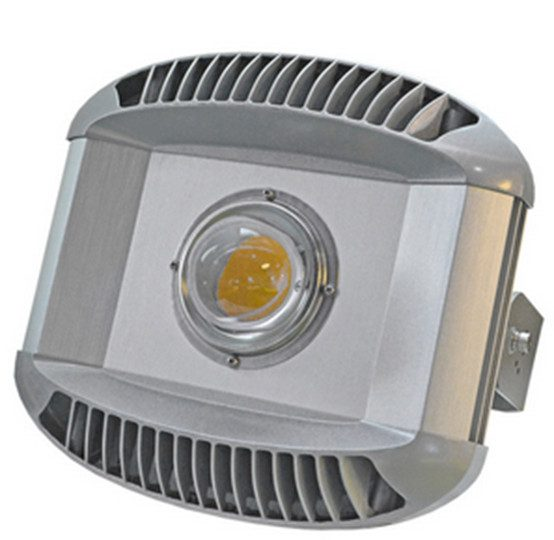
Design Integration Notes for Luminaire Engineers
Switching from silicone‑based remote phosphor to amber phosphor in glass requires minor optical re‑engineering. Because the glass matrix has a higher refractive index than silicone, the forward extraction pattern shifts slightly. CAS provides ray‑files (TXT or STEP) for our standard amber PiG plates, enabling direct simulation in LightTools or Zemax. Additionally, the glass plates can be cut to custom shapes using diamond wafer dicing—no edge sealing needed, as the material itself is non‑hygroscopic. For solder‑reflow assembly (peak temperature 260 °C), the glass converter remains unaffected; this is a major advantage over silicone sheets that soften and extrude during reflow.
Thermal interface resistance: Attach the glass plate using thermally conductive, optically clear adhesive (e.g., silicone‑free or borosilicate‑based) with thermal conductivity > 1 W/m·K. Avoid air gaps directly under the plate. Many customers of CAS use thermally cured epoxy with index matching to the glass (n≈1.54).
Frequently Asked Questions (FAQ) – Amber Phosphor in Glass
Q1: What is the typical peak wavelength range for amber phosphor in glass suitable for outdoor warning lights?
A1: For SAE and ECE compliant amber signaling, the dominant wavelength should be between 585 nm and 595 nm, with peak wavelength around 590 nm. Amber phosphor in glass formulations from CAS achieve a 590 nm ± 2 nm peak and a full‑width‑half‑maximum (FWHM) of 15–18 nm, ensuring high color purity while maintaining > 90 lm/W optical conversion efficiency.
Q2: Does amber phosphor in glass require any special handling during LED module assembly compared to silicone phosphor films?
A2: Yes, because the glass plate is rigid and brittle, pick‑and‑place equipment should use vacuum tips with soft pads. However, the glass plate is not hygroscopic and does not require dry storage. Unlike silicone films that must be stored at low humidity, amber phosphor in glass can be stored under standard cleanroom conditions (20 °C / 50% RH) for over 12 months without performance loss.
Q3: How does the cost structure of amber phosphor in glass compare to silicone‑based alternatives for high‑reliability projects?
A3: While the initial material cost of a glass‑bonded converter is higher than silicone due to the sintering process, total cost of ownership (TCO) across a 10‑year period is substantially lower. The elimination of early‑life failures, reduced relamping labor, and zero chromaticity drift justify the upgrade. For infrastructure projects requiring 50,000+ hour warranties, amber phosphor in glass is the only viable technology.
Q4: Can amber phosphor in glass be combined with remote phosphor architectures for tunable‑white luminaires?
A4: Absolutely. Many dynamic lighting systems use separate blue, amber, and red‑emitting strings. Amber phosphor in glass plates can be placed selectively over blue‑emitting chips or as a dedicated amber channel. The narrow emission band and temperature stability allow consistent color mixing even when the amber channel is dimmed to 1% current. CAS provides custom‑sized PiG plates for multi‑channel boards.
Q5: What standard reliability tests should I request from an amber phosphor in glass supplier?
A5: Request the following: (a) High‑temperature high‑humidity operation (85 °C / 85% RH / 1000 h with in‑situ photometry), (b) Thermal shock from -40 °C to +125 °C (500 cycles, 20 min dwell), (c) UV‑exposure test (340 nm, 0.89 W/m²·nm for 500 h) to verify no glass yellowing, (d) Mechanical vibration (10 Hz to 2000 Hz, 5 g). CAS provides full test reports as part of our technical package.
Future‑Proofing Amber LED Systems with Glass‑Bonded Converters
The lighting industry continues to shift toward inorganic, high‑temperature‑resistant components as operating power densities increase. Amber phosphor in glass directly addresses the weakest link in conventional amber LEDs—the organic binder. By adopting PiG technology, engineers eliminate field failures linked to phosphor degradation, moisture ingress, and thermal cycling. Whether the application is a coastal tunnel luminaire, a solar‑powered aviation warning light, or a museum accent fixture requiring fixed amber color for decades, the glass matrix provides a verifiable long‑term solution.
CAS maintains a full production line for custom amber phosphor in glass plates with thicknesses from 0.12 mm to 1.0 mm and sizes up to 150 mm × 150 mm. We support customers from prototyping to mass volume with complete optical, thermal, and reliability characterization data.
Ready to integrate amber phosphor in glass into your next LED
lighting project?
Contact the CAS engineering team directly to
discuss your optical specifications, required lifetime, and thermal management
constraints. We provide free sample evaluation for qualified OEMs and design‑in
support to help you transition from silicone to glass‑bonded converters
seamlessly.
Inquiry link: daniel.lin@zkxyled.com | or use the contact form below (please include your target luminous flux, operating temperature range, and desired amber peak wavelength). Our B2B technical specialists will respond within 24 hours with a datasheet and initial quotation.
CAS – Inorganic Photonics for Demanding Environments