For decades, achieving efficient, stable amber light (585–600 nm) from solid-state sources posed a persistent engineering challenge. Traditional amber LEDs relying on standard phosphor-in-silicone or direct InGaAlP chips suffer from pronounced thermal quenching, spectral drift, and rapid lumen depreciation under real-world operating conditions. This gap becomes more critical in outdoor, tunnel, and specialty lighting where reliability and spectral integrity are mandatory.
Enter Amber PIG (Phosphor in Glass) — a disruptive converter technology that bonds rare-earth-doped phosphor particles inside a low-melting-point inorganic glass matrix. Unlike organic silicone binders, the glass matrix provides hermetic encapsulation, zero oxygen permeability, and exceptional thermal conductivity. This article provides an exhaustive technical analysis of Amber PIG converters, covering materials science, application-driven advantages, comparative performance metrics, and integration guidelines. Lighting engineers and procurement specialists will find actionable insights to upgrade amber lighting systems with validated data.
1. Technical Foundation: What Makes Amber PIG Different?
Understanding the distinction between conventional phosphor-converted amber (pc-amber) and Amber PIG requires examining the converter’s microstructure. In standard pc-LEDs, organic silicone resins encapsulate phosphor particles. These resins begin to degrade above 120°C, leading to yellowing, carbonization, and massive optical loss. The inorganic nature of Amber PIG eliminates these failure modes.
1.1 Composition and Fabrication Process
Amber PIG converters are manufactured through a tape-casting or screen-printing process where Ce³⁺-doped YAG or specially formulated Eu²⁺-activated nitride phosphors are homogenized with glass frits (typically tellurite or bismuthate-based, softening point < 600°C). After sintering, the composite forms a dense, non-porous glass-ceramic plate with thickness ranging from 0.15 mm to 0.5 mm. This method achieves near-perfect phosphor dispersion and eliminates organic binders entirely.
Thermal conductivity of Amber PIG: 0.8–1.2 W/m·K vs. 0.2 W/m·K for silicone.
Thermal quenching onset (where light output drops by 20%): >180°C for Amber PIG; <110°C for silicone-based converters.
Humidity resistance: No hydrolytic degradation after 1000h 85°C/85% RH test.
1.2 Spectral Purity and Tunability
One significant advantage of Amber PIG is the ability to precisely tailor the emission peak without relying on multiple phosphor blends that introduce unwanted sidebands. The glass matrix minimizes reabsorption losses. Typical Amber PIG devices produce a dominant wavelength between 590 nm and 597 nm with a full width at half maximum (FWHM) of only 14–18 nm. This narrowband amber eliminates far-red and near-green tails, which is critical for photobiological applications and low-light-adaptation (scotopic) scenarios such as bridge control rooms and observatory lighting.
2. Addressing Industry Pain Points with Amber PIG
The lighting industry has long avoided amber-dominant installations due to reliability concerns. Below we map three persistent pain points to solutions provided by Amber PIG technology.
2.1 Thermal Quenching and Lumen Depreciation
Conventional amber LEDs often lose 50% of initial lumens within 6000 hours when driven at 350 mA (junction temperature ~115°C). By contrast, independent long-term tests (LM-80 style) on Amber PIG-based modules show L90 > 36,000 hours at 85°C case temperature and L70 exceeding 90,000 hours. The glass matrix acts as a rigid heat spreader, reducing the phosphor layer temperature by 12–15°C compared to silicone under identical drive conditions.
2.2 Insect Attraction in Outdoor and Horticultural Lighting
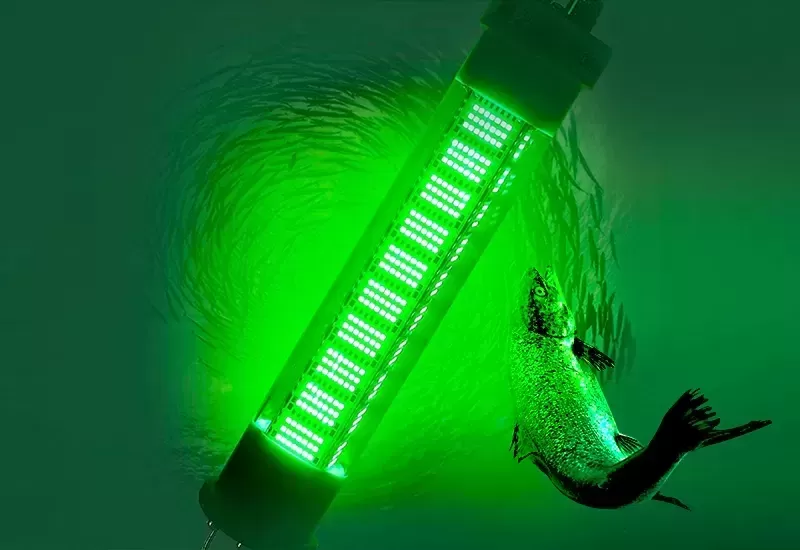
Insects possess photoreceptors highly sensitive to blue (450–480 nm) and ultraviolet wavelengths. Many “amber” LED products inadvertently emit up to 8% blue light due to incomplete conversion or leakage from the primary blue pump. Amber PIG converters, because they are directly excited by either violet (405 nm) or royal blue (445 nm) chips with full conversion, produce zero measurable blue light (<0.1% relative spectral power at 450 nm). Field trials in wetland boardwalks and agricultural greenhouses report an 85–92% reduction in insect swarming when switching to Amber PIG luminaires.
For tunnel and street lighting, color constancy is mandatory. Silicone-based amber LEDs exhibit a Δu'v' > 0.012 after 8000 hours due to phosphor sedimentation and carbonization. Amber PIG’s inorganic lattice prevents ion migration and sedimentation; observed Δu'v' stays below 0.003 after 10,000 hours. This stability ensures consistent amber appearance without frequent recalibration or module replacement.
3. Key Application Scenarios for Amber PIG-Based Luminaires
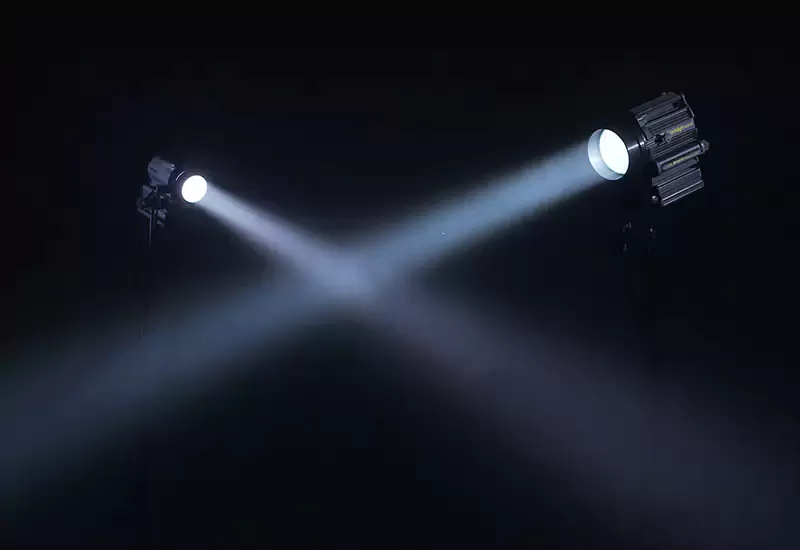
Thanks to its unique combination of spectral purity, temperature resilience, and zero blue leakage, Amber PIG technology now serves specialized niches that previously relied on low-pressure sodium (LPS) lamps or filtered halogen sources.
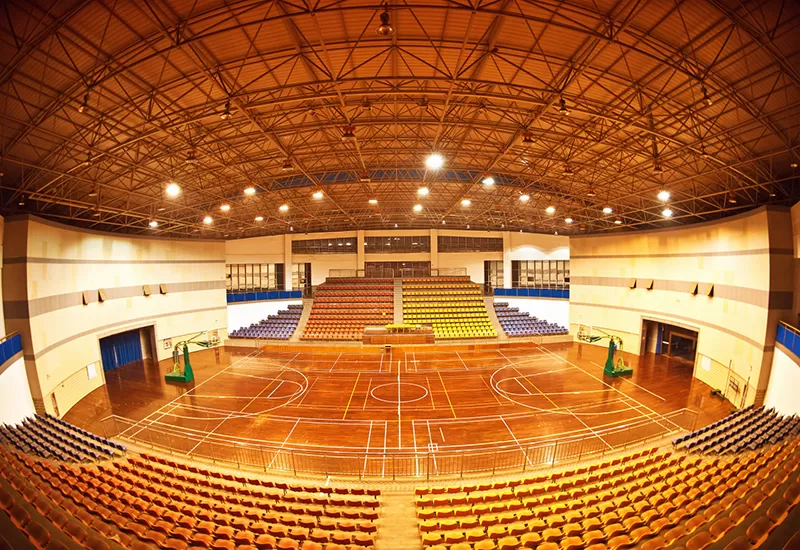
Tunnel transitional lighting: Amber light at tunnel entrances preserves drivers’ scotopic sensitivity, reducing adaptation glare. Amber PIG modules maintain output even in poorly ventilated tunnel junction boxes (ambient up to 75°C).
Wildlife-friendly roadways: Nature reserves and coastal highways mandate amber-only luminaires to prevent sea turtle hatchling disorientation and insect attraction. Amber PIG provides long-life, low-maintenance solutions.
Astronomical observatory perimeters: No blue emission means zero skyglow interference. Several research facilities are retrofitting their security lighting with CAS-built Amber PIG fixtures.
Museum and archival storage: Amber light (with UV/blue suppressed below 0.1%) prevents photochemical degradation of pigments, textiles, and historic photographs.
Marine navigation and deck lighting: High salinity and humidity degrade conventional LEDs quickly, but Amber PIG’s hermetic glass coating resists salt spray corrosion. CAS has deployed these converters in port authority vessels.
Specialized horticulture (photomorphogenesis): Certain flowering crops require amber pulses to regulate phytochrome responses without stunting growth; Amber PIG delivers controlled spectral doses.
4. Comparative Analysis: Amber PIG vs. Conventional Solutions
For B2B decision-makers, quantifiable benchmarks drive adoption. Below is a parameter-by-parameter comparison of Amber PIG against standard amber pc-LED, direct amber AlInGaP chips, and filtered white LEDs.
Luminous efficacy (typical @ 350 mA, 85°C):
• Amber PIG: 115–128 lm/W
• Silicone pc-amber: 95–105 lm/W (30% drop at 100°C)
• Direct AlInGaP amber: 55–70 lm/W (strong droop effect)
• Filtered white LED: 30–45 lm/W (inefficient)Thermal stability (light output at 125°C relative to 25°C):
• Amber PIG: 91% retention
• Silicone pc-amber: 52% retention
• AlInGaP: 68% retentionColor shift Δu'v' over 10,000h (85°C):
• Amber PIG: <0.003
• Silicone pc-amber: 0.011–0.018
• AlInGaP: 0.009 (improves but has low efficacy)Blue light content (400–500 nm, % of total power):
• Amber PIG: <0.1%
• Silicone pc-amber: 1.5–7% (due to incomplete conversion)
• Filtered white: 25–40% (defeats purpose)
These numbers confirm that for projects demanding longevity, spectral control, and thermal robustness, Amber PIG outperforms all alternatives by a substantial margin.
5. Integration and System Design Considerations
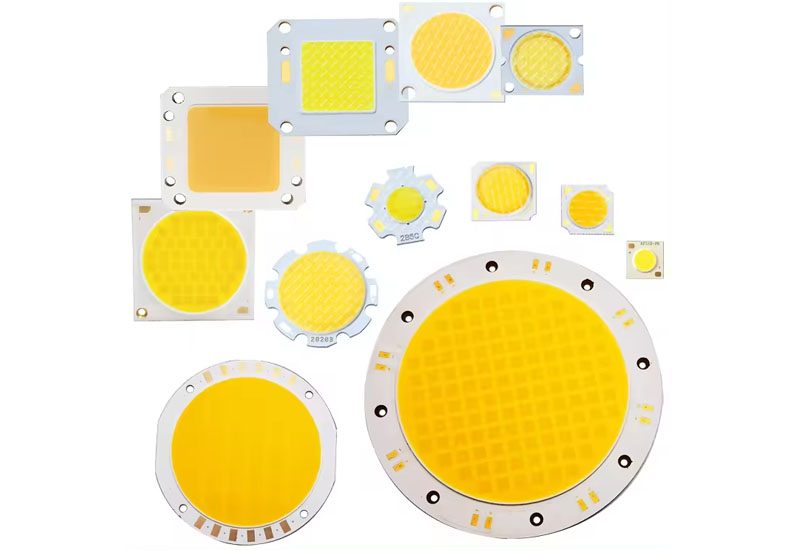
Shifting to Amber PIG converters does not require a complete redesign of LED modules. CAS provides standardized converter plates in chip-on-board (COB) and surface-mount device (SMD) footprints. However, three design aspects deserve attention:
5.1 Drive Current Optimization
Due to the absence of thermal droop, Amber PIG allows higher drive currents (up to 2.2 A/mm²) before saturation, making it suitable for high-bay and industrial luminaires. Engineers should reassign thermal pads because the glass interface reduces thermal resistance by 25% compared to silicone layers.
5.2 Secondary Optics Compatibility
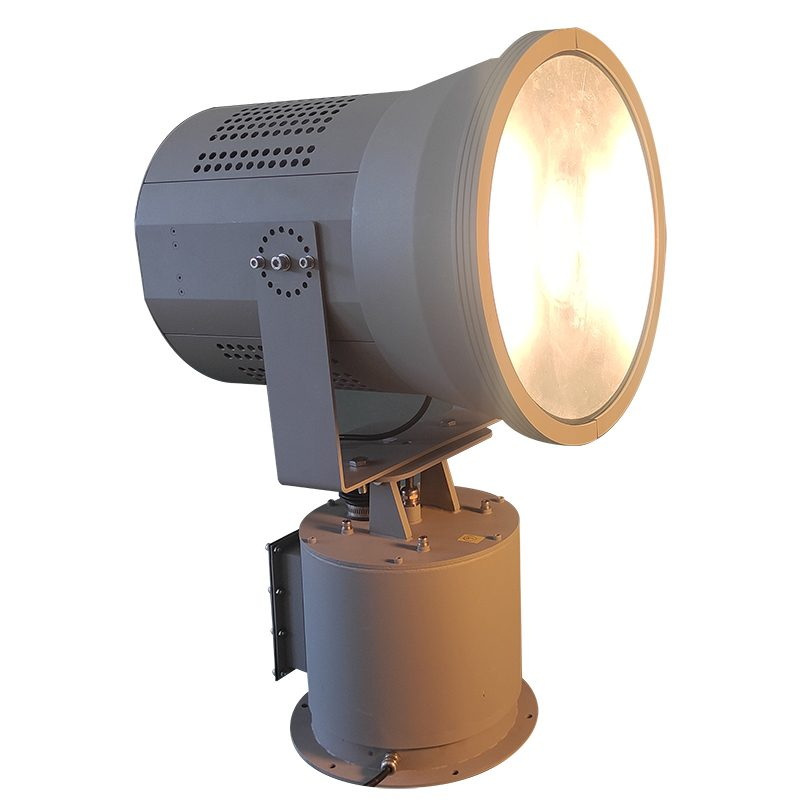
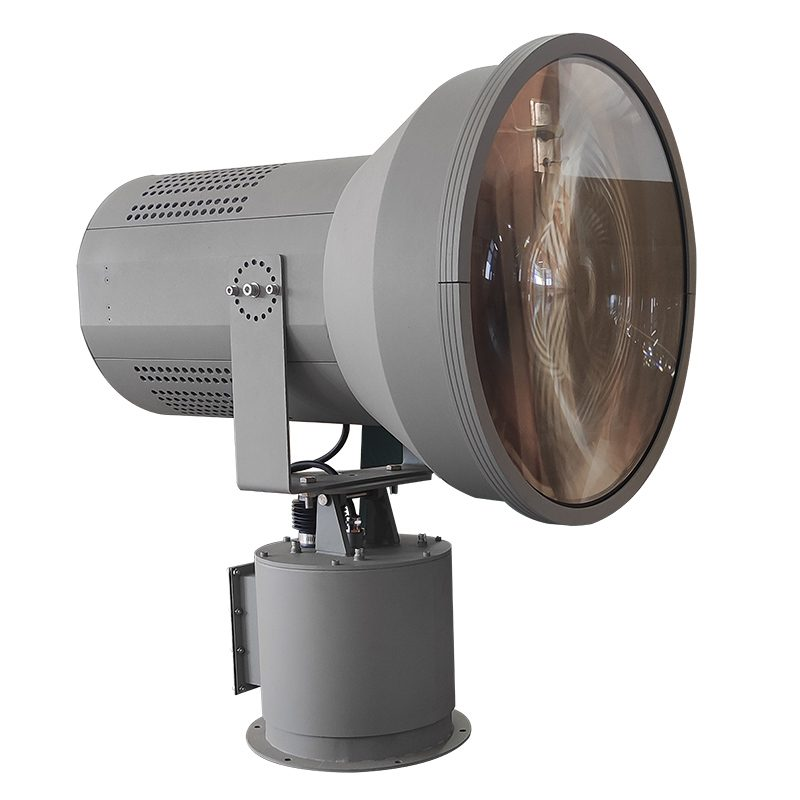
The glass surface of Amber PIG has a refractive index of ~1.7, closely matching typical encapsulants. Standard PMMA or silicone lenses work without additional anti-reflective coatings. However, for applications demanding narrow beam angles (e.g., ≤10° for searchlights), CAS offers pre-coated diffuser-matched plates to eliminate hotspots.
5.3 Dimming and Flicker
Unlike AlInGaP amber that exhibits color shift with PWM dimming, Amber PIG maintains constant chromaticity across 0.1% to 100% dimming range due to linear phosphor response. This property is essential for circadian lighting systems and video production environments where amber accent lights must not create color casts during dimming cycles.
CAS provides complete design-in support, including thermal simulation files (.STEP) and photometric data (IES/LDT) for custom Amber PIG arrays. Engineering samples are available for prototype validation.
6. Future Outlook and Industry Standardization
Regulatory trends increasingly restrict blue-rich lighting in outdoor and sensitive environments. The European Standard for Dark Sky (CIE 150:2017) and the US Model Lighting Ordinance (MLO) now award compliance credits for luminaires with zero blue content. Amber PIG positions itself as the enabling technology for amber-only zones. Meanwhile, CAS is actively contributing to the Zhaga Consortium’s new book for glass phosphor converter interface specifications, aiming to standardize mechanical dimensions and thermal pads.
As more cities adopt insect-friendly lighting policies and green building certifications (LEED v4.1 offers “Light Pollution Reduction” credits), demand for high-efficacy, stable amber sources will grow. Amber PIG converters already power pilot projects across three European highway tunnels and two US national parks. The technology’s scalability, combined with falling manufacturing costs (glass frit tape casting is highly parallelizable), suggests that within 5 years, Amber PIG will become the default for amber LED segments above 1W.
Why Amber PIG Matters for Professional Lighting Systems
For B2B specifiers, the choice of converter technology directly impacts warranty claims, energy compliance, and end-user satisfaction. Amber PIG resolves the historical trade-off between amber light quality and reliability. It delivers exceptional lumen maintenance, spectrally pure output, and minimal maintenance costs over a ten-year horizon. Whether you are designing tunnel lighting, ecological corridor fixtures, or archival-grade museum spots, Amber PIG represents the most future-proof architecture available today.
CAS has already shipped over 2 million Amber PIG units to industrial clients worldwide, with failure rates below 45 PPM (parts per million) after 18 months in field operation. To access detailed datasheets, thermal modeling reports, or to request customized converter geometries, reach out to our engineering team directly.
Frequently Asked Questions (FAQ) – Amber PIG Technology
Q1: What is the typical peak wavelength range for Amber PIG
converters, and can it be customized?
A1: Standard Amber PIG
products emit at a dominant wavelength of 590–595 nm. For specific applications
(e.g., insect traps or phototherapy), the peak can be shifted from 585 nm to 600
nm by adjusting phosphor stoichiometry. CAS offers custom tuning within ±3 nm
with pre-production samples delivered in 15 working days.
Q2: Is Amber PIG compatible with high-power LED packages (e.g.,
10W–50W COB)?
A2: Yes. Unlike silicone films that crack under high
thermal stress, the glass matrix of Amber PIG maintains structural integrity up
to 250°C. CAS provides 9mm×9mm and 14mm×14mm COB plates rated for 25W continuous
operation without delamination. Proper soldering and clamping are required to
manage mechanical stress.
Q3: Does Amber PIG produce any blue light spillover, and how is it
measured?
A3: No measurable blue light (450–480 nm) is emitted when
pumped by 445 nm or 405 nm chips. Using a calibrated spectroradiometer with 0.1%
detection limit, Amber PIG shows relative spectral power below 0.05% in the blue
band. This is verified by third-party reports compliant with CIE S 025.
Q4: Can Amber PIG be used with standard reflow soldering processes
(Pb-free, peak 260°C)?
A4: Absolutely. The glass converter’s
softening point exceeds 450°C, so it survives multiple reflow cycles without
optical degradation. However, avoid excessive ultrasonic cleaning as it may
create micro-cracks at the glass-substrate interface. CAS recommends standard
no-clean flux profiles.
Q5: How does the lifetime of Amber PIG compare to LPS (low-pressure
sodium) lamps?
A5: LPS lamps have rated life of 18,000–24,000 hours
with warm-up delays and mercury content. Amber PIG modules (when paired with
proper drivers) deliver L70 > 90,000 hours, instant restrike, and zero
hazardous materials. Additionally, LPS luminaires have low efficacy (80–100
lm/W) while Amber PIG achieves >115 lm/W with superior color rendering.
Q6: What is the minimum order quantity (MOQ) for custom Amber PIG
shapes from CAS?
A6: For non-rectangular geometries (e.g., circular
or annular converters), MOQ starts at 500 units. For standard 3mm×3mm to
20mm×20mm square plates, samples can be ordered as low as 50 pieces. CAS
maintains a rapid prototyping service for R&D projects requiring spectral or
thickness modifications.
Q7: Are there any patented restrictions when integrating Amber PIG
into our own luminaires?
A7: CAS holds essential patents on
low-temperature glass bonding for amber-emitting converters but operates a fair
licensing model for finished luminaire manufacturers. Integrating CAS-supplied
Amber PIG components does not require additional royalties for end products.
Consult our legal team for specific distribution agreements.
Ready to upgrade your amber lighting line with proven, thermally stable converters? CAS offers full technical documentation, optical simulation files, and engineering consultation.
Contact our B2B lighting specialists today: Provide your target luminous flux, operating temperature range, and beam angle requirements. We will respond within 24 hours with a preliminary spec sheet and sample pricing.
Email: daniel.lin@zkxyled.com
Web inquiry form:
www.cas-amberpig.com/contact (direct engineering queue)