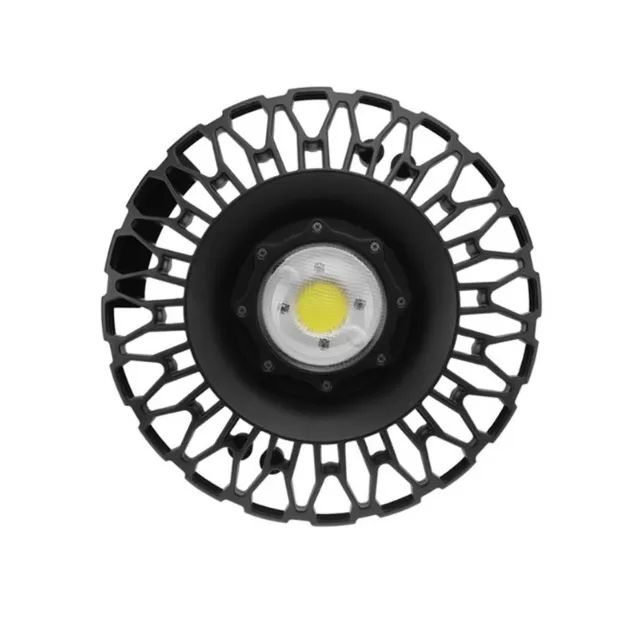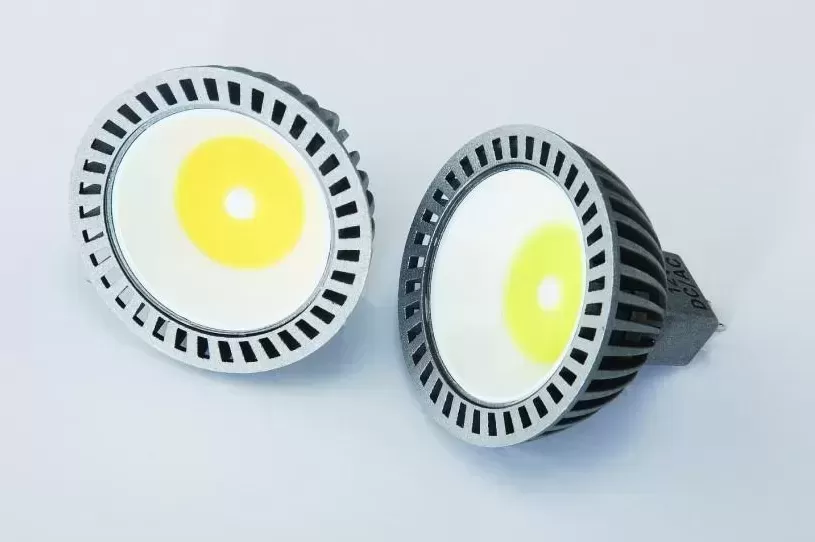
Commercial lighting systems operate under severe conditions. High-bay fixtures, sports stadium luminaires, and architectural floodlights run for long daily cycles, generating intense thermal stress. Choosing the right light source determines whether an installation survives ten years or fails within eighteen months.
For lighting engineers, fixture manufacturers, and procurement specialists, partnering with dependable Cob Led Manufacturers is the most critical supply chain decision. If your project demands custom thermal analysis or high-power samples, contact our technical sales team at CAS for direct support.
Commercial Lighting Demands More from COB LEDs
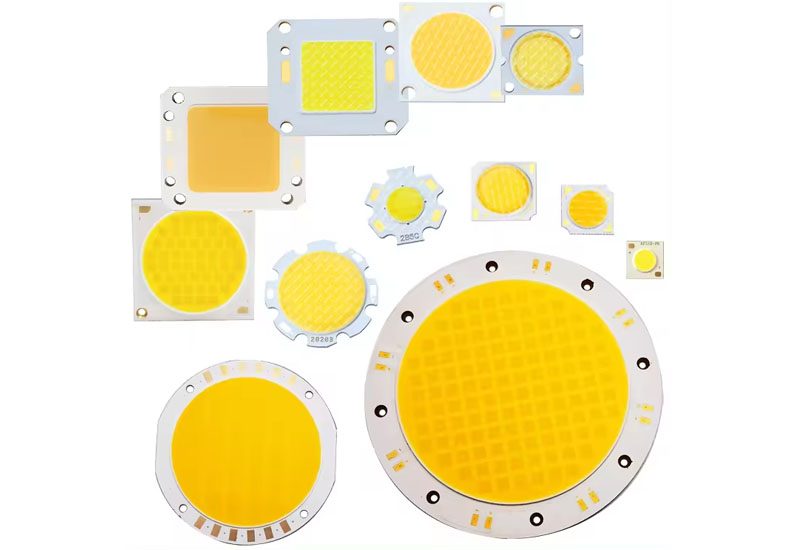
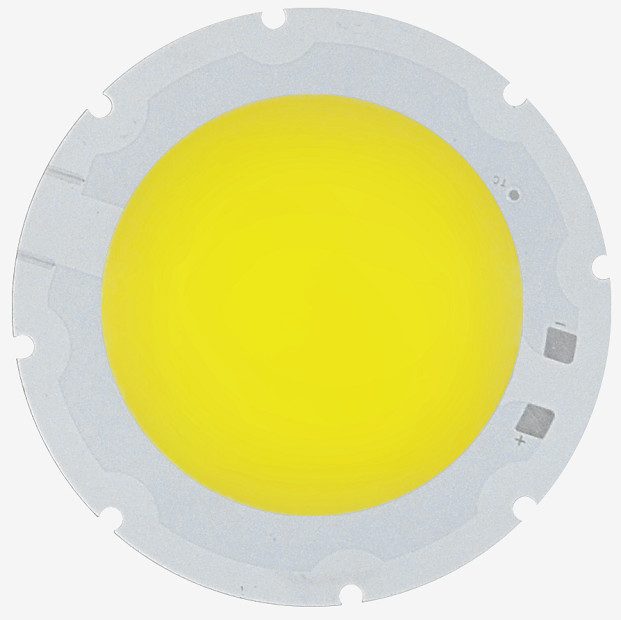
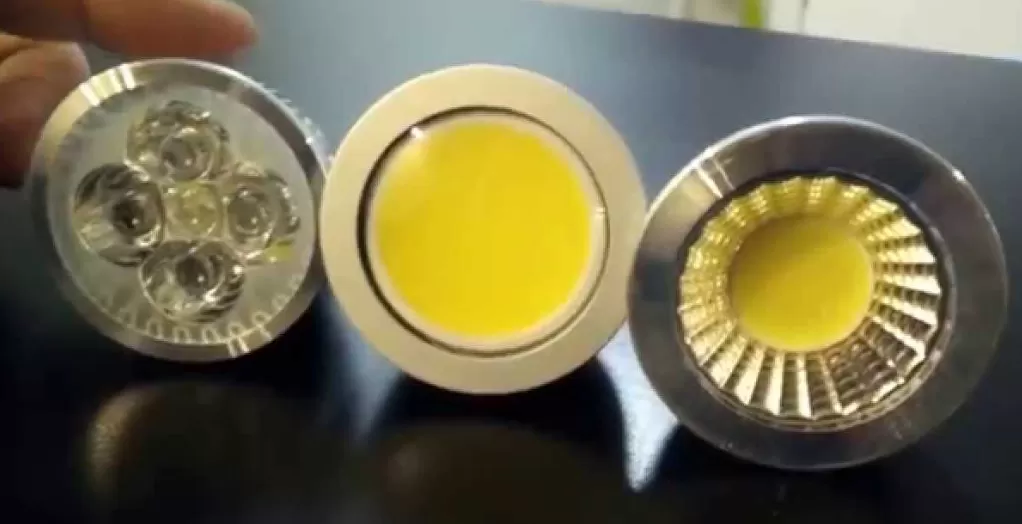
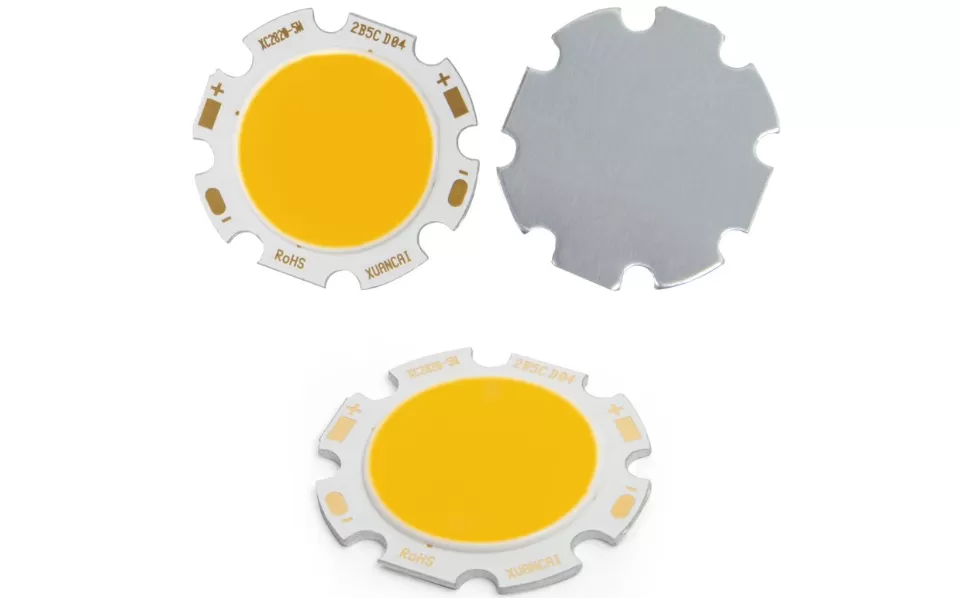
A Chip-on-Board (COB) LED concentrates tens or hundreds of diode junctions onto a single printed circuit board or substrate. This setup produces a dense, uniform light field without the multi-shadow artifacts of discrete surface-mount devices (SMD).
However, running high power through a compact emission surface causes rapid heat accumulation. Traditional packaging relies on organic silicone resins mixed with phosphor powders applied over blue LED dies. Under high temperatures and intense short-wavelength light flux, organic binders break down.
Over time, traditional silicone-encapsulated arrays experience lumen depreciation, epoxy browning, and significant chromaticity shift. Forward-thinking luminaire builders are shifting toward inorganic materials and novel architectures to solve these persistent points of failure.
Key Metrics for Evaluating COB LED Manufacturers
Selecting an optical supplier requires looking past the first-page marketing claims on a datasheet. Tier-1 buyers assess Cob Led Manufacturers using four baseline technical standards:
- Thermal Resistance ($R_{th}$): Measured in degrees Celsius per watt (°C/W), this metric determines how quickly heat flows from the diode junction to the heatsink. Lower values keep the junction temperature ($T_j$) low, preserving diode efficiency.
- Lumen Maintenance and LM-80 Testing: Reliable suppliers test their modules according to industry guidelines such as IES LM-80 standards, providing clear data for TM-21 lifespan projections beyond 50,000 hours.
- Packaging Material Chemistry: The encapsulant and phosphor delivery medium dictate operational stability. Manufacturers working with inorganic phosphor ceramics eliminate the degradation risks common to polymer gels.
- Spectral Consistency: Strict color control within a 2-step or 3-step MacAdam ellipse prevents visible chromatic variation across wide commercial installations. High Color Rendering Index (CRI Ra > 90, with R9 > 50) remains a basic requirement for high-end retail.
Top Global Tier-1 COB LED Manufacturers
Several global leaders design and manufacture high-performance COB devices. Each company excels in specific market segments based on their historical manufacturing strengths.
Citizen Electronics (Japan)
Citizen Electronics remains an industry benchmark for indoor commercial lighting. The Japanese manufacturer popularized the standardized COB form factor, developing arrays with high lumen-per-watt efficiency and tight mechanical tolerances. Their modules appear routinely in retail track lights, downlights, and museum spots where uniform beam quality and reliable SDCM color bins are paramount.
Bridgelux (United States)
Bridgelux built its market share on high-efficacy, architectural-grade lighting arrays. The Vero and V Series provide integrated electrical wiring connectors that speed up luminaire assembly. Bridgelux focuses heavily on color quality, offering targeted spectra for hospitality, art spaces, and commercial supermarkets.
Cree LED (United States)
Cree LED has long been recognized for silicon carbide substrate innovations and high-drive-current endurance. Their CXA and CXB families serve high-lumen commercial applications, including parking lot luminaires and exterior area fixtures. Their products emphasize robust electrical margins and survival under variable ambient temperatures.
Nichia (Japan)
Nichia is the global pioneer in blue LED dies and phosphor synthesis. The company controls the entire production cycle from raw phosphor chemicals to final packaging. Nichia COB arrays lead the market in lumen maintenance, narrow color binning, and specialty high-CRI recipes that mimic natural daylight.
CAS (CAS Ceramic): Material Science Redefines Next-Generation K-COB
While legacy manufacturers rely on organic silicone encapsulation, CAS (CAS Ceramic) solves thermal and light-degradation challenges by engineering completely inorganic optical materials.
To request sample kits or review thermal simulations for your fixtures, contact the CAS technical team to discuss your project requirements.
Scientific Heritage and Full-Chain Manufacturing
CAS operates with direct research ties to the Chinese Academy of Sciences. Founded in 2013 and led by an academician-directed team, CAS approaches solid-state lighting as an advanced materials science problem rather than a simple assembly task.
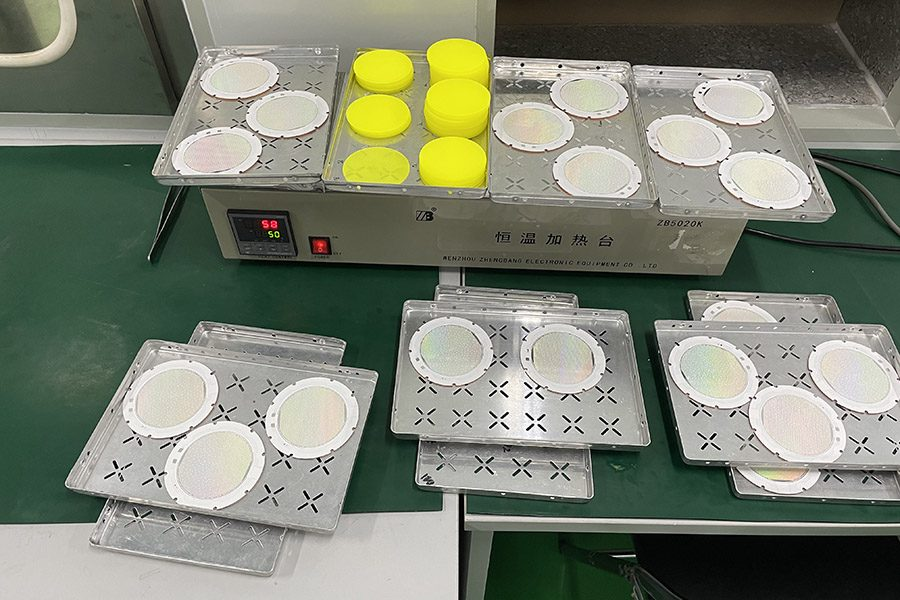
The company maintains complete vertical integration over its entire manufacturing chain. CAS synthesizes raw precursor powders, operates high-precision ceramic sintering furnaces, and runs automated packaging lines in-house. This comprehensive control guarantees zero batch-to-batch variation in phosphor stoichiometry and optical density.
Inorganic Phosphor Ceramic Technology
The defining innovation at CAS is its proprietary Phosphor Ceramic material. Traditional Cob Led Manufacturers mix loose phosphor particles into clear silicone gel. Over thousands of hours at high junction temperatures, that silicone oxidizes, yellows, and shrinks, causing severe lumen drops and green/yellow color drift.
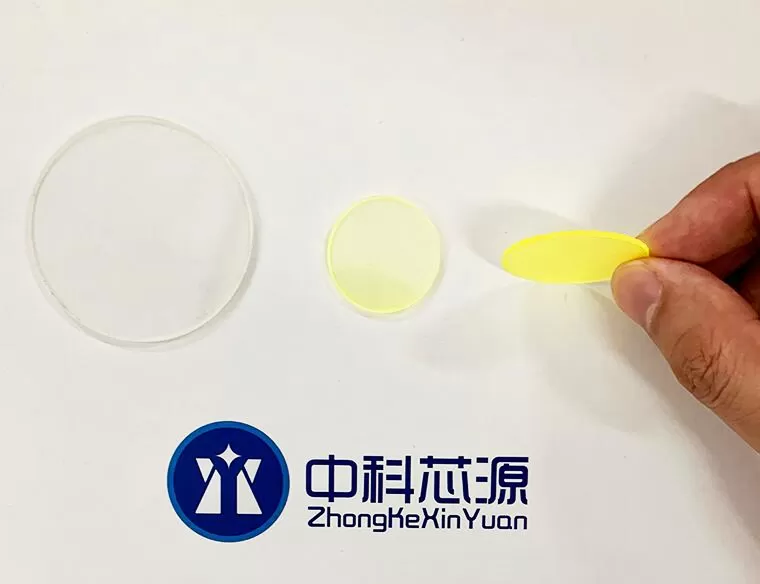
CAS replaces silicone entirely with a fully sintered, pure inorganic phosphor ceramic plate. Inorganic ceramics are immune to photo-thermal yellowing, capable of withstanding temperatures exceeding 300°C without physical or chemical degradation. This material choice matches the recommendations for durable optical components documented by organizations like the National Institute of Standards and Technology (NIST).
Patented Dual-Channel Heat Dissipation (K-COB)
Beyond packaging chemistry, CAS engineered the K-COB architecture with a patented dual-channel thermal dissipation structure. Standard COB arrays force all heat down through the internal substrate into the baseplate.
The K-COB design splits thermal dissipation into two parallel paths: heat conducts through the ceramic layer and the circuit carrier simultaneously. This structural design lowers the thermal boundary resistance significantly, pulling operating junction temperatures down by 15°C to 20°C compared to conventional assemblies running at identical wattages.
Verified Reliability and Global Patents
CAS is the first manufacturer worldwide to achieve large-scale mass production of phosphor ceramics for both high-power LED and laser diode (LD) applications. Backed by five international invention patents and independent LM-80 certification for high-power ceramic COBs, CAS gives luminaire designers absolute reliability under the harshest thermal conditions.
Technical Comparison: Traditional Silicone COB vs. CAS Phosphor Ceramic K-COB
Understanding the operational differences between organic packaging and inorganic ceramic architectures helps engineers calculate lifetime system costs:
| Performance Parameter | Traditional Silicone COB | CAS K-COB (Phosphor Ceramic) |
|---|---|---|
| Encapsulation Medium | Organic Silicone / Epoxy Resin | 100% Inorganic Sintered Ceramic |
| Maximum Thermal Tolerance | 150°C Junction Temp ($T_j$) | >300°C Material Stability Limit |
| Thermal Dissipation Route | Single Path (Substrate to Heat Sink) | Patented Dual-Channel (Ceramic + PCB) |
| Silicone Yellowing / Aging | High Risk at High Wattages | Zero Risk (No Organic Materials) |
| Lumen Depreciation Rate | Moderate to High after 20,000 hrs | Extremely Low (<3% over 30,000 hrs) |
| High-Drive Current Margin | Constrained by Gel Thermal Breakdown | High (Handles Over-Driving Safely) |
| LM-80 High-Power Data | Available (Typically at low drive currents) | Fully Certified on High-Power Ceramic Arrays |
Ideal Applications for High-Power Ceramic COB LEDs
The durability of the K-COB architecture makes it particularly suitable for commercial fixtures where maintenance costs dwarf the initial purchase price of the lamp.
High-Mast and Sports Stadium Lighting
Illuminating sports arenas and port terminals demands fixtures delivering 500W to 2000W of optical output. At these power levels, heatsink weight becomes a serious mechanical design constraint. The superior thermal conduction of CAS K-COB allows smaller, lighter heat sinks without raising chip temperatures past safe operating margins. The optical stability also guarantees consistent, flicker-free broadcasting quality compliant with International Electrotechnical Commission (IEC) lighting standards.
Industrial High-Bay Luminaires
Manufacturing facilities, foundries, and chemical processing plants maintain high ceiling temperatures year-round. Standard silicone COBs degrade rapidly in hot, humid ambient environments. The inorganic construction of phosphor ceramic arrays withstands corrosive chemical vapors and high ambient temperatures without premature lumen loss.
Museums and High-End Retail Spotlights
Luxury retail spaces and art galleries require pinpoint optical color accuracy that never drifts over years of continuous operation. Because CAS ceramic plates do not yellow or warp, the emitted spectrum maintains a flat, stable spectral distribution, eliminating color bin drift and preserving high R9 values across the lifespan of the fixture.
Procurement Guide: How to Select Cob Led Manufacturers
When selecting a manufacturing partner for your commercial product lines, apply this straightforward verification checklist:
- Review Real LM-80 Test Reports: Check the test report temperatures. Ensure testing was conducted at 85°C and 105°C case temperatures at your target operating current, not just minimal baseline wattages.
- Assess Material Composition: For fixtures rated over 50W per single light source, determine whether the manufacturer uses organic silicone or inorganic ceramic encapsulation.
- Confirm Patent Coverage: Ensure your vendor owns clear intellectual property for their packaging technologies to protect your global exports against patent disputes.
- Evaluate Custom Engineering Support: Select Cob Led Manufacturers that supply thermal simulation data, optical secondary lens pairings, and custom PCB layout assistance.
The commercial lighting sector continues to move toward higher lumen density and longer operating life. While legacy Cob Led Manufacturers like Citizen, Bridgelux, Cree, and Nichia continue to serve standard applications, material limitations cap their performance at extreme wattages.
CAS has reshaped expectations for high-power packaging through its advanced phosphor ceramic chemistry and dual-channel K-COB architecture. By eliminating organic resins from the light path, CAS enables lighting brands to build more compact, durable, and thermally efficient luminaires.
If you are developing your next generation of high-bay lights, stadium fixtures, or architectural projectors, submit an inquiry to CAS today to receive product catalogs, photometric test data, and evaluation samples.
Frequently Asked Questions
Q1: What is the main difference between traditional COB LEDs and K-COB?
A1: Traditional COB LEDs mix phosphor powders into an organic silicone gel applied directly over the LED dies. Over time, heat and blue light degrade the silicone, causing yellowing and lumen drop. K-COB, developed by CAS, uses a 100% inorganic sintered phosphor ceramic plate coupled with a patented dual-channel thermal dissipation path. This eliminates thermal aging, extends operating life, and lowers overall thermal resistance.
Q2: Why is LM-80 certification critical when evaluating Cob Led Manufacturers?
A2: LM-80 is the universally recognized testing standard that records the lumen maintenance and chromaticity drift of LED packages over a minimum of 6,000 to 10,000 hours at various temperatures. Reviewing verifiable LM-80 reports protects luminaire builders from inflated marketing claims, verifying that the diodes will meet projected lifetime standards under real-world operating conditions.
Q3: Can high-power ceramic COBs reduce overall luminaire manufacturing costs?
A3: Yes. Because inorganic phosphor ceramic COBs operate reliably at significantly higher temperatures and drive currents without decaying, fixtures require fewer overall components. Furthermore, the lower thermal resistance allows designers to use smaller aluminum heatsinks, reducing housing materials, freight weights, and assembly labor.
Q4: How does phosphor ceramic solve the problem of chromaticity shift?
A4: Chromaticity shift in conventional arrays occurs when the silicone resin expands, contracts, and browns under thermal cycles, shifting the ratio of blue light transmission to phosphor emission. Sintered phosphor ceramics are dimensionally and chemically stable across extreme thermal ranges, keeping the color coordinates within a tight, unchanging tolerance over tens of thousands of hours.
Q5: How can engineering teams obtain K-COB samples for prototyping?
A5: Engineering teams and luminaire manufacturers can request evaluation units directly through the CAS technical portal. CAS provides custom CCT and CRI options, ray files for optical modeling, and thermal resistance data sheets to assist with rapid system prototyping.