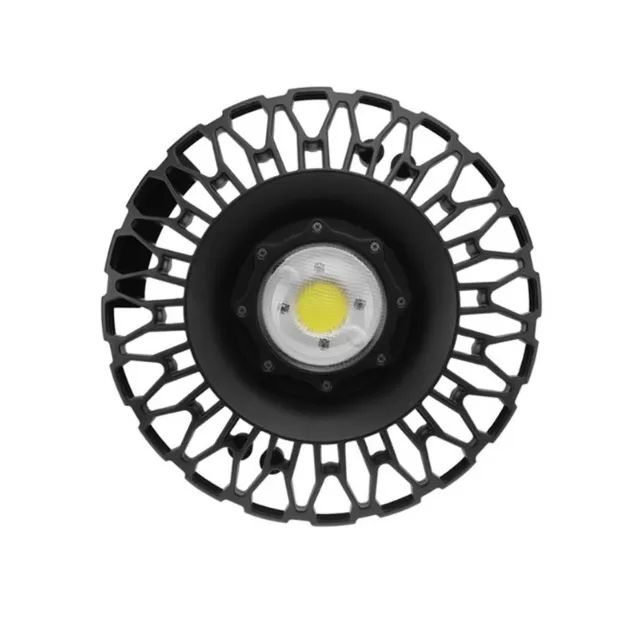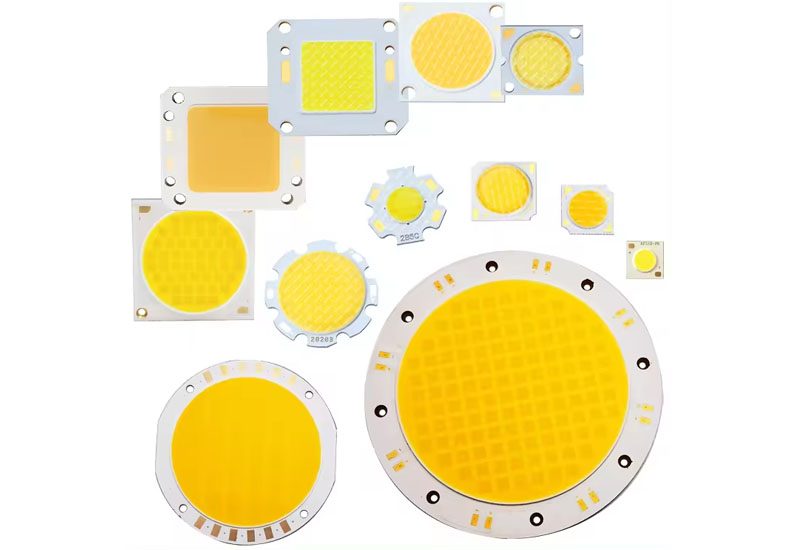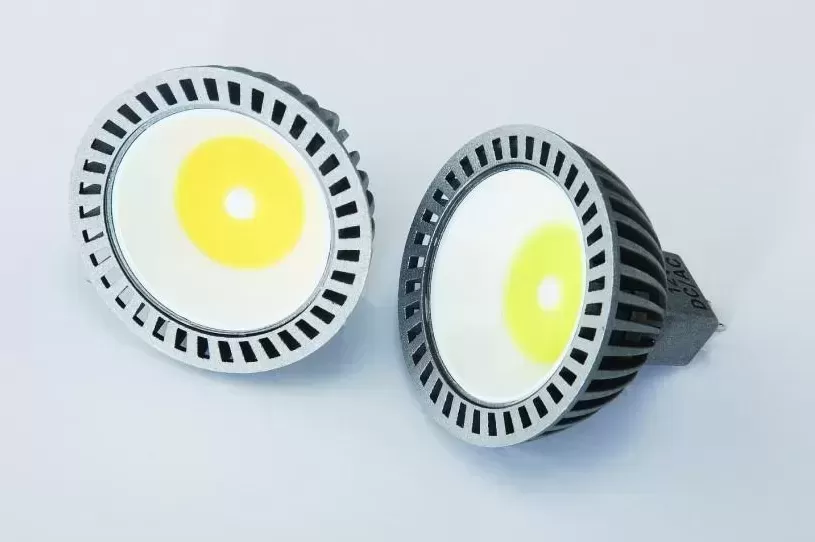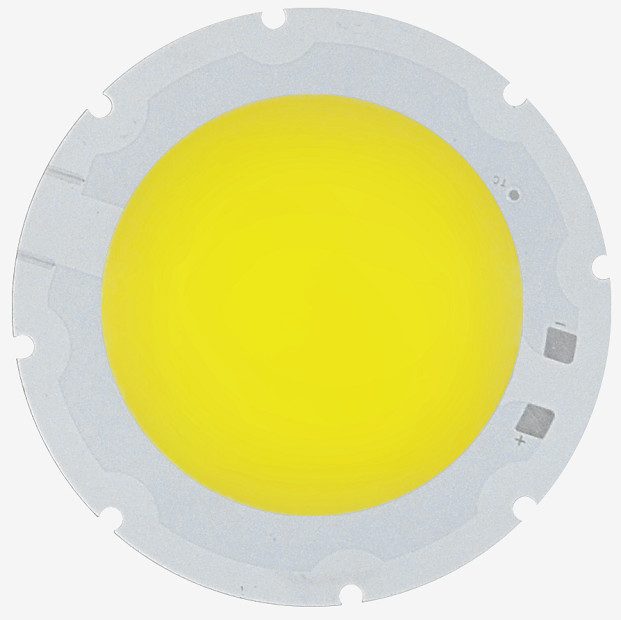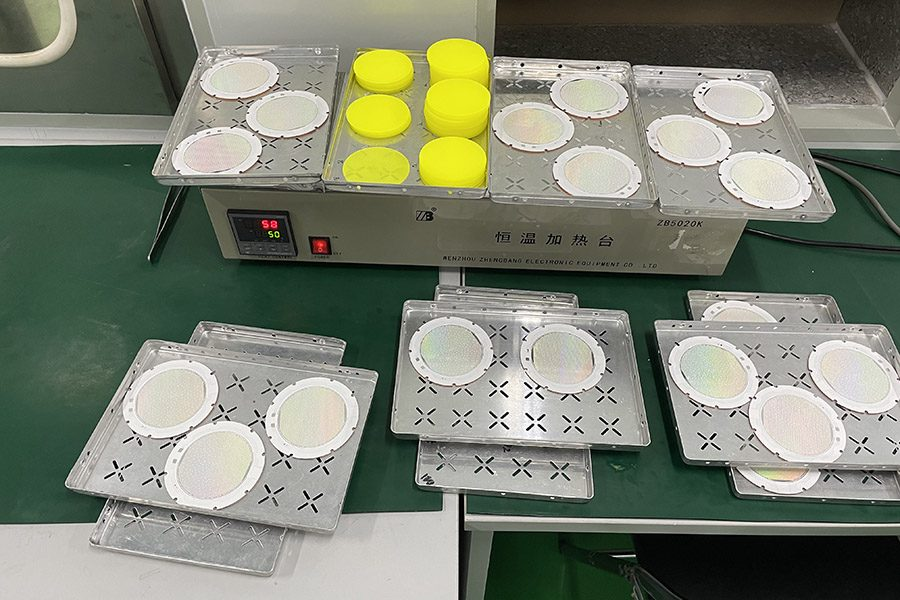
A COB LED light (Chip-on-Board light-emitting diode) is an advanced solid-state lighting module where multiple bare semiconductor dies mount directly onto a thermally conductive substrate to form a single, continuous, ultra-bright light source.
Solid-state lighting has moved beyond the constraints of traditional incandescent, fluorescent, and basic through-hole diodes. Designers need smaller light engines that emit more usable lumens without producing ugly multi-shadow beam patterns. This demand pushed Chip on Board technology from specialized niche applications straight into main-line industrial fixtures, retail track heads, and professional photography rigs.
Below, we deconstruct the mechanical architecture of a modern Cob Led Light, analyze its photoluminescent operating principles, and review its practical engineering pros and cons.
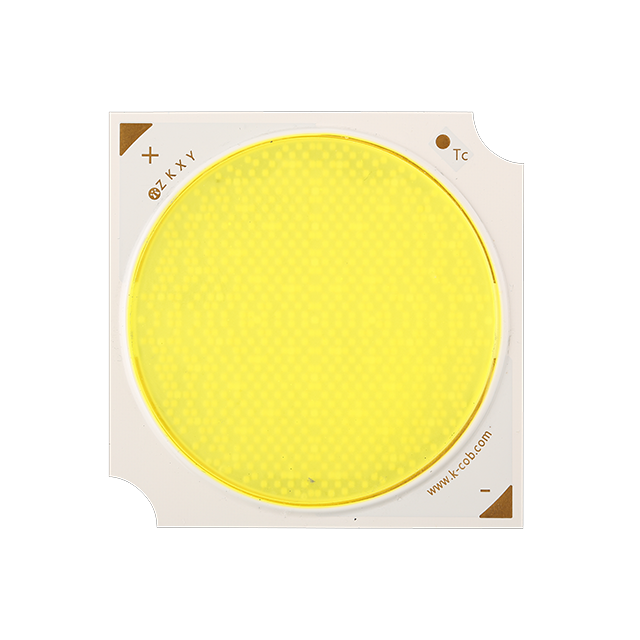
The Anatomy: What’s Inside a COB LED Light?
Unlike standard surface-mount devices (SMD) that package every diode individually inside plastic housings, a COB module consolidates dozens—sometimes hundreds—of micro-diodes into a monolithic footprint. This integration cuts out intermediate lead frames and minimizes thermal resistance.
Understanding this packaging requires looking at each structural layer, from the heat-shedding base to the outer protective phosphor matrix, as outlined in the technical definitions of Chip on board assembly.
1. The Substrate (Base Carrier)
The substrate serves as both the mechanical baseplate and the primary highway for heat rejection. Manufacturers select substrate materials based on the fixture's intended wattage and thermal density:
- Aluminum Metal-Core PCBs (MCPCB): Highly common for standard commercial luminaires. They offer good thermal dissipation, high mechanical ductility, and lower production costs.
- Ceramic Substrates (Alumina $\text{Al}_2\text{O}_3$ or Aluminum Nitride $\text{AlN}$): Reserved for high-power, high-current density arrays. Ceramic provides superior dielectric strength, zero circuit corrosion risks, and thermal conductivity rates exceeding $170\text{ W/m}\cdot\text{K}$ for $\text{AlN}$.
2. Bare LED Chips (The Die Array)
Dozens of microscopic blue gallium nitride ($\text{GaN}$) or indium gallium nitride ($\text{InGaN}$) semiconductor chips sit directly against the substrate. They bond to the board using conductive silver epoxy or eutectic solder alloys. Because these chips lack external lead frames or plastic cups, manufacturers place them micrometers apart. This dense packing creates incredible lumen output from an exceptionally small surface area.
3. Microscopic Bonding Wires
Micro-fine wires—typically drawn from 99.99% pure gold ($\text{Au}$), copper ($\text{Cu}$), or aluminum ($\text{Al}$)—bridge the electrical connections across the array. Ultrasonic ball or wedge wire-bonding machines stitch these wires between the chips and circuit traces, configuring the array in precise series-parallel circuits. Gold wire remains the standard for industrial-grade modules because it resists oxidation during high thermal loading cycles.
4. The Phosphor Coating Matrix
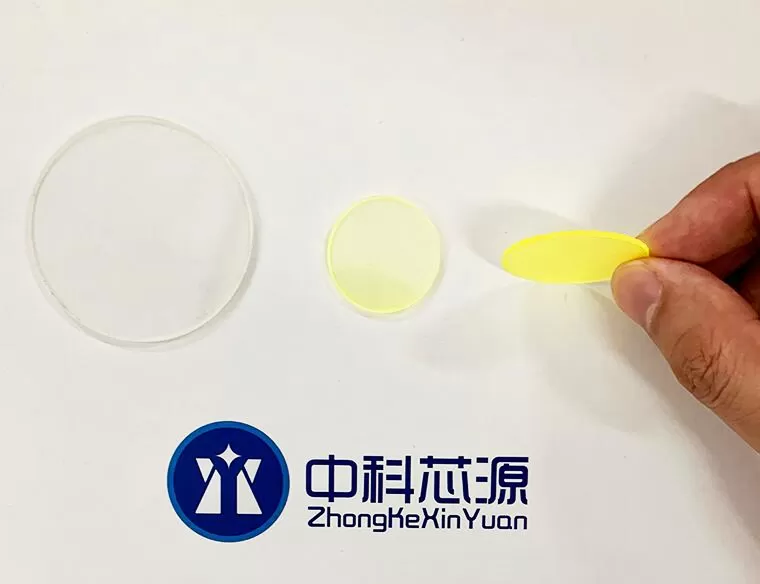
Raw micro-dies emit narrow-spectrum royal blue light. To turn this blue light into wide-spectrum white illumination, engineers pour a layer of optical-grade silicone infused with rare-earth phosphor compounds over the entire array. The thickness and chemical ratio of this uniform yellow layer directly determine the correlated color temperature (CCT) and color rendering performance.
5. Thermal Interface Material (TIM) and Heat Sink
A COB module cannot run safely on its own without burning out in seconds. The module mounts directly against an engineered aluminum or copper heat sink, separated by a microscopic layer of thermal paste or a phase-change pad. This interface eliminates air pockets, moving heat away from the sensitive P-N semiconductor junctions.
How Does a COB LED Light Work?
A Cob Led Light converts electrical energy into usable visual lumens through a coordinated two-step process: electroluminescence followed by phosphor down-conversion.
First, direct current (DC) passes through the printed circuitry and micro-bonding wires into the bare $\text{InGaN}$ semiconductor dies. At each P-N junction, electrons cross the depletion layer to recombine with electron holes. This transition releases quantum energy packets as high-energy blue photons (typically centered around $450\text{ to }460\text{ nanometers}$).
Second, these blue photons hit the shared silicone-phosphor layer. The phosphor crystals absorb a portion of this narrow blue light and re-emit it at lower frequencies across the green, yellow, and red wavelengths. The human eye blends this remaining blue and down-converted spectrum together, perceiving it as a single uniform beam of white light.
Because the bare chips are grouped closely beneath a single shared phosphor layer, the individual light points merge. Rather than acting as separate spot sources, the module functions like an expansive planar surface emitter. This optical behavior eliminates the harsh multi-shadowing patterns seen on older multi-diode arrays.
The Pros of COB LED Lights
Using Chip on Board technology provides distinct optical, mechanical, and electrical advantages for demanding architectural, industrial, and studio fixtures.
- Exceptional Lumen Density: Packing dozens of chips onto a coin-sized footprint yields intense directional illumination. A designer can get 5,000 to 20,000 lumens out of an aperture that previously fit only a fraction of that output.
- Superior Optical Uniformity: The single phosphor layer produces smooth, clean light pools without the "polka-dot" appearance of surface-mount arrays. It creates clean, sharp shadows with a single penumbra edge, which is essential for retail display and cinematography.
- Lower Thermal Resistance: Bare chips sit right on the heat-spreading base without intermediate lead frames or packaging resins. This short thermal path simplifies fixture engineering, as evaluated in packaging research by IEEE Xplore.
- High Color Fidelity (CRI): Leading manufacturers produce COB light engines boasting a Color Rendering Index (CRI) of 95+ and an R9 (deep red) value above 90. Photometric standards defined by the National Institute of Standards and Technology (NIST) help assess these exact parameters for mission-critical retail and medical visual tasks.
- Compact Fixture Form Factors: Intense center-beam candlepower (CBCP) from a small light emission surface (LES) allows designers to use smaller reflectors and compact housing designs.
Brands like CAS engineer these mechanical and optical benefits directly into heavy-duty commercial luminaires, balancing high lumen output with tight optical beam control.
The Cons of COB LED Lights
While a Cob Led Light offers high efficiency, it presents unique physical challenges that require careful engineering.
- Concentrated Thermal Dissipation Demands: Even though the thermal interface is efficient, shedding 100 watts of heat from a 25mm circle creates intense local thermal flux. If the luminaire's secondary heat sink is too small, junction temperatures will quickly pass safe operating limits, leading to fast lumen decay.
- No Component-Level Repairability: In an SMD fixture, a technician can desolder and swap out a single blown diode. On a COB engine, the entire array shares electrical paths beneath a cured silicone dam; a single localized failure usually means replacing the whole light engine.
- Limited Multi-Channel Color Tuning: Combining red, green, blue, and white dies under a single phosphor layer is technically difficult. As a result, full-spectrum RGBW color tuning remains primarily the domain of multi-package SMD boards.
- Strict Current Regulation Requirements: Because dozens of micro-dies are wired in interconnected series and parallel grids, current imbalances can trigger localized thermal runaway. They need precise, high-grade constant-current LED drivers.
COB vs. SMD LEDs: A Quick Comparison
Lighting procurement teams often weigh COB against standard SMD arrays. The table below outlines how these two package styles compare:
| Performance Attribute | COB LED Module | SMD LED Array |
|---|---|---|
| Lumen Density | Extremely high; intense optical punch from a small surface. | Moderate to low; spread across a wide circuit board area. |
| Light Quality / Uniformity | Even, homogeneous "panel" wash; casts a single, clean shadow. | Individual point sources; can cast messy multi-shadows without diffusion. |
| Thermal Management Path | Direct die-to-substrate mounting; very low internal thermal resistance. | Heat passes through the lead frame, package solder, then to the PCB. |
| Color Tuning Versatility | Mainly single CCT or dual bi-color white configurations. | Easily controls multi-channel RGB, RGBW, and wide-spectrum dynamic arrays. |
| Ideal Applications | Downlights, directional track lights, high-bay lamps, film spots. | Linear strip lights, troffers, backlights, digital signage. |
Common Applications of COB LED Lights
Thanks to their high optical output and clean beam control, industries deploy COB technology across a range of high-performance settings:
- Commercial Retail and Gallery Lighting: Narrow-beam track fixtures use miniature COB dies to focus punchy accent beams on merchandise without annoying glare or multiple shadow edges.
- Industrial High-Bay Fixtures: Warehouses and manufacturing floors mount high-output COB arrays inside deep aluminum reflectors to drop high foot-candle levels straight down from ceilings up to 40 feet high.
- Film, Broadcast, and Photography Studios: Continuous video lights demand high color accuracy and single-shadow properties to replicate traditional tungsten and HMI fixtures.
- Architectural Outdoor Floodlights: Compact stadium lights, facade washers, and area spots rely on high-wattage COB modules behind glass lenses to project beams over long distances.
- Horticultural Production: Specialized broad-spectrum COBs
provide dense photosynthetically active radiation (PAR) that penetrates plant
canopies inside commercial indoor farms.
Frequently Asked Questions About COB LED Lights
Q1: Do COB LEDs last longer than SMD LEDs?
A1: Both configurations generally share theoretical lifetimes of 50,000 hours or more (L70 rating). However, a Cob Led Light concentrates heat within a small area. If the luminaire lacks sufficient heat dissipation, the junction temperature rises quickly, which can degrade the phosphor and shorten its lifespan faster than a spread-out SMD array.
Q2: Why do COB LED lights run so hot to the touch?
A2: When an operational COB fixture feels hot, its thermal cooling system is actually working properly. The direct-bond substrate moves heat away from the internal micro-chips and transfers it out to the exterior metal heat sink, which radiates that energy away from the fixture.
Q3: Are COB LEDs more energy-efficient than traditional LEDs?
A3: Yes. Modern COB modules deliver between 130 and 170+ lumens per watt. By eliminating the individual plastic packaging and lead wires found on legacy through-hole and early SMD chips, COB packaging cuts internal optical losses and runs with lower electrical resistance.
Q4: Can you dim a COB LED light safely?
A4: Yes. You can dim COB units using pulse-width modulation (PWM) or continuous constant-current reduction (CCR / 0-10V dimming). Stable dimming depends on using an industrial-grade, flicker-free driver that matches the forward voltage and current limits of the array.
Q5: What causes a single dark spot inside a COB module?
A5: A localized dark spot means one or more micro-dies have failed, or an individual micro-bonding wire has broken from a thermal surge or physical flex stress. Because the chips are wired in series-parallel arrays, a failure in one branch can also dim adjacent diodes along that circuit line.
Conclusion and Procurement Next Steps
Understanding the internal anatomy of a Cob Led Light helps commercial buyers and system designers choose the right hardware. The package's direct-to-substrate die layout, unified silicone-phosphor surface, and single-source optical profile offer unbeatable lumen density, low thermal resistance, and clean beam quality.
When an application calls for high center-beam punch, excellent color fidelity, and a compact fixture body, modern Chip on Board technology provides the ideal balance of efficiency and visual performance.
Are you looking to integrate advanced COB technology into your commercial projects or architectural luminaires? CAS develops industrial-grade LED modules, specialized downlights, and custom solid-state fixtures built to your specifications. Submit an inquiry to the CAS technical sales team today to discuss custom footprints, sample evaluations, and volume OEM manufacturing pricing.