Automotive lighting no longer functions merely to illuminate a dark road. As vehicles transition toward electrification and autonomous mobility, lighting systems have become digital communication devices, active safety components, and key aesthetic differentiators.
Original equipment manufacturers (OEMs) and Tier-1 suppliers face immense pressure to balance optical efficiency, thermal performance, and digital integration. At CAS, we engineer high-performance solutions that help automotive designers bridge this transition. If your engineering team is specifying exterior illumination or optical modules for upcoming platform launches, send an inquiry to the CAS technical team today to review optical specifications and manufacturing feasibility.
Next-generation automotive lighting refers to digitized, software-controlled illumination architectures. These systems combine high-density solid-state emitters like Micro-LEDs and laser diodes with intelligent micro-optics and vehicle sensor data to project dynamic, high-resolution light patterns onto the road surface.
The year 2026 represents a major turning point for the industry. Updated safety frameworks, such as the full real-world rollout of Adaptive Driving Beam (ADB) standards under Federal Motor Vehicle Safety Standard (FMVSS) 108 in the United States and UNECE regulations in Europe and Asia, demand higher optical precision. At the same time, the transition to centralized vehicle computer architectures transforms exterior lamps from static assemblies into edge-connected, software-updatable endpoints.
1. Micro-LED Matrix Headlights: The Next Leap in Adaptive Driving Beams (ADB)
Traditional automotive LED headlights rely on matrix arrangements containing anywhere from 12 to 100 individual emitter chips. While effective, these coarse pixel layouts struggle to create refined cut-offs around oncoming traffic without dimming large swaths of the forward field.
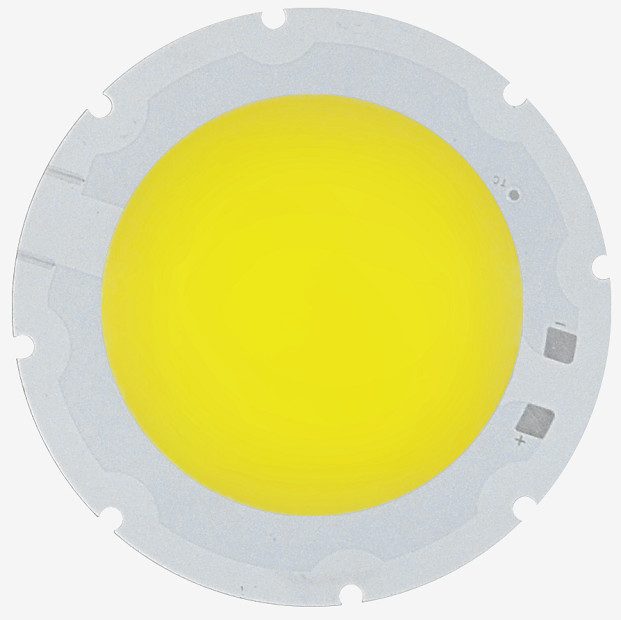
Micro-LED matrix technology changes this equation completely. By integrating monolithic arrays containing between 20,000 and 100,000 individually addressable microscopic emitters onto a single silicon CMOS backplane, lighting designers achieve digital light processing directly at the emitter source.
- Glare-Free High Beam Precision: Pixels deactivate with sub-degree accuracy around target vehicles, pedestrians, and cyclists, maximizing ambient forward light without causing glare.
- Optical Miniaturization: Monolithic emitter arrays eliminate bulky primary optical guides, shrinking the front-facing lamp height to under 20 millimeters.
- Market Expansion: High-pixel matrix systems will transition from ultra-luxury flagships into mainstream C- and D-segment vehicles by 2026 as wafer-level packaging drives yields up and costs down.
This pixel density turns the headlight into an ultra-precise digital projector, allowing dynamic cutoff lines that adapt seamlessly to suspension pitch, vehicle roll, and changes in road topology.
2. Laser Headlight 2.0: Beyond High-Beam Range to Sensor Integration
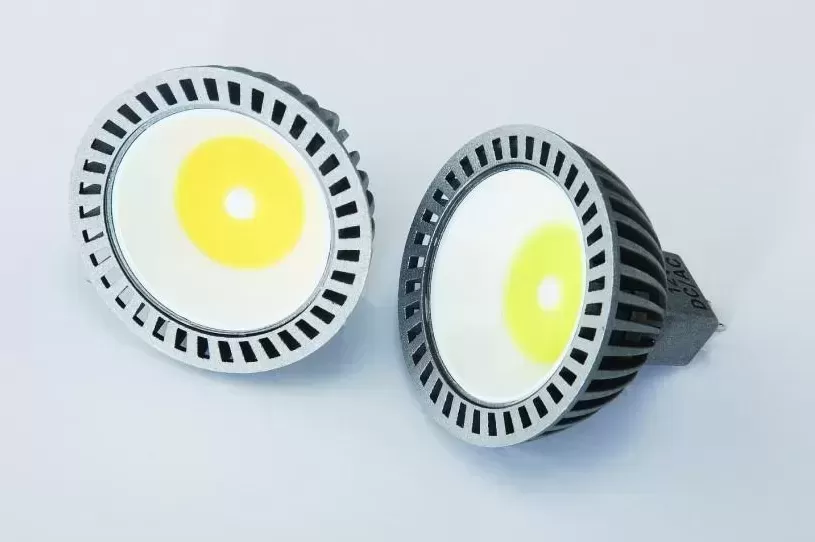
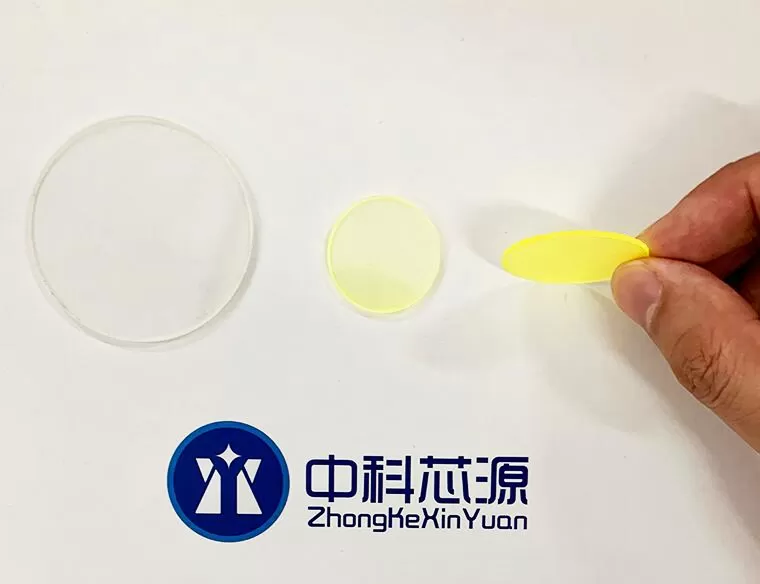
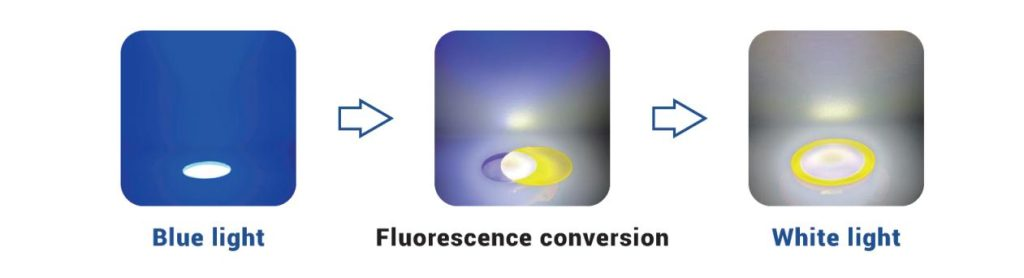
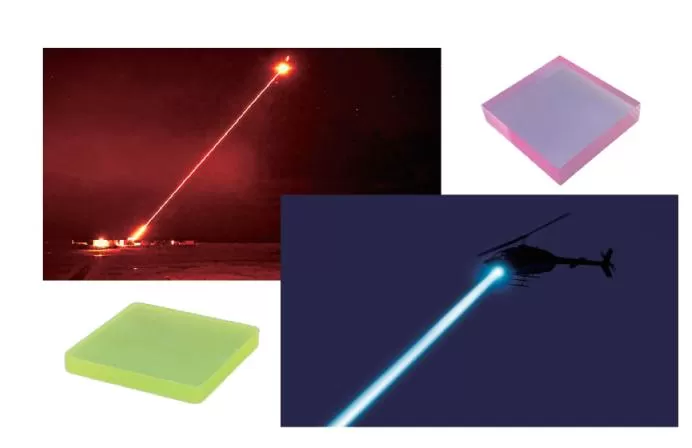
First-generation automotive laser light technology operated primarily as an auxiliary high-beam booster. Blue laser diodes focused their light onto an inorganic yellow phosphor plate, generating high-luminance white light capable of throwing light past 600 meters. However, packaging size, high manufacturing costs, and strict optical safety protocols confined these modules to high-end sports cars.
Laser Headlight 2.0 addresses these operational bottlenecks. Contemporary modules utilize miniaturized surface-mount laser packages with optimized solid-state phosphor converters, reducing module volume by more than 40 percent while lowering power draw.
More significantly, Tier-1 engineers are exploring the shared integration of laser lighting modules and LiDAR hardware. Because both systems rely on coherent light sources and precision optical paths, co-packaging them into single headlamp assemblies reduces frontal aerodynamic drag, protects sensitive optical transceivers from road debris, and eliminates the need for sensor cutouts on the front fascia.
When comparing high-output automotive lighting sources, engineers must weigh distinct trade-offs:
- Luminance: Laser modules provide optical luminance up to four times higher than high-power LEDs, allowing smaller front lens apertures.
- Thermal Concentration: Lasers produce concentrated heat loads that require specialized thermal paths, whereas LEDs spread heat over a larger surface area.
- System Cost: Standard LEDs remain the most cost-effective option for basic forward lighting, but laser packages deliver far superior throw distance per square millimeter of front-end packaging space.
3. Ground Projection & V2X Communication: Lighting as a Language
As advanced driver assistance systems (ADAS) assume greater vehicle control, exterior automotive lighting must communicate vehicle intent to vulnerable road users. Lighting functions as an external Human-Machine Interface (eHMI), conveying real-time warnings to pedestrians, cyclists, and other drivers.
By leveraging high-resolution projection modules based on Micro-LEDs or Digital Micromirror Devices (DMD), the vehicle can cast sharp optical symbols directly onto the asphalt:
- Pedestrian Guidance: Projecting dynamic zebra crosswalks onto the street surface signals to pedestrians that the vehicle sensors detect them and that the car is actively stopping.
- Turn and Reversing Paths: Projecting curved red or yellow warning lines warns nearby traffic of the vehicle's turning path or impending reversal out of blind driveways.
- Autonomous Status Indicators: Specific light signatures and standardized cyan or turquoise hues alert surrounding drivers that the vehicle is actively driving under Level 3 autonomous control.
These systems integrate directly with the central vehicle controller area network (CAN) and automotive Ethernet buses, triggering dynamic alerts instantaneously based on sensor inputs.
4. Ultra-Thin Dynamic OLED & 3D Surface Rear Lighting
Rear lighting design has advanced rapidly past simple red tail and stop lamps. Modern vehicle designs demand full-width light bars that convey functional signaling, charging progress, and brand-specific startup sequences. OLED automotive rear lights represent the current pinnacle of this design language.
Unlike standard LEDs, which are point light sources requiring secondary light guides and diffusers, Organic LEDs (OLEDs) are surface light sources. They emit completely uniform light across their entire area without secondary lenses, casting deep, consistent illumination across broad view angles.
The progression toward flexible, ultra-thin OLED panels allows Tier-1 suppliers to mount lighting layers over complex, curved sheet metal surfaces. These panels can be segmented into hundreds of tiny individual zones. In an emergency stop, the panel can instantly rearrange its illuminated segments into high-visibility hazard icons or warning text, alerting trailing motorists to road ice, traffic jams, or stopped traffic ahead.
5. Software-Defined Lighting (SDL) & Over-the-Air (OTA) Updates
The rise of Software-Defined Vehicles (SDVs) has altered how engineering teams architect smart automotive lighting systems. Historically, lighting logic was hardcoded onto dedicated microcontrollers embedded inside the lamp assembly. If a beam pattern required adjustment, suppliers had to alter physical molds or flash ECUs on the production line.
Modern architectures consolidate lighting control into central vehicle domain computers. At CAS, our product development specialists track how Tier-1 suppliers implement software-defined drivers to adjust lighting behavior throughout the vehicle lifecycle. This architecture separates physical hardware from functional lighting code, bringing several distinct advantages:
- Feature Monetization: Automakers can offer customizable welcome-light signatures, specialized off-road lighting modes, or upgraded projection packages via post-sale digital marketplaces.
- Regulatory Agility: When regional regulations evolve, manufacturers can push software updates over the air to re-map headlight distribution cutoff lines, enabling ADB features in newly approved regions without replacing physical lamp units.
- Degradation Compensation: Smart drive electronics monitor
the real-time lumen degradation and forward voltage shifts of individual LEDs
over tens of thousands of hours, automatically rebalancing drive currents to
maintain uniform output and color consistency.
6. Energy Efficiency & Thermal Management for the EV Era
EV automotive lighting efficiency sits under strict scrutiny from powertrain engineers. In a modern battery electric vehicle (BEV), every watt of unnecessary parasitic power consumption directly reduces the vehicle's overall driving range.
While an individual LED consumes minimal power, a fully equipped modern lighting suite—comprising dynamic high-beam matrix modules, front light bars, ground projectors, dynamic taillights, and sensor heating elements—can pull significant electrical power under continuous operation. Lighting engineers are driving forward efficiency improvements across several primary fronts:
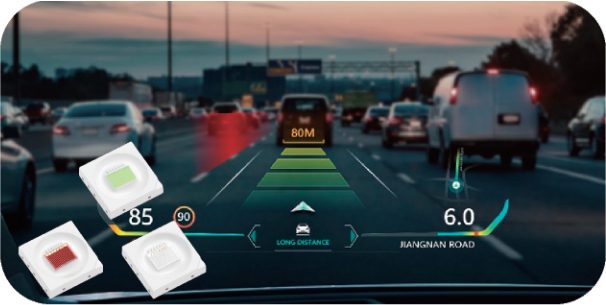
- High-Efficacy Emitter Dies: Transitioning to advanced Gallium Nitride (GaN) and Indium Gallium Aluminum Phosphide (InGaAlP) chip structures yields higher lumens per watt while decreasing forward drive current.
- Thermally Conductive Composite Materials: Replacing heavy cast-aluminum heat sinks with lightweight, thermally conductive polymer matrices cuts component mass while keeping junction temperatures below the 125°C degradation threshold.
- Direct Liquid Cooling Channels: High-performance matrix modules increasingly integrate direct fluid or heat-pipe loops tied into the vehicle's central thermal management loop, stabilizing output and prolonging LED operational life.
By dropping thermal resistance within the emitter package, manufacturers maximize optical output without draining high-voltage battery packs.
7. Human-Centric Interior Ambient Lighting: Enhancing Well-being & Safety
Interior automotive lighting has transitioned from a cosmetic novelty into a crucial functional element of cabin comfort, human-machine interaction, and passive safety. The interior of the modern vehicle functions as a connected workspace, a relaxation space, and a high-focus driving cockpit.
Intelligent interior illumination uses micro-packaged RGB and RGBW LEDs controlled via digital bus transceivers. These arrays support two main functional requirements:
- Active Safety Warning Integration: Interior light strips interface directly with ADAS blind-spot and door-open sensors. If an occupant reaches for a door latch while a bicyclist approaches from behind, the ambient line within the door trim flashes bright red to warn against opening the door.
- Circadian Rhythm and Fatigue Mitigation: Long-haul journeys induce cognitive fatigue. Intelligent interior systems automatically adjust light color temperatures throughout the trip. Cooler, blue-enriched light supports alert focus during daytime or late-night driving, while warmer tones help passengers wind down when the vehicle runs in semi-autonomous cruising modes.
By blending subtle functional safety warnings into decorative cockpit light-pipes, interior lighting reduces cognitive distraction for the operator.
Comparison Table: Automotive Lighting Technologies
Selecting the optimal optical source requires analyzing trade-offs between physical footprint, optical reach, power consumption, and bill of materials (BOM) cost. The table below illustrates how primary automotive lighting technologies compare as platforms head into 2026 production cycles.
| Technology Type | Luminous Flux / Output | Effective Range (Meters) | Power Consumption | Relative Cost Index | Primary Vehicle Application |
|---|---|---|---|---|---|
| Standard Automotive LED | Moderate (1,000–1,800 lm/module) | 150–250 m | Moderate (20–40W per headlamp) | Low (Baseline) | Mainstream low/high beams, turn signals, daytime running lights |
| Micro-LED Matrix | Very High (2,000–3,500+ lm/module) | 250–400 m | Moderate to High (Dynamic variable load) | Moderate to High | High-resolution ADB, optical ground projection, dynamic safety zoning |
| Laser Diode Phosphor | Extremely High (Point luminance) | 500–650+ m | Low for spot reach (15–25W booster) | High | Ultra-long-range auxiliary high beams, aerodynamic sports car styling |
| Flexible OLED | Low to Moderate (Areal emission) | Direct view (Signaling) | Low (Uniform surface load) | High | Rear signature lamps, animated communication panels, dynamic surface styling |
Challenges Facing the Automotive Lighting Industry by 2026
Despite rapid optical innovation, significant engineering and regulatory hurdles remain before smart lighting technologies can reach universal deployment across worldwide markets.
The primary hurdle remains regulatory divergence between major automotive jurisdictions. While Europe and Asian markets have embraced high-resolution Adaptive Driving Beams under UNECE regulations for years, the United States market follows FMVSS 108. The specific test procedures, photodiode reaction-time limits, and cutoff targets mandated by the National Highway Traffic Safety Administration (NHTSA) make it difficult for OEMs to deploy identical optical assemblies globally. Engineering teams must frequently design split configurations, adding BOM complexity and tooling expense.
Thermal management in tight packaging environments presents a continuous mechanical engineering challenge. As front fascias become smoother to optimize aerodynamic drag coefficients for EVs, the volume available inside the front corners of the vehicle shrinks. Packeting high-power LED drivers, laser diodes, and auxiliary sensor heaters within tight spaces demands advanced composite materials, heat pipe integration, and detailed CFD thermal modeling.
Conclusion & Strategic Takeaways for Automakers
By 2026, automotive lighting will sit firmly at the intersection of optoelectronics, active safety, aesthetic styling, and vehicle software. The transition from simple forward-facing headlights to dynamic, high-resolution communication systems presents an opportunity for forward-thinking automakers and Tier-1 suppliers to differentiate their vehicle platforms.
Success requires balancing high luminous efficiency with robust thermal durability, all while designing flexible software architectures capable of evolving through over-the-air updates. Whether your objective is engineering pixel-dense Micro-LED front lamps, thin OLED dynamic rear indicators, or energy-optimized EV modules, selecting the right manufacturing and technical partner is essential.
CAS provides advanced engineering, optical component design, and manufacturing solutions tailored to the exacting demands of global automotive programs. Contact CAS today to consult with our technical specialists and request a quotation for your upcoming automotive lighting development projects.
Frequently Asked Questions (FAQ)
Q1: What are the main benefits of Adaptive Driving Beam (ADB) systems compared to conventional auto-high beams?
A1: Conventional auto-high beams rely on simple on-off switching: when their forward sensors detect a vehicle ahead, the system shuts down the high beam entirely and shifts to low beam. Adaptive Driving Beam (ADB) systems maintain maximum forward illumination continuously. Using dynamic matrix arrays or Micro-LEDs, ADB selectively dims or blocks only the specific light rays that would strike oncoming drivers or leading vehicles, illuminating the remainder of the road at full high-beam brightness.
Q2: Will Micro-LED headlights completely replace laser headlights by 2026?
A2: Micro-LED matrix systems will dominate high-resolution road projection and adaptive anti-glare functions because they provide thousands of controllable pixels. However, laser light technology still holds the advantage in pure point-source luminance and extreme long-range throw distance beyond 500 meters. Rather than completely replacing laser systems, Micro-LEDs will handle medium-range variable patterns, while compact laser modules will serve as specialized, long-range auxiliary boosters or co-packaged sensors.
Q3: How does automotive lighting efficiency affect the real-world range of electric vehicles?
A3: In standard temperate highway driving, lighting draws only a modest portion of total traction pack energy. However, during continuous cold-weather or nighttime driving, running auxiliary lighting, interior lamps, and active thermal de-icing elements over prolonged periods produces a measurable parasitic load. Improving LED efficiency and optical conversion efficiency directly preserves battery watt-hours, helping vehicles maximize highway range.
Q4: Why are OLEDs preferred for rear lighting applications over standard surface-mounted LEDs?
A4: Standard LEDs emit concentrated point light that requires optical lenses, light-pipes, and diffusion screens to create an even surface appearance, adding packaging thickness and weight. In contrast, OLEDs are natural surface emitters that generate perfectly uniform, non-glaring light with near-infinite contrast ratios without extra diffusers. Their extremely thin profile and potential for flexible substrates enable distinctive 3D contoured body-line designs.
Q5: Can existing vehicle platforms upgrade to Software-Defined Lighting via over-the-air (OTA) updates?
A5: A vehicle can only update its lighting behavior over the air if its physical hardware supports it. The vehicle requires high-resolution addressable lighting modules, such as Micro-LED or digital matrix chips, paired with central domain controllers connected via high-speed automotive Ethernet or CAN-FD buses. Vehicles built with legacy, hardwired analog ECUs lack the hardware layer needed to reconfigure beam geometry or add dynamic projection sequences post-production.