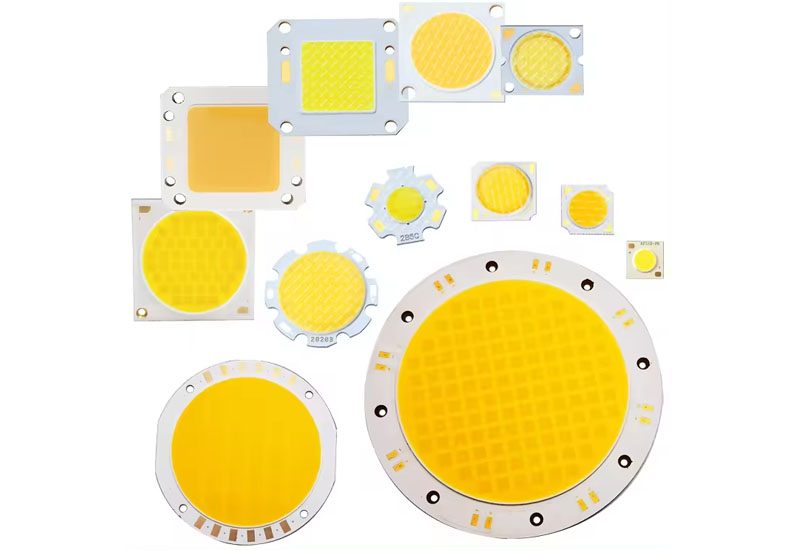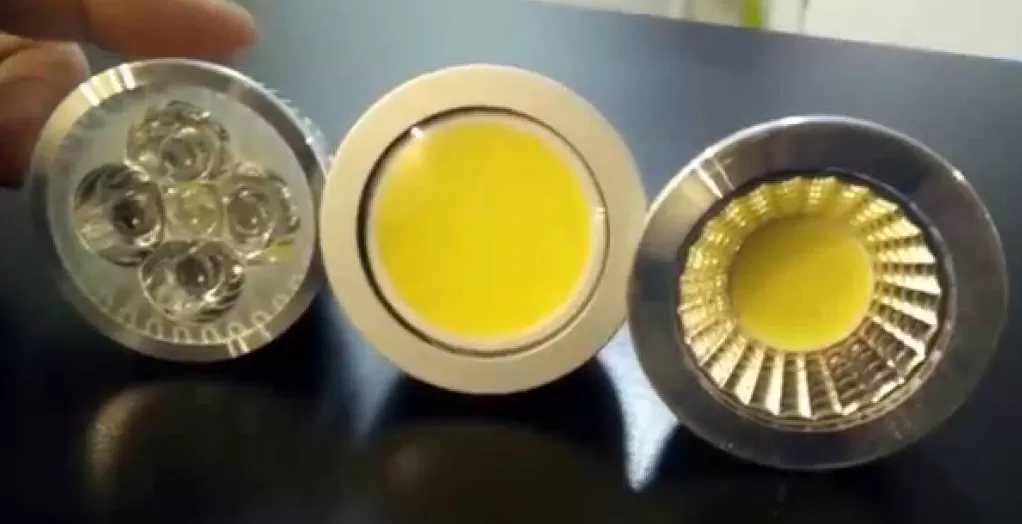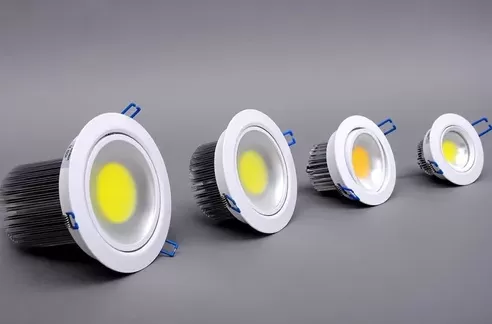
Solid-state lighting has evolved rapidly over the past decade. High-power LED systems now regularly operate at 600W and even reach kilowatt-level outputs. However, pushing LED density to these extreme thresholds exposes a fundamental physics problem: severe thermal stress.
Traditional LED packaging relies heavily on Phosphor-in-Silicone (PiS) technology. In low-to-medium power fixtures, silicone works adequately. But when drive currents surge, junction temperatures spike beyond standard operating limits. This intense localized heat severely damages organic silicone polymers.
High thermal loads trigger rapid mechanical and chemical breakdown inside traditional LED packages. Engineers at CAS (CAS-CERAMIC OPTOELECTRONICS TECHNOLOGY CO., Ltd) have documented how silicone encapsulation suffers when exposed to continuous heat and blue light bombardment:
Silicone Carbonization and Yellowing: High temperatures cook the organic polymer chains, causing the clear encapsulant to turn brown or yellow.
Severe Lumen Depreciation: Discolored silicone absorbs emitted light instead of transmitting it, causing sudden drops in total lumen output.
Color Temperature Drift: Phosphor settling and silicone degradation alter the spectral output, leading to noticeable shift in Correlated Color Temperature (CCT).
Package Cracking and Moisture Ingress: Mismatched coefficients of thermal expansion (CTE) between the silicon chip and silicone mold create micro-cracks, inviting environmental contaminants.
When high-power lighting fixtures fail, thermal degradation is almost always the root cause. To build truly reliable high-bay, outdoor, and industrial luminaires, lighting manufacturers must abandon organic encapsulants entirely. The industry requires an all-in-inorganic solution that survives extreme thermal stress: the inorganic yellow ceramic plate.
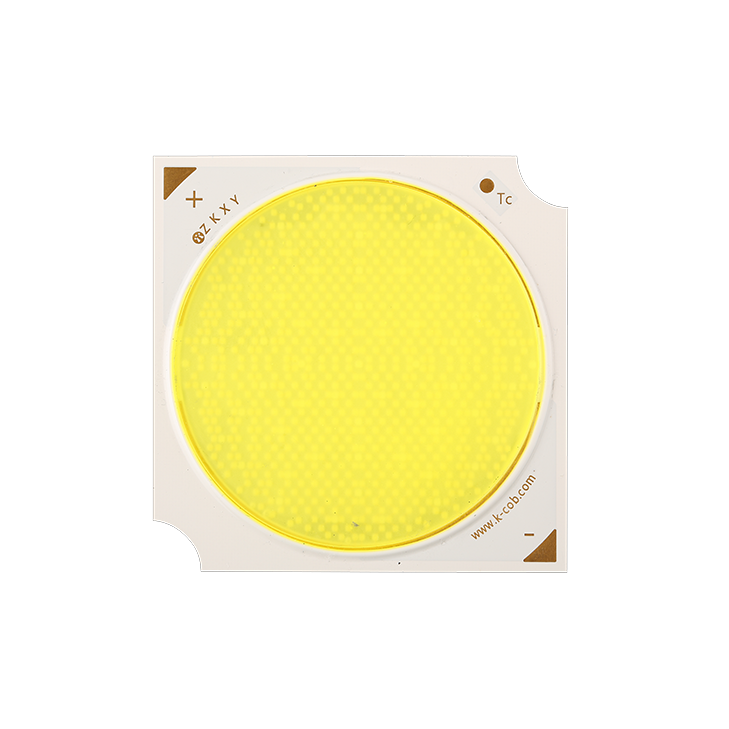
How Yellow Ceramic Plates Overcome Thermal Degradation
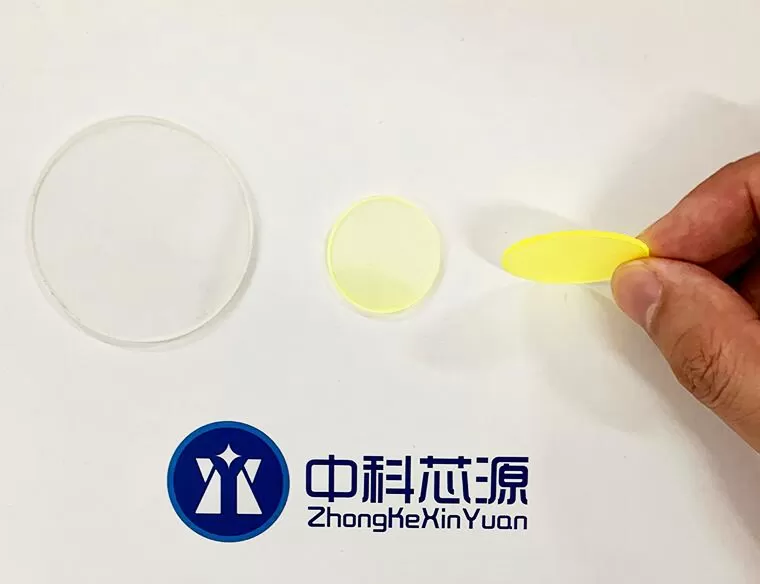
The primary reason conventional LED packaging fails under high wattage is the presence of organic materials. A phosphor ceramic plate eliminates this vulnerability by replacing silicone with a dense, solid ceramic structure. The resulting yellow ceramic plate functions as both the wavelength conversion layer and a high-efficiency thermal pathway.
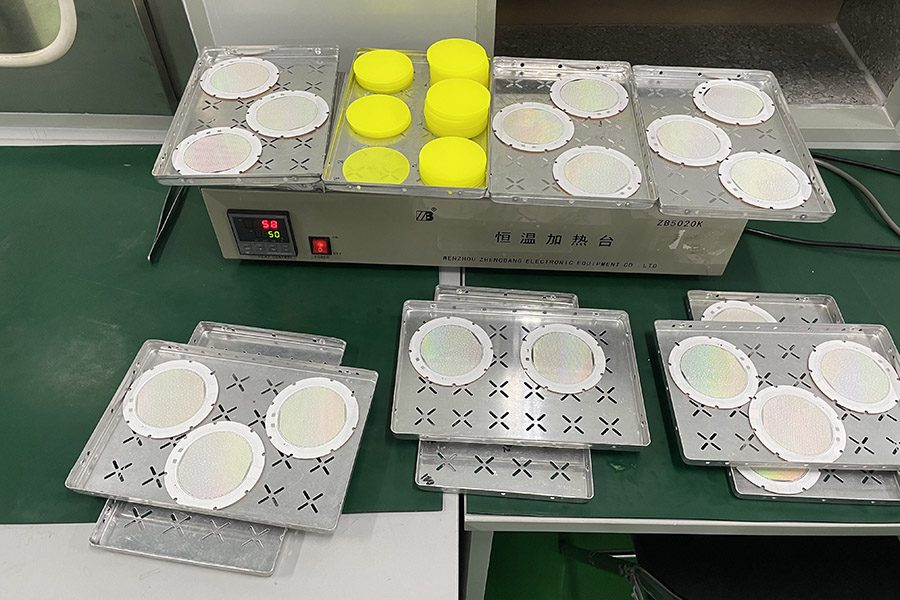
Manufactured by co-sintering YAG (Yttrium Aluminum Garnet) phosphor powder with an inorganic ceramic matrix at temperatures exceeding 1,600°C, a yellow ceramic plate contains zero organic compounds. It cannot burn, carbonize, or turn yellow under high operational temperatures.
1. Extreme High-Temperature Resistance
Organic silicone begins degrading at temperatures above 150°C. In contrast, an inorganic yellow ceramic plate maintains structural and optical stability at operational temperatures exceeding 300°C. Even under intense blue laser or concentrated LED excitation, light conversion efficiency remains steady without thermal quenching.
2. Superior Thermal Conductivity
Standard silicone exhibits dismal thermal conductivity, typically around 0.2 to 0.3 W/m·K. Heat becomes trapped directly on the LED die, accelerating diode failure. An inorganic fluorescent ceramic plate achieves thermal conductivity rates up to 10–20 W/m·K—nearly 50 to 100 times higher than silicone. Heat dissipates rapidly away from the active junction, keeping the entire optical assembly cooler.
3. High Mechanical Hardness and Thermal Shock Stability
Industrial LED fixtures frequently experience physical vibration, rapid power cycling, and ambient temperature swings. A solid yellow ceramic plate features high mechanical hardness and exceptional thermal shock resistance. It does not swell, shrink, or crack when subjected to instantaneous thermal changes.
4. Exceptional Chemical and Corrosion Resistance
Maritime ports, chemical processing plants, and outdoor sports arenas expose lighting equipment to corrosive environments containing salt spray, sulfur, and high moisture. Organic packaging absorbs corrosive gases, leading to silver reflector tarnish and internal wire bond corrosion. An inorganic yellow ceramic plate forms an impermeable barrier against airborne chemicals and moisture, ensuring long-term operational integrity.
5. High Transparency and Optical Uniformity
Uniform light distribution is critical for precise optical control. Advanced manufacturing allows each yellow ceramic plate to achieve precise thickness control and consistent internal phosphor scattering. Light passes through efficiently with minimal internal reflection losses, yielding higher lumen-per-watt efficiency and smooth beam patterns.
How CAS Reinvents High-Power Standards with K-COB Technology
Pioneering advanced optoelectronic materials, CAS (CAS-CERAMIC OPTOELECTRONICS TECHNOLOGY CO., Ltd) recognized the limitations of silicone early on. Founded in 2013, CAS focused on solving LED thermal degradation through advanced ceramic synthesis and specialized packaging designs.
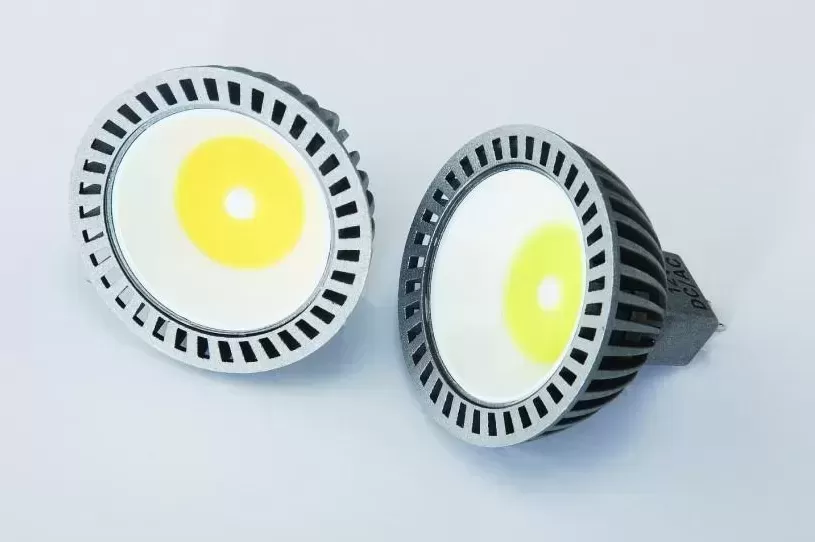
Central to this innovation is the proprietary CAS K-COB (Chip-on-Phosphor Ceramic COB) technology. Traditional COB (Chip-on-Board) architecture glues LED chips onto a metal substrate and covers them with a dome of phosphor-mixed silicone. CAS completely redesigned this architecture from the ground up.
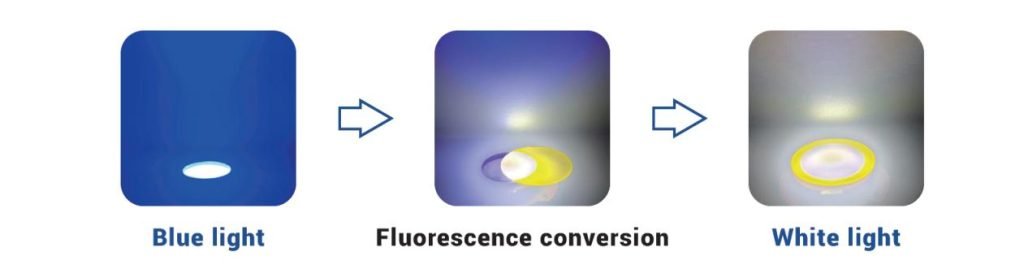
In a K-COB module, the high-density flip-chip array attaches directly to an engineered yellow ceramic plate. This inorganic ceramic component serves dual roles: converting blue light into stable white light and conducting heat laterally across the entire module surface. The heat is then transferred directly through an aluminum or copper substrate without traversing heat-trapping organic layers.
Key advantages of the CAS K-COB framework include:
Direct Thermal Paths: Eliminates the organic thermal bottleneck, lowering overall junction-to-heatsink thermal resistance.
Ultra-High Power Density: Enables small light-emitting surfaces (LES) to emit massive lumen packages without heat buildup.
Unmatched Reliability: Achieves zero lumen degradation caused by encapsulant yellowing over tens of thousands of operating hours.
Today, CAS stands as the world's sole mass producer capable of delivering true K-COB high-power lighting modules at scale. Backed by extensive patent portfolios, CAS supplies high-power lighting manufacturers with robust alternatives to legacy COB products.
High-Power Applications: From 600W to Kilowatt-Level Solutions
As lighting design trends demand smaller fixture profiles and higher lumen outputs, conventional encapsulation reaches its physical limit. Integrating a yellow ceramic plate into high-power LED COB designs opens up massive capabilities for demanding commercial and industrial environments.
600W High-Power COB Solutions
A standard 600W LED light source built with conventional silicone packaging requires an excessively large surface area to dissipate heat. Even then, lumen maintenance curves drop significantly after a few thousand hours of continuous use.
By implementing a yellow ceramic plate within a 600W COB package, thermal engineers achieve high lumen output from a remarkably compact emitting surface. These 600W modules provide crisp optical control, allowing narrow beam angles that throw light across vast distances without light pollution or scattered spill light.
Kilowatt-Level K-COB Modules
Replacing legacy 1000W to 2000W High-Pressure Sodium (HPS) or Metal Halide (MH) lamps has historically proven difficult for solid-state lighting. Heat density at the kilowatt level incinerates standard silicone encapsulation within weeks.
Kilowatt-level LED modules powered by CAS K-COB technology easily handle these extreme power densities. Utilizing robust phosphor ceramic plates, these modules comfortably operate at power levels exceeding 1000W on a single, continuous light source module. This breakthrough allows industrial designers to replace energy-intensive HID lamps on a 1-to-1 basis while cutting energy consumption in half.
Key Target Application Fields
The rugged nature of the yellow ceramic plate makes it the optimal choice for environments where fixture failure incurs high maintenance costs or safety hazards:
Airport Terminals and Port Terminals: High-mast towers require maximum throw and continuous 24/7 reliability in severe, salty outdoor environments.
Sports Stadiums and Arenas: High-power floodlights require flicker-free, non-drifting color consistency for high-definition television broadcasting.
Explosion-Proof Industrial Lighting: Hazardous chemical plants require sealed, durable luminaires that withstand ambient heat and aggressive chemical fumes.
Horticultural Top-Lighting: High-intensity growth lights run for 18 hours daily under hot, humid greenhouse conditions that accelerate standard LED degradation.
Mining and Heavy Industry: Heavy machinery lights require shock resistance and complete immunity to dust and moisture ingress.
Conclusion & Next Steps
Thermal degradation is no longer an inevitable cost of doing business in high-power LED lighting. Organic silicone encapsulation created an artificial ceiling for fixture wattage, optics, and lifespan. Transitioning to an inorganic yellow ceramic plate eliminates silicone yellowing, drops thermal resistance, and restores long-term lumen maintenance.
As a global leader in inorganic ceramic packaging materials, CAS continues to push the boundaries of solid-state lighting. The patented CAS K-COB architecture provides thermal engineers and lighting manufacturers with a proven, mass-produced platform for 600W and kilowatt-level lighting development.
Are thermal degradation and lumen drop limiting your high-power LED fixture designs? Stop letting heat compromise your product reputation. Contact the optical engineering team at CAS today to request technical whitepapers, request customized yellow ceramic plate specifications, or order K-COB test samples for your next project inquiry.
Frequently Asked Questions (FAQ)
Q1: What is a yellow ceramic plate in LED
packaging?
A1: A yellow ceramic
plate is an inorganic luminescent component made by co-sintering YAG
phosphor with a ceramic matrix at high temperatures. It replaces traditional
phosphor-mixed silicone in high-power LEDs, acting as both a light-converting
phosphor medium and a superior heat dissipation pathway.
Q2: How does a phosphor ceramic plate differ from traditional
silicone encapsulation?
A2: Traditional silicone
encapsulation relies on organic polymers that decompose, crack, and turn yellow
under high temperatures (above 150°C). A phosphor ceramic plate is 100%
inorganic, withstands temperatures over 300°C without burning, and offers up to
100 times higher thermal conductivity than silicone.
Q3: Can CAS yellow ceramic plates withstand chemical and maritime
environments?
A3: Yes. Because the ceramic
structure is dense, non-porous, and completely inorganic, it is immune to
chemical corrosion, sulfur gas penetration, and salt spray oxidation. This makes
it ideal for ports, marine vessels, and industrial chemical facilities.
Q4: What makes CAS K-COB technology suitable for kilowatt-level
lighting?
A4: CAS K-COB technology mounts LED dies
directly against an inorganic yellow ceramic plate on a
high-conductivity substrate. This direct thermal architecture lowers thermal
resistance to unprecedented levels, enabling single light sources to operate
stably at 600W to 1000W+ without overheating.
Q5: How can engineers request samples or customized optical
configurations from CAS?
A5: Optical and thermal
engineers can submit an inquiry directly through the CAS official website or
contact their technical sales representatives. CAS provides custom ceramic
shaping, spectral tuning, and integrated K-COB test modules tailored to specific
OEM/ODM design requirements.