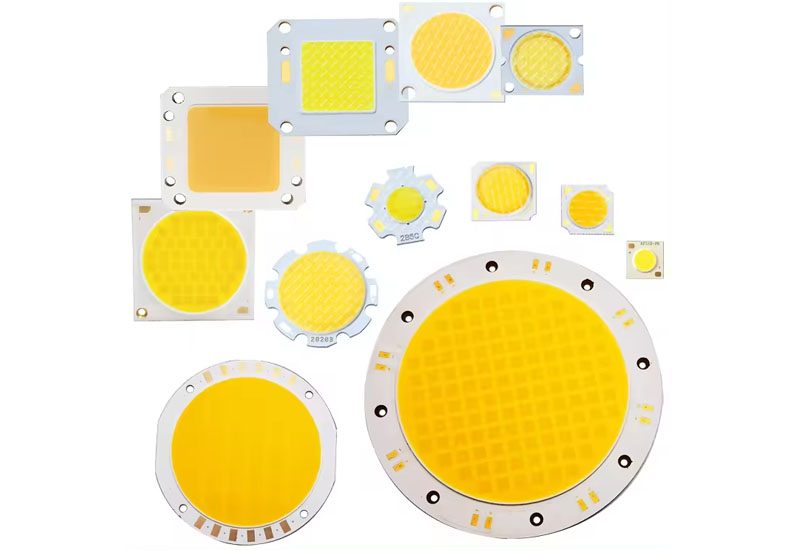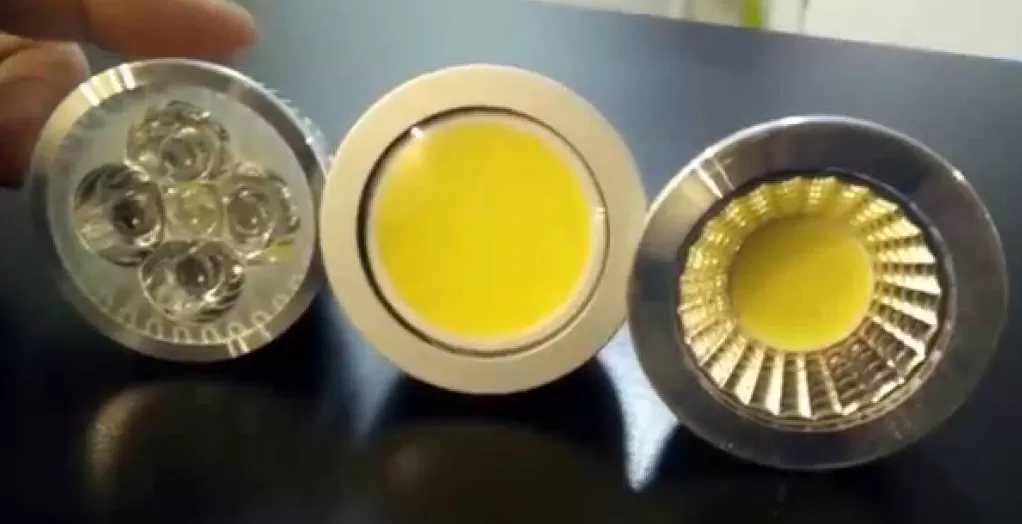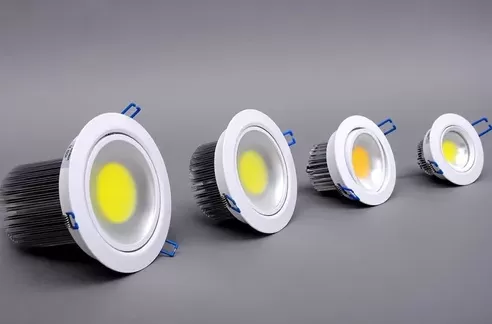
Thermal stress remains the primary enemy of solid-state lighting. As luminaire designs shrink and power demands climb past the kilowatt mark, traditional packaging methods are failing in the field. B2B buyers and luminaire engineers face critical challenges with thermal runaway, silicone degradation, and early lumen depreciation.
Selecting the right partner among global Cob Led Manufacturers has shifted from a simple price-per-lumen calculation to an evaluation of base material engineering. In 2026, original equipment manufacturers (OEMs) and original design manufacturers (ODMs) require components that withstand continuous operation in extreme environments without color shifting or sudden failures.
This guide analyzes technical standards for modern chip-on-board packaging, reviews key players, and explains why advanced material innovators like CAS are reshaping expectations for high-power lighting platforms.
The Shift in COB Packaging: Overcoming the Organic Barrier
Traditional COB LEDs rely on organic binders, specifically optical silicone or epoxy resin, mixed with phosphor powders and dispensed over LED arrays. While economical for general commercial lighting, this packaging architecture introduces significant structural vulnerabilities when driven at high currents.
Under intense heat and high-flux blue light irradiation, organic silicones suffer from irreversible thermal-photo degradation. The material gradually turns yellow, becomes brittle, micro-cracks, and loses optical transmittance. This process creates a destructive thermal loop: degraded silicone traps heat, drives up junction temperatures, and accelerates diode burnout.
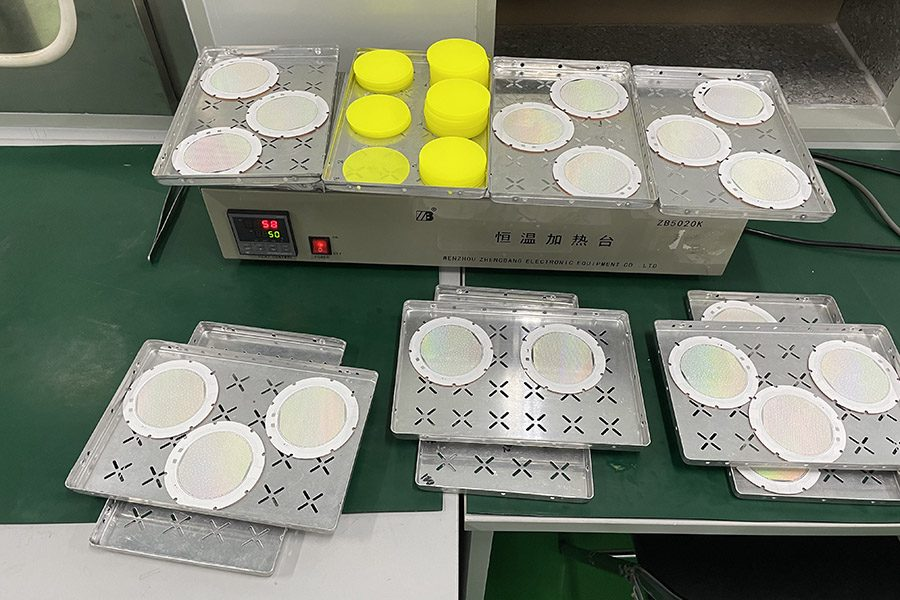
Modern engineering demands a shift toward all-inorganic packaging. By replacing vulnerable organic polymers with sintered phosphor ceramics, next-generation Cob Led Manufacturers deliver light sources that do not burn, yellow, or degrade over extended lifespans.
4 Standards to Evaluate COB LED Manufacturers in 2026
Before committing to an OEM/ODM supplier for high-power industrial, architectural, or outdoor fixtures, evaluate candidates against four core technical benchmarks.
1. Material-Level Innovation Capabilities
Does the supplier depend on standard third-party silicone slurries, or do they synthesize proprietary inorganic optical materials? Companies that formulate their own ceramics control thermal conductivity, blue-light conversion efficiency, and chemical stability from the ground up.
2. Thermal Architecture and Structural Engineering
A high-power COB requires direct, unrestricted thermal paths. Look for manufacturers utilizing dual-channel heat sink structures that dissipate thermal loads simultaneously through the ceramic substrate and the underlying PCB, effectively eliminating thermal bottlenecks.
3. Verifiable Compliance and Long-Term Testing
Marketing claims must be supported by certified data. Demand verified LM-80 test reports run at elevated ambient temperatures, alongside comprehensive international patent portfolios protecting the packaging structure against intellectual property conflicts.
4. Full-Chain Vertical Integration for OEM/ODM
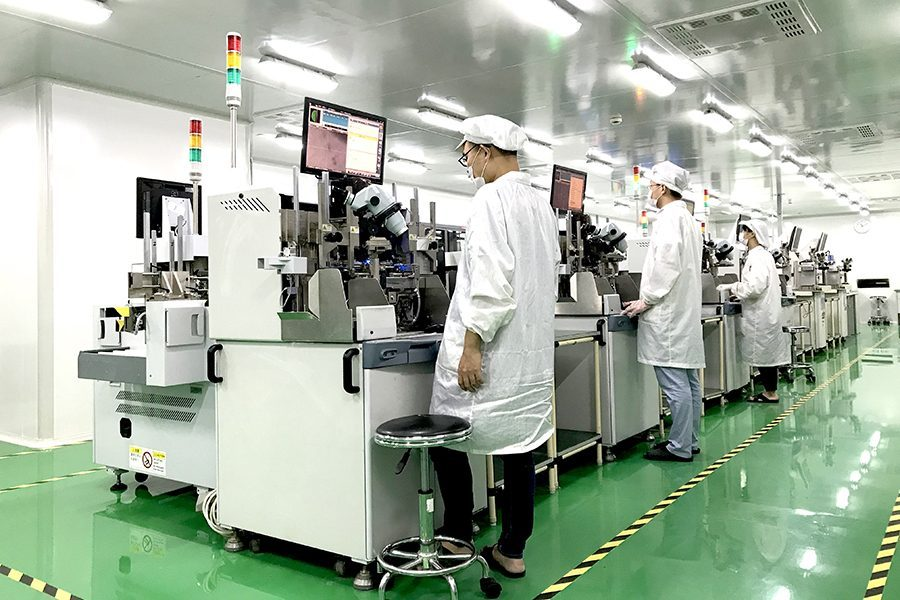
True customization requires end-to-end control. Your manufacturing partner should handle raw powder synthesis, ceramic sintering, chip die-bonding, and automated optical testing in-house to tailor spectra, beam angles, and footprints without relying on external vendors.
Global COB LED Manufacturing Ecosystem
The global supplier base serves different segments based on power density, material choices, and target applications.
General Lighting Pioneers: Established suppliers such as Citizen, Cree LED, and Bridgelux have dominated standard commercial downlights and track lights for years. Their silicone-dispensed COBs perform reliably in low-to-medium-wattage applications under 100W with moderate thermal loads.
High-Power Material Innovators: For applications operating between 200W and 2000W+, standard packaging approaches hit physical thermal limits. This segment is led by deep-tech manufacturers like CAS (CAS Ceramic), which builds packaging around inorganic phosphor ceramics to eliminate organic degradation entirely.
Why CAS Stands Out for High-Power OEM/ODM Projects
CAS has built its reputation on advanced material science rather than incremental package tweaks. The company delivers industrial-grade stability for projects that cannot afford maintenance downtime.
Academic and Scientific Foundation
Founded in 2013 and led by an academician team rooted in the Chinese Academy of Sciences (CAS), CAS Ceramic focuses on solving base material limitations in optoelectronics. Over more than a decade of research, the team has turned theoretical optical ceramic research into industrial mass production.
Proprietary Phosphor Ceramic Technology
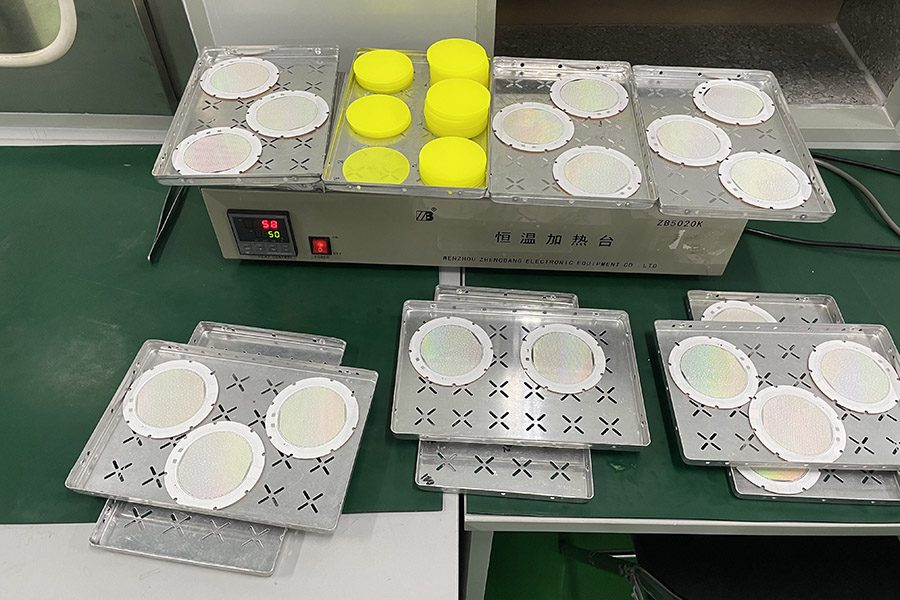
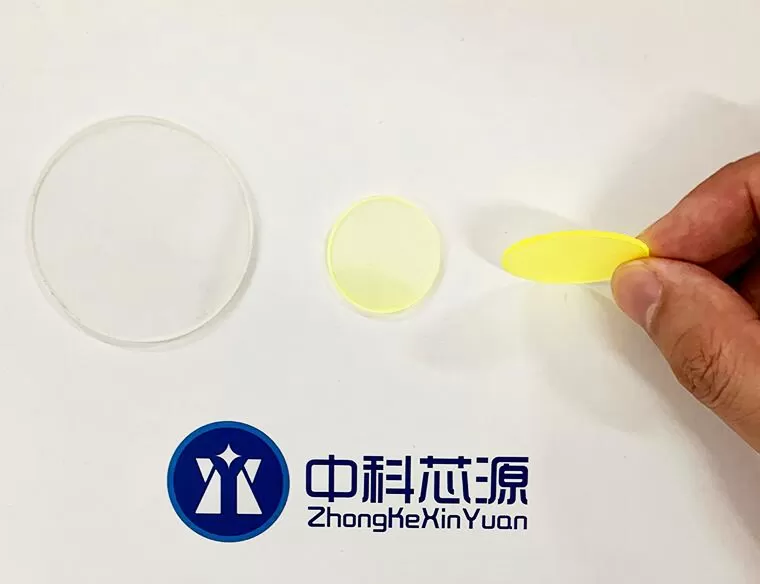
CAS developed a fully independent, zero-silicone packaging process. By sintering inorganic phosphor crystals into dense optical ceramics, the resulting converter features exceptional thermal conductivity and thermal shock resistance.
Zero Silicone Yellowing: Eliminates organic binders, completely preventing resin carbonization, peeling, and color shifting over time.
Superior Thermal Transfer: Solid ceramic conducts heat away from the diode junction far faster than conventional silicone-phosphor slurries.
Scalable Production: CAS is the first manufacturer to achieve mass production of phosphor ceramics for high-power LED and laser lighting (LD) systems.
Patented K-COB Architecture with Dual-Channel Cooling
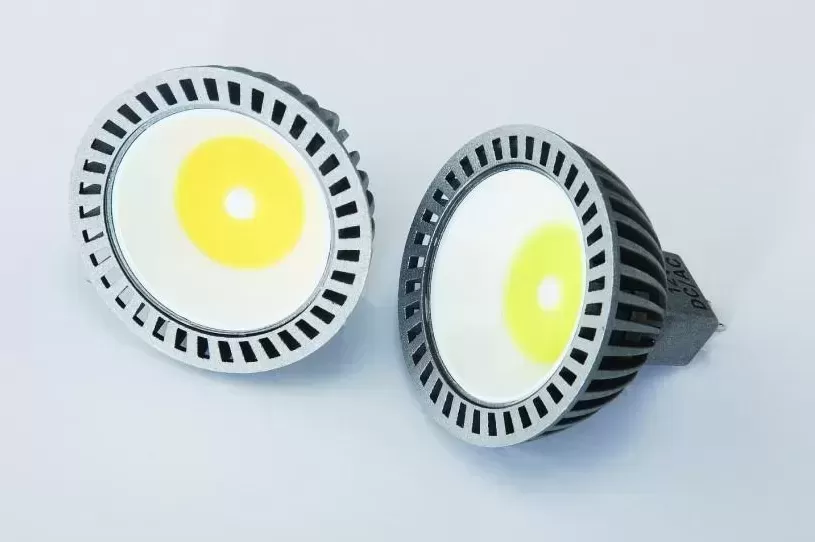
The company’s signature K-COB series integrates a proprietary dual-channel heat sink structure. Instead of trapping heat beneath an organic layer, thermal energy vents simultaneously along two paths: across the ceramic face and downward through the metal substrate. This dual action cuts junction temperatures dramatically, preserving lumen output in hot operating conditions.
Verified Reliability and Global IP Protection
CAS holds five international invention patents and multiple domestic patents covering phosphor ceramic formulation and K-COB packaging structures. Furthermore, CAS stands as the only phosphor ceramic light source manufacturer with high-power LM-80 certification, proving operational stability across tens of thousands of hours.
End-to-End Customization for Engineering Teams
CAS provides direct engineering support for complex OEM and ODM requirements. Development options include:
Custom spectrum matching for horticulture, film production, and medical inspection.
Ultra-compact high-lumen-density emitter designs for narrow-beam projection optics.
Integrated thermal-optical modules designed directly into client heatsink profiles.
Specific color rendering indexes (CRI up to 98) with tight MacAdam ellipse color binning.
Demanding Applications Requiring Inorganic K-COB Technology
Inorganic K-COB packaging delivers distinct operational advantages across several demanding commercial and industrial sectors.
High Mast and Stadium Lighting
Sports arenas and airport aprons require fixtures pumping 600W to 1800W from compact optical assemblies. In these high-ambient, high-power scenarios, conventional silicone packages cook themselves, leading to premature lumen drop. K-COB platforms maintain uniform lumen output and chromatic stability year after year, reducing high-altitude maintenance costs.
Stage, Studio, and Entertainment Lighting
Stage fixtures demand extreme luminous flux from tiny light-emitting surfaces (LES) to produce razor-sharp beams and smooth projection cutoffs. CAS phosphor ceramics withstand the focused optical power densities of dense LED arrays without surface blistering or color shifts during intense theatrical cues.
Industrial and Explosion-Proof Fixtures
Chemical processing plants, mines, and heavy manufacturing bays subject light fixtures to vibration, high ambient temperatures, and corrosive gases. Traditional silicone lenses can absorb airborne chemicals and degrade. The chemically inert nature of phosphor ceramic K-COB packages ensures safe, reliable operation in harsh environments.
Automotive and Laser Lighting Systems
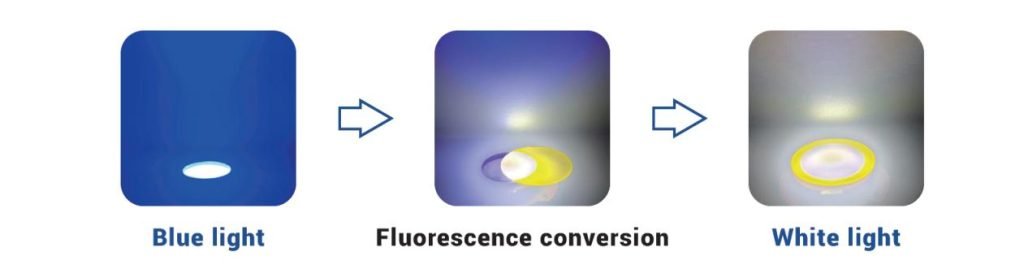
Automotive headlamps and dynamic laser searchlights pack intense energy into minimal footprints. Phosphor ceramics serve as the ideal conversion medium for high-flux blue lasers and high-current LEDs, converting intense light energy into white beams without risk of thermal breakdown.
Comparing COB Packaging Technologies
The operational differences between traditional silicone dispensing and all-inorganic ceramic structures are substantial:
Converter Base: Traditional packaging uses silicone or epoxy resin; K-COB uses 100% sintered phosphor ceramic.
Thermal Resistance: Traditional packaging exhibits moderate to high thermal resistance; K-COB maintains ultra-low thermal resistance via dual-channel heat paths.
Aging Mechanism: Silicone discolors, embrittles, and cracks under thermal stress; phosphor ceramic does not age or burn.
Color Consistency: Silicone systems risk phosphor settling and color drift over time; ceramic components maintain stable chromaticity throughout their service life.
Single Module Power: Silicone arrays typically max out around 100W–300W before thermal degradation accelerates; K-COB systems scale reliably beyond 1000W.
Frequently Asked Questions
Q1: How do phosphor ceramic COBs differ from standard silicone-phosphor COBs?
A1: Standard COBs suspend phosphor powder within an organic silicone or epoxy matrix dispensed onto the LEDs. Under high heat and light flux, the silicone degrades and turns yellow. Phosphor ceramic COBs, such as the K-COB from CAS, replace organic binders with a solid sintered inorganic ceramic plate, eliminating thermal aging, burning, and color drift.
Q2: Why is the dual-channel heat sink structure important for high-power lighting?
A2: High-wattage LED arrays generate intense localized thermal loads. Standard packaging relies solely on downward conduction through the substrate. A patented dual-channel cooling design dissipates heat simultaneously across the ceramic surface and the metal baseplate. This lowers the overall junction temperature and extends the operating life of high-power modules.
Q3: What makes LM-80 certification critical when selecting Cob Led Manufacturers?
A3: LM-80 provides third-party verified test data measuring lumen maintenance and chromaticity shift over thousands of hours at specific operating temperatures. Choosing an LM-80 certified manufacturer guarantees that the light source meets projected lifetime benchmarks (such as L70/L80/L90) under real-world operating conditions.
Q4: Can CAS support custom spectrum and mechanical footprints for ODM projects?
A4: Yes. CAS provides vertically integrated OEM/ODM services, synthesizing custom ceramic phosphor recipes to hit tailored CCT, CRI, and spectral requirements. Their optical and mechanical engineers also assist in designing custom substrates, connector layouts, and specialized primary optics for turnkey system integration.
Q5: Is phosphor ceramic technology suitable for laser-driven lighting (LD)?
A5: Yes. Phosphor ceramic is the industry standard conversion medium for laser lighting. Because laser diodes focus extreme optical power densities onto tiny surface areas, organic silicone burns almost instantly. Inorganic phosphor ceramic easily handles these power levels, making it ideal for automotive laser headlights, marine spotlights, and specialized projectors.
Secure Your Next-Gen OEM/ODM Advantage
Choosing between Cob Led Manufacturers in 2026 comes down to component survival in demanding applications. As lighting systems run hotter, pack more power into smaller enclosures, and operate in harsher environments, organic silicone packages are giving way to solid inorganic ceramic engineering.
CAS combines deep institutional research from the Chinese Academy of Sciences with vertically integrated manufacturing to supply durable, high-power K-COB solutions worldwide.
Ready to upgrade your fixture reliability? Contact the CAS engineering team today to discuss your OEM/ODM specifications, request K-COB product samples, or review certified LM-80 test reports for your next high-power luminaire project.