The transition from legacy halogen and high-intensity discharge (HID) light sources to solid-state illumination has restructured vehicle exterior design and electrical engineering. Contemporary automotive lighting demands extreme luminous efficacy, precise spatial light distribution, and long-term durability under harsh operational environments. Modern front-lighting, signal illumination, and adaptive beam modules must balance thermal constraints, mechanical integration, and strict regulatory standards set by global governing bodies.
Designing modern light engines involves complex interactions between semiconductor performance, optical beam shaping, micro-electronics, and thermal transport. Engineers must optimize forward-lighting modules to deliver maximum output while preventing thermal degradation of the optical elements and electronic drivers. This article analyzes the primary engineering challenges, structural architectures, and component-level requirements of advanced vehicle lighting systems.

Optical Engineering Principles in Modern Headlamp Systems
Automotive optics serve to collect flux emitted by solid-state sources and re-project it onto the roadway in strict accordance with defined beam patterns. Achieving required photometrics without blinding oncoming traffic requires advanced primary and secondary optical structures.
Reflector vs. Refractor Systems
Free-form reflector systems rely on complex, non-spherical mirrored surfaces to shape the beam pattern directly from the LED source. While cost-effective, free-form reflectors offer lower collection efficiency and larger volumetric footprints. Conversely, projection systems utilizing total internal reflection (TIR) lenses and collimators offer superior control over light distribution. TIR lenses capture edge-emitted photons that would otherwise escape reflector geometry, redirecting them into the parallel primary beam.
Micro-Optics and Light Projection
To reduce overall headlight housing volume, optical engineers utilize micro-optic arrays and thin-film lenses. Micro-optic arrays feature hundreds of tiny lenses molded into a single optical sheet, enabling precise cut-off lines for low-beam patterns. These structures minimize optical losses caused by absorption and internal reflection, ensuring maximum lux output per watt of input energy.
Polycarbonate (PC) and PMMA Selection: High-transmittance optical polycarbonates are specified for primary lenses due to impact resistance, whereas polymethyl methacrylate (PMMA) is favored for secondary optics due to UV stability and low birefringence.
Cut-Off Line Precision: Asymmetrical beam cut-offs prevent glare in opposing traffic lanes while illuminating shoulder regions, demanding mechanical positioning tolerances below 50 micrometers during assembly.
Chromatic Aberration Control: Achromatic lens doublets or diffractive optical elements minimize color fringing along the gradient boundaries of the beam pattern.
Advanced Thermal Substrates and Heat Dissipation
Solid-state light engines convert approximately 20% to 30% of electrical power into visible light, while the remaining 70% to 80% is converted into thermal energy. High junction temperatures ($T_j$) reduce luminous flux output, shift dominant wavelengths, and accelerate device degradation. Maintaining lower operating temperatures is a core engineering requirement for reliable automotive lighting performance.
Through proprietary thermal substrates developed by CAS, light engine modules achieve minimal thermal resistance across high-power LED interfaces. Direct-bonded copper (DBC) and aluminum nitride (AlN) substrates provide superior thermal conductivity compared to standard FR4 or aluminum metal-core printed circuit boards (MCPCBs).
Passive vs. Active Thermal Management
Passive cooling systems utilize extruded or die-cast aluminum heat sinks designed with vertical fin geometries to encourage natural convection. Heat pipes containing phase-change fluids are integrated into high-flux headlamp modules to transport heat away from space-constrained optical centers toward larger radiator fins located at the rear of the lamp assembly.
When passive cooling is insufficient—such as in high-density LED matrix modules generating upwards of 50 watts in sealed enclosures—active cooling becomes necessary. Brushless DC fans with IP67 ingress ratings provide forced air movement across heat sink surfaces. Thermal management systems incorporate real-time thermistor monitoring (NTC/PTC sensors) connected to driver ICs to automatically dim output if temperatures exceed safe thresholds.
Adaptive Driving Beam (ADB) and High-Pixel Matrix Architectures
The progression toward dynamic lighting systems has accelerated the adoption of Adaptive Driving Beam (ADB) technology. Instead of switching between static low and high beams, ADB systems continuously alter the high-beam light pattern to mask out surrounding vehicles while keeping the rest of the roadway fully illuminated.
Solid-State Pixelation Technologies
Solid-state matrix lighting has evolved from simple multi-chip arrays (8 to 32 pixels) to high-density Micro-LED matrices featuring over 20,000 individually addressable elements per headlight. These micro-pixel emitters allow for high-resolution projection capabilities, enabling vector graphics and warning symbols to be rendered directly onto the road surface.
Micro-LED Arrays: Direct-emission semiconductor displays integrated on a single silicon backplane provide high contrast ratios and fast refresh rates without mechanical actuation.
Digital Micromirror Devices (DMD): Reflective spatial light modulators utilize millions of microscopic mirrors to steer light dynamically, achieving pixel-level control of high-flux light sources.
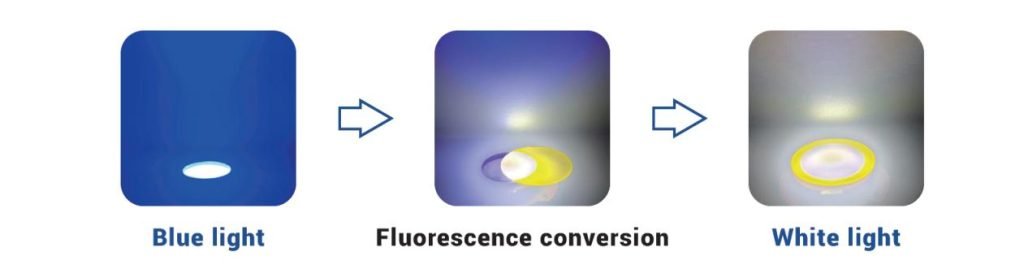
Laser-Activated Phosphor Systems: Blue laser diodes directed onto static phosphor targets generate dense white light points for high-range illumination exceeding 600 meters.
Electrical Architecture and Signal Control
High-pixel count matrix headlamps generate massive data streams requiring dedicated communication protocols. Drivers must switch individual LEDs at high pulse-width modulation (PWM) frequencies to control dimming levels without creating visible flicker or electromagnetic interference.
Matrix driver ICs interface directly with the vehicle's central domain controller via Controller Area Network (CAN) or Ethernet buses. Camera systems positioned behind the windshield detect headlight and taillight signatures, feeding spatial coordinates back to the lighting control unit (LCU). The LCU calculates necessary masking zones and updates pixel states within milliseconds to prevent glare for preceding and oncoming drivers.
Signal Lighting, DRLs, and Exterior Personalization
Exterior signal illumination—including daytime running lights (DRL), position lamps, turn signals, and animated rear light strips—plays a vital role in vehicle safety and brand identity. Modern automotive lighting designs heavily leverage continuous light guide optics to achieve homogeneous illumination without visible LED hot spots.
Light guides use total internal reflection to transmit light along acrylic or polycarbonate rods. Surface micro-structures etched along the guide redirect light outward toward the observer at controlled angles. Modules manufactured by CAS incorporate tight binning tolerances to guarantee color uniformity across continuous light bars spanning the entire vehicle width.
Dynamic Signal Drivers and OLED Integration
Sequential turn signals and welcome animations require multi-channel linear LED drivers capable of precise current regulation. Organic Light-Emitting Diodes (OLEDs) represent another advancement in surface illumination. OLEDs operate as area light sources, producing uniform light directly from thin organic film layers without secondary optical diffusers. Because individual OLED segments can be segmented into distinct sub-zones, complex dynamic sequences can be executed within thin rear lamp assemblies.
Regulatory Testing, Photometric Validation, and Reliability
Light assemblies must comply with global regulations governing light distribution, output power, color coordinates, and environmental durability. The two dominant standards frameworks are UN ECE Regulations (applicable in Europe, Asia, and other regions) and Federal Motor Vehicle Safety Standards (FMVSS 108 / SAE, applicable in North America).
Photometric and Colorimetric Measurement
Validation of automotive lighting components requires goniophotometer testing within darkrooms. Systems measure luminous intensity (measured in candelas) across specified horizontal and vertical angles. Color coordinates must remain within strict chromaticity boundaries across varying ambient temperatures and forward current levels to ensure compliance with legal white, amber, and red spectral definitions.
Environmental and Electromagnetic Qualification
Vehicle exterior light housings endure rigorous environmental testing to ensure long-term durability over the vehicle's lifespan.
Thermal Shock and Cycling: Modules undergo rapid temperature transitions ranging from -40°C to +125°C to assess mechanical stress on solder joints, lenses, and housing seals.
Ingress Protection (IP): Headlamp assemblies must maintain IP67 or IP69K ratings to prevent water, dust, and high-pressure steam from entering housing cavities.
Electromagnetic Compatibility (EMC): Switch-mode LED driver power supplies generate high-frequency electrical noise. Drivers must conform to CISPR 25 Class 5 standards to prevent interference with vehicle radio reception, GPS systems, and telemetry sensors.
Vibration and Mechanical Impact: Random vibration profiles simulating continuous road shock are applied across X, Y, and Z axes alongside physical impact testing on outer lenses.
Frequently Asked Questions
1. What are the primary differences between standard matrix LED and high-pixel micro-LED headlamps?
Standard matrix LED systems typically feature between 8 and 100 discrete LED packages, with each LED illuminating a broad sector of the road. High-pixel micro-LED systems integrate thousands of microscopic light sources onto a single microchip backplane. This high pixel density allows for localized beam masking, smooth dynamic transitions, and high-resolution road projection capabilities.
2. How is thermal resistance minimized in high-power headlight modules?
Thermal resistance is minimized by reducing interface barriers between the LED die junction and the external heat sink. This involves using high-conductivity ceramic substrates (such as AlN or DBC), minimizing thermal interface material (TIM) thickness, and applying direct-bond solder layers rather than traditional organic adhesives.
3. Why are light guides preferred for daytime running lights (DRL) over direct-emitting LEDs?
Light guides convert distinct point sources of light into continuous, uniform linear surfaces. This eliminates high-intensity hot spots, provides smooth aesthetic aesthetics, reduces visible glare, and enables thin vehicle fascia integration while using fewer LED packages located at the optical entry points.
4. What role does CISPR 25 Class 5 play in electronic driver design?
CISPR 25 Class 5 is a stringent electromagnetic interference (EMI) standard for automotive electronics. LED drivers utilize high-frequency switching to control current; without active input filtering, shielded enclosures, and optimized PCB layout routing, high-frequency noise can interfere with delicate vehicle communications and radio receiver circuits.
5. How do environmental seals prevent lens fogging inside sealed headlamp housings?
Headlamp housings feature hydrophobic breathable membrane vents (such as expanded PTFE). These vents allow air pressure equalization and water vapor transport while blocking liquid water, dirt, and contaminants. This moisture equilibrium prevents internal condensation and lens fogging across varying temperature ranges.
Technical Inquiries and B2B Collaboration
Developing high-performance exterior lighting systems requires deep expertise in optical modeling, thermal substrate design, and automotive-grade driver integration. For specialized component sourcing, custom light engine manufacturing, or custom module development, contact the CAS engineering team directly at daniel.lin@zkxyled.com to discuss technical specifications and prospective OEM project requirements.