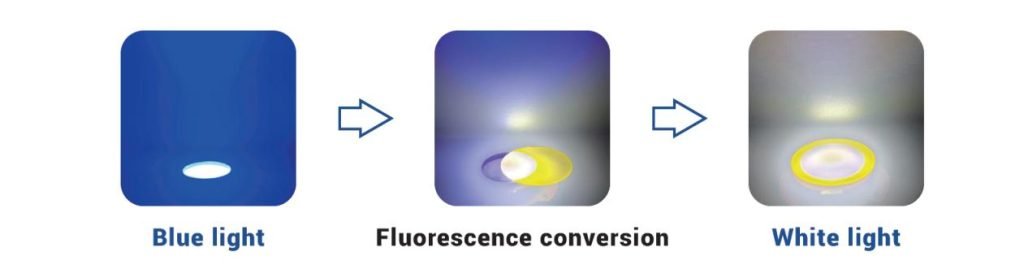
The shift toward higher luminous flux densities in solid-state lighting has placed unprecedented demands on wavelength conversion materials. Traditional phosphor-in-silicone encapsulation, while suitable for general illumination, encounters fundamental limitations when operating under high excitation flux, elevated junction temperatures, or laser-driven configurations. Phosphor in glass has emerged as a viable alternative, offering a combination of thermal stability, optical transparency, and mechanical robustness that silicone-based systems cannot match.
This article examines the material characteristics, fabrication routes, and performance metrics of phosphor in glass composites. The discussion addresses specific application scenarios where glass-based phosphor conversion provides measurable advantages, along with the manufacturing considerations that influence final device reliability. For lighting engineers and procurement specialists evaluating next-generation phosphor materials, understanding the trade-offs between glass and silicone matrices is becoming increasingly relevant as system power densities continue to rise.
Material Composition and Structural Characteristics of Phosphor in Glass
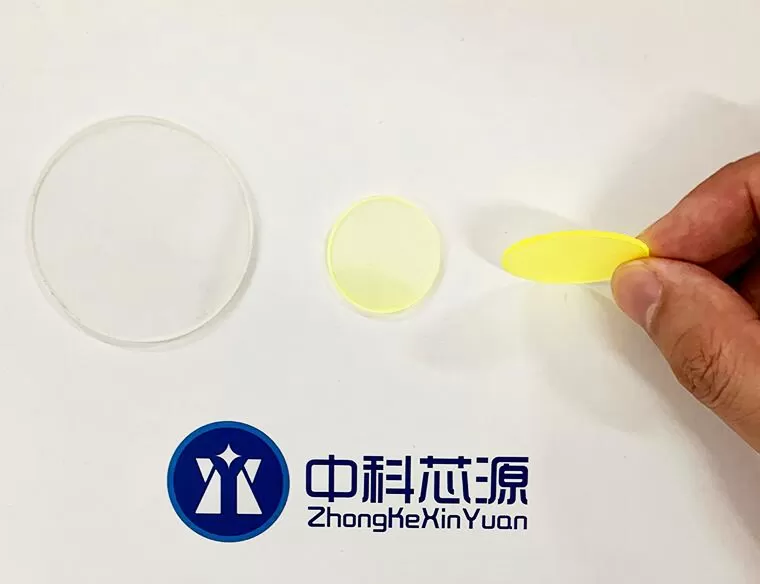
The term phosphor in glass refers to a composite material consisting of inorganic phosphor particles uniformly dispersed within a glass host matrix. Unlike organic binders or silicone resins, the glass phase provides a rigid, impermeable environment that isolates the phosphor from atmospheric moisture and oxygen. The glass composition is typically based on silicate, borosilicate, or phosphate systems, selected for their matching refractive index and thermal expansion coefficient relative to the embedded phosphor crystals.
Key material parameters include the glass transition temperature, which determines the upper operating limit of the composite, and the refractive index difference between glass and phosphor, which affects scattering losses. For cerium-doped yttrium aluminum garnet (YAG:Ce) phosphors, the most common yellow-emitting species used in white LED production, the glass matrix must maintain chemical compatibility to prevent interfacial reactions during high-temperature processing. This compatibility ensures that the phosphor's quantum efficiency remains uncompromised after incorporation into the glass.
The particle size distribution of the phosphor powder directly influences the optical properties of the final composite. Finer particles reduce scattering but may exhibit lower conversion efficiency due to surface defects introduced during milling. Coarser particles offer higher quantum yields but create more significant scattering events, reducing overall luminous efficacy. Manufacturers of phosphor in glass materials must balance these competing factors through precise control of phosphor synthesis and comminution processes.
Manufacturing Processes for Phosphor in Glass
Production of phosphor in glass typically follows one of two primary routes: the sintered powder method or the molten glass quenching method. Each approach presents distinct advantages and constraints that influence the final material properties.
Sintered Powder Route
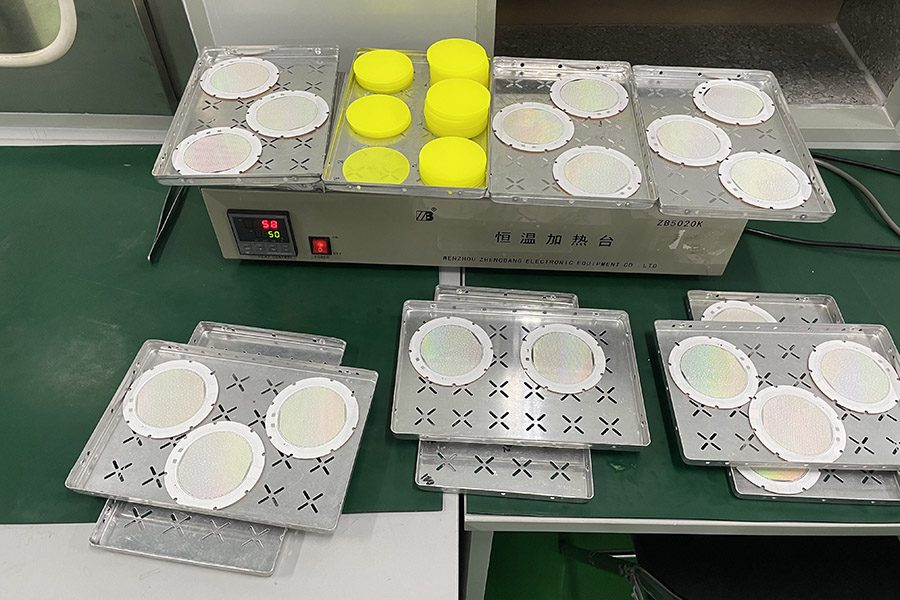
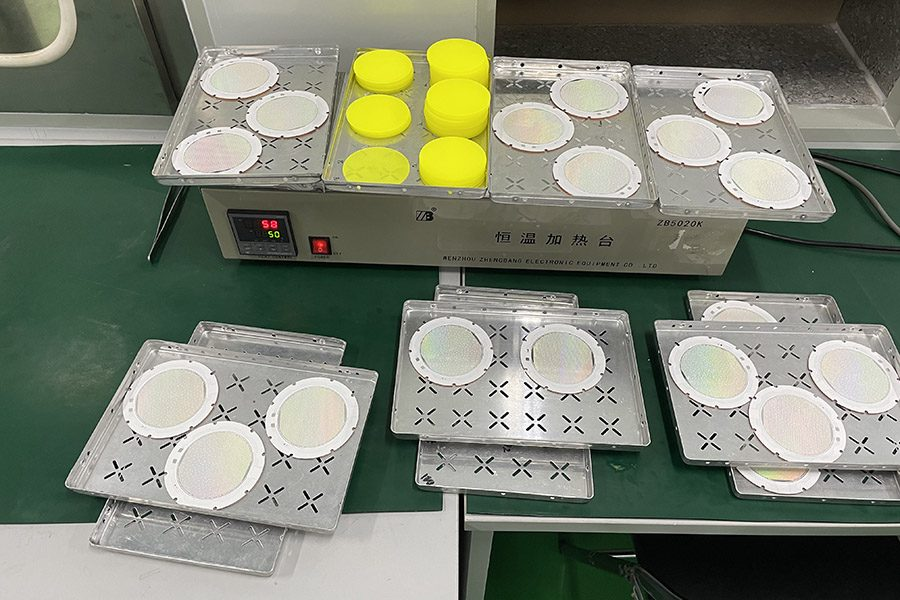
In the sintered powder route, a mixture of glass frit and phosphor powder is pressed into a green body and subsequently heated to a temperature above the glass softening point but below the phosphor decomposition temperature. The glass flows around the phosphor particles, forming a dense, pore-free composite upon cooling. This method offers excellent control over phosphor loading fraction, allowing manufacturers to adjust the color point by varying the phosphor-to-glass ratio. The sintering atmosphere must be carefully controlled to prevent oxidation of the phosphor or reduction of cerium ions, both of which degrade conversion efficiency.
For high-phosphor-loading compositions, the sintering temperature window becomes narrow. Excessive temperature causes the glass viscosity to drop too low, leading to sedimentation of the denser phosphor particles during firing. Insufficient temperature results in incomplete densification, leaving residual porosity that scatters light and reduces transmission. Industrial producers of phosphor in glass employ controlled heating profiles and sometimes apply uniaxial pressure during sintering to enhance densification while maintaining uniform particle distribution.
Molten Glass Quenching Route
The quenching route involves melting the glass components at high temperature, then adding the phosphor powder to the molten glass just before rapid cooling. This method enables very high glass homogeneity but exposes the phosphor to elevated temperatures that may cause thermal degradation. For phosphors with high thermal stability, such as certain nitride-based red emitters, the quenching route can produce phosphor in glass plates with exceptional optical clarity. However, the brief high-temperature exposure limits the choice of phosphor chemistries to those that withstand the melt conditions.
Post-processing steps for both routes include grinding, polishing, and dicing the glass phosphor plates into the required dimensions for LED package integration. The surface finish after polishing significantly affects light extraction efficiency, with rougher surfaces promoting scattering that can either improve or reduce uniformity depending on the application.
Thermal and Optical Performance Attributes
The primary advantage of phosphor in glass over silicone-based phosphor layers lies in thermal management. Silicone matrices have thermal conductivities around 0.2 W/m·K, whereas glass matrices offer values typically in the range of 1.0 to 1.5 W/m·K, depending on composition. This higher thermal conductivity facilitates more efficient heat dissipation from the phosphor particles, reducing the operating temperature under high excitation flux. The temperature dependence of quantum efficiency, known as thermal quenching, becomes less pronounced when the phosphor operates at lower temperatures.
Measurements on comparable YAG:Ce phosphor samples show that the quantum efficiency at 150°C drops to approximately 80% of its room-temperature value in silicone matrices, while phosphor in glass composites maintain over 90% efficiency under the same conditions. This difference translates into higher luminous flux maintenance over the lifetime of the device, particularly in applications where the LED junction temperature exceeds 100°C. For laser-driven white light sources, where excitation power densities reach several watts per square millimeter, the thermal advantage of glass matrices becomes even more pronounced.
Color stability over temperature is another area where phosphor in glass demonstrates improved performance. The chromaticity shift (Δu'v') across the operating temperature range from 25°C to 125°C is typically less than 0.005 for glass-based phosphors, compared to 0.015 or higher for silicone-based systems. This stability arises from the reduced thermal expansion mismatch between the phosphor and the glass matrix, which minimizes stress-induced changes in the phosphor's emission spectrum.
Long-term reliability testing under high-temperature, high-humidity conditions reveals additional benefits of glass encapsulation. Silicone phosphor layers absorb moisture, leading to hydrolysis of the polymer chains and subsequent yellowing or delamination. The impermeable glass matrix eliminates moisture ingress, preserving both the optical properties and the adhesion to the underlying LED chip or substrate. Accelerated life tests at 85°C and 85% relative humidity show that phosphor in glass composites maintain over 95% of initial luminous flux after 5000 hours, while silicone counterparts degrade to below 85% under the same conditions.
Application Domains for Phosphor in Glass
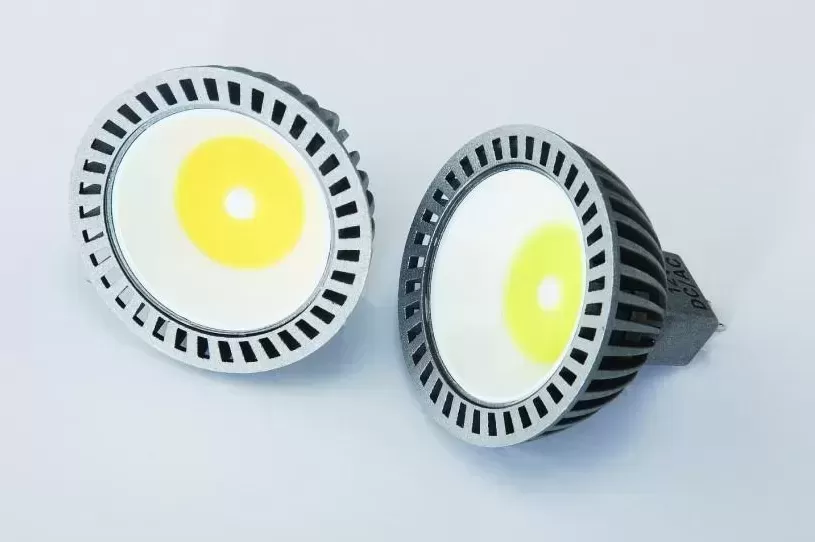
The distinct performance profile of glass-based phosphor conversion makes it particularly suitable for specific application segments where silicone encapsulation falls short. These include high-power LED packages for outdoor lighting, automotive forward lighting, laser projection systems, and specialized industrial illumination.
In automotive headlamp modules, the trend toward adaptive driving beams and matrix LED arrays has increased the power density per light source. The elevated temperatures within the compact headlamp housing, combined with vibration and thermal cycling, demand a phosphor converter that maintains mechanical integrity and optical performance over the vehicle's lifetime. Phosphor in glass materials have been adopted by several tier-one automotive lighting suppliers for these reasons, with the glass matrix providing the necessary robustness against thermal shock and mechanical stress.
Laser-driven phosphor light sources, used in high-brightness projection displays and searchlights, represent another growth area for phosphor in glass. The focused laser beam creates a localized hot spot on the phosphor surface, with temperatures exceeding 200°C under continuous operation. Silicone-based phosphor wheels or plates degrade rapidly under such conditions, while glass-based converters demonstrate stable performance over thousands of hours. The transparency of the glass matrix also allows for better heat dissipation through the substrate, extending the operational lifetime of the phosphor.
For outdoor LED luminaires, particularly those used in high-mast lighting and sports stadium illumination, the combination of high ambient temperatures and the need for long service intervals makes phosphor in glass an attractive option. The reduced maintenance frequency and consistent color output over the luminaire's life contribute to lower total cost of ownership for facility operators. Some manufacturers have reported that replacing silicone phosphor layers with glass equivalents extends the useful life of the luminaire from 50,000 to over 80,000 hours in tropical climate conditions.
Industry Challenges Addressed by Phosphor in Glass
Despite its advantages, the adoption of phosphor in glass has faced several obstacles related to manufacturing complexity, cost, and integration with existing LED packaging infrastructure. The higher processing temperatures required for glass fabrication demand specialized equipment and quality control procedures that are not present in conventional silicone dispensing lines. The brittle nature of glass also requires careful handling during assembly to prevent chipping or cracking.
However, recent advances in glass composition and processing have narrowed the gap between glass and silicone in terms of manufacturability. Low-melting-temperature glass formulations, with softening points below 500°C, allow the use of standard furnaces and reduce the thermal stress on the phosphor particles during processing. These new glass compositions also offer improved toughness, reducing the susceptibility to fracture during handling and thermal cycling.
Color consistency across production batches has historically been a concern for phosphor in glass manufacturing. The complex interplay between glass chemistry, phosphor quality, and sintering conditions makes it challenging to achieve the tight color binning that LED package assemblers require. Suppliers have responded by developing in-line process monitoring systems that measure the emission spectrum of each phosphor plate before it is diced, enabling the sorting of plates into color bins. This approach, while adding to the production cost, ensures that the delivered material meets the specified color coordinate tolerances.
Integration of phosphor in glass plates into LED packages requires modifications to the conventional packaging design. The higher thermal expansion coefficient of glass compared to silicon or ceramic submounts necessitates careful design of the attachment interface to avoid stress-induced failure during temperature cycling. Many package designers have adopted a compliant intermediate layer, such as a thin silicone adhesive, to accommodate the differential expansion while still maintaining adequate thermal contact. This hybrid approach preserves the thermal and optical benefits of the glass phosphor while ensuring long-term mechanical reliability.
The cost of phosphor in glass materials remains higher than that of silicone-based alternatives, primarily due to the additional processing steps and the lower throughput of the sintering or quenching operations. As production volumes increase and process efficiencies improve, the cost differential is expected to narrow. Early adopters in the automotive and laser projection markets have accepted the higher upfront cost in exchange for the extended lifetime and superior performance, establishing a business case for broader adoption in other high-reliability applications.
For lighting system designers evaluating phosphor in glass, the decision involves weighing the material's advantages against the integration challenges and cost premium. The total cost of ownership perspective often favors glass-based solutions for applications where maintenance access is restricted, thermal conditions are severe, or color stability is critical. CAS has developed a range of phosphor in glass products tailored to these demanding environments, with options spanning various color temperatures and phosphor chemistries. The company's engineering team provides application support to assist customers in optimizing their package designs for seamless integration of glass phosphor plates.
Frequently Asked Questions About Phosphor in Glass
What is the fundamental difference between phosphor in glass and phosphor in silicone?
The primary difference lies in the matrix material. Phosphor in silicone uses a soft polymer binder that is flexible and easy to process but degrades under high temperature and humidity. Phosphor in glass employs a rigid, inorganic glass matrix that offers superior thermal conductivity, moisture resistance, and long-term stability. The glass matrix preserves the phosphor's quantum efficiency at elevated temperatures, whereas silicone undergoes yellowing and cracking under similar conditions.
What are the typical phosphor chemistries used in glass composites?
YAG:Ce (yellow-emitting) remains the most widely used phosphor for white light generation in glass composites. Nitride-based red phosphors, such as (Ca,Sr)AlSiN3:Eu, are also incorporated to achieve warm color temperatures with high color rendering. The choice of phosphor chemistry depends on the desired color point and the thermal stability requirements of the specific application. Each phosphor type presents different compatibility characteristics with the glass matrix, affecting the processing parameters and final performance.
How does the thermal conductivity of phosphor in glass affect system-level performance?
The higher thermal conductivity of glass (approximately 1.0–1.5 W/m·K) compared to silicone (≈0.2 W/m·K) facilitates more efficient heat removal from the phosphor particles. This reduces the operating temperature of the phosphor, thereby minimizing thermal quenching of the emission. At the system level, the improved heat dissipation can enable higher drive currents or reduced heatsink requirements, depending on the design constraints. The effect is most pronounced in high-flux applications where the phosphor layer experiences significant self-heating.
Can phosphor in glass be used with laser excitation sources?
Glass-based phosphor converters are well-suited for laser excitation due to their high thermal stability and resistance to optical damage. The rigid glass matrix withstands the localized heating and high irradiance levels associated with laser pumping, whereas silicone would rapidly degrade. Laser-driven phosphor systems used in projection displays and high-brightness searchlights routinely employ glass phosphor plates to achieve the required luminance levels with acceptable lifetime.
What factors influence the color point stability of phosphor in glass over time?
Color point stability depends on the thermal stability of the phosphor chemistry, the chemical compatibility between the phosphor and the glass matrix, and the mechanical stress state of the composite. Any chemical reaction at the phosphor-glass interface can alter the phosphor's emission spectrum, while stress-induced changes in the crystal field can shift the emission wavelength. Proper selection of glass composition and processing conditions minimizes these effects, ensuring consistent color output over the device lifetime.
How is phosphor in glass typically integrated into LED packages?
The glass phosphor plate is either placed directly on top of the LED chip or mounted at a distance from the chip, depending on the package design. In close-proximity configurations, the plate is attached using a thin layer of optical adhesive or a solder glass seal. In remote phosphor configurations, the plate is positioned away from the chip to reduce thermal loading. The attachment method must account for thermal expansion differences to prevent stress cracking during temperature cycling.
What are the main cost drivers for phosphor in glass manufacturing?
The primary cost drivers include the raw material costs for high-purity glass and phosphor powders, the energy consumption during sintering or melting, the precision grinding and polishing steps, and the inspection and sorting processes. The relatively low throughput of batch processing compared to continuous silicone dispensing also contributes to the higher cost per unit area. As production scales and process automation improves, these costs are expected to decrease.
For detailed specifications, customization options, and application guidance on phosphor in glass materials, please contact the technical sales team at CAS via email:daniel.lin@zkxyled.com. Include your target color coordinates, flux density requirements, and operating temperature range to receive a tailored recommendation.