Outdoor LED lighting faces a brutal reality. Heat, humidity, UV radiation, and wide temperature swings from -40°C to +85°C relentlessly attack conventional packaging. Epoxy and silicone—the industry's go-to materials—simply cannot hold up. They yellow, crack, and degrade. The result? Drastic color shifts, plummeting luminous efficacy, and field failures that drive maintenance costs through the roof. This is where Phosphor in Ceramic changes the game—not through flashy claims, but through proven inorganic stability.
CAS, with its deep roots in the Chinese Academy of Sciences, has spent over a decade perfecting the art of inorganic phosphor ceramics. Since 2013, they have focused on one thing: delivering a Phosphor in Ceramic solution that outlasts organic alternatives in the harshest outdoor conditions. This article explores why thermal management and long-term reliability remain the two pillars of outdoor LED design, and how ceramic phosphor technology—specifically from CAS—provides a robust, field-verified answer.
The Outdoor LED Challenge: Thermal and Optical Reliability Under Fire
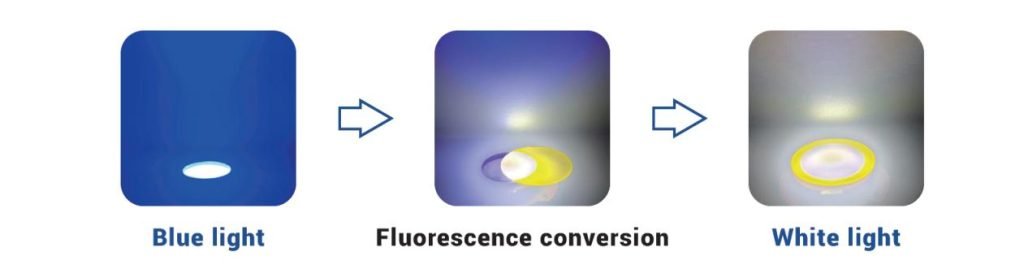
Outdoor luminaires for roadways, tunnels, stadiums, and industrial zones operate in unforgiving environments. Daily thermal cycling stresses every component. At the heart of the system, the phosphor converter faces a double whammy: it absorbs blue or UV light and re-emits it as visible light, but this conversion process generates significant heat. In traditional silicone or epoxy encapsulation, that heat has nowhere to go. Thermal conductivity languishes below 0.2 W/m·K.
This low thermal conductivity becomes a bottleneck. Heat accumulates at the phosphor layer, raising junction temperatures (Tj) and accelerating degradation. Organic binders break down under prolonged UV exposure. They turn brown, reducing light extraction and shifting the correlated color temperature (CCT). Field data shows that conventional COB packages often experience a CCT shift of over 500K within the first 10,000 hours of outdoor operation. That is unacceptable for infrastructure lighting that demands consistent color over years.
LM80 testing, the industry standard for LED lumen maintenance, frequently projects L70 or L90 lifetimes under 50,000 hours for organic-based phosphor systems. For municipalities and facility managers, this translates to frequent re-lamping, higher labor costs, and disrupted operations. The root cause? Inadequate thermal dissipation and photochemical degradation of the organic matrix.
CAS Ceramic Phosphor: Inorganic Architecture for Extreme Environments
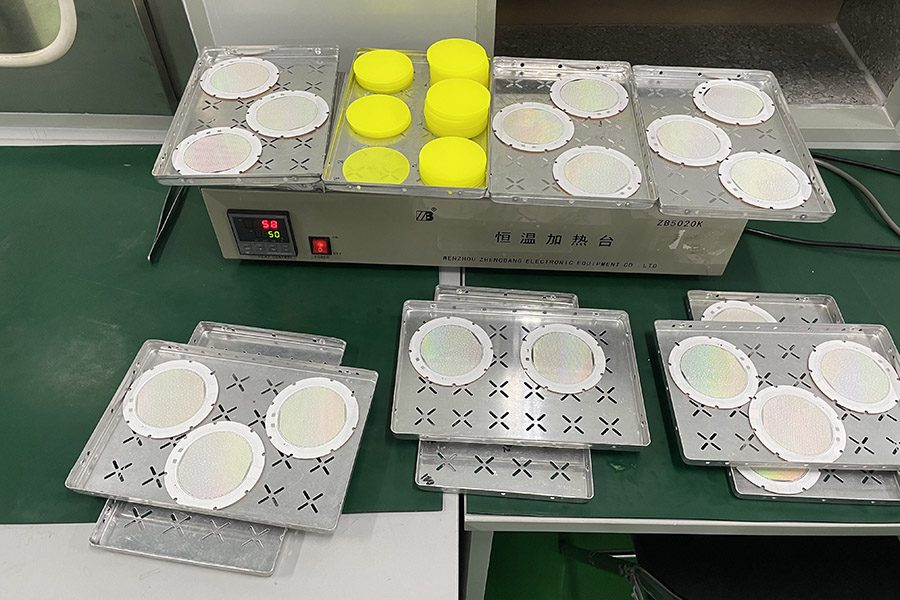
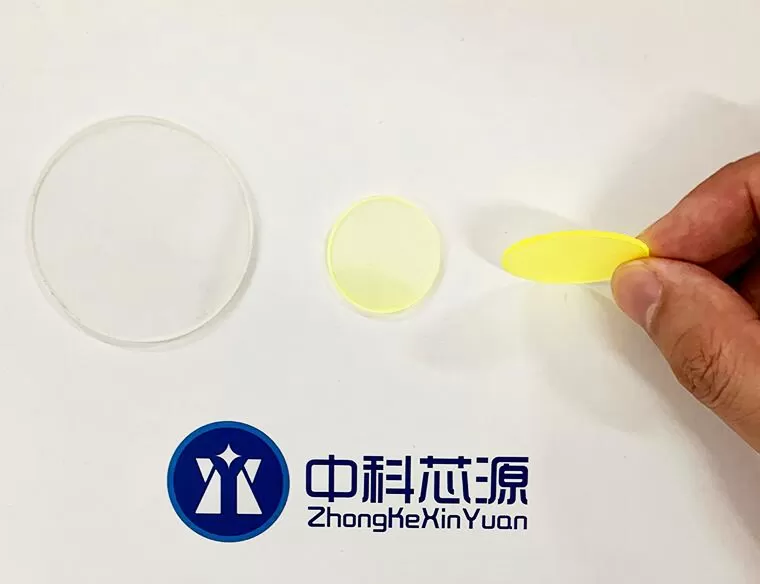
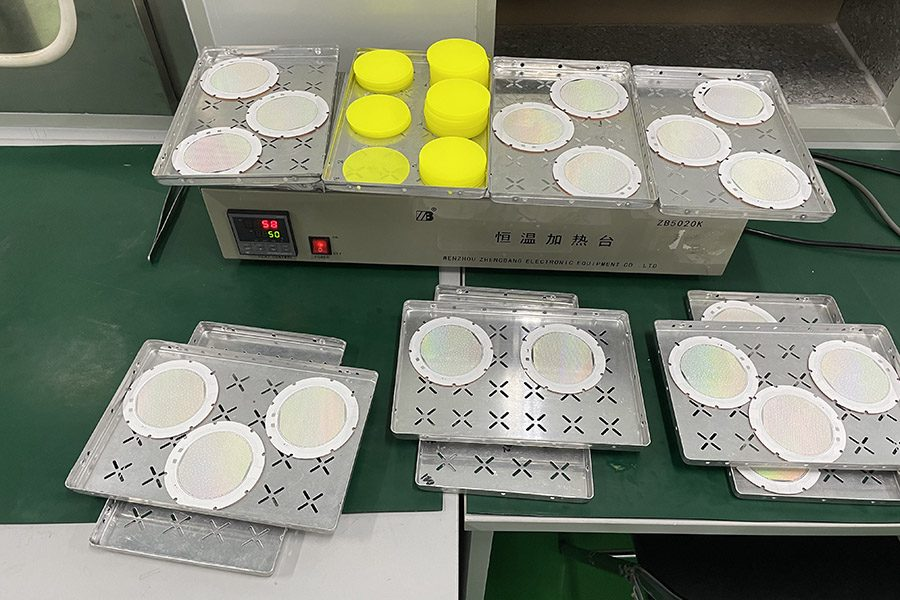
CAS took a different path. Instead of dispersing phosphor particles in a polymer binder, they developed a Phosphor in Ceramic approach that sinters phosphor powders directly into a dense, polycrystalline ceramic body. No organic binders. No epoxy. Just a fully inorganic, monolithic converter that acts as both the wavelength converter and the heat spreader.
This ceramic matrix delivers thermal conductivity of 15–20 W/m·K—more than ten times higher than silicone. The difference is dramatic. A Phosphor in Ceramic disc from CAS can channel heat from the conversion layer straight to the heatsink, reducing junction temperature by 10–15°C compared to conventional silicone-phosphor layers. Lower Tj directly translates to longer LED life and more stable optical output.
Zero Organic Volatiles, Zero Yellowing
Because the ceramic contains no organic compounds, there is nothing to yellow, carbonize, or outgas. CAS subjected their ceramic phosphors to 150°C aging tests for 1,000 hours. The result? Luminous efficacy retention exceeded 98%, and chromaticity shift (Δu'v') stayed below 0.003. In contrast, silicone reference samples drifted beyond 0.010 in the same conditions. This stability is not a laboratory curiosity—it is a guarantee for long-term outdoor performance.
Superior Moisture and UV Resistance
Humidity and UV radiation are silent killers for outdoor LEDs. Moisture penetrates organic encapsulants, causing delamination and phosphor degradation. UV radiation breaks polymer chains, accelerating yellowing. CAS ceramic phosphors achieve a density exceeding 99.5%, making them practically impermeable to water vapor. Moreover, the ceramic matrix exhibits inherent inertness to UV wavelengths (380–420 nm). It does not absorb UV light in a way that triggers photochemical breakdown. This dual resistance ensures that CAS-based luminaires maintain their color and flux even in coastal or high-altitude installations.
Dual-Channel Thermal Architecture: From Passive Survival to Active Heat Routing
CAS engineers did not stop at material improvements. They designed a patented dual-channel heatsink structure (multiple international patents) that uses the Phosphor in Ceramic itself as one heat-dissipation path, while the PCB copper layer serves as a second channel. This bifurcated thermal path reduces overall thermal resistance by 30% compared to conventional COB designs.
In practice, this architecture keeps junction temperatures within design limits even when ambient temperatures hit 85°C. For outdoor fixtures that bake under summer sun, this thermal headroom is critical. It ensures that the LED operates in a safe regime, preserving both flux and color over the intended lifetime. The dual-channel approach is not an incremental improvement; it is a fundamental rethinking of how to manage heat in high-power density lighting.
LM80 Certification and International Patent Portfolio: The CAS Differentiator
CAS stands alone as the only manufacturer with an LM80 (IES LM-80-08) certification for power-type COB using Phosphor in Ceramic technology. This is not a self-declared number—it is an independently verified measure of lumen maintenance. The data shows L90 (90% luminous flux maintenance) exceeding 60,000 hours at a 105°C case temperature. For outdoor lighting owners, this means confidence that the fixture will deliver consistent illumination for well over five years of continuous operation.
Beyond certification, CAS holds five international invention patents and dozens of Chinese patents. These patents cover ceramic composition, sintering processes, and structural designs. They are not defensive filings—they represent genuine innovations that solve real-world thermal and optical challenges. This intellectual property positions CAS as the go-to partner for luminaire manufacturers who want to differentiate on reliability.
Custom Solutions for Every Outdoor LED Fixture
CAS understands that outdoor lighting is not one-size-fits-all. Their Phosphor in Ceramic platform offers extensive customization across multiple parameters:
Dimensions: Diameters from 3 mm to 20 mm, thicknesses from 0.15 mm to 1.0 mm.
Doping concentration: Ce³⁺ doping from 0.5 mol% to 5 mol% to tune conversion efficiency and color.
Color temperature: 2700K to 6500K, covering warm white to cool daylight.
Color rendering: CRI options of >70, >80, or >90 for applications that demand accurate color perception.
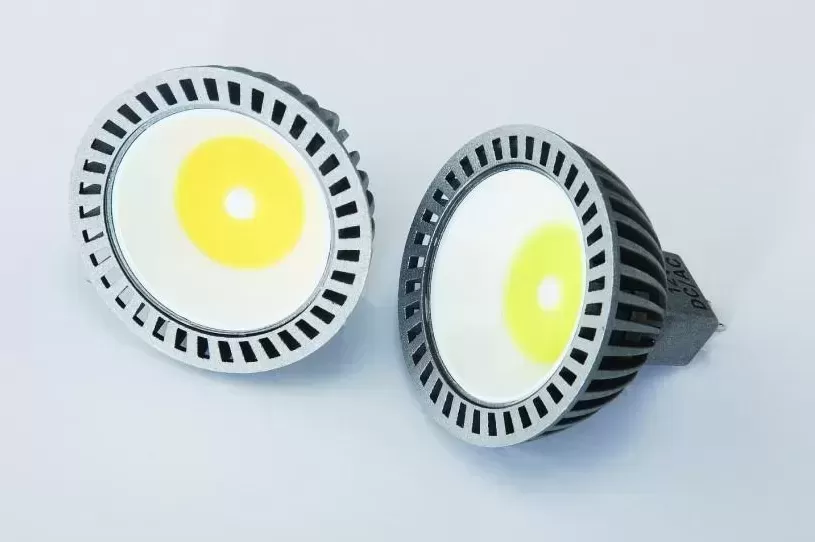
This flexibility allows fixture designers to match the ceramic phosphor precisely to their optical and thermal requirements. Whether you are building a high-lumen streetlight or a color-critical sports lighting system, CAS provides a tailored Phosphor in Ceramic solution that integrates seamlessly into your existing mechanical and optical designs.
Engineering Support from Concept to Production
CAS does not just sell components; they deliver engineering partnership. Their application engineering team—guided by a technical committee that includes academicians from the Chinese Academy of Sciences—offers a full suite of services: thermal simulation, optical matching, and reliability validation. This holistic approach reduces system development costs by 15–20% and accelerates time-to-market. More importantly, it gives fixture manufacturers the confidence to extend product warranties from three years to five years, a strong competitive advantage in the outdoor lighting market.
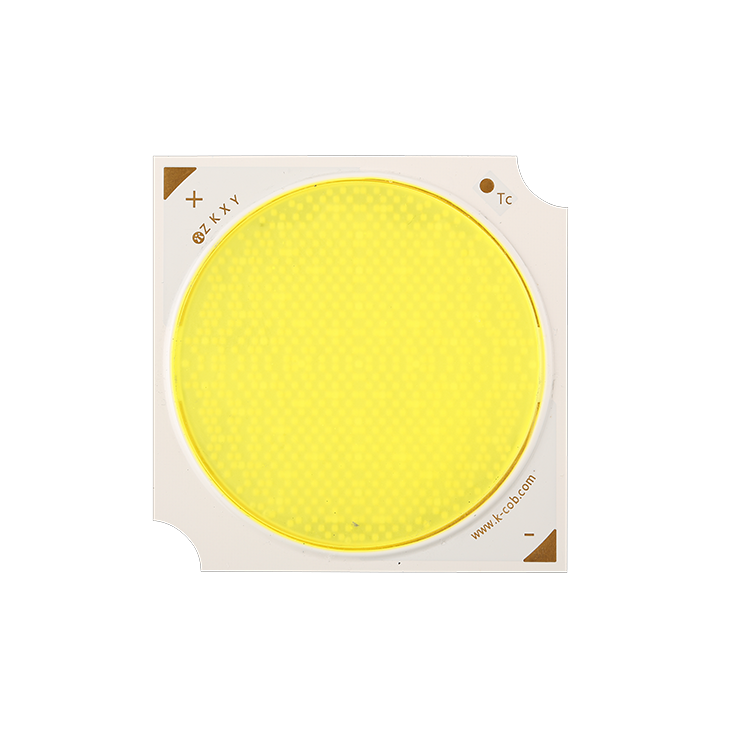
Why CAS Ceramic Phosphor Redefines Outdoor LED Reliability
As outdoor lighting migrates toward higher power densities and longer lifetimes, the industry needs materials that match this ambition. Organic encapsulation simply cannot keep pace. The Phosphor in Ceramic platform from CAS offers a proven, scalable, and field-tested alternative. Its inorganic composition, high thermal conductivity, and validated long-term lumen maintenance address the core failure modes of outdoor LEDs.
CAS has moved beyond laboratory prototypes. They operate a manufacturing line that produces ceramic phosphors in volume, serving global customers in the power COB segment. This is not a niche technology—it is a production-ready solution for luminaire manufacturers who refuse to compromise on reliability. Choosing CAS means choosing a foundation that withstands thermal stress, humidity, and UV exposure without fading or failing.
FAQ: Common Questions About Phosphor in Ceramic for Outdoor LED
Q1: What makes Phosphor in Ceramic more thermally stable than silicone-based phosphor for outdoor LED applications?
A1: Silicone-based phosphor relies on organic polymers with thermal conductivity below 0.2 W/m·K. This traps heat and accelerates degradation. CAS ceramic phosphor, by contrast, is fully inorganic with thermal conductivity of 15–20 W/m·K. It conducts heat away from the conversion layer efficiently, reducing junction temperature by 10–15°C and preventing yellowing or carbonization. This intrinsic thermal stability ensures consistent color and flux over tens of thousands of hours.
Q2: How does CAS ensure long-term lumen maintenance in high-humidity outdoor environments?
A2: CAS ceramic phosphors achieve a density greater than 99.5%, making them nearly impervious to moisture ingress. Unlike organic encapsulants that absorb water and degrade, the ceramic matrix maintains its structural integrity and optical properties. Independent LM80 testing confirms L90 beyond 60,000 hours at 105°C case temperature, validating its robustness in humid conditions.
Q3: Can CAS customize Phosphor in Ceramic for specific color temperatures and CRI requirements?
A3: Yes. CAS offers full customization across diameter (3–20 mm), thickness (0.15–1.0 mm), Ce³⁺ doping (0.5–5 mol%), CCT (2700K–6500K), and CRI (>70, >80, or >90). This flexibility allows luminaire designers to match the ceramic phosphor precisely to application needs, whether for roadway lighting or high-color-rendering sports illumination.
Q4: What patents or certifications support the reliability of CAS ceramic phosphor technology?
A4: CAS holds five international invention patents and numerous Chinese patents covering ceramic formulations, sintering processes, and thermal management structures. Additionally, CAS is the only manufacturer with LM80 (IES LM-80-08) certification for power-type COB using ceramic phosphor. These independently verified credentials provide a solid foundation for reliability claims.
Q5: How does CAS's dual-channel thermal architecture improve outdoor LED fixture performance?
A5: The dual-channel structure uses the ceramic phosphor itself as one heat path and the PCB copper layer as a second path. This bifurcated design reduces thermal resistance by 30% versus conventional COB packages, keeping junction temperatures lower even at 85°C ambient. The result is extended lifetime, stable color, and reduced risk of thermal-induced failure in extreme outdoor conditions.
Partner with CAS for Reliable Outdoor LED Solutions
The transition to high-power, long-life outdoor lighting demands components that deliver on their promises. CAS ceramic phosphor technology provides the thermal stability, optical consistency, and verified longevity that the industry needs. Backed by decades of materials science research and a robust patent portfolio, CAS offers more than a product—they offer a complete reliability ecosystem.
If you are designing outdoor LED fixtures for roads, tunnels, industrial sites, or architectural lighting, consider the Phosphor in Ceramic advantage. CAS engineers are ready to collaborate on thermal simulations, optical designs, and reliability validation to ensure your product meets the highest standards of performance and durability.
Contact CAS today to request samples, discuss your custom specifications, or schedule a technical consultation. Let us help you build outdoor lighting that stands the test of time.
Inquire now and discover how CAS ceramic phosphor can elevate your next-generation outdoor LED projects—without the gimmicks, just proven science and engineering excellence.