High-density solid-state lighting has reached a critical junction. As optical systems demand higher lumen output from smaller surface areas, traditional color conversion materials cannot keep up with the extreme heat generated by high-power blue LEDs and laser diodes.
Phosphor-in-silicone (PiS) matrices degrade, turn yellow, and burn out under concentrated photon flux. This thermal bottleneck limits modern automotive headlights, digital cinema projectors, and industrial floodlights from reaching their full output capacity.
Phosphor ceramic solves this fundamental thermal challenge. By eliminating organic resins entirely, this inorganic material allows optical engineers to push optical power density far beyond historic limits.
CAS established its manufacturing foundation in 2013, drawing directly on research expertise from the Chinese Academy of Sciences. As a pioneer in commercial-scale production, CAS delivers fully inorganic phosphor ceramic solutions that redefine thermal stability across the global optoelectronics industry.
What Is Phosphor Ceramic? Material Science and Core Properties
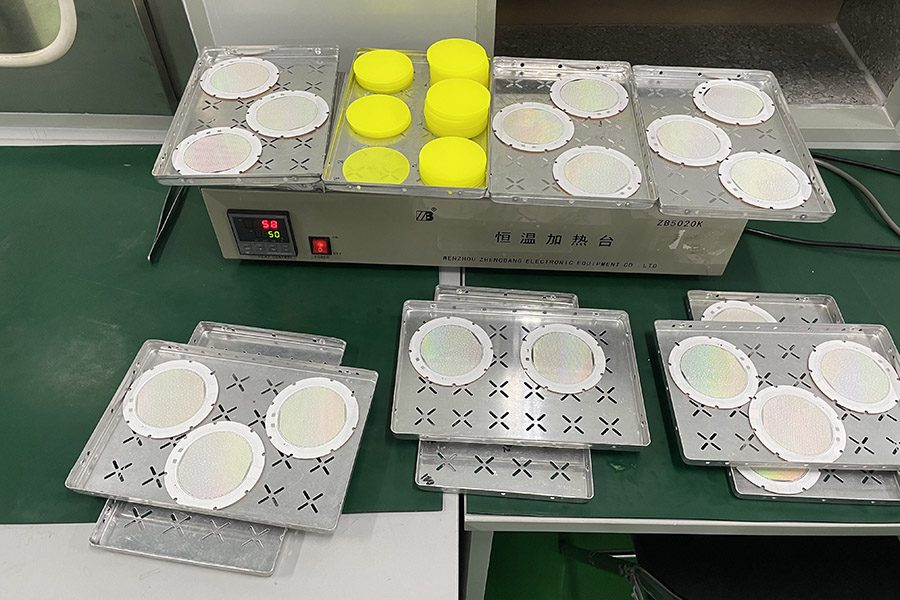
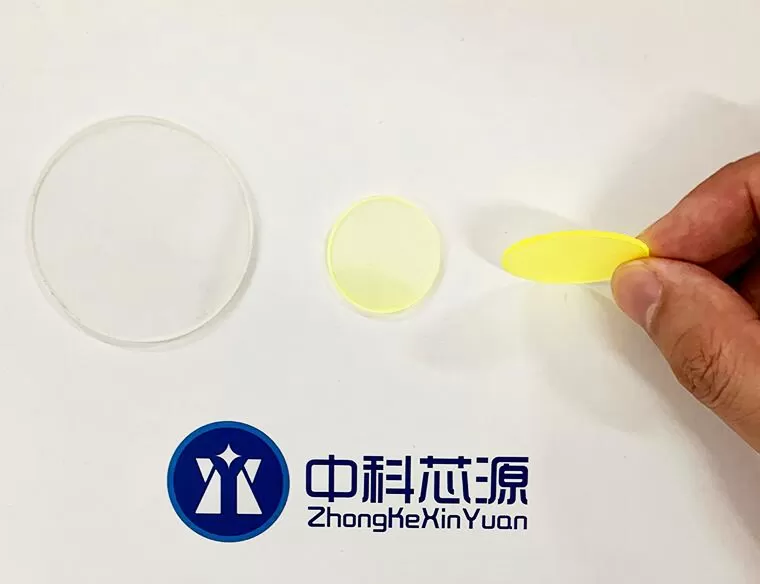
Phosphor ceramic is a polycrystalline luminescent material formed by sintering inorganic phosphor powders at extreme temperatures. Unlike conventional phosphor plates that rely on silicone, resin, or low-melting glass binders, a phosphor ceramic plate consists of 100% pure crystalline grain structures.
During the vacuum sintering process, raw garnet powders (such as YAG:Ce or LuAG:Ce) fuse together under high pressure. This eliminates internal voids and creates continuous grain boundaries that transfer heat quickly across the entire ceramic body.
This distinct microstructure gives phosphor ceramic three decisive performance advantages:
Superior Thermal Conductivity: While silicone binders conduct heat at less than 0.2 W/m·K, phosphor ceramics achieve thermal conductivity ratings between 10 and 30 W/m·K. This direct heat dissipation prevents localized hot spots.
Zero Thermal Quenching: Traditional phosphors lose internal quantum efficiency as temperature increases. Phosphor ceramic maintains stable light emission and avoids chromatic shifts even when surface temperatures exceed 200°C.
Permanent Chemical and Photothermal Stability: Pure inorganic ceramics do not carbonize, crack, or yellow when exposed to high-energy blue laser radiation or harsh ultraviolet light.
CAS Proprietary Innovations: From Raw Powder to K-COB Packaging
Manufacturing consistent optical ceramics requires complete control over chemical purity, crystalline phase composition, and optical scattering. CAS manages the entire value chain internally, from precision precursor powder synthesis to final optical component packaging.
Patented Dual-Channel Heat Sinking
Heat management dictates the operating life of high-power optical systems. CAS engineered and patented a dual-channel heat sinking architecture that dissipates thermal energy from two directions simultaneously.
Instead of forcing all thermal energy downward through the semiconductor die, the CAS design extracts heat directly from the front emitting face of the phosphor ceramic while simultaneously routing heat away through the lower substrate. This dual-path thermal transport reduces active junction temperatures, preserves lumen output, and protects the system during long duty cycles.
The K-COB All-Inorganic Packaging Platform
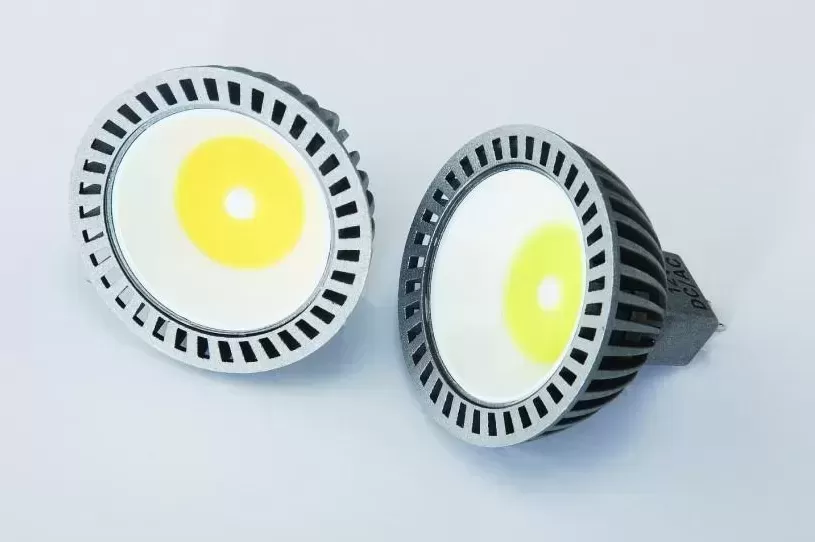
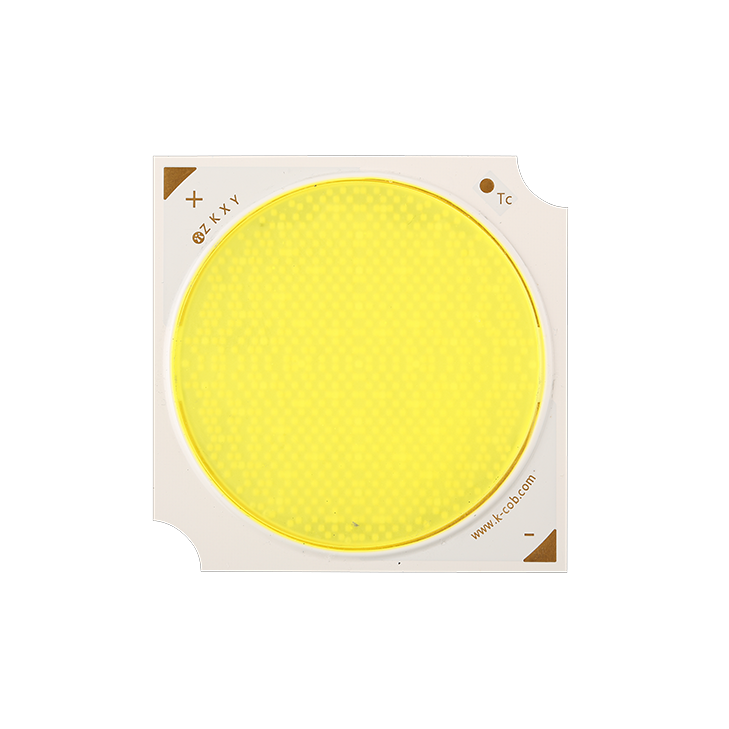
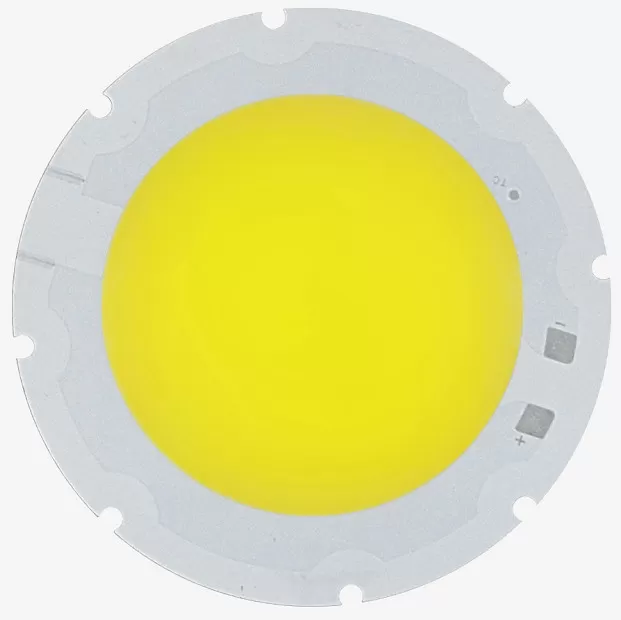
CAS introduced the proprietary K-COB (Ceramic Chip-on-Board) packaging technology to replace conventional organic encapsulation methods. By mounting precision-ground phosphor ceramic plates directly to high-thermal-conductivity substrates using inorganic bonding layers, K-COB modules operate continuously under severe industrial conditions.
K-COB components eliminate common failure points associated with silicone expansion, moisture penetration, and adhesive degradation. The result is a rock-solid optical engine built for high-stress operations.
International Patents and Aerospace-Grade Certifications
CAS holds 5 international invention patents alongside dozens of domestic patents covering ceramic formulations, sintering methods, and packaging structures. Technical performance is backed by rigorous third-party quality standards:
The world's only high-power phosphor ceramic COB supplier holding comprehensive LM-80 test certification.
AS9100D Aerospace Quality Management System certification.
ISO9001 and ISO14001 manufacturing and environmental compliance.
Special process compliance accredited through NADCAP testing standards.
Key Applications for Phosphor Ceramics in 2026
As semiconductor lasers and high-current LED arrays shrink in size while increasing in output, phosphor ceramic serves as the core wavelength converter across several critical industries.
Automotive Laser Headlights and ADB Matrix Systems
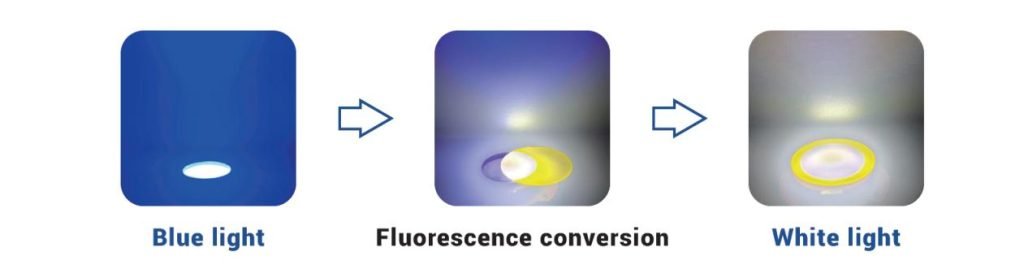
Modern vehicle lighting requires micro-sized light emitting surfaces (LES) capable of casting high-beam patterns 500 meters down the road. Adaptive Driving Beam (ADB) matrix modules rely on phosphor ceramic to convert concentrated blue laser diode beams into white light without thermal degradation inside compact headlight housings.
High-Power Industrial, Maritime, and Stage Fixtures
Stadium light towers, maritime searchlights, and professional entertainment spotlights run at power levels from 500W to several kilowatts. Using CAS K-COB phosphor ceramic modules, fixture designers build ultra-compact luminaires that resist maritime salt spray, high humidity, and extreme ambient heat without losing color consistency.
Laser Phosphor Projection Displays (LPD)
Digital cinema projection and large-venue laser projectors generate immense optical flux at the color wheel. Phosphor ceramic static plates and spinning rings replace fragile phosphor-on-metal wheels, maintaining uniform white-point balance across thousands of operating hours.
Aerospace and Defense Lighting
Aircraft searchlights, runway guidance systems, and military optical platforms face severe mechanical vibration and dramatic temperature swings. Fully inorganic phosphor ceramic assemblies survive rapid transitions between cryogenic atmospheric conditions and high operating heat without mechanical delamination.
Material Comparison: Phosphor Ceramic vs. Legacy Technologies
The following table shows how phosphor ceramic compares against traditional silicone encapsulation and intermediate glass-based solutions:
| Performance Metric | Phosphor-in-Silicone (PiS) | Phosphor-in-Glass (PiG) | CAS Phosphor Ceramic |
|---|---|---|---|
| Thermal Conductivity (W/m·K) | 0.15 – 0.25 | 1.0 – 1.5 | 15.0 – 30.0 |
| Optical Power Density Limit | < 1.5 W/mm² | 5.0 – 8.0 W/mm² | > 30.0 W/mm² |
| Maximum Operating Temperature | 120°C | 200°C | 400°C+ |
| Resistance to Blue Light Aging | Poor (Rapid Yellowing) | Moderate (Pore Defects) | Excellent (Zero Degradation) |
| Mechanical Strength | Low / Flexible | Brittle | High Hardness & Toughness |
| Primary Failure Mechanism | Resin carbonization, cracking | Interfacial glass softening | None (Inorganic crystal) |
2026 Sourcing Guide: How to Select a Phosphor Ceramic Manufacturer
Procuring optical ceramic components for high-reliability systems requires careful evaluation beyond initial material price. Engineering teams should audit prospective suppliers against four core criteria:
1. True Mass-Production Capacity
Many material laboratories can produce small batches of optical ceramics. However, delivering tens of thousands of ceramic plates with identical optical density, thickness tolerances (±5 μm), and color coordinates requires mature factory automation. CAS operates dedicated manufacturing lines that supply stable volume production for international Tier-1 lighting brands.
2. Powder-to-Component Vertical Integration
Suppliers that buy third-party powders and outsource sintering cannot easily modify custom color temperatures (CCT) or Color Rendering Indexes (CRI). Work with a manufacturer that controls initial chemical synthesis, sintering cycles, and high-precision diamond cutting in-house.
3. Certified Quality Assurance Frameworks
Never integrate non-certified conversion plates into mission-critical hardware. Demand verified test documentation, including LM-80 lumen maintenance reports, AS9100D aerospace certification, and environmental stress profiles under thermal shock.
4. System-Level Thermal Engineering Support
A phosphor ceramic component performs best when paired with an optimized optical and thermal package. Choose a supplier capable of providing custom substrate metallization, high-precision eutectic bonding, and complete K-COB module customization.
Frequently Asked Questions (FAQ)
Q1: What makes phosphor ceramic superior to phosphor-in-glass (PiG)?
A1: Phosphor-in-glass blends phosphor powders into a low-temperature glass frit. The residual glass matrix still has low thermal conductivity (around 1 W/m·K) and contains internal micro-bubbles that scatter light erratically. Pure phosphor ceramic contains zero glass matrix, offering up to twenty times higher thermal conductivity and superior mechanical strength under laser excitation.
Q2: Can phosphor ceramic withstand direct blue laser diode excitation?
A2: Yes. Phosphor ceramic is engineered specifically for high-power laser illumination. It easily handles optical power densities exceeding 30 W/mm² without experiencing photothermal burning, color drift, or surface pitting.
Q3: How does the CAS dual-channel heat sinking structure reduce junction temperatures?
A3: Traditional assemblies push heat only downward through the chip substrate, creating a thermal logjam. CAS dual-channel technology routes heat through both the front emitting surface and the mounting base plate at the same time, lowering internal temperatures across the entire system.
Q4: What color temperatures (CCT) and CRI values can be customized?
A4: By adjusting the chemical doping of YAG and LuAG crystal lattices alongside custom red-emitting inorganic elements, CAS tailors CCT from 3000K warm white to 6500K cool white, with custom CRI configurations from 70 to over 90 for specialized stage and film fixtures.
Q5: Why is LM-80 certification critical for phosphor ceramic COB modules?
A5: LM-80 is the international standard for testing long-term lumen maintenance and color shift of optical packages at elevated temperatures. CAS phosphor ceramic K-COB modules hold third-party LM-80 test records verifying stable light output beyond 50,000 hours of continuous operation.
Upgrade Your Optical Systems with CAS Phosphor Ceramics
Thermal limitations no longer need to restrict your product roadmaps. Whether you are engineering compact automotive laser headlamps, high-lumen architectural fixtures, or projection systems, phosphor ceramic provides the thermal foundation your designs require.
CAS combines research heritage from the Chinese Academy of Sciences with a decade of high-volume manufacturing expertise. Contact our engineering team today to request material samples, review technical datasheets, or discuss custom K-COB module development for your next optical platform.