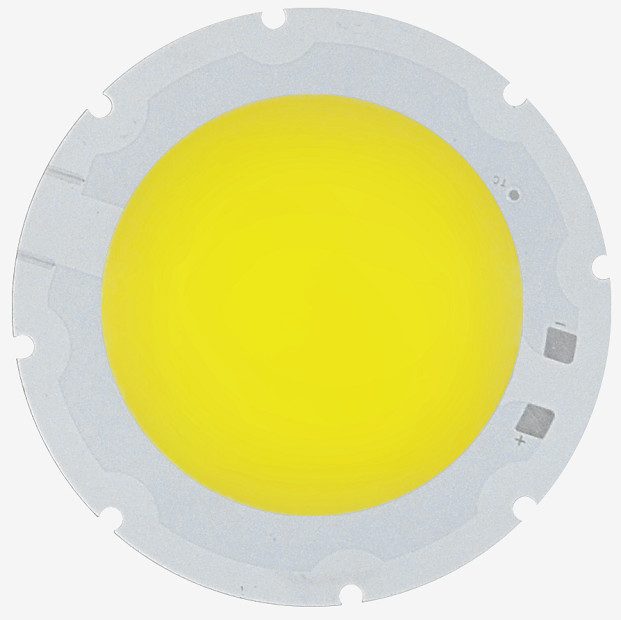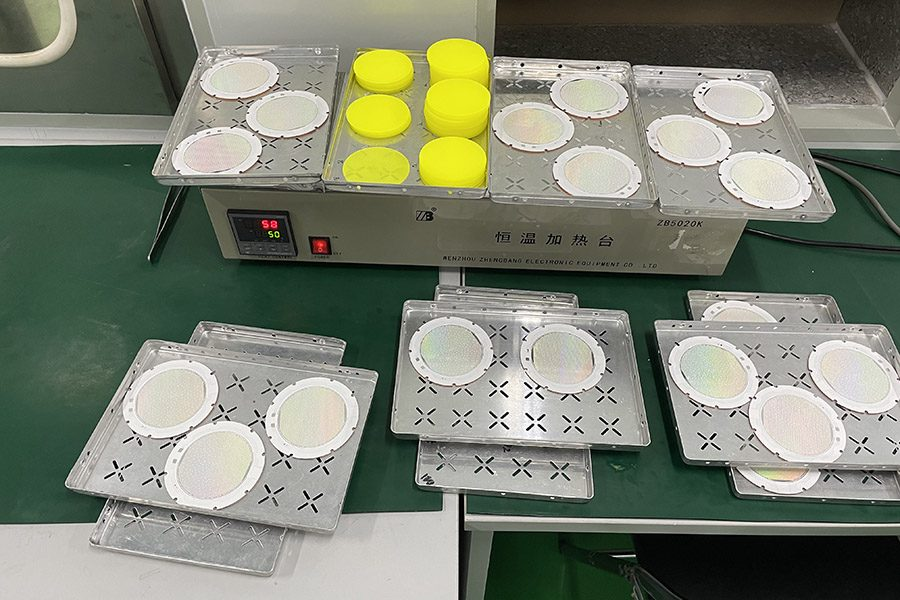
Spec sheets often claim that a modern LED street light will operate continuously for 50,000 to 100,000 hours. That translates to more than a decade of maintenance-free illumination on highways and urban roads. Yet, municipal managers, electrical contractors, and utility operators frequently report dark poles within just two to three years of installation.
When an outdoor luminaire fails, the replacement cost of the fixture is rarely the biggest issue. Dispatching bucket trucks, rerouting traffic, and paying certified lineman crews quickly turn a minor hardware defect into a municipal budget crisis. At CAS, we inspect field-returned lighting units routinely, and the root causes almost always point to design compromises, severe grid spikes, or environmental degradation.
If you are planning an upcoming retrofit or infrastructure rollout, premature failure should not be part of your balance sheet. Send an inquiry to the CAS engineering team today to discuss high-reliability designs that survive real-world field conditions.
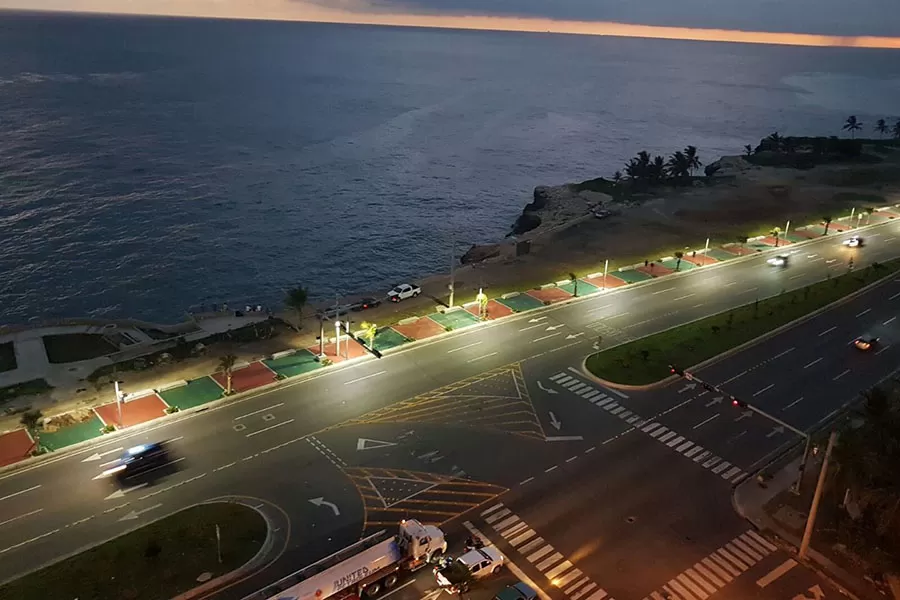
Top 5 Common Causes of LED Street Light Failure
LED emitters themselves rarely burn out instantly like vintage incandescent filaments. Instead, the surrounding assembly breaks down under constant electrical, thermal, and mechanical stress. Here are the five primary vulnerabilities responsible for premature dark poles.
1. LED Driver Malfunction (The Weakest Link)
The driver converts alternating current (AC) high voltage from the grid into regulated, low-voltage direct current (DC). In field reports, driver breakdown accounts for over 60% of all outdoor luminaire failures. The culprit is almost never the solid-state silicon chip; it is the auxiliary electronics.
Inside low-cost drivers, electrolytic capacitors contain liquid electrolyte that slowly dries out under thermal cycling. As the internal chemical dries, equivalent series resistance (ESR) rises, leading to unstable output current, extreme internal heat, and eventual component burnout. When cheap driver units face regular night-time input fluctuations, their internal components buckle long before the rated LED street light lifespan expires.
To avoid this, industrial designs must comply with international standards such as IEC 61347-2-13, which mandates rigid safety and operational guidelines for electronic control gear used with LED modules.
2. Poor Thermal Management and Overheating
LEDs emit cold light in their beam, but they generate intense heat at the p-n junction inside the package. If this heat cannot escape quickly, the junction temperature climbs. Every 10°C rise above the optimum junction threshold cuts diode life roughly in half, triggering steep lumen depreciation and color shifting.
Poor thermal performance stems from undersized or poorly cast heat sinks. Budget manufacturers often cut costs by reducing die-cast aluminum mass or using recycled alloys riddled with air pockets. These air pockets block thermal conduction from the metal-core printed circuit board (MCPCB) to the outer cooling fins.
Without sufficient conductive material and convective airflow, the fixture traps its own heat. Over time, high thermal resistance cooks the encapsulation resin, degrades silicone lenses, and breaks microscopic bonding wires within the LED package.
3. Power Surges and Lightning Strikes
Outdoor utility poles act as lightning rods. Even without a direct strike, nearby cloud-to-ground lightning induces thousands of volts onto secondary distribution lines. Switching operations from nearby industrial motors or substation capacitor banks create identical transient voltage spikes.
Solid-state electronics cannot tolerate these high-voltage spikes without dedicated protection. Many budget street luminaires carry weak, onboard 2kV to 4kV surge suppressors designed purely for indoor environments. A modest outdoor spike burns right through this minor barrier, puncturing the driver's rectifying bridge and leaving the fixture permanently dead.
Heavy-duty outdoor poles require dedicated Surge Protective Device (SPD) components that safely divert massive transients directly to ground before harmful current enters the driver board.
4. Environmental Factors (Water, Dust, and Corrosion)
Streetlights must endure heavy rain, baking sun, sub-zero winters, wind vibrations, and industrial pollution. If a luminaire seal fails, trouble follows rapidly. Water ingress causes short circuits across circuit traces, while internal condensation creates galvanic corrosion on component leads.
Dust accumulation presents an equal threat. Fine particles settle inside housing fins, blanketing the heat sink and destroying convective airflow. Furthermore, installations in coastal zones face airborne chloride ions.
Without anti-corrosion surface treatments meeting standards like ISO 12944 for C4 or C5-M marine environments, salt spray will eat through powder coatings. The bare aluminum then corrodes, expanding and breaching the silicone waterproof gaskets completely.
5. Substandard Components and Assembly
Price competition drives some suppliers to trim margins on unseen subcomponents. Instead of pure gold bonding wires between the LED die and the lead frame, cut-rate manufacturers use copper or alloy wires. Copper oxidizes faster and suffers higher mechanical fatigue during thermal expansion and contraction cycles.
Other cost-cutting practices include using cheap optical lenses made of low-grade polystyrene instead of optical-grade polycarbonate (PC) or polymethyl methacrylate (PMMA). Within 18 months of ultraviolet exposure from the sun, cheap lenses turn yellow and crack. The light output drops dramatically, making the fixture functionally useless even if the electronics still draw power.
Symptoms of a Failing LED Street Light: How to Diagnose
A failing fixture usually shows warning signs before it goes out completely. Catching these early helps contractors diagnose system issues across an entire lighting run.
- Rhythmic Flickering or Strobe Effect: This symptom points squarely to a failing driver. When output filter capacitors degrade, they fail to smooth the rectified DC ripple, transmitting raw 100Hz/120Hz oscillations directly to the diodes. It can also indicate that the driver has entered thermal hiccup mode to protect itself from extreme heat.
- Severe Lumen Depreciation (Rapid Dimming): If a light loses 30% to 50% of its brightness within two years, thermal management in street lights has likely failed. The junction is running far too hot, burning out the phosphor layer that converts blue light into white illumination.
- Partial Module Blackout: High-power luminaires utilize multiple LED arrays on separate boards. If one cluster of diodes goes dark while others remain lit, it indicates either a cracked trace on an MCPCB or a broken solder joint along that specific series circuit.
- Total Blackout: A dead fixture that draws zero current usually signals a blown internal fuse, an open circuit caused by an unhandled surge, or catastrophic driver transformer failure.
How to Prevent LED Street Light Failures: Best Practices for Buyers & Contractors
Reliability does not happen by accident. It is engineered from the mechanical enclosure inward. Procurement teams can eliminate most field failures by enforcing specific hardware criteria during the bidding and sourcing process.
1. Specify High-Grade Drivers and Quality Brands
Never accept an unbranded or "generic factory" driver on municipal specifications. Require established power supplies from reputable makers such as Inventronics, Mean Well, or Philips Advance. Insist on models built with 105°C-rated solid electrolytic capacitors and dual-stage power factor correction (PFC).
Drivers should feature programmatic output currents, soft-start capabilities, and automatic thermal throttling. These built-in protections dim the light slightly to drop temperatures rather than shutting off the luminaire during heatwaves.
2. Demand Superior Thermal Design
Scrutinize the fixture housing. Effective thermal management requires clean, uninterrupted heat flow from the chip junction to the ambient air. Look for housings built from high-purity die-cast aluminum (such as ADC12 or A380) with generous fin surface areas.
Opt for self-cleaning housings with curved or sloped top profiles. Flat back designs allow dirt, sand, and bird droppings to accumulate rapidly. This debris forms an insulating blanket that blocks natural convection and drives up internal temperatures.
3. Ensure Robust Surge Protection (10kV/20kV SPD)
Always specify a secondary, independent surge protective device installed in front of the driver, rated for a minimum of 10kV / 10kA, with 20kV protection preferred for open highway setups. This separate module acts as a sacrificial shield.
Ensure the SPD features an external LED status indicator or an automatic disconnect function. If a massive lightning event consumes the surge protector, the device should cleanly disconnect the lamp from the circuit to alert crews, rather than allowing subsequent raw surges to reach the driver.
4. Check Ingress Protection (IP) and Impact (IK) Ratings
Outdoor fixtures must carry a minimum ingress rating of IP66 to stop wind-blown rain and fine dust ingress. Look for continuous, one-piece silicone gaskets rather than cheap glued foam rubber strips that dry rot under UV radiation.
For mechanical toughness, insist on an IK08 or IK10 impact resistance rating. This ensures the tempered glass lens and aluminum casing can survive hail, fallen tree branches, and roadside vandalism without cracking.
5. Partner with Certified LED Street Light Manufacturers
Check the engineering credentials behind your supplier. Top-tier manufacturers like CAS execute multi-stage quality control routines, including extended 100% burn-in testing inside high-temperature chambers, helium-based leak testing, and goniophotometer spectral analysis.
Verify third-party certifications such as CE, RoHS, UL, and ENEC. Request copies of official LM-79 photometric test reports and LM-80/TM-21 diode degradation data to confirm real performance numbers before placing orders.
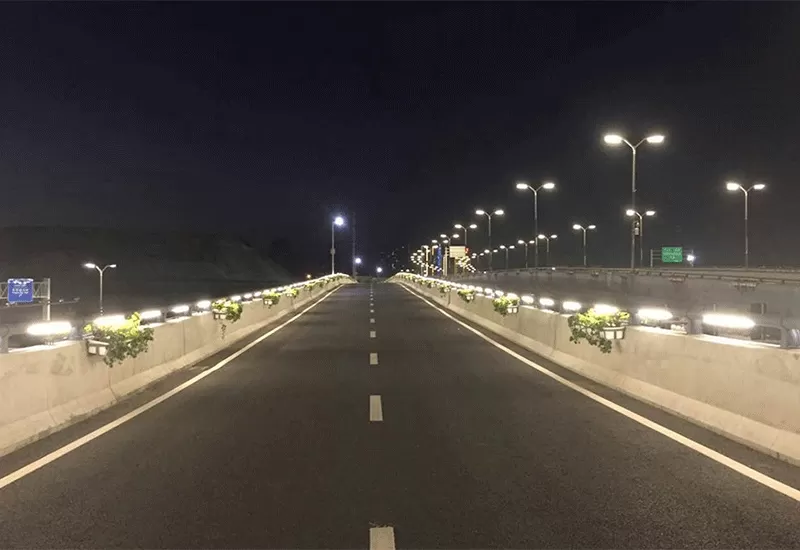
The Cost of Cheap Street Lights: Total Cost of Ownership (TCO) Analysis
Procurement teams are often pressured to select the lowest bidder. However, purchasing an economy LED street light to shave 20% off capital expenditure is a costly error over the life of a project.
Consider the real-world expenses of a commercial lighting repair run:
- Access Equipment: Renting an insulated bucket truck typically costs $400 to $900 per day.
- Labor Costs: Certified electrical linemen command professional union wages, frequently requiring hazard pay for live-lane highway operations.
- Traffic Management: Closing lanes requires crash-cushion trucks, cones, illuminated arrow boards, and dedicated safety personnel.
- Administrative Overhead: Processing citizen complaints, scheduling work orders, and tracking spare parts inventories consumes valuable staff hours.
Replacing a burned-out driver on a single 30-foot pole can easily cost between $350 and $800 in field labor alone. If 10% of a city's 5,000 budget streetlights fail within the first three years, the municipality will spend hundreds of thousands of dollars on reactive maintenance.
Buying professional fixtures with heavy-duty surge components, premium drivers, and optimized heat dissipation delivers a vastly lower Total Cost of Ownership (TCO). High-spec luminaires pay for themselves simply by keeping bucket trucks parked in the garage.
Frequently Asked Questions (FAQs)
Q1: What is the average lifespan of an LED street
light?
A1: A well-engineered municipal LED street light should
operate reliably between 50,000 and 100,000 hours. That translates to roughly 11
to 22 years of service at 12 hours of operation per night. However, units fitted
with budget drivers or undersized heat sinks often fail within 15,000 to 25,000
hours due to electronic stress and thermal breakdown.
Q2: Can a failed LED street light be repaired, or does it need full
replacement?
A2: Most professional fixtures feature modular designs
that allow maintenance teams to swap out individual parts. Drivers and surge
modules are built for quick replacement via tool-less entry housings. However,
low-end unbranded fixtures are often glued shut, requiring a complete, costly
luminaire replacement when a single component fails.
Q3: Why are my newly installed LED street lights
flashing?
A3: Rapid flashing usually indicates a damaged driver,
severe voltage fluctuations on the municipal utility line, or an incompatible
photocell sensor. It can also occur if the driver's current output does not
match the forward voltage range of the LED board, throwing the circuit into
continuous over-voltage protection cycles.
Q4: What surge protection rating is required for municipal LED street
lights?
A4: Industry best practice requires an integrated surge
protection device (SPD) rated for at least 10kV nominal discharge current, with
20kV preferred for high-mast highway systems, open rural corridors, and
storm-prone areas. Indoor-grade 2kV to 4kV protection is insufficient for
outdoor pole applications.
Q5: How does ambient temperature affect an outdoor LED street
light?
A5: While LEDs perform efficiently in freezing conditions,
elevated summer temperatures present serious risks. High ambient heat slows
convective air cooling over exterior fins, driving up internal junction
temperatures. Fixtures operating in regions that exceed 40°C require oversized
heat sinks and drivers equipped with thermal rollback protection to prevent
early failure.
Choose Reliability for Your Next Lighting Project
Premature failures in outdoor lighting are almost entirely preventable. They stem from compromised thermal design, sub-par driver electronics, inadequate surge suppression, and weak weatherproofing. By demanding rigid specifications and verified components, buyers can build public lighting networks that operate reliably for decades.
CAS engineers commercial-grade, heavy-duty lighting fixtures that pass the most demanding municipal standards. If you manage roadways, ports, industrial complexes, or municipal developments, our engineering team can review your specifications and supply field-proven luminaires built to last.
Ready to eliminate maintenance headaches and lower your long-term operating costs? Contact CAS today to submit an inquiry, request detailed photometric designs, or receive a project quote.