2022 Sports competition
After the 2021 Tokyo Olympics, the National Games and the European Cup, 2022 will still be a super year in the international sports arena.
Due to the recurrence of the epidemic worldwide, many events including the World Athletics Championships and the Asian Youth Games have been postponed from 2021 to 2022.
The highlight of the year is undoubtedly the Beijing Winter Olympics during the Spring Festival, the Qatar World Cup from November to December, and the Hangzhou Asian Games.
In 2022, there will be not only the Winter Olympics and the FIFA World Cup, the two world competitions at the top of the pyramid, but also a number of individual world championships will be held. For the entire sports industry, this is destined to be a busy and stressful year. Next, let’s take a look at the list of sports events in 2022.
Sports events in 2022
| Time | Sport | Venue |
| January 9th to February 6th | Africa Cup of Football | Cameroon |
| January 17th to January 30th | Australian Open | Melbourne |
| January 18th to January 23th | Four Continents Figure Skating Championships | Tallinn, Estonia |
| January 20th to February 6th | The AFC Women's Asian Cup India 2022 | India |
| February 4th to February 20th | Beijing Winter Olympics | Beijing, China |
| March 3rd to March 6th | Speed Skating World Championships 2022 | Hamar, Norway |
| March 4th to March 13th | Beijing 2022 Paralympic Winter Games | Beijing, China |
| March 18th to March 20th | 2022 World Athletics Indoor Championships | Belgrade, Serbia. |
| March 18th to March 20th | World Short Track Speed Skating Championships | Montreal, Canada |
| March 21th to March 27th | World Figure Skating Championships | Montpellier, France |
| April 16th to May 2nd | World Snooker Championship | Sheffield, United Kingdom |
| May 13th to May 29th | World Swimming Championship | Fukuoka, Japan |
| May 22th to June 5th | French Open | Paris, France |
| June 27th to July 10th | The Championships, Wimbledon | London, England |
| July 15th to July 24th | The World Athletics Championships | Oregon, U.S. |
| August 21st to August 28th | BWF World Championships | Japan |
| August 29 - September 11, 2022 | The US Open Tennis Championships | New York, U.S. |
| September 10 to September 25 | The 19th Asian Games Hangzhou 2022 | Hangzhou, Zhejiang, China |
| September 22th –October 1st | The FIBA Women's Basketball World Cup 2022 | Sydney, Australia |
| September 23 to October 15th | The FIVB Volleyball Women's World Championship | Netherlands, Poland |
| October 29th to November 6th | World Artistic Gymnastics Championships | Liverpool, United Kingdom |
| November 13th | The World Athletics Half Marathon Championships | Yangzhou, China |
| November 21st to December 18th | The FIFA World Cup Qatar 2022™ | QATAR |
Having said that, let me take you to understand the lighting of various stadiums!
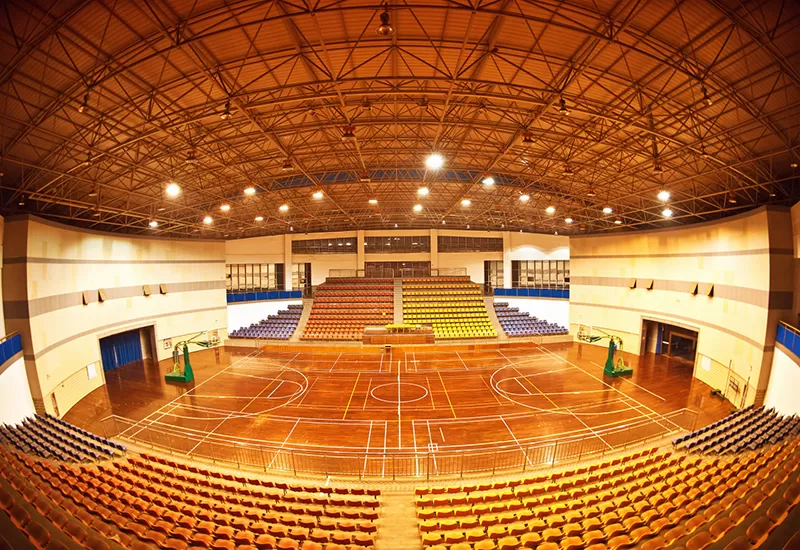
The lighting of stadiums is an important content of stadium design and is more complicated. It must not only meet the requirements of athletes for competitions and audience viewing, but also meet the requirements for lighting color temperature, illuminance, and uniformity of illuminance for live TV broadcast. This requirement is much higher than that of athletes and audiences. In addition, the lighting method needs to be closely matched with the overall planning of the stadium and the structure of the stands. Especially the maintenance of lighting equipment is closely related to architectural design. It needs to be fully considered.
Football Sports Lighting
Football lighting is divided into indoor football field lighting and outdoor football field lighting.
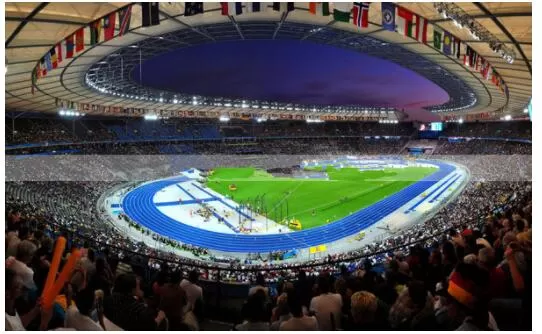
Football is a highly antagonistic collective sports event, a popular sport in the world. The history of football development is sufficient to illustrate the vitality and influence. According to FIFA regulations, the length of the football field is 105~110m and the width is 68~75m. There should be no obstacles within at least 5m outside the bottom line and sideline to ensure the safety of athletes.
Football lighting is divided into indoor football field lighting and outdoor football field lighting. The way of installing lights is different for different venues. The standard should be based on the function of the football field to determine the lighting standard, divided into seven levels, training and entertainment activities illuminance 200lx, amateur games 500lx, professional games 750lx, general TV broadcast 1000lx, large-scale international game HD TV broadcast 1400lx, TV emergency 750lx.
In the past, traditional football stadiums generally used metal halide lamps or floodlights with 1000W and 1500W lamps. Due to the glare, high energy consumption, short lifespan, inconvenient installation, poor color rendering, and insufficient actual brightness, traditional lamps have shortcomings. It is difficult to meet the lighting requirements of modern stadiums.
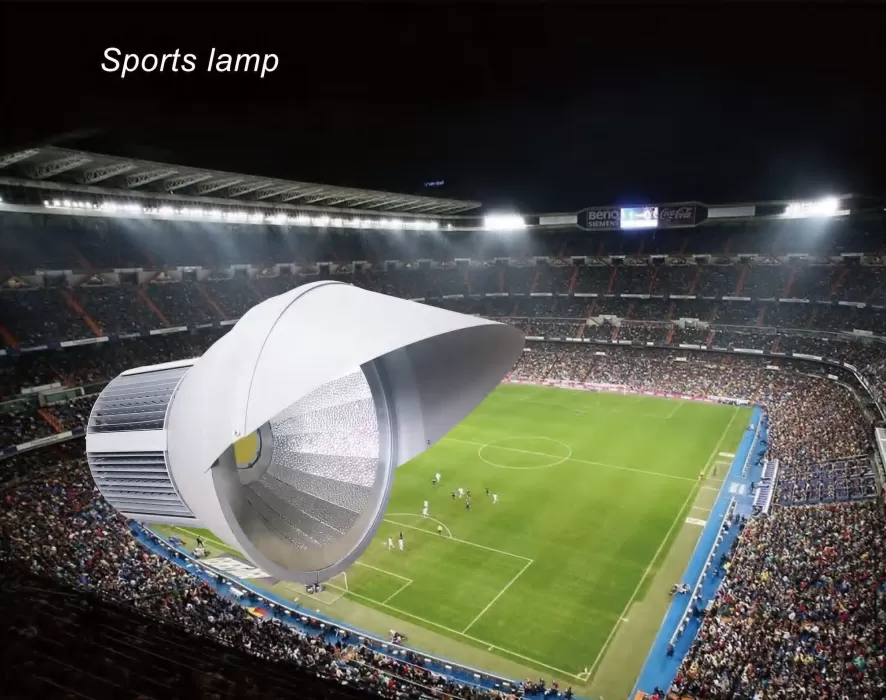
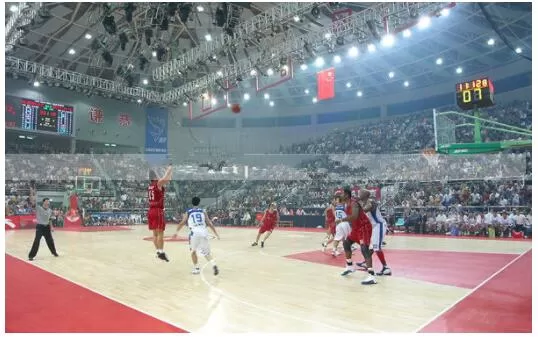
The LED lighting of the football field should have sufficient illuminance above the playing field but should avoid causing glare to the players. The LED lamps used in football stadiums are generally high pole lamps or floodlights. The position of the lamps can be installed on the edge of the stand ceiling or above the poles. The poles are installed around the stadium; it is determined according to the different LED lighting requirements of different stadiums. The number of lights and the size of the power.
Standard value of LED lighting for basketball
5. The light source should have suitable color temperature, good color rendering, high luminous efficiency, long life and stable lighting and photoelectric characteristics.
6. The correlated color temperature and application of the light source can be determined by the following table.
1. For stadiums with higher lighting installation heights, the light source should be LED stadium lights with small angles from Harding Lighting.
2. Indoor stadiums with lower ceilings and smaller areas should use LED stadium lights with lower power and larger luminous angles.
3. The light source of a special place can adopt the LED stadium light with an explosion-proof function.
4. The power of the light source should be compatible with the size, installation location, and height of the competition venue. Outdoor stadiums should adopt high-power LED stadium lights, and the light source should be guaranteed to work uninterrupted or start quickly.
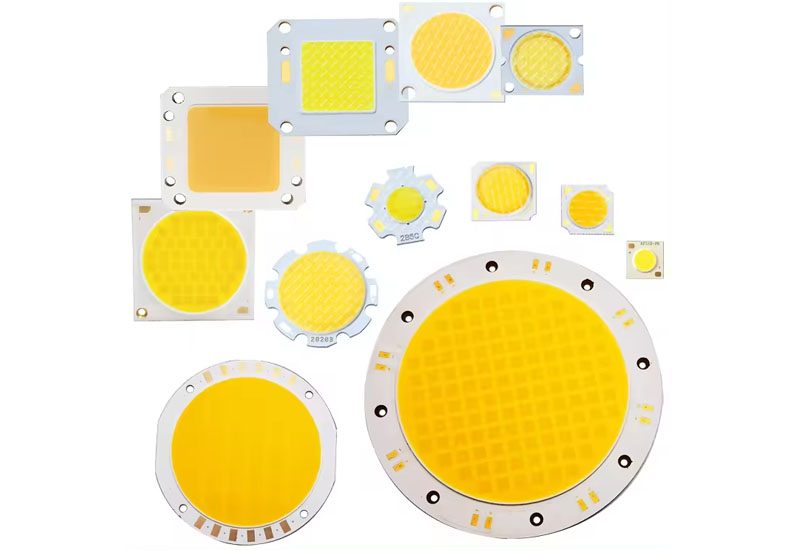
1. the choice of light source (cob led chios)
1. The safety performance of lamps and accessories should fully comply with relevant standards.
2. The anti-shock level of the lamps should meet the following requirements:
3. The industrial lamps or class II lamps with metal shell grounding should be used.
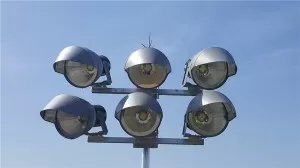
2. Selection of sports lights
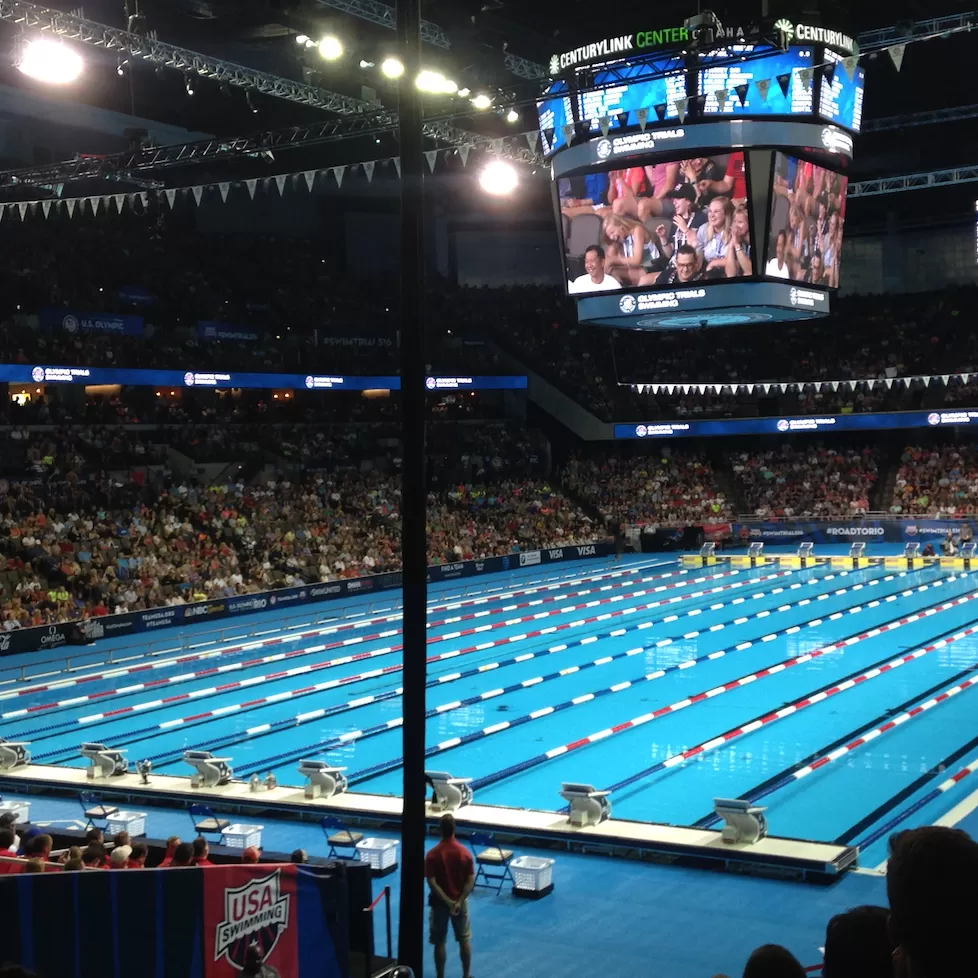
Swimming Pool Lighting
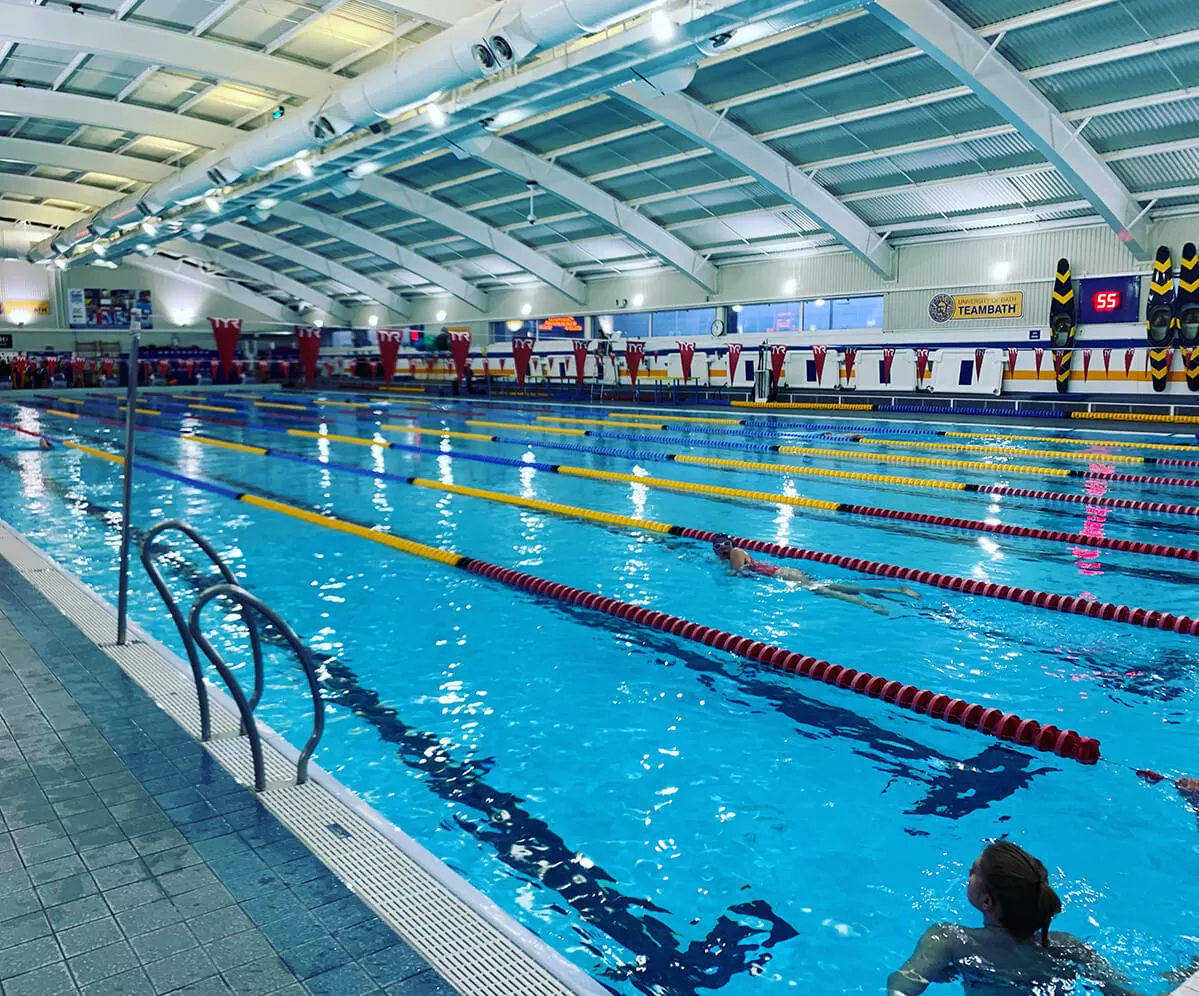
In the struggle against nature, in order to survive, and sometimes for entertainment, humans gradually mastered swimming skills. Until 1896, swimming entered the first modern Olympic Games. From May 1, 1957, FINA regulations only recognize the world record set in the 50-meter standard pool. The international standard swimming pool is 50 meters long, at least 25 meters wide, and more than 2 meters deep. There are 8 swimming lanes, each of which is 2.5 meters wide. The outer lanes of the first and eighth lanes are 2.5 meters away from the pool wall.
Lighting method:
Indoor swimming and diving halls usually consider the maintenance of lamps and lanterns. Generally, lamps and lanterns are not arranged above the water surface, except for those with special inspection channels above the water surface. For venues without TV broadcast requirements, the lamps are often scattered under the suspended ceiling, under the roof or on the wall, outside the water surface.
For venues with TV broadcast requirements, the lamps are generally arranged in a light strip type, that is, they are arranged over the banks on both sides. Longitudinal horse trails, horizontal horse trails are arranged over the banks at both ends. In addition, it is necessary to set up appropriate lamps under the diving platform and springboard to eliminate the shadows formed by the diving platform and springboard, and to emphasize the lighting of the diving warm-up pool.
It should be emphasized that there should be no lamps placed above the diving pool in diving sports. Otherwise, the mirror image of the lights will appear in the water, which will cause light interference to the athletes and affect the athletes' judgment and performance.
In addition, due to the unique optical characteristics of the water medium, the lighting and horse track layout of indoor swimming and diving halls mainly consider the following issues.
1. Glare control
Due to the unique optical characteristics of the water medium, the glare control of the lighting in the swimming pool is more difficult than other types of stadiums, and it is particularly important.
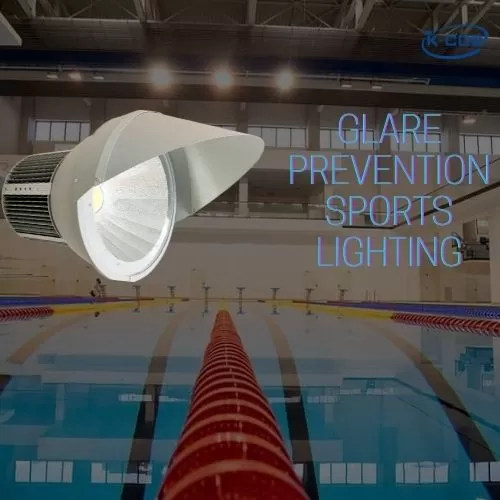
A. Control the reflected glare on the water surface by controlling the projection angle of the lamps. Generally speaking, the projection angle of the luminaires in the gymnasium should not be greater than 60°, and the projection angle of the luminaires in the swimming pool should not be greater than 55°, preferably not greater than 50°. The larger the incident angle of light, the more reflected light on the water surface.
B. Glare control measures for diving athletes. As far as diving is concerned, the range of the field includes 2 meters from the diving platform and 5 meters from the diving board to the surface of the water, that is, the entire trajectory space of the diving athlete. In this space, the field lighting is not allowed to have any uncomfortable glare to the athletes.
C. Strictly control the glare to the camera. That is, the light from the still water surface must not be reflected to the main camera field of view, and the light emitted by the lamp must not be directly directed to the fixed camera. It is more ideal if it does not directly illuminate the 50° fan-shaped area centered on the fixed camera.
D. Strictly control the glare caused by the mirror image of the lamp in the water. For swimming and diving halls with TV broadcast, the competition hall has a relatively large space, and the lighting fixtures for the venue generally use high-power LED lamps.
2. Horse track layout
A. Correctly determine the spatial range of lighting calculation in the game.
B. Reasonably determine the position of the horse track.
TV broadcasting requires not only horizontal illuminance but also vertical illuminance in 4 directions. At the same time, in order to ensure the three-dimensional sense of the shooting picture, the ratio of horizontal illuminance to vertical illuminance Eh/Ev should be between 0.5-2. The projection angle α1 of the near-side aiming point of the luminaire should not be too small, and the projection angle α2 of the far-side aiming point should not be too large. If the projection angle α1 is too small, the vertical illuminance component is too small to meet the Eh/Ev ratio requirement. If the projection angle α2 is too large, severe glare will occur.